World Heritage Identification Number: 720
World Heritage since: 1995
Category: Natural Heritage
WHE Type: Natural Landscapes & Geographic Features
Transboundary Heritage: No
Endangered Heritage: No
Country: 🇩🇪 Germany
Continent: Europe
UNESCO World Region: Europe and North America
Map
Messel Pit Fossil Site: Window into the Middle Eocene
The Messel Pit Fossil Site, located in Hesse, central Germany, offers a captivating glimpse into the Eocene epoch, a period spanning approximately 56 million to 34 million years ago. This extraordinary site was inscribed as a UNESCO World Heritage Site in 1995, recognizing its significant contribution to our understanding of the living environment during this critical phase of Earth's history.
The Messel Pit unconformably overlies the Variscan basement and its Permian cover rocks (Rotliegend), as well as Eocene volcanic breccias derived from the basement rocks. The Messel Formation consists primarily of lacustrine laminated bituminous shale deposited in an ancient volcanic lake. These sediments have yielded an extraordinary abundance of fossils, particularly plants, arthropods, fish, reptiles, birds, and mammals.
One of the defining geological features of the Messel Pit Fossil Site is its origin as a maar lake formed by volcanic activity during the Middle Eocene (around 47 million years ago). Explosive interactions between rising magma and groundwater created a deep volcanic crater that gradually filled with water and fine organic sediments.
Over millions of years, these sediments accumulated in oxygen-poor bottom waters, creating ideal conditions for the extraordinary preservation of fossils. Furthermore, scientists believe that periodic releases of toxic volcanic gases may have contributed to sudden die-offs of animals around and above the lake, further enriching the fossil deposits.
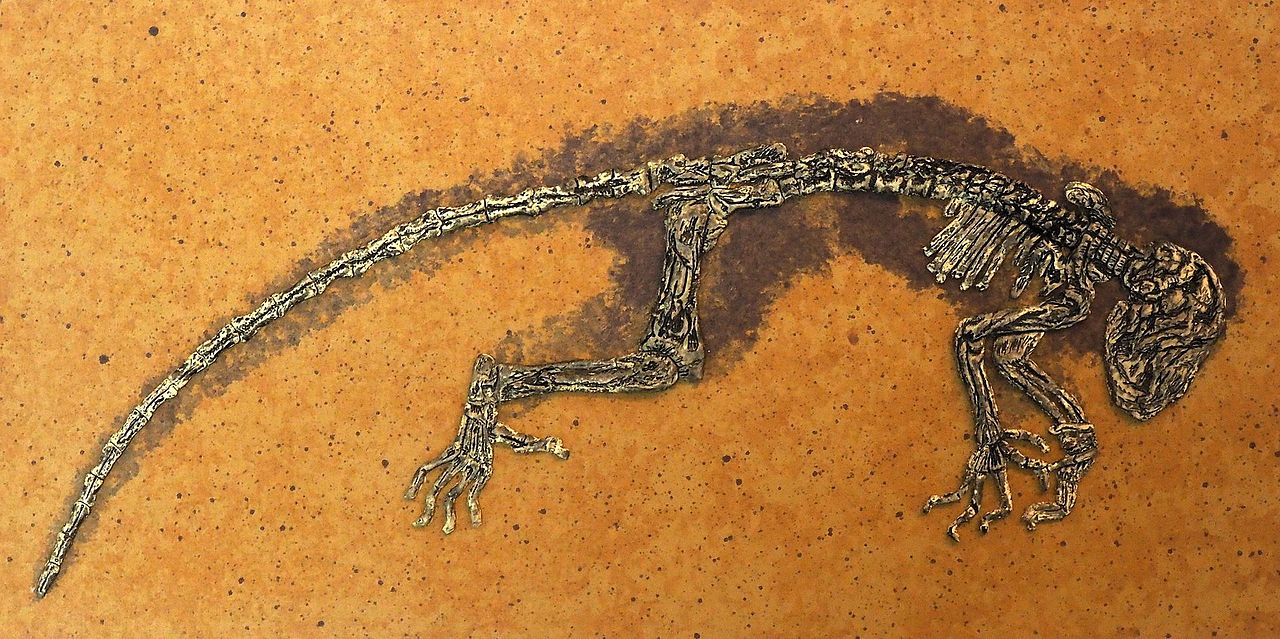
The Messel Pit is significant not only for the abundance of its fossils, but also for their remarkable quality of preservation. In many cases, delicate soft tissues such as fur, feathers, skin, and wing membranes have survived alongside complete skeletons. Some specimens even preserve stomach contents, evidence of parasites, and unborn offspring within pregnant mammals. These exceptionally detailed fossils allow researchers to reconstruct ancient food webs, behaviors, and ecological relationships with an accuracy rarely possible in the fossil record.
Among the diverse fossils discovered at Messel, mammals stand out as a particularly rich source of information. These fossils provide unique insights into the early evolution of mammals, revealing important information about their adaptations, behaviors, and ecological roles during the Eocene. Notable discoveries include early horses such as Propalaeotherium, primitive primates, bats, pangolins, and small carnivorous mammals, many preserved in extraordinary detail.
In addition to its importance for understanding mammalian evolution, the Messel Pit Fossil Site also provides valuable evidence about the broader Eocene ecosystem. The site’s diverse fossil record indicates a complex subtropical environment surrounding a volcanic lake, characterized by dense forests, wetlands, and freshwater habitats. This wealth of information allows scientists to reconstruct the climate, biodiversity, and ecological interactions of the Eocene with exceptional precision.
The history of the Messel Pit is also an important chapter in scientific conservation. During the nineteenth and twentieth centuries, the site was mined extensively for oil shale, which was used as a source of fuel and industrial products. By the 1970s, however, plans were underway to convert the abandoned quarry into a landfill. Strong opposition from scientists, environmental groups, and the public ultimately led to the preservation of the site. Their efforts were rewarded in 1995 when UNESCO designated the Messel Pit a World Heritage Site, recognizing its outstanding importance to paleontology and Earth science.
The Messel Pit Fossil Site serves as a testament to the power of geological preservation and the potential for discovery hidden within Earth's fossil record. Its exceptional fossil record continues to reveal new insights into the lives of ancient creatures and the evolutionary processes that shaped our planet. As a UNESCO World Heritage Site, the Messel Pit remains one of the most important paleontological localities on Earth and a symbol of humanity’s continuing quest to understand the deep history of life on our planet.
UNESCO Description of the World Heritage Site
Messel Pit is the richest site in the world for understanding the living environment of the Eocene, between 57 million and 36 million years ago. In particular, it provides unique information about the early stages of the evolution of mammals and includes exceptionally well-preserved mammal fossils, ranging from fully articulated skeletons to the contents of stomachs of animals of this period.
UNESCO Justification of the World Heritage Site
Criterion (viii): Messel Pit Fossil Site is considered to be the single best site which contributes to the understanding of the Eocene, when mammals became firmly established in all principal land ecosystems. The state of preservation of its fossils is exceptional and allows for high-quality scientific work.
Encyclopedia Record: Messel Formation
The Messel Formation is a geologic formation in Hesse, central Germany, dating back to the Eocene epoch. Its geographic range is restricted to the Messel pit. There it unconformably overlies crystalline Variscan basement and its Permian cover (Rotliegend) as well as Eocene volcanic breccias derived from the basement rocks. The formation mainly comprises lacustrine laminated bituminous shale renowned for its content of fossils in exceptional preservation, particularly plants, arthropods and vertebrates.Additional Site Details
Area: 42 hectares
Number of Components: 1
Coordinates: 49.918 , 8.757
IUCN World Heritage Outlook
The 2025 Conservation Outlook on Messel Pit Fossil Site reports the following assessment:
Source: International Union for Conservation of Nature (IUCN) · View assessment
World Heritage Research
Discover scientific research and academic studies that deepen our understanding of Messel Pit Fossil Site from its history and significance to its conservation, management, and contemporary challenges.
-
Increased hydroclimate variability in midlatitude Europe during the middle Eocene greenhouse
A high-resolution hydroclimate record from the Messel Pit Fossil Site (Germany) reveals that midlatitude Europe experienced significant variability in relative humidity during the middle Eocene greenhouse, partly decoupled from temperature changes. The study, using hydrogen and carbon isotopic composition of plant waxes preserved in varved sediments, shows that moisture sources varied due to fragmented paleogeography, with relative humidity fluctuating up to 60% between 47.7 and 47.2 million years ago. This variability decreased over time, coinciding with orbital insolation changes, suggesting a link between Earth's orbital cycles and hydroclimatic trends.
Schmitt, C., Vasiliev, I., Martínez-García, A., Meijer, N., & Mulch, A. (2026). Increased hydroclimate variability in midlatitude Europe during the middle Eocene greenhouse. Global and Planetary Change, 259, 105357. https://doi.org/10.1016/j.gloplacha.2026.105357
View Publication Record | Read Publication -
Micro-computed tomography indicates Eurotamandua, putative anteater from the Eocene of Messel, Germany, is related to pangolins, not xenarthrans
A re-evaluation of Eurotamandua joresi, a 47-million-year-old fossil from the Messel Pit in Germany, reveals it is not an ancient anteater but instead closely related to pangolins and their extinct relatives. Using micro-computed tomography (μCT) on the original skeleton—previously obscured by matrix compression and fiberglass resin—the study identified unique anatomical features, particularly in the forelimb, that indicate Eurotamandua was a specialized digger. Phylogenetic analysis confirms its affiliation with Holarctic palaeanodonts (Pholidotamorpha), not Xenarthra, challenging long-held assumptions about Old World xenarthrans. This finding resolves decades of debate and provides new insights into the evolutionary history of mammals during the Eocene.
Rose, K. D., Rabenstein, R., Habersetzer, J., & Gaudin, T. J. (2026). Micro-computed tomography indicates Eurotamandua, putative anteater from the Eocene of Messel, Germany, is related to pangolins, not xenarthrans. Scientific Reports, 16(1). https://doi.org/10.1038/s41598-026-51713-6
View Publication Record | Read Publication -
Osteology, paleoecology, and phylogenetic relationships of the carettochelyid turtle Allaeochelys crassesculpta from the middle Eocene Konservat-Lagerstätte of Messel, Germany
A detailed osteological analysis of the carettochelyid turtle Allaeochelys crassesculpta from the middle Eocene Messel Pit reveals a unique combination of primitive and advanced traits, providing new insights into the evolutionary history of this group. Using micro-computed laminography and tomography, researchers reconstructed high-resolution 3D models of its skull, shell, and limbs, uncovering features such as an enlarged antrum postoticum and maxilla-quadratojugal contact. The study suggests that Allaeochelys crassesculpta possessed the ability for 'synchronous rowing,' a locomotor mode shared with the extant pig-nosed turtle, hinting at its origins in the Late Cretaceous to Paleocene transition. Additionally, phylogenetic analysis incorporating recent anatomical findings refines our understanding of carettochelyid evolution.
Rollot, Y., Zuber, M., Hamann, E., & Joyce, W. G. (2026). Osteology, paleoecology, and phylogenetic relationships of the carettochelyid turtle Allaeochelys crassesculpta from the middle Eocene Konservat-Lagerstätte of Messel, Germany. Fossil Record, 29(2), 611–674. https://doi.org/10.3897/fr.29.195537
View Publication Record | Read Publication -
Allaeochelys crassesculpta
A detailed anatomical and taxonomic study of Allaeochelys crassesculpta, a fossilized softshell turtle from the Messel Pit (Germany), reveals unique cranial and carapace features that distinguish it from other Carettochelyinae. The research, utilizing µCT imaging and morphological analysis, identifies diagnostic traits such as a straight labial margin of the maxilla, a deep quadrate fossa, and a flat ventral surface of the basioccipital, while confirming the absence of nasal bones and carapace scutes. The study also provides an updated diagnosis and comprehensive description of referred specimens from Messel Pit, contributing to our understanding of Eocene turtle evolution.
Rollot, Y., Zuber, M., Hamann, E., & Joyce, W. G. (2026). Allaeochelys crassesculpta. Zenodo. https://doi.org/10.5281/ZENODO.21939049
View Publication Record | Read Publication -
Sounds from the Eocene: the first singing cicada from the Messel Pit, Germany
Researchers have uncovered the first fossil evidence of singing cicadas from the Eocene epoch, specifically identifying a new genus and species, Eoplatypleura messelensis, within the tribe Platypleurini. This discovery at the Messel Pit in Germany not only represents one of the earliest known fossil records of crown-group Cicadidae in Eurasia but also the oldest confirmed record of the subfamily Cicadinae globally. The findings significantly enrich our understanding of cicada diversity during the Eocene and provide a crucial calibration point for molecular phylogenetic studies, shedding light on the origins and dispersal patterns of this insect group. Analysis of existing records further suggests that Cicadidae was once widely distributed across Europe during the Cenozoic era.
Jiang, H., Moulds, M. S., Blank, S. M., Rust, J., & Wedmann, S. (2025). Sounds from the Eocene: the first singing cicada from the Messel Pit, Germany. Scientific Reports, 15(1). https://doi.org/10.1038/s41598-025-94099-7
View Publication Record | Read Publication -
High‐Resolution Lake Deposits Record Temperature Variability During the Middle Eocene Greenhouse in Central Europe
A previously unknown 'hyperthermal-like' global warming event was identified during the middle Eocene greenhouse period (47.5 million years ago) using high-resolution lake deposits from the Messel Pit Fossil Site, Germany. The study revealed that continental temperatures in Central Europe fluctuated between 21–28°C over a 430,000-year span, transitioning from a highly variable pattern to a more stable state. This shift may have been linked to orbital configurations or changes in the North Atlantic seaway. Researchers used terrestrial biomarkers preserved in maar sediments to reconstruct temperature variability under high atmospheric CO₂ conditions, providing critical insights into past climate dynamics. The findings align with concurrent marine isotopic excursions, underscoring the site's significance for understanding global climate events.
Schmitt, C., Vasiliev, I., Meijer, N., & Mulch, A. (2025). High‐Resolution Lake Deposits Record Temperature Variability During the Middle Eocene Greenhouse in Central Europe. Paleoceanography and Paleoclimatology, 40(7). Portico. https://doi.org/10.1029/2024pa005047
View Publication Record | Read Publication -
Central European climate variability during the Eocene hothouse
A previously unknown 'hyperthermal-like' warming event, correlating with marine isotopic excursions, has been identified in the Messel Pit Fossil Site record, suggesting that profound global warming events occurred more frequently during the Eocene than previously assumed. This discovery challenges the understanding of climate variability in past warm periods. The study utilized biomarkers from annually resolved maar lake sediments to reconstruct sub-millennial to millennial-scale temperature dynamics over a ~430 thousand-year period (47.7 to 47.2 million years ago). It revealed nonlinear warming of up to 3.5°C during the hyperthermal event, modulated by Earth's orbital cycles, and significant ecological changes in the lake ecosystem. Additionally, the research demonstrated that the Eocene climate transitioned from an unstable state with 5°C fluctuations to a stable state with only 2°C variability, likely driven by orbital configuration. Hydrogen isotopic analysis further indicated a decoupling of the hydrological cycle from regional temperature history and shifts in relative humidity of up to 60%.
Schmitt, C. Central European climate variability during the Eocene hothouse. https://doi.org/10.21248/gups.96764
View Publication Record | Read Publication