World Heritage Identification Number: 1456
World Heritage since: 2014
Category: Cultural Heritage
WHE Type: Archaeological Sites
Transboundary Heritage: No
Endangered Heritage: No
Country: 🇮🇷 Iran (Islamic Republic of)
Continent: Asia
UNESCO World Region: Asia and the Pacific
Map
Shahr-i Sokhta: A Window into the Emergence of Complex Societies in Eastern Iran
Shahr-i Sokhta, translating to 'Burnt City', is a significant archaeological site located at the intersection of ancient trade routes traversing the Iranian plateau. Inscribed as a UNESCO World Heritage Site in 2014, this mudbrick city offers valuable insights into the development of the earliest complex societies in eastern Iran. Founded around 3200 BC, the city experienced four primary periods of occupation that extended up to 1800 BC.
More to come…UNESCO Description of the World Heritage Site
Shahr-i Sokhta, meaning ‘Burnt City’, is located at the junction of Bronze Age trade routes crossing the Iranian plateau. The remains of the mudbrick city represent the emergence of the first complex societies in eastern Iran. Founded around 3200 BC, it was populated during four main periods up to 1800 BC, during which time there developed several distinct areas within the city: those where monuments were built, and separate quarters for housing, burial and manufacture. Diversions in water courses and climate change led to the eventual abandonment of the city in the early second millennium. The structures, burial grounds and large number of significant artefacts unearthed there, and their well-preserved state due to the dry desert climate, make this site a rich source of information regarding the emergence of complex societies and contacts between them in the third millennium BC.
UNESCO Justification of the World Heritage Site
Criterion (ii): Shahr-i Sokhta exhibits a transition from village habitation to an urbanized community with significant cultural, social and economic achievements and developments from the late Calcolithic to the early Bronze Age. The site is a rich source of information regarding the emergence of complex societies and some contact between them in the third millennium BCE.
Criterion (iii): Shahr-i Sokhta bears exceptional testimony to a peculiar civilization and cultural tradition that entertained trade and cultural relations with ancient sites and cultures on the Indus Plain, southern shores of the Persian Gulf, the Oman Sea and South-west Iran, and Central Asia. Archaeological remains and finds indicate the key role of the city on a very large scale in terms of working with metals, stone vessels, gems and pottery.
Criterion (iv): The ancient site of Shahr-i Sokhta is an outstanding example of early urban planning: excavations have brought to light well-preserved evidence in the form of its mud-brick structures, burial grounds, workshops and artefacts that testify to its size, organisation, the source of its wealth and its trade and social structures. The city was separated into various parts according to different functions - residential, industrial and burial; it therefore represents an important stage in urban planning in the region.
Encyclopedia Record: Shahr-e Sukhteh
Shahr-e Sukhteh, c. 3550–2300 BC, also spelled as Shahr-e Sūkhté and Shahr-i Sōkhta, is an archaeological site of a sizable Bronze Age urban settlement, associated with the Helmand culture. It is located in Sistan and Baluchistan Province, the southeastern part of Iran, on the bank of the Helmand River, near the Zahedan-Zabol road. It was placed on the UNESCO World Heritage List in June 2014.Additional Site Details
Area: 275 hectares
Number of Components: 1
(iii) — Unique or exceptional testimony to a cultural tradition
(iv) — Outstanding example of a type of building or landscape
Coordinates: 30.5938888889 , 61.3277777778
Image
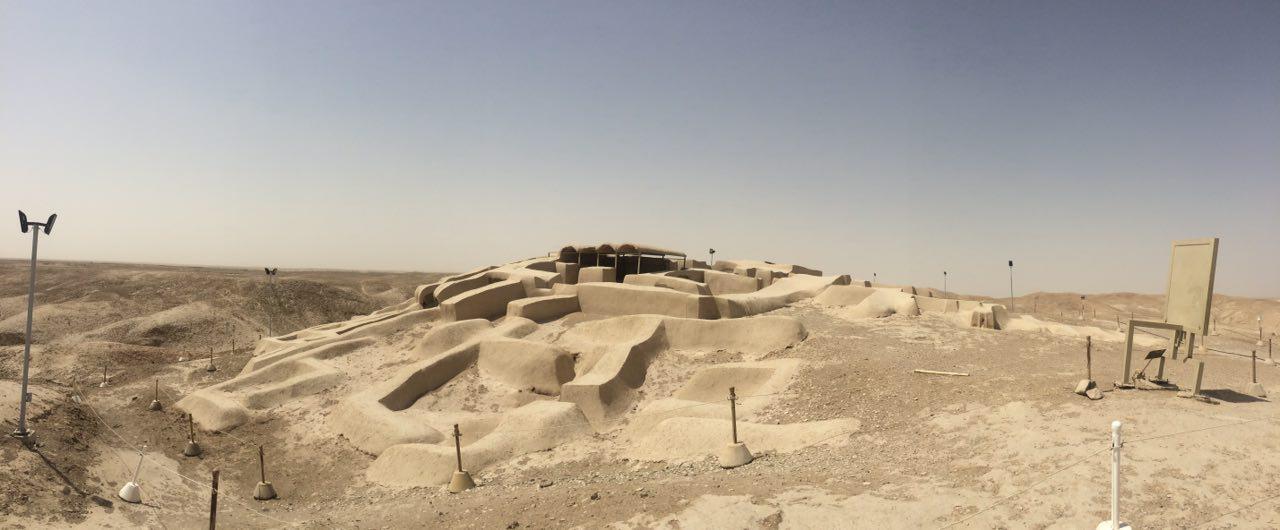
© Saeedrahdari (سعید راهداری), CC BY-SA 4.0 Resized from original. (This derivative is under the same CC BY-SA license.)
World Heritage Research
Discover scientific research and academic studies that deepen our understanding of Shahr-i Sokhta from its history and significance to its conservation, management, and contemporary challenges.
-
Before the Silk Road: The Indus Valley Civilization and the Deep Origins of Eurasian Trade Infrastructure
Archaeological evidence challenges the conventional narrative that the Silk Road (114 BCE) was the origin of Eurasian long-distance trade, revealing instead that the Indus Valley Civilization (IVC, c. 7000–1900 BCE) established and maintained a sophisticated trade network—dubbed the Middle Asian Interaction Sphere (MAIS)—by 2500 BCE. This network, spanning the Iranian Plateau, Persian Gulf, Mesopotamia, and Central Asia, predates the Silk Road by two millennia and shares identical geographic corridors. Material proof includes IVC seals, standardized weights, and carnelian beads found across key sites like Ur, Susa, and Shahr-i-Sokhta, alongside genomic data confirming multigenerational IVC communities in Bactria–Margiana (BMAC). The study leverages the Deep Symbolic Systems Model (DSSM) to argue that this network functioned as a distributed symbolic infrastructure, maintaining cognitive coherence without centralized authority. These findings reshape our understanding of Eurasian trade's deep origins.
Vondoom, A. (2026). Before the Silk Road: The Indus Valley Civilization and the Deep Origins of Eurasian Trade Infrastructure. Zenodo. https://doi.org/10.5281/ZENODO.20369725
View Publication Record | Read Publication -
The Woman from Rakhigarhi: Ancient Genome I6113
Ancient DNA analysis of I6113, a 35-year-old woman from the Indus Valley Civilization (IVC), reveals that her ancestry is a mixture of ancient Iranian-related populations and Ancient Ancestral South Indians (AASI), with no evidence of steppe pastoralist or Anatolian farmer influence. This challenges the notion of external demographic replacement in IVC's formation. The study also identifies IVC-cline ancestry in individuals from non-IVC sites, suggesting a distributed human diaspora that maintained symbolic systems across vast distances without central enforcement. The research required extensive skeletal sampling and sequencing efforts to extract viable ancient DNA.
Vondoom, A. (2026). The Woman from Rakhigarhi: Ancient Genome I6113. Zenodo. https://doi.org/10.5281/ZENODO.20369711
View Publication Record | Read Publication -
Bronze Age pottery of the Sistan region: Evidence from Tepe Sadegh
A detailed analysis of Bronze Age pottery from Tepe Sadegh, a satellite settlement linked to Shahr-i Sokhta in southeastern Iran, reveals strong cultural and technological continuity with the urban center. The study, based on 1959 ceramic sherds, identifies standardized buff ware production, predominantly wheel-made, with limited painted or incised decoration, suggesting a high level of craftsmanship. Radiocarbon dating aligns Tepe Sadegh's main occupation with Shahr-i Sokhta periods II and III. The findings highlight the settlement's role as a semi-industrial hub integrating domestic activities while contributing to understanding regional ceramic production and settlement organization in the Helmand Plain during the Bronze Age.
Ebrahimiabareghi, S., & Shirazi, R. (2026). Bronze Age pottery of the Sistan region: Evidence from Tepe Sadegh. Archaeological Research in Asia, 48, 100745. https://doi.org/10.1016/j.ara.2026.100745
View Publication Record | Read Publication -
Study of compositional and luminescence properties of calcite in lapis lazuli for provenance investigations of archaeological findings
Archaeological findings from Shahr-i Sokhta (Iran) and Tanis (Egypt) suggest that lapis lazuli used in these historical sites likely originated from Afghanistan. This conclusion is based on a study analyzing the compositional and luminescence properties of calcite within 42 reference rocks from four distinct mining regions: Afghanistan, Tajikistan, Siberia, and Myanmar. Using non-destructive Ion Beam Analysis techniques—μ-Particle Induced X-rays Emission (μ-PIXE) and μ-Ion Beam Induced Luminescence (μ-IBIL)—researchers identified unique markers such as high Mg and Mn content in Afghan calcite and high Sr content in Siberian calcite. Principal Component Analysis further distinguished between the provenances, leveraging variability in Mg, Mn, Sr, and Y elements. Notably, luminescence intensity ratios also varied among regions, aiding in provenance discrimination. The study's findings imply that Afghan lapis lazuli was the most probable source for the archaeological materials examined.
Magalini, M., Guidorzi, L., Re, A., Marabotto, M., Borghi, A., Gallo, P., Vidale, M., La Torre, L., Campostrini, M., Lemasson, Q., Pichon, L., Moignard, B., Pacheco, C., Couture, P., Palitsin, V., & Lo Giudice, A. (2025). Study of compositional and luminescence properties of calcite in lapis lazuli for provenance investigations of archaeological findings. The European Physical Journal Plus, 140(2). https://doi.org/10.1140/epjp/s13360-025-06095-5
View Publication Record | Read Publication -
Tepe Sadegh, a Bronze Age settlement on the Sistan Plain. Pottery, Chronology, and Interactions
A revised chronological framework for the Bronze Age in Eastern Iran emerges from the first comprehensive analysis of pottery from Tepe Sadegh, a satellite settlement near the UNESCO-listed Shahr-i Sokhta. This study establishes both relative and absolute dating by integrating ceramic typology with radiocarbon-dated charcoal, offering new insights into cultural sequences, urbanization, and socio-cultural complexity on the Sistan Plain. Comparative analysis with other Indo-Iranian Bronze Age sites refines regional chronologies, addressing a critical gap in documentation for Shahr-i Sokhta's satellite settlements.
Ebrahimiabareghi, S. (2025). Tepe Sadegh, a Bronze Age settlement on the Sistan Plain. Pottery, Chronology, and Interactions. Open Series in Prehistoric Archaeology. https://doi.org/10.59641/t7366wf
View Publication Record | Read Publication -
The Compositional Analysis of Mineral Content and Geo-Chemistry of the Ancient Grey Potsherds from Shahr-I Sokhta, East of Iran
A compositional analysis of ancient grey potsherds from Shahr-i Sokhta, a UNESCO-listed archaeological site in East Iran, reveals that most pottery was locally produced. Using X-Ray Fluorescence (XRF) and X-Ray Diffraction (XRD), researchers identified distinct mineral phases and high-temperature baking signatures, confirming local manufacturing. Notably, copper oxide was used as a glazing agent to achieve the grey coloration, while lead concentrations remained minimal, consistent with Indus Valley pottery traditions. This study provides new insights into the technological sophistication of ancient potters in the region.
Moradi, H., Sarhaddi-Dadian, H., Ramli, Z.,. (2025). The Compositional Analysis of Mineral Content and Geo-Chemistry of the Ancient Grey Potsherds from Shahr-I Sokhta, East of Iran. Cercetări Arheologice, 32(1), 27–38. https://doi.org/10.46535/ca.32.1.02
View Publication Record | Read Publication -
Gli uccelli a Shahr-I Sokhta (Iran):buoni da mangiare, buoni per lavorare
At Shahr-i Sokhta, a UNESCO World Heritage Site in Iran, birds played a significant but underappreciated role during the Bronze Age. While their contribution to diet was minimal—dominated by species like the coot (Fulica atra) and tufted duck (Aythia ferina)—their long bones were crafted into specialized tools, possibly used for decorating pottery. The discovery of these tools, along with production waste, sheds light on ancient manufacturing techniques. Notably, the presence of non-edible cormorant (Phalacrocorax carbo) bones in urban contexts suggests a rudimentary form of domestication, potentially for fishing in shallow waters. This finding, derived from archaeozoological analyses conducted as part of the MAIPS project, challenges conventional views on the economic significance of birds in ancient societies.
Potenza, A. (2025). Gli uccelli a Shahr-I Sokhta (Iran):buoni da mangiare, buoni per lavorare. Archaeofauna, 34(1). https://doi.org/10.15366/archaeofauna2025.34.1.041
View Publication Record | Read Publication