World Heritage Identification Number: 211
World Heritage since: 2002
Category: Cultural Heritage
WHE Type: Archaeological Sites
Transboundary Heritage: No
Endangered Heritage: Yes
Country: 🇦🇫 Afghanistan
Continent: Asia
UNESCO World Region: Asia and the Pacific
Map
The Minaret of Jam: A Stunning Testimony of Islamic Artistry in Afghanistan
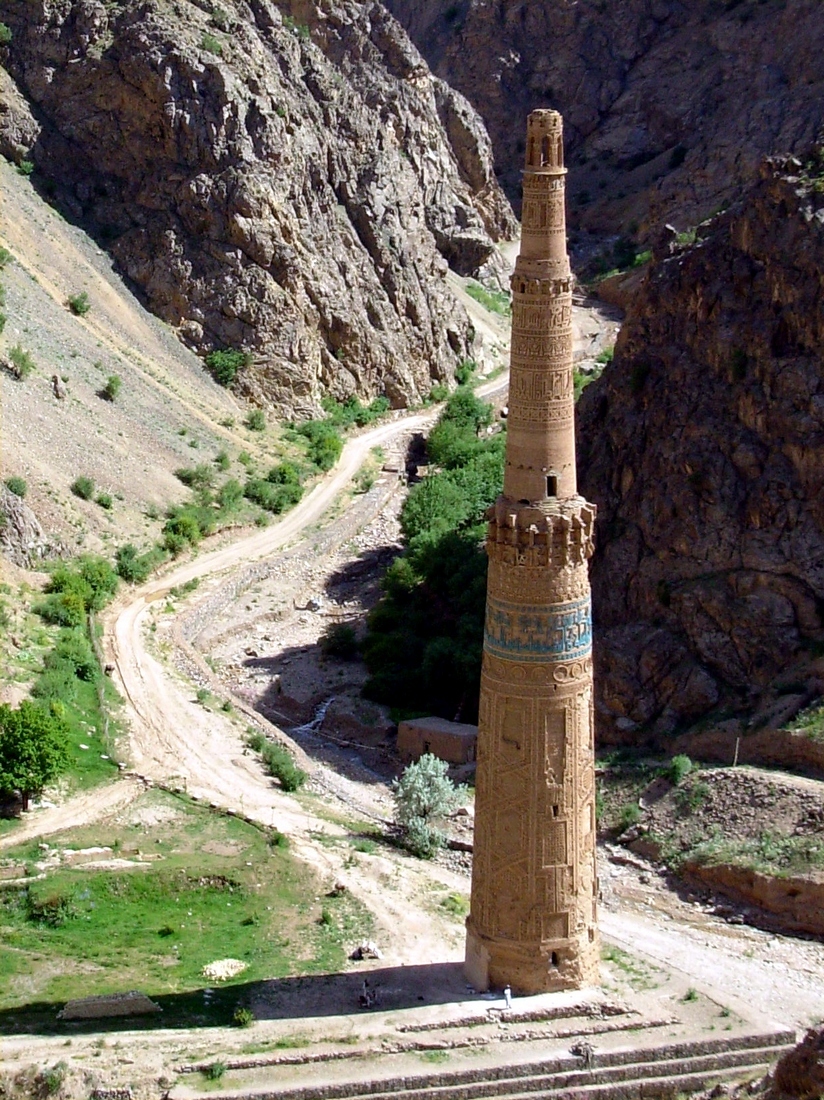
The Minaret of Jam, a UNESCO World Heritage Site since 2002, stands as a remarkable example of Islamic artistry and architectural prowess in the rugged mountains of western Afghanistan. Located in the remote and rugged terrain of the Shahrak District, Ghor Province, near the confluence of the Hari River and the Jam River, this 65-meter-tall minaret boasts intricate brick, stucco, and glazed tile decorations that have captivated visitors and scholars alike for centuries.
Built around 1194 AD during the reign of the Ghurid Sultan Ghiyath al-Din Muhammad, the Minaret of Jam represents the height of architectural and artistic traditions in the region. Its design showcases a harmonious blend of Kufic and Naskhi calligraphy, geometric patterns, and verses from the Qur'an, all executed with exceptional craftsmanship. The minaret's blue tile inscription at the top adds a striking contrast to the overall composition, further enhancing its aesthetic appeal.
The minaret is widely believed to be connected to the lost medieval city of Firozkoh, once the capital of the Ghurid Empire. Known as the “Turquoise Mountain,” Firozkoh flourished during the 12th century as a center of art, scholarship, and political power before being destroyed during the Mongol invasions in the early 13th century. Although much of the ancient city has disappeared, archaeologists believe the Minaret of Jam may be its most significant surviving monument, offering a rare glimpse into the grandeur of the Ghurid civilization and its contributions to the Islamic world.
Archaeological remains surrounding the minaret, including fortifications, watchtowers, cemeteries, and fragments of ancient buildings, suggest that the site was once part of a much larger urban settlement. Pottery shards and other artifacts discovered in the area further support the belief that the Minaret of Jam stood at the heart of a thriving medieval center connected to the lost city of Firozkoh.
The Minaret of Jam's location contributes significantly to its enchanting allure. Situated in a deep river valley surrounded by towering mountains, the minaret commands a dramatic presence that resonates with the rich history and culture of Ghor Province and the medieval Ghurid Empire. This breathtaking setting offers a unique insight into the lives of the people who once inhabited this region, providing a tangible connection to the civilization that flourished there.
Since its inscription on the World Heritage List, the Minaret of Jam has faced numerous challenges, most notably erosion caused by nearby rivers, seismic activity, and a lack of consistent preservation. In 2002, the site was placed on the list of World Heritage in Danger due to these concerns. Over the years, UNESCO and other international organizations have undertaken stabilization and conservation efforts, though progress has often been slow because of security concerns, difficult terrain, and limited resources. Reports continue to warn of the tower's structural vulnerability, particularly its noticeable lean, underscoring the urgent need for comprehensive conservation.
Despite these challenges, the Minaret of Jam continues to stand as a testament to the rich cultural heritage of Afghanistan. Its intricate decorations, dramatic setting, and historical significance make it one of the finest surviving examples of medieval Islamic architecture in Central Asia. As efforts to preserve and protect this national treasure continue, the Minaret of Jam remains a powerful symbol of resilience, history, and artistic achievement for future generations.
UNESCO Description of the World Heritage Site
The 65m-tall Minaret of Jam is a graceful, soaring structure, dating back to the 12th century. Covered in elaborate brickwork with a blue tile inscription at the top, it is noteworthy for the quality of its architecture and decoration, which represent the culmination of an architectural and artistic tradition in this region. Its impact is heightened by its dramatic setting, a deep river valley between towering mountains in the heart of the Ghur province.
UNESCO Justification of the World Heritage Site
Criterion (ii): The innovative architecture and decoration of the Minaret of Jam played a significant role in the development of the arts and architecture of the Indian sub-continent and beyond.
Criterion (iii): The Minaret of Jam and its associated archaeological remains constitute exceptional testimony to the power and quality of the Ghurid civilization that dominated the region in the 12th and 13th centuries.
Criterion (iv): The Minaret of Jam is an outstanding example of Islamic architecture and ornamentation in the region and played a significant role for further dissemination.
Encyclopedia Record: Minaret of Jam
The Minaret of Jam is a UNESCO World Heritage Site in western Afghanistan. It is located in a remote and nearly inaccessible region of Shahrak District, Ghor Province, between the Jam and Hari Rivers. The 62 m (203 ft) or 65 m (213 ft) high minaret was built c. 1190, entirely of baked bricks, and is famous for its intricate brick, stucco and glazed tile decoration, which consists of alternating bands of Kufic and Naskhi calligraphy, geometric patterns, and verses from the Qur'an. Since 2002, the minaret has remained on the list of World Heritage in Danger, under serious threat of erosion, and has not been actively preserved. In 2014, the BBC reported that the tower was in imminent danger of collapse.Additional Site Details
Area: 70 hectares
Number of Components: 1
(iii) — Unique or exceptional testimony to a cultural tradition
(iv) — Outstanding example of a type of building or landscape
Coordinates: 34.3964166667 , 64.5158888889
Image
david adamec, Public domain