World Heritage Identification Number: 1685
World Heritage since: 2023
Category: Natural Heritage
WHE Type: Protected Areas & National Parks
Transboundary Heritage: No
Endangered Heritage: No
Country: 🇹🇯 Tajikistan
Continent: Asia
UNESCO World Region: Asia and the Pacific
Map
Tugay Forests of the Tigrovaya Balka Nature Reserve: An Unspoiled Ecosystem in Central Asia
The Tigrovaya Balka Nature Reserve, situated in southwestern Tajikistan, is home to one of the most significant and intact tugay forest ecosystems in Central Asia. Inscribed as a UNESCO World Heritage Site in 2023, this unique reserve spans an area of approximately 460 square kilometers (180 square miles), making it the largest and best-preserved example of its kind globally.
More to come…UNESCO Description of the World Heritage Site
This property is located between the Vakhsh and Panj rivers in southwestern Tajikistan. The Reserve includes extensive riparian tugay ecosystems, the sandy Kashka-Kum desert, the Buritau peak, as well as the Hodja-Kaziyon mountains. The property is composed of a series of floodplain terraces covered by alluvial soils, comprising tugay riverine forests with very specific biodiversity in the valley. The tugay forests in the reserve represent the largest and most intact tugay forest of this type in Central Asia, and this is the only place in the world where the Asiatic poplar tugay ecosystem has been preserved in its original state over an area of this size.UNESCO Justification of the World Heritage Site
Criterion (ix): The natural complex of Tigrovaya Balka is an outstanding example of continuous ecological and biological processes taking place in the evolution and development of desert-tugay biocenoses and their characteristic plant and animal communities. The reserve hosts various ecological units, not only tugay lowland forests, but also steppe and semi-desert areas and their various ecotones where many stenoeceous species of flora are found. The reserve’s forests, sandy and saline semi-deserts, piedmont semi-savannas, and various wetlands are dynamically adapting to changes in the hydrological regime of the territory. There are several habitats in the reserve: tugay riverine forests, freshwater bodies and marshes, semi-deserts, takirs and solonchaks. The complex features water-resistant and thermophilic, salt-tolerant trees and shrubs such as the Asiatic Poplar or Blue Poplar, the Dzhida or Oleaster, the Multiramose Tamarix. Wildlife includes Bactrian Deer, whose population in the reserve exceeds 300; Goitered Gazelle, Striped Hyena, Gray Monitor, Tajik Black-and-gold Pheasant, and many waterfowl, completing the largely intact tugay ecosystem. The 24,100 hectares of tugay forests in the reserve represent the largest and most intact tugay forest of this type in Central Asia, and this is the only place in the world where the Asiatic poplar tugay ecosystem has been preserved in its original state over an area of this size.
Encyclopedia Record: Tigrovaya Balka Nature Reserve
Tigrovaya Balka Nature Reserve is a nature reserve in Tajikistan located at the confluence of the Vakhsh and Panj Rivers forming the Amu Darya River. It stretches over 40 km (25 mi) from the south-west to the north-east with an area of 460 km2 (180 sq mi).Additional Site Details
Area: 49,786 hectares
Number of Components: 1
Coordinates: 37.2047222222 , 68.3413888889
IUCN World Heritage Outlook
The 2025 Conservation Outlook on Tugay forests of the Tigrovaya Balka Nature Reserve reports the following assessment:
Source: International Union for Conservation of Nature (IUCN) · View assessment
Image
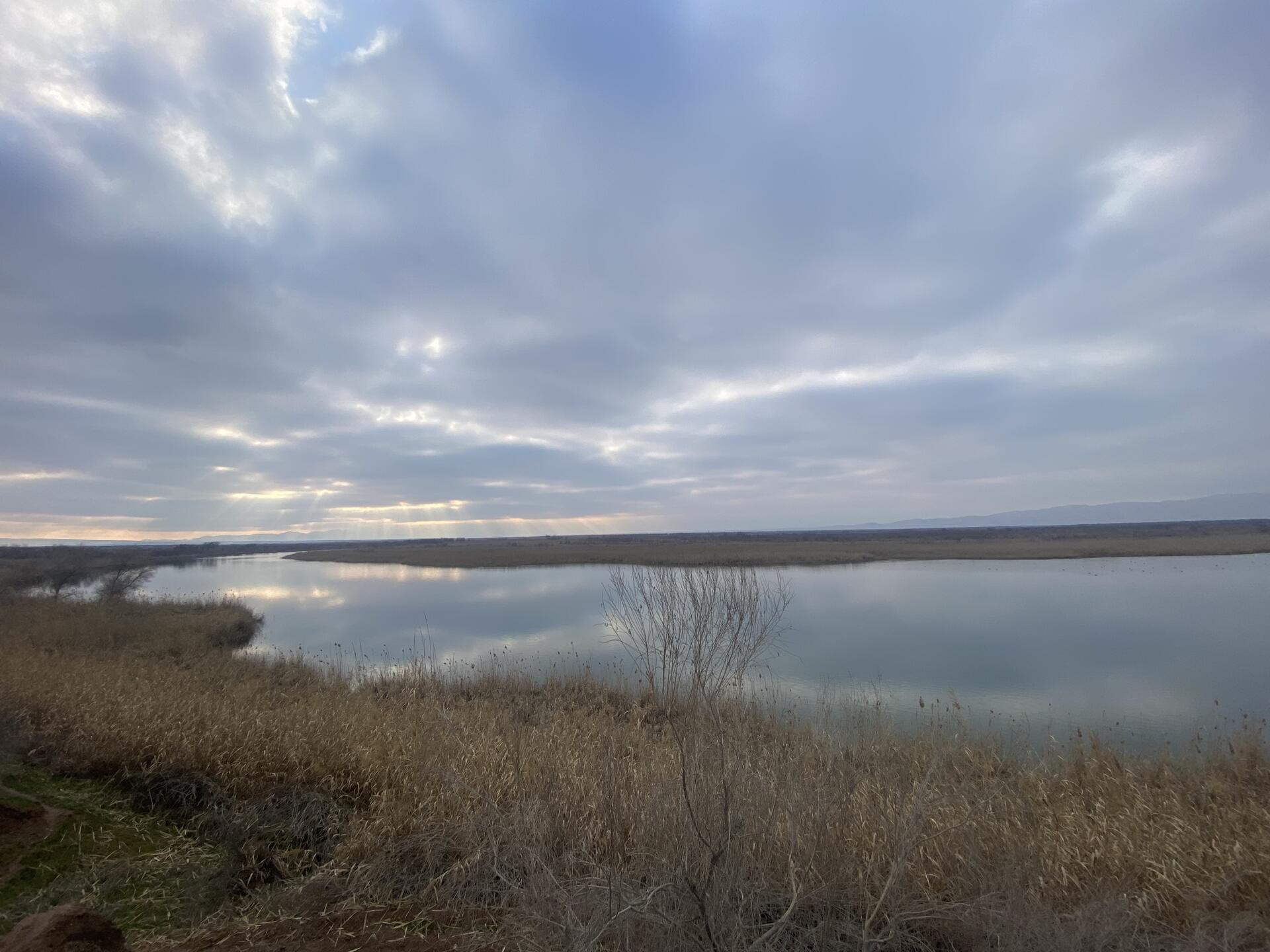
© Мухаммадсолех Оев, CC BY-SA 4.0 Resized from original. (This derivative is under the same CC BY-SA license.)
World Heritage Research
Discover scientific research and academic studies that deepen our understanding of Tugay forests of the Tigrovaya Balka Nature Reserve from its history and significance to its conservation, management, and contemporary challenges.
-
Illidops tigris
A rare wasp species, Illidops tigris, has been documented within the Tugay forests of Tajikistan's Tigrovaya Balka Nature Reserve—a UNESCO World Heritage Site. This discovery, based on the examination of the holotype and supporting paratypes, highlights the region's biodiversity. The study relied on morphological analysis and historical records from Tobias & Kotenko (1986), with no molecular data available to date. While the host species remains unidentified, the distribution is confirmed in Tajikistan and Turkmenistan. This finding underscores the importance of protected areas like Tigrovaya Balka for conserving lesser-known taxa.
Höcherl, A., Kaliuzhna, M., Raupach, M. J., & Fernandez-Triana, J. L. (2025). Illidops tigris. Zenodo. https://doi.org/10.5281/ZENODO.18157326
View Publication Record | Read Publication -
Luciobarbus conocephalus
A recent study identifies Luciobarbus conocephalus, a vulnerable fish species, as present in the Tigrovaya Balka Nature Reserve within Tajikistan's UNESCO World Heritage Sites. This discovery, based on specimen examination and historical records, confirms its distribution across key rivers like Amu Darya, Syr Darya, and Vakhsh, including the Kairakkum reservoir. The research highlights the species' conservation status as vulnerable, aligning with IUCN criteria, and underscores its significance in the region's biodiversity. Historical references trace its presence from the 19th century to recent observations (2003–2018), providing critical data for conservation efforts.
Artaev, O., Thoni, R., Mirzoev, N., & Levin, B. (2025). Luciobarbus conocephalus. Zenodo. https://doi.org/10.5281/ZENODO.20514635
View Publication Record | Read Publication -
Pelecus cultratus
A recent survey of the Tugay forests within the Tigrovaya Balka Nature Reserve, Tajikistan, confirms the presence of Pelecus cultratus, a fish species previously documented in the Syr Darya and Amu Darya river basins. The study, conducted between 2003 and 2018, recorded specimens in floodplain lakes and riverbeds of the lower Vakhsh River, extending its known distribution to include this UNESCO-listed wetland area. While no preserved specimens were collected, the findings suggest that P. cultratus remains widespread across these ecosystems, with potential implications for conservation efforts. The research relies on field observations, reinforcing its ecological significance in Tajikistan’s biodiversity.
Artaev, O., Thoni, R., Mirzoev, N., & Levin, B. (2025). Pelecus cultratus. Zenodo. https://doi.org/10.5281/ZENODO.20514687
View Publication Record | Read Publication -
Abramis brama
Abramis brama, commonly known as the silver bream, has been documented in the Tigrovaya Balka Nature Reserve, Tajikistan, specifically in the Kairakkum reservoir and the lower reaches of the Vakhsh River. This study contributes to the understanding of its distribution and conservation status in the region, revealing that it is classified as vulnerable according to local assessments (Saidov, 2017), though globally considered least concern by IUCN standards (Freyhof and Kottelat, 2008). The research involved examining specimens caught between 2003 and 2018 in floodplain lakes and riverbeds within the reserve. This finding underscores the need for targeted conservation efforts to protect this species in its Tajikistani habitat.
Artaev, O., Thoni, R., Mirzoev, N., & Levin, B. (2025). Abramis brama. Zenodo. https://doi.org/10.5281/ZENODO.20514668
View Publication Record | Read Publication -
Aspiolucius esocinus
A critically endangered fish species, Aspiolucius esocinus, has been documented in the Tugay forests of the Tigrovaya Balka Nature Reserve, Tajikistan. This discovery highlights its restricted distribution within the Syr Darya and Amu Darya river basins, including the lower reaches of the Vakhsh River. The study confirms its presence outside the Kairakkum Reservoir and suggests potential occurrences in other large rivers of the Amu Darya basin, such as the Panj, Kafirnigan, and Kyzyl-Su. Conservation assessments classify it as Critically Endangered (Saidov, 2017) or Endangered (Karimov, 2020), emphasizing urgent protection needs. Specimens were observed between 2003–2018 in the Vakhsh River bed, underscoring its vulnerability and the importance of targeted conservation efforts in this UNESCO-recognized region.
Artaev, O., Thoni, R., Mirzoev, N., & Levin, B. (2025). Aspiolucius esocinus. Zenodo. https://doi.org/10.5281/ZENODO.20514676
View Publication Record | Read Publication -
Hypophthalmichthys molitrix
Hypophthalmichthys molitrix, commonly known as silver carp, is established in the Tugay forests of Tajikistan's Tigrovaya Balka Nature Reserve, forming sustainable populations. This species, native to China, has been documented in the lower reaches of the Vakhsh River and its oxbows within the reserve, as well as in nearby reservoirs like Kairakkum and Nurek. Observations from 2003–2018 confirm its presence in floodplain lakes and riverbeds, contributing to local aquaculture efforts. The study highlights its ecological adaptability and economic significance, with potential implications for biodiversity management in UNESCO-listed wetlands.
Artaev, O., Thoni, R., Mirzoev, N., & Levin, B. (2025). Hypophthalmichthys molitrix. Zenodo. https://doi.org/10.5281/ZENODO.20514748
View Publication Record | Read Publication -
Alburnoides holciki Coad and Bogutskaya 2012
A previously unknown species of fish, Alburnoides holciki, has been identified in Tajikistan's rivers, including the Tigrovaya Balka Nature Reserve. Genetic and morphological analysis revealed that this species, initially thought to be Alburnus bipunctatus or Alburnoides bipunctatus eichwaldi, belongs to a recently described taxon (Alburnoides holciki). The discovery was made through examination of 39 specimens from the IBIW_FS collection and additional preserved samples. This finding highlights the biodiversity significance of Tajikistan's riverine ecosystems, particularly within protected areas like Tigrovaya Balka, which is part of a UNESCO World Heritage Site. The research underscores the importance of genetic studies in unraveling cryptic species diversity in freshwater environments.
Artaev, O., Thoni, R., Mirzoev, N., & Levin, B. (2025). Alburnoides holciki Coad and Bogutskaya 2012. Zenodo. https://doi.org/10.5281/ZENODO.20514670
View Publication Record | Read Publication