World Heritage Identification Number: 1208
World Heritage since: 2004
Category: Cultural Heritage
WHE Type: Cultural Landscapes
Transboundary Heritage: No
Endangered Heritage: No
Country: 🇮🇷 Iran (Islamic Republic of)
Continent: Asia
UNESCO World Region: Asia and the Pacific
Map
Bam and its Cultural Landscape: An Oasis City in the Heart of Iran's Desert
Bam and its Cultural Landscape, inscribed as a UNESCO World Heritage Site in 2004, is a captivating testament to human ingenuity and resilience in one of the harshest environments on Earth – the Iranian desert. Situated on the southern edge of the Iranian high plateau, this ancient city has a rich history that spans over two millennia.
More to come…UNESCO Description of the World Heritage Site
Bam is situated in a desert environment on the southern edge of the Iranian high plateau. The origins of Bam can be traced back to the Achaemenid period (6th to 4th centuries BC). Its heyday was from the 7th to 11th centuries, being at the crossroads of important trade routes and known for the production of silk and cotton garments. The existence of life in the oasis was based on the underground irrigation canals, the qanāts, of which Bam has preserved some of the earliest evidence in Iran. Arg-e Bam is the most representative example of a fortified medieval town built in vernacular technique using mud layers (Chineh ).
UNESCO Justification of the World Heritage Site
Criterion (ii): Bam developed at the crossroads of important trade routes at the southern side of the Iranian high plateau, and it became an outstanding example of the interaction of the various influences.
Criterion (iii): The Bam and its Cultural Landscape represent an exceptional testimony to the development of a trading settlement in the desert environment of the Central Asian region.
Criterion (iv): The city of Bam represents an outstanding example of a fortified settlement and citadel in the Central Asian region, based on the use mud layer technique (chineh) combined with mud bricks (khesht).
Criterion (v): The cultural landscape of Bam is an outstanding representation of the interaction of man and nature in a desert environment, using the qanats. The system is based on a strict social system with precise tasks and responsibilities, which have been maintained in use until the present, but has now become vulnerable to irreversible change.
Encyclopedia Record: Bam, Iran
Bam is a city in the Central District of Bam County, Kerman province, Iran, serving as capital of both the county and the district. The modern city surrounds the ancient citadel which has a history dating back to around 2,000 years ago. The citadel is a popular tourist attraction and a world heritage site. Before the 2003 earthquake, the official population count of the city was roughly 43,000.Additional Site Details
Area: Not available
Number of Components: 1
(iii) — Unique or exceptional testimony to a cultural tradition
(iv) — Outstanding example of a type of building or landscape
(v) — Outstanding example of traditional human settlement
Coordinates: 29.11683 , 58.3666666667
Image
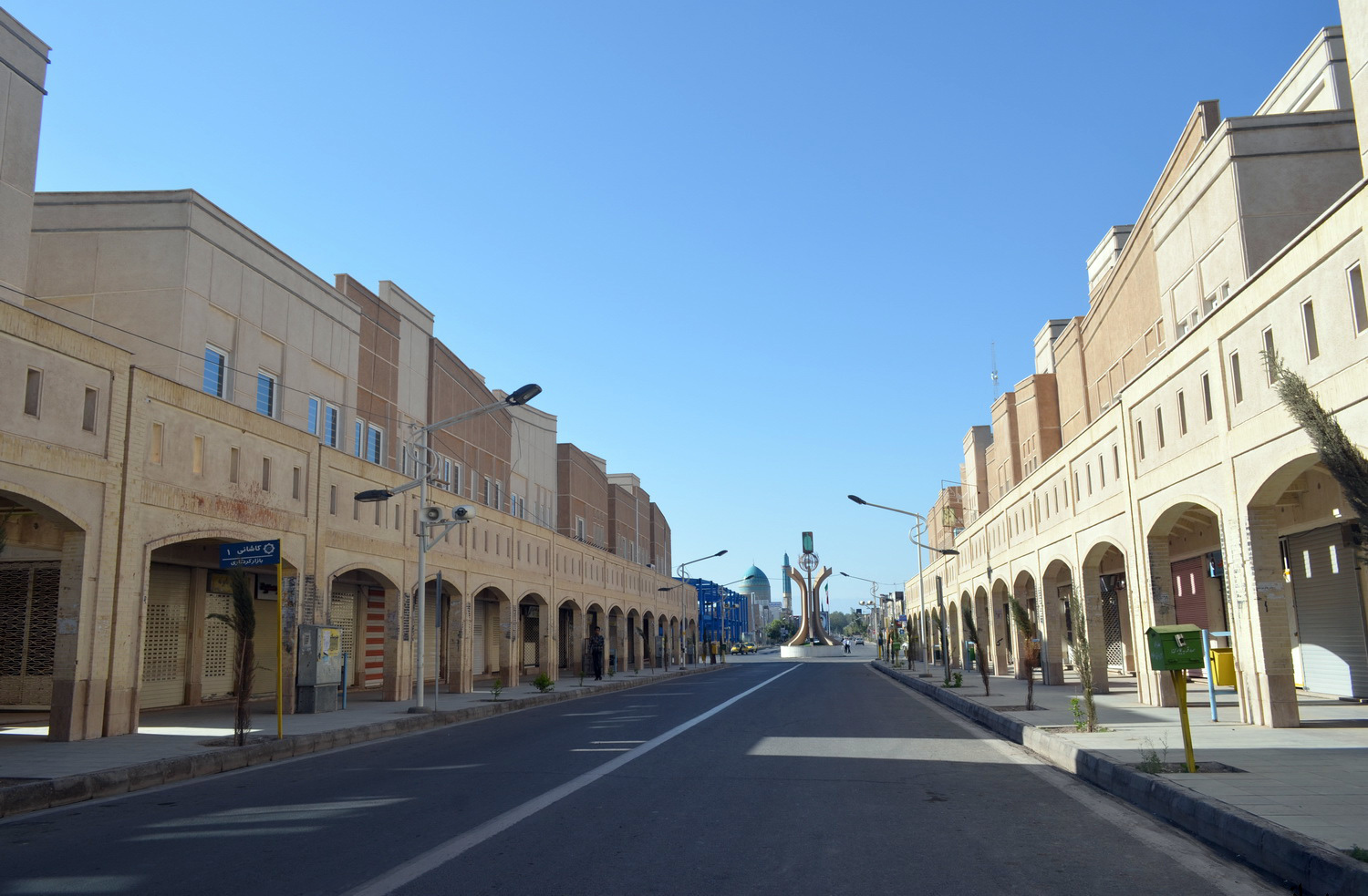
© auoob farabi, CC BY-SA 3.0 Resized from original. (This derivative is under the same CC BY-SA license.)
World Heritage Research
Discover scientific research and academic studies that deepen our understanding of Bam and its Cultural Landscape from its history and significance to its conservation, management, and contemporary challenges.
-
The Cultural Landscape of the Persian Qanat
The Persian qanat, an ancient underground water extraction system, has sustained arid landscapes and cultural development for over 3,000 years. This study highlights its role in shaping human settlement patterns, agrarian traditions, and social structures in regions like Bam, Yazd, and Khorasan. The qanat's design reflects advanced multidisciplinary knowledge, including hydrology, geotechnics, and community cooperation, while its maintenance demands ongoing adaptation to environmental changes. However, modern infrastructure is replacing traditional qanats, threatening their cultural significance. The research advocates for qanat tourism as a means to preserve this heritage while generating revenue, emphasizing its potential as both an economic and conservation strategy.
Vakil, N. (2022). The Cultural Landscape of the Persian Qanat. The Routledge Handbook of Cultural Landscape Heritage in the Asia-Pacific, 420–435. https://doi.org/10.4324/9781003099994-31
View Publication Record | Read Publication -
Mohammad T. Atayi, Shahram Zare’. “A new Achaemenid building-complex in Kerman, Evidence from Mahdiābād-e Oliā (Rigān-Kermān)”
Researchers have identified a previously unknown Achaemenid building complex at Mahdiābād-e Oliā, Rigān-Kermān, Kerman, Iran. The discovery stems from satellite imagery analysis conducted as part of the Bam Cultural Landscape Project, which examined an area devastated by flooding in 2017. The complex, spanning approximately 90 hectares and featuring a prominent quadrangular structure within a larger architectural ensemble measuring 120 x 60 meters, provides new evidence of Achaemenid-era occupation in the region. Surface ceramic findings further support the significance of this site, contributing to our understanding of ancient urban planning and architecture in the Kerman province.
Boucharlat, R. (2021). Mohammad T. Atayi, Shahram Zare’. “A new Achaemenid building-complex in Kerman, Evidence from Mahdiābād-e Oliā (Rigān-Kermān)”. Abstracta Iranica, Volume 42-43. https://doi.org/10.4000/abstractairanica.51706
View Publication Record | Read Publication -
The role of intangible assets in the conservation of Bam and its cultural landscape as a World Heritage site
Bam's Citadel, the world's largest mud-brick structure, retains its authenticity and integrity even after surviving a devastating 2003 earthquake, contributing significantly to its designation as a UNESCO World Heritage Site. Beyond its tangible architecture, Bam's intangible heritage—such as the legend of Haftvad, Silk Road connections, and rituals tied to Imam Zaman and Ashura—plays a crucial role in its cultural significance. While traditional conservation focuses on pragmatic restoration of physical structures, preserving intangible elements requires more nuanced approaches. This study highlights the interplay between Bam's architectural heritage and its intangible assets, emphasizing the need for sophisticated methods to safeguard both aspects to fully appreciate the site's cultural importance.
Amirjamshidi, G., Fodde, E., D’Ayala, D., & Mokhtari, E. (2012). The role of intangible assets in the conservation of Bam and its cultural landscape as a World Heritage site. Sustainable Tourism V, 1, 393–402. https://doi.org/10.2495/st120321
View Publication Record | Read Publication