World Heritage Identification Number: 312
World Heritage since: 1985
Category: Cultural Heritage
WHE Type: Buildings & Architectural Ensembles
Transboundary Heritage: No
Endangered Heritage: No
Country: 🇪🇸 Spain
Continent: Europe
UNESCO World Region: Europe and North America
Map
Pre-Romanesque Architecture in the Kingdom of Asturias: A Journey Through the Monuments of Oviedo
The Monuments of Oviedo and the Kingdom of the Asturias, inscribed as a UNESCO World Heritage Site in 1985, offer a unique glimpse into the rich history and cultural evolution of medieval Spain. Located in the northwestern region of Asturias, these monuments serve as testament to the innovative pre-Romanesque architectural style that emerged during the 9th century, a period when the Kingdom of Asturias played a pivotal role in preserving the flame of Christianity within the Iberian Peninsula.
More to come…UNESCO Description of the World Heritage Site
In the 9th century the flame of Christianity was kept alive in the Iberian peninsula in the tiny Kingdom of the Asturias. Here an innovative pre-Romanesque architectural style was created that was to play a significant role in the development of the religious architecture of the peninsula. Its highest achievements can be seen in the churches of Santa María del Naranco, San Miguel de Lillo, Santa Cristina de Lena, the Cámara Santa and San Julián de los Prados, in and around the ancient capital city of Oviedo. Associated with them is the remarkable contemporary hydraulic engineering structure known as La Foncalada.
UNESCO Justification of the World Heritage Site
Criterion (i) : Pre-Romanesque Asturian architecture represents a unique artistic achievement which is neither a metamorphosis of Paleo-Christian art nor a feature of Carolingian art. These churches which are of basilical layout, entirely vaulted, and which make use of columns instead of piers, have very rich decors inspired from Arab elements as well as shapes which associate them with the great sanctuaries of Asia Minor.
Criterion (ii) : Asturian monuments have exerted decisive influence on the development of medieval architecture in the Iberian peninsula.
Criterion (iv) : The palaces and churches in the surroundings of Oviedo provide eminent testimony to the civilization of the small Christian Kingdom of the Asturias during the splendour of the Emirate of Cordoba.
Encyclopedia Record: Oviedo
Oviedo, officially known by the bilingual name Oviedo / Uviéu is the capital city of the Principality of Asturias in northern Spain and the administrative and commercial centre of the region. With a population of 220,027, it is also the 2nd-largest city in Asturias.Additional Site Details
Area: 0.2 hectares
Number of Components: 6
(ii) — Significant interchange of human values
(iv) — Outstanding example of a type of building or landscape
Coordinates: 43.36262 , -5.84303
Image
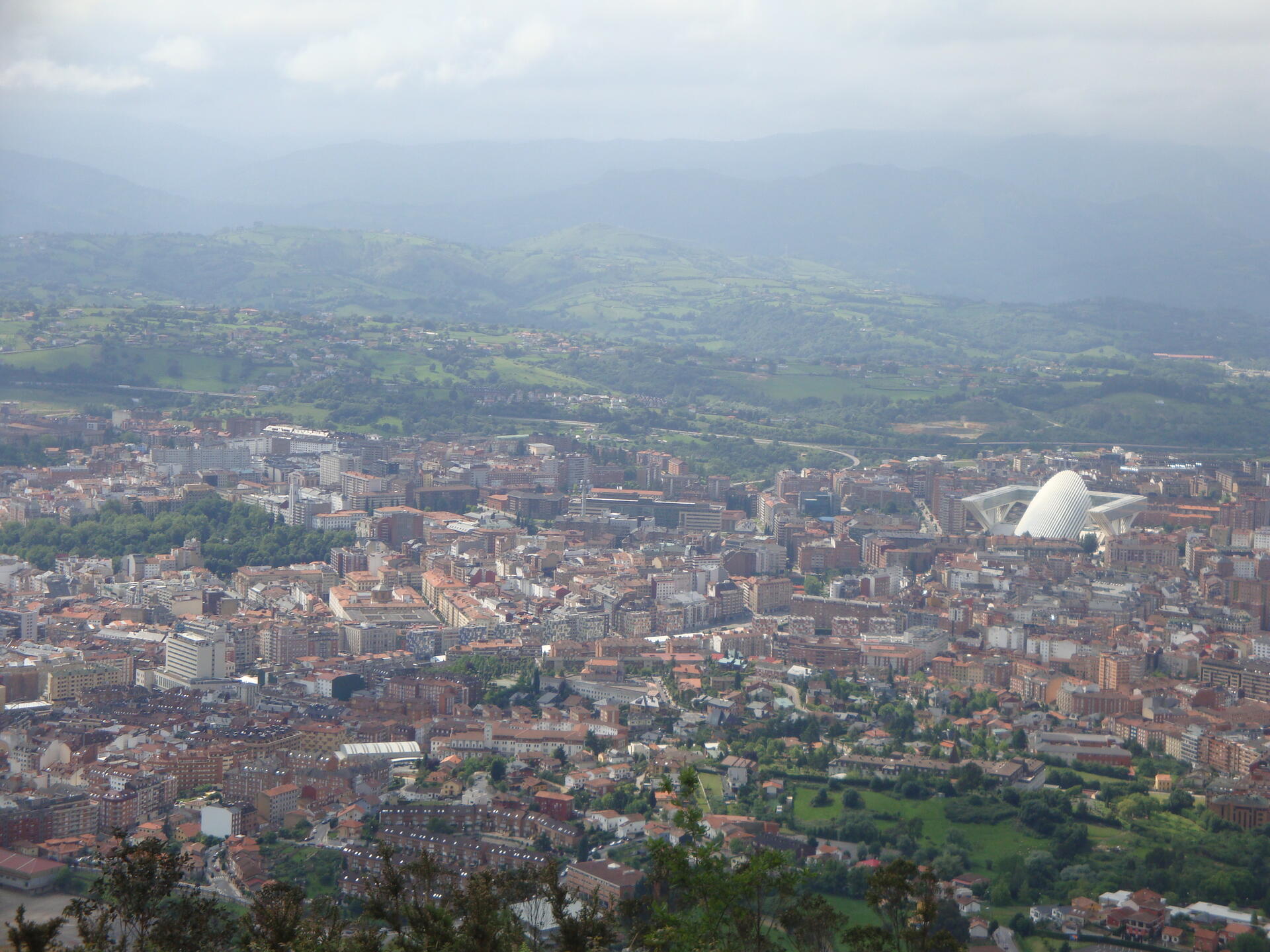
© Frobles, CC BY-SA 4.0 Resized from original. (This derivative is under the same CC BY-SA license.)
World Heritage Research
Discover scientific research and academic studies that deepen our understanding of Monuments of Oviedo and the Kingdom of the Asturias from its history and significance to its conservation, management, and contemporary challenges.
-
Upper Cretaceous Limestones as Stone Resources for the Monuments of Oviedo (Asturias, NW of Spain): Petrographic Variability and Stratigraphic Origin
Two distinct lithotypes of Upper Cretaceous limestones, Piedramuelle and La Granda, dominate the construction of Oviedo's historical monuments, including UNESCO World Heritage Sites. These stones originate from the San Lázaro and Oviedo Formations, with Piedramuelle primarily used in pre-18th-century structures, while La Granda became prevalent during the 17th and 18th centuries. The study analyzed over 100 samples from monuments and outcrops, classifying them macroscopically and identifying finer varieties at a microscopic scale. This research sheds light on the stratigraphic origin and petrographic variability of the stones, revealing their significance in Oviedo's architectural heritage.
González-Fernández, B., Alonso, F. J., Valdeón, L., & Pando, L. (2022). Upper Cretaceous Limestones as Stone Resources for the Monuments of Oviedo (Asturias, NW of Spain): Petrographic Variability and Stratigraphic Origin. Geoheritage, 14(1). https://doi.org/10.1007/s12371-022-00672-1
View Publication Record | Read Publication -
Un inventario de reliquias inédito de San Salvador de Valdediós (Asturias)
A previously unnoticed and undeciphered Latin text, preserved on the plaster of San Salvador de Valdediós church in Asturias, has been successfully read through advanced photographic retouching and comparative analysis with Visigothic and medieval texts. The text reveals a meticulously ordered inventory of 16 relics from 13 saints, biblical figures, or early Christian leaders (III-IV centuries), deposited in the main altar during the Asturian Kingdom period. Notably, the inventory includes a unique mention of Saint Basilissa, distinguishing it from other Asturian catalogs linked to Oviedo. Linguistic and paleographic analysis suggests the text dates to around 893, coinciding with the church's pre-Romanesque parietal decoration phase or shortly before 968. This discovery sheds new light on the religious and cultural practices of the time, particularly in the context of the Kingdom of Asturias.
Valdés Gallego, J. A. (2020). Un inventario de reliquias inédito de San Salvador de Valdediós (Asturias). Documenta & Instrumenta - Documenta et Instrumenta, 18, 223–244. https://doi.org/10.5209/docu.68791
View Publication Record | Read Publication -
Paintings in the Church of San Julián de los Prados in Oviedo. An Analysis of Aniconic Paintings in the Framework of Art in the Mediterranean
The Church of San Julián de los Prados in Oviedo features unique aniconic paintings that challenge traditional understandings of medieval Iberian art. These paintings, devoid of human figures but adorned with geometric patterns and golden crosses, suggest a deliberate artistic choice influenced by the Asturian monarchy's desire to assert its authority while drawing from both Roman heritage and contemporary Mediterranean trends. The study critically examines past research, comparing these works to those in Ravenna, Thessaloniki, and Damascus, while exploring potential links to iconoclasm and 'adoptionist heresy' beliefs prevalent in 9th-century Iberia. Through a fresh analysis of historical and artistic evidence, the research sheds light on the theological and political motivations behind this distinctive body of work.
Usai, N. (2018). Paintings in the Church of San Julián de los Prados in Oviedo. An Analysis of Aniconic Paintings in the Framework of Art in the Mediterranean. Ikon, 11, 21–30. https://doi.org/10.1484/j.ikon.4.2018003
View Publication Record | Read Publication -
Sculture asturiane del IX secolo
Asturian art, particularly during the reign of King Ramiro I, exhibits a distinct and original style characterized by significant architectural and sculptural achievements. This 'Ramirense' period, marked by maturity in the Kingdom of Asturias, is represented by masterpieces such as the Santa María de Naranco palace and the San Miguel de Liño palatine church, both located near Oviedo on Monte Naranco. While the Santa Cristina de Lena church is also linked to this style, its attribution remains debated among scholars, with some associating it with King Ordoño I. The research highlights the importance of sculptural decoration in these monuments, contributing to the understanding of artistic development during this pivotal era.
Mele, S. (2012). Sculture asturiane del IX secolo. ArcheoArte, Ricerca e Confronti 2010 (Supplemento ArcheoArte 1). https://doi.org/10.4429/J.ARART.2011.SUPPL.43
View Publication Record | Read Publication