
World Heritage Identification Number: 1468
World Heritage since: 2015
Category: Cultural Heritage
WHE Type: Buildings & Architectural Ensembles
Transboundary Heritage: Yes
Endangered Heritage: No
Country: Denmark, Germany, United Kingdom of Great Britain and Northern Ireland, United States of America
Continent: Americas, Europe
UNESCO World Region: Europe and North America
Map
The Moravian Church Settlements: A Transnational Legacy of Urban Planning and Architecture
The Moravian Church Settlements, inscribed as a UNESCO World Heritage Site in 2015, constitute a remarkable collection of four congregational settlements spanning four countries: Christiansfeld (Denmark), Herrnhut (Germany), Gracehill (United Kingdom of Great Britain and Northern Ireland), and Bethlehem (United States of America). These settlements serve as tangible reminders of the global reach and enduring influence of the Moravian Church, which fostered a unique network of communities adhering to shared ideals and principles.
Originally, only the Danish settlement of Christiansfeld was inscribed on the UNESCO World Heritage List in 2015. In July 2024, the inscription was formally extended to form a serial transnational World Heritage property, bringing together Christiansfeld with Herrnhut, Gracehill, and Bethlehem under the collective designation Moravian Church Settlements, thereby recognizing their shared origins, planning principles, and outstanding universal value.
Each settlement embodies the Moravian Church's vision for an ideal city, rooted in the concept developed during its formative period in the 18th and early 19th centuries. This vision encompassed a harmonious, cohesive urban design, characterized by the construction of distinctive buildings such as Gemeinhaus (congregation buildings), churches, choir houses, and God's Acre (cemeteries). Despite regional variations, each settlement exhibits an architectural character grounded in a distinctive Moravian architectural style influenced by Baroque principles, adapted to local conditions.
Christiansfeld, the best-preserved example of this town-planning and architecture, is situated in Kolding Municipality, Southern Jutland, in the Region of Southern Denmark. Founded in 1773 by the Moravian Church and named after King Christian VII of Denmark, Christiansfeld boasts a population of approximately 3,000 residents. Its inclusion in the serial UNESCO World Heritage Site in 2015 underscores its significance as a testament to the Moravian Church's impact on urban development.
Herrnhut, located in Saxony, Germany, was established in 1722 and serves as the spiritual center of the Moravian Church. Gracehill, in County Antrim, Northern Ireland, was developed as a planned Moravian settlement from the mid-1760s, while Bethlehem, Pennsylvania, was established in 1741. Each settlement maintains an active congregation, preserving and perpetuating the Moravian heritage through tradition.
The Moravian Church Settlements offer valuable insights into the historical, cultural, and architectural legacy of the Moravian Church. Their shared commitment to communal organization, social equality, and structured religious life has left an indelible mark on the landscape of Europe and North America. As living repositories of Moravian heritage, these settlements continue to inspire and captivate visitors from around the world, offering a glimpse into the past and a reminder of the enduring power of faith and community.
UNESCO Description of the World Heritage Site
This transnational serial property comprises four congregational settlements in four countries representing the transnational scope and consistency of the international Moravian community as a global network of the Moravian Church: Christiansfeld (Denmark), Herrnhut (Germany), Gracehill (United Kingdom of Great Britain and Northern Ireland) and Bethlehem (United States of America). These settlements were established according to overarching planning principles that reflected the ideals of the Moravian Church, as expressed in their plans and democratic organisation. Each architectural ensemble bears witness to the Moravian Church’s vision of a unified, coherent urban design, inspired by the concept of an “ideal city” developed by the Church during its formative phase in the 18th and beginning of the 19th enturies. Distinctive Moravian buildings include a particular type of Gemeinhaus (congregation building), church, choir houses, as well as a nearby God’s Acre (cemetery). Each settlement has its own architectural character based on an original Moravian Church Civic Baroque style but adapted to local conditions. Present today in each component part is an active congregation whose continuation of traditions forms a living Moravian heritage.
UNESCO Justification of the World Heritage Site
Criterion (iii): The transnational series of Moravian Church settlements bears exceptional testimony to Moravian Church principles, which are expressed in their layouts, architecture, and craftsmanship, as well as the fact that numerous buildings are still used for their original functions or for the continuation of Moravian Church activities and traditions. The Herrnhut, Bethlehem, Gracehill, and Christiansfeld settlements, each possessing an exceptional range of tangible and intangible attributes, represent a vibrant worldwide network in which no settlement or congregation exists in isolation. Together, they highlight the Church’s influence in colonisation processes and missionary work, and its structure as a network during its formative phase during the 18th and beginning of the 19th centuries. The continuing presence of Moravian Church communities in each of the settlements ties their historic layouts and structures to the living cultural tradition of the Moravian Church and to the larger Moravian Church community.
Criterion (iv): The transnational series of Moravian Church settlements are an outstanding example of religious town planning, within the Protestant tradition, combining both the spiritual aspects and the practical considerations of community life. Each architectural ensemble bears witness to the Moravian Church’s vision of a unified, coherent urban design, inspired by the concept of an “ideal city” and anticipating Enlightenment ideals of equality and social improvement that became a reality for many only much later. The democratic organisation of the Moravian Church is expressed in its humanistic town planning and important buildings for the common welfare, and in the visual and functional connections between individual elements and with the landscape setting. These settlements, established during the formative phase of Moravian Church settlements, stand for the movement towards democratisation, offering the same standard of living to all its members and advancing the well-being of the group. Each settlement possesses distinctive functions and illustrates unity through homogeneous groups of buildings with shared styles, materials, and proportions (each adapted to local conditions), together with a high quality of craftsmanship.
Encyclopedia Record: Christiansfeld
Christiansfeld, with a population of 3,115, is a town in Kolding Municipality in Southern Jutland in Region of Southern Denmark. The town was founded in 1773 by the Moravian Church and named after the Danish king Christian VII. Since July 2015 it has been a UNESCO World Heritage Site, highlighting its status as the best-preserved example of the town-planning and architecture of the Moravian Church.Additional Site Details
Area: Not available
Number of Components: 4
(iv) — Outstanding example of a type of building or landscape
Coordinates: 55.3555555556 , 9.4813888889
Image
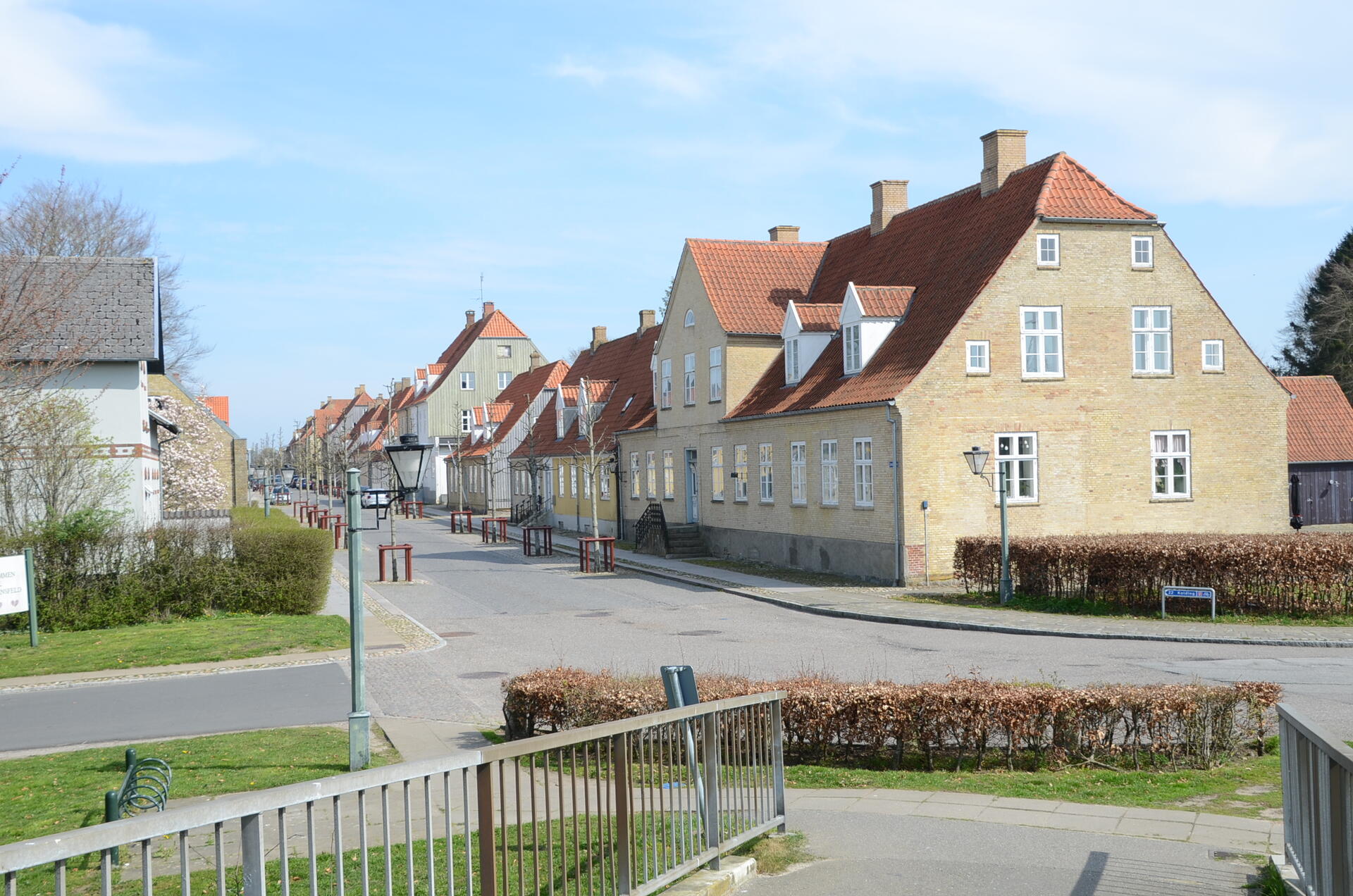
© Hjart, CC BY-SA 4.0 Resized from original. (This derivative is under the same CC BY-SA license.)
World Heritage Research
Discover scientific research and academic studies that deepen our understanding of Moravian Church Settlements from its history and significance to its conservation, management, and contemporary challenges.
-
History in the Making: The Recognition of Moravian Church Settlements as a UNESCO World Heritage Site and Its Implications for Research in Moravian Studies
On July 26, 2024, the Moravian Church Settlements—a transnational site comprising Bethlehem (Pennsylvania), Christiansfeld (Denmark), Gracehill (Northern Ireland), and Herrnhut (Germany)—were inscribed as a UNESCO World Heritage Site. This recognition marks a significant milestone in Moravian Studies, offering new avenues for research while emphasizing the need to understand the site's conceptual framework from a World Heritage perspective. The study highlights the implications of this designation, which includes opportunities for interdisciplinary research, preservation challenges, and the broader cultural significance of these settlements. By analyzing the historical, architectural, and social dimensions of the Moravian Church Settlements, this work provides a foundation for future scholarly exploration in this field.
Vogt, P. (2024). History in the Making: The Recognition of Moravian Church Settlements as a UNESCO World Heritage Site and Its Implications for Research in Moravian Studies. Journal of Moravian History, 24(2), 180–219. https://doi.org/10.5325/jmorahist.24.2.0180
View Publication Record | Read Publication -
Herrnhut
Herrnhut, founded in 1722 by three Moravian families on the estate of Count Nikolaus Ludwig von Zinzendorf, emerged as a pivotal settlement that defied religious regulations while fostering a transatlantic movement. This study reveals how Herrnhut strategically positioned itself as a 'Philadelphian community,' uniting diverse Christians under the guise of Lutheran affiliation and the renewed Unity of Brethren, despite its separatist roots. Through meticulous archival analysis of documents from Germany and the United States, the research uncovers Count Zinzendorf's instrumental role in shielding Herrnhut from state church oversight, providing a fresh perspective on the Moravian Church's evolution. This work offers unprecedented insights into 18th-century religious dynamics, Pietism, and Moravian history.
Peucker, P. (2022). Herrnhut. https://doi.org/10.1515/9780271092478
View Publication Record | Read Publication -
Pravěké osídlení v okolí velkomoravského kostela ve Starém Městě – „Špitálkách“
New excavation at the Staré Město – 'Špitálky' site, near a Great Moravian church, revealed intensive prehistoric occupation north of the church's foundations. Despite no continuation of the ecclesiastical area or cemetery in this direction, two graves were uncovered: one from the final phase of the Corded Ware culture and another likely from the Urnfield culture (UFC). The study highlights the site's significance for understanding settlement structures during different prehistoric periods, including the Moravian Painted Ware culture (MPWC) and UFC. This research builds on earlier excavations (1949–1950), providing fresh insights into the region's complex archaeological history.
Bartík, J., & Chrástek, T. (2021). Pravěké osídlení v okolí velkomoravského kostela ve Starém Městě – „Špitálkách“. Přehled Výzkumů, 47–67. https://doi.org/10.47382/pv0621-05
View Publication Record | Read Publication