World Heritage Identification Number: 1403
World Heritage since: 2014
Category: Natural Heritage
WHE Type: Protected Areas & National Parks
Transboundary Heritage: No
Endangered Heritage: No
Country: 🇵🇭 Philippines
Continent: Asia
UNESCO World Region: Asia and the Pacific
Map
Mount Hamiguitan Range Wildlife Sanctuary: A Biodiversity Haven in the Philippines
The Mount Hamiguitan Range Wildlife Sanctuary, inscribed as a UNESCO World Heritage Site in 2014, is nestled within the southeastern portion of the Eastern Mindanao Biodiversity Corridor in the province of Davao Oriental, Philippines. Stretching across a north-south mountain ridge, this sanctuary boasts an elevation range from 75 to 1,637 meters above sea level, providing a rich tapestry of terrestrial and aquatic habitats that cater to a myriad of plant and animal species.
More to come…UNESCO Description of the World Heritage Site
Forming a mountain ridge running north-south along the Pujada Peninsula in the south-eastern part of the Eastern Mindanao Biodiversity Corridor, the Mount Hamiguitan Range Wildlife Sanctuary has an elevation range of 75–1,637 m above sea level and provides critical habitat for a range of plant and animal species. The property showcases terrestrial and aquatic habitats at different elevations, and includes threatened and endemic flora and fauna species, eight of which are found only at Mount Hamiguitan. These include critically endangered trees, plants and the iconic Philippine eagle and Philippine cockatoo.
UNESCO Justification of the World Heritage Site
Criterion (x): The Mount Hamiguitan Range Wildlife Sanctuary represents a complete, substantially intact and highly diverse mountain ecosystem, in a significant biogeographic region of the Philippines. Its diversity of plants and animals include globally threatened species as well as a large number of endemic species including those species that exist only in the Philippines, only in Mindanao and only in the nominated property. The fragile tropical “bonsai” forest that crowns the Mount Hamiguitan Range Wildlife Sanctuary epitomizes nature’s bid to survive in adverse conditions. As a result of its semi-isolation and its varied habitat types growing in dissimilar soil and climate conditions, its biodiversity has shown a significantly high level of endemicity that has led scientists to believe that there may be more globally unique species waiting to be discovered in the area. The combination of terrestrial and aquatic ecosystems within the boundaries of the property and the large number of species inhabiting each makes the Mount Hamiguitan Range Wildlife Sanctuary home to a total of 1,380 species with 341 Philippine endemics that include critically endangered species such as the iconic Philippine Eagle (Pithecophaga jefferyi) and the Philippine Cockatoo (Cacatua haematuropygia), as well as the trees Shorea polysperma, Shorea astylosa, and the orchid Paphiopedilum adductum. Its high level of endemicity is well exemplified by the proportion of its amphibian (75% endemic) and reptile (84% endemic) species. The Mount Hamiguitan Range Wildlife Sanctuary exhibits segmentation of terrestrial habitats according to elevation. In the lower elevations the agro-ecosystem and remnants of dipterocarp forests house some 246 plant species including significant numbers of endemics such as the globally threatened dipterocarps of the genus Shorea. The dipterocarp forest ecosystem at 420-920 m asl is characterized by the presence of large trees and is home to 418 plant and 146 animal species, which include threatened species such as the Mindanao Bleeding-heart dove (Gallicolumba crinigera) and Philippine warty pig (Sus philippensis). At higher elevations the montane forest ecosystem exhibits numerous species of mosses, lichens and epiphytes. This ecosystem type houses 105 animal species representing all the animal groups found in the Mount Hamiguitan Range Wildlife Sanctuary as well as the relatively recently discovered rat species, Hamiguitan hairy-tailed rat (Batomys hamiguitan). The fourth ecosystem type is the typical mossy forest ecosystem characterized by thick mosses covering roots and tree trunks; it provides habitat for the Philippine pygmy fruit bat, (Haplonycteris fischeri) and the threatened Pointed-snouted tree frog (Philautus acutirostris). At the topmost (1160-1200m a.s.l.) is the mossy-pygmy forest ecosystem, adding a unique natural tropical bonsai forest layer to the property. It is the only known habitat in the world of the pitcher plant (Nepenthes hamiguitanensis) and the Delias butterfly (Delias magsadana).
Encyclopedia Record: Mount Hamiguitan
Mount Hamiguitan is a mountain located in the province of Davao Oriental, Philippines. It has a height of 1,620 metres (5,315 ft). The mountain and its vicinity has one of the most diverse wildlife populations in the country. Among the wildlife found in the area are Philippine eagles and several species of Nepenthes. Some of the latter, such as the Nepenthes peltata and Nepenthes micramphora, are endemic to the area. The mountain has a protected forest area of approximately 2,000 hectares. This woodland is noted for its unique pygmy forest of century-old trees in ultramafic soil, with many endangered, endemic and rare species of flora and fauna.Additional Site Details
Area: 16,923.07 hectares
Number of Components: 1
Coordinates: 6.7171694444 , 126.1734305556
IUCN World Heritage Outlook
The 2025 Conservation Outlook on Mount Hamiguitan Range Wildlife Sanctuary reports the following assessment:
Source: International Union for Conservation of Nature (IUCN) · View assessment
Image
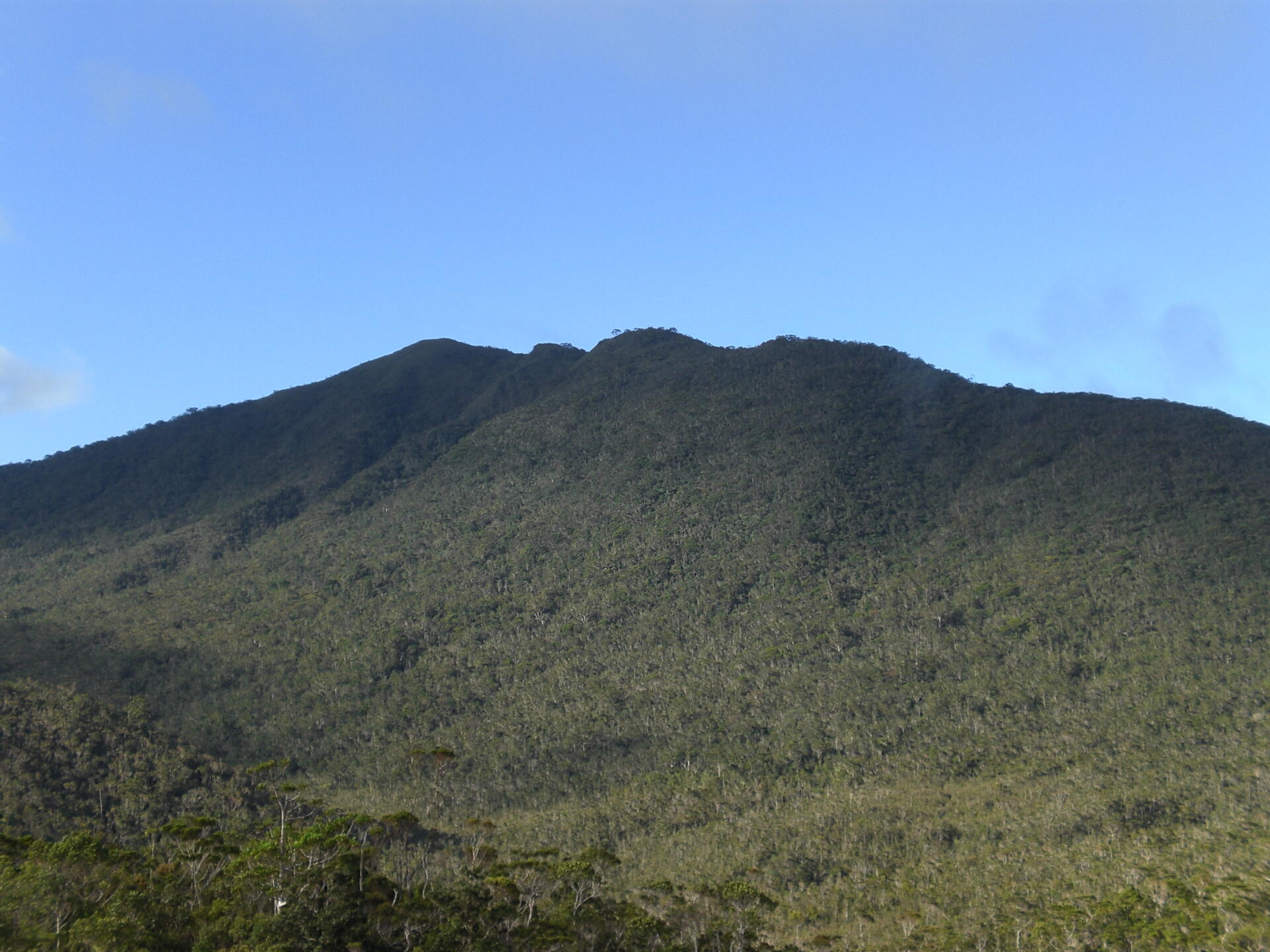
© Kleomarlo, CC BY-SA 3.0 Resized from original. (This derivative is under the same CC BY-SA license.)
World Heritage Research
Discover scientific research and academic studies that deepen our understanding of Mount Hamiguitan Range Wildlife Sanctuary from its history and significance to its conservation, management, and contemporary challenges.
-
Elevation-Driven Shifts in Species Diversity, Endemicity, and Vegetation Structure across the Mount Hamiguitan Range Wildlife Sanctuary, a UNESCO World Heritage Site in Davao Oriental, Philippines
Elevation significantly influences species diversity, endemicity, and vegetation structure within the Mount Hamiguitan Range Wildlife Sanctuary (MHRWS), a UNESCO World Heritage Site in Davao Oriental, Philippines. The study identified five distinct forest formations—agroecosystem, dipterocarp forest, montane forest, mossy forest, and mossy-pygmy forest—each characterized by unique species adapted to specific elevation-driven conditions. Lower elevations were dominated by agriculturally influenced species like Ficus indica and Chrysophyllum cainito, while higher zones supported stunted, endemic taxa such as Leptospermum flavescens and Tristaniopsis micrantha, thriving in ultramafic soils and cooler environments. The research integrated vegetation quadrats, satellite land cover data, and GIS analysis to map habitat distribution and human influence, emphasizing the sanctuary's role as a vertically stratified refuge for biodiversity. Protecting high-altitude forests and restoring buffer zones is critical to mitigating climate-driven species shifts.
Ramos, R. L., Nemenzo-Calica, P., & Antonio, E. S. (2026). Elevation-Driven Shifts in Species Diversity, Endemicity, and Vegetation Structure across the Mount Hamiguitan Range Wildlife Sanctuary, a UNESCO World Heritage Site in Davao Oriental, Philippines. Davao Research Journal, 17(1), 60–72. https://doi.org/10.59120/drj.v17i1.500
View Publication Record | Read Publication -
Four New Climbing Bamboo Species in the genus Dinochloa Buse (Poaceae) from Mount Hamiguitan Range Wildlife Sanctuary, Mindanao, Philippines
Scientists have identified four new species of climbing bamboo, Dinochloa rubra, Dinochloa torretae, Dinochloa adonii, and Dinochloa hamiguitanensis, within the Mount Hamiguitan Range Wildlife Sanctuary in Mindanao, Philippines. These discoveries expand the known diversity of the genus Dinochloa from eight to twelve species in the Philippines, emphasizing the region's significance as a center for bamboo endemism. The research employed detailed morphological analyses of voucher specimens, focusing on diagnostic traits such as culm coloration, sheath persistence, and foliage-leaf characteristics to distinguish each species. The findings underscore the ecological importance of ultramafic ecosystems in supporting unique biodiversity, highlighting Mount Hamiguitan's role in conservation efforts for bamboo species.
Aribal, L. G., Noblefranca, E. L., Polestico, J. O., & Mazo, K. R. F. (2026). Four New Climbing Bamboo Species in the genus Dinochloa Buse (Poaceae) from Mount Hamiguitan Range Wildlife Sanctuary, Mindanao, Philippines. Jurnal Sylva Lestari, 14(2), 454–468. https://doi.org/10.23960/jsl.v14i2.1378
View Publication Record | Read Publication -
Assessment of the Institutional Arrangements for the Payments for Environmental Services (PES) Implementation for Watershed Conservation: The Case of Mount Hamiguitan Range Wildlife Sanctuary (MHRWS)
A critical gap in the institutionalization of Payments for Environmental Services (PES) hinders watershed conservation efforts at Mount Hamiguitan Range Wildlife Sanctuary (MHRWS), despite supportive national policies and stakeholder engagement. The study, which analyzed key informant interviews and secondary data, revealed that while enabling factors such as clear property rights for the Mandaya indigenous community and existing environmental laws exist, constraints like limited institutional capacity, inadequate water management data, and weak representation of local stakeholders in governance bodies pose significant challenges. The absence of a national PES framework further disrupts conservation initiatives due to government transitions. To overcome these barriers, the research recommends prioritizing capacity building, stakeholder engagement, sustainable funding, and aligning local actions with national policies. Active participation by MHRWS lead bodies in the ongoing Payment for Water Ecosystem Service (P-WES) institutionalization process could catalyze PES implementation, enhancing watershed management and ensuring a sustainable water supply.
Cereno, D. C., & Roxas, A. T. (2025). Assessment of the Institutional Arrangements for the Payments for Environmental Services (PES) Implementation for Watershed Conservation: The Case of Mount Hamiguitan Range Wildlife Sanctuary (MHRWS). Davao Research Journal, 16(1), 89–107. https://doi.org/10.59120/drj.v16i1.306
View Publication Record | Read Publication -
Disease Infestation and Insect Damage of Pygmy Trees inMount Hamiguitan Range Wildlife Sanctuary
A study of pygmy trees in Mount Hamiguitan Range Wildlife Sanctuary revealed that fungal diseases were the dominant cause of internal infections, significantly impacting plant health. The research found severe damage at four stations, primarily due to insect infestations and bacterial contamination, with leaves being the most commonly affected part. Symptoms included leaf scratches, black spots, red lesions, and wilting. The study employed a transect walking method across 10 stations, examining three replicates of tree species per station for detailed analysis in the laboratory.
Canonigo, C. J. B., & Dedal, A. D. (2025). Disease Infestation and Insect Damage of Pygmy Trees inMount Hamiguitan Range Wildlife Sanctuary. Davao Research Journal, 11(2), 48–59. https://doi.org/10.59120/drj.v11i2.396
View Publication Record | Read Publication -
Elliptic Fourier Analysis of the two Threatened Aquilaria Lam.(Thymelaeaceae) and its Associated Flora in Mount Hamiguitan Range Wildlife Sanctuary (Mhrws), Davao Oriental, Philippines
Research using Elliptic Fourier Analysis (EFA) demonstrates that leaf shape can effectively distinguish between two threatened Aquilaria species, offering a rapid identification tool for conservation efforts. The study, conducted at Mount Hamiguitan Range Wildlife Sanctuary in the Philippines, identified Shorea polysperma and Palaquium species as dominant keystone species, suggesting their role in forest dynamics. The sanctuary exhibits moderate floristic diversity, with indices of 2.98 (Barangay La Union) and 2.93 (Barangay Maputi). These findings highlight the need for protecting vulnerable, endangered, endemic, and indigenous species to combat illegal cutting and trade.
Castaňares, E., Vedra, S., Perpetua, A., Mazo, K. R., Coronado, W., Bigcas, E., Gonzales, R., & Sumilla, J. (2025). Elliptic Fourier Analysis of the two Threatened Aquilaria Lam.(Thymelaeaceae) and its Associated Flora in Mount Hamiguitan Range Wildlife Sanctuary (Mhrws), Davao Oriental, Philippines. IOP Conference Series: Earth and Environmental Science, 1506(1), 12006. https://doi.org/10.1088/1755-1315/1506/1/012006
View Publication Record | Read Publication -
Community Perception and Biophysical Assessment of Lapnisan ( Aquilaria species Lam.) in Mount Hamiguitan Range Wildlife Sanctuary, Davao Oriental, Philippines
Aquilaria species, known for their valuable agarwood resin used in medicine and fragrance, exhibit distinct community perceptions and biophysical characteristics within Mount Hamiguitan Range Wildlife Sanctuary. This study reveals that while Barangay La Union features shallow soil with rocky surfaces predominantly inhabited by Aquilaria malaccensis and A. cumingiana, Barangay Maputi showcases deeper soils with fewer rocks, where A. cumingiana thrives. Climatic factors show minor variations between the two areas. The research combines Key Informant Interviews to assess community knowledge and attitudes toward conservation with Line Plot Method for biophysical characterization, alongside climatic and edaphic data collection. Findings underscore the importance of in situ conservation strategies while highlighting Aquilaria species' potential for ex situ conservation, offering livelihood opportunities and climate risk mitigation through forest plantation.
Castaňares, E., Vedra, S., Perpetua, A., Sumilla, J., & Coronado, W. (2025). Community Perception and Biophysical Assessment of Lapnisan ( Aquilaria species Lam.) in Mount Hamiguitan Range Wildlife Sanctuary, Davao Oriental, Philippines. IOP Conference Series: Earth and Environmental Science, 1553(1), 12043. https://doi.org/10.1088/1755-1315/1553/1/012043
View Publication Record | Read Publication -
Sustaining Livelihoods in Protected Areas: Lessons from State-initiated Projects in Mt. Hamiguitan Range Wildlife Sanctuary, Southern Philippines
State-initiated livelihood projects within UNESCO World Heritage Sites can foster sustainability if they adhere to defined principles, engage communities effectively, and provide adaptive support. A study on Mount Hamiguitan Range Wildlife Sanctuary (MHRWS) in the Philippines reveals that successful strategies include conceptualizing projects with clear purposes, understanding community needs, implementing responsive approaches, ensuring sustained marketing and technical assistance, and forming partnerships with agencies. However, these projects face challenges such as lack of long-term sustainability planning, coordinated governance, and sufficient personnel. The research, based on in-depth interviews with implementers and surveys among beneficiaries, highlights that while state resources can drive sustainability, structural inadequacies pose significant impediments.
Mendoza, E. N., Apa-ap, M. J., & Amoroso, V. B. (2024). Sustaining Livelihoods in Protected Areas: Lessons from State-initiated Projects in Mt. Hamiguitan Range Wildlife Sanctuary, Southern Philippines. International Journal of Rural Management, 20(3), 295–312. https://doi.org/10.1177/09730052241231087
View Publication Record | Read Publication