World Heritage Identification Number: 1427
World Heritage since: 2013
Category: Natural Heritage
WHE Type: Protected Areas & National Parks
Transboundary Heritage: No
Endangered Heritage: No
Country: 🇮🇹 Italy
Continent: Europe
UNESCO World Region: Europe and North America
Map
Mount Etna: A Volcanic Giant in the Heart of the Mediterranean
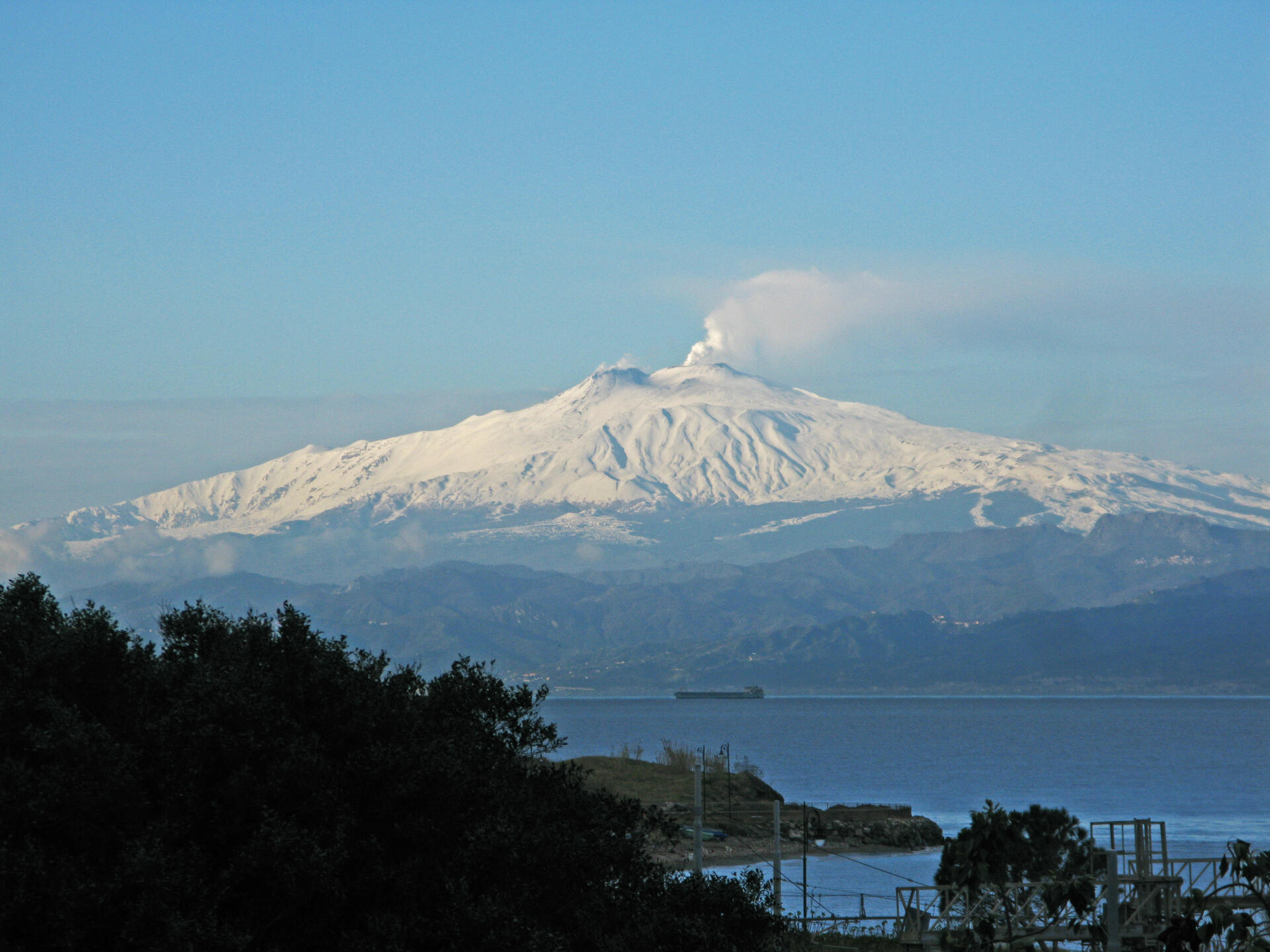
Mount Etna, officially known as Monte Etna, is an iconic UNESCO World Heritage Site that stands as a testament to the dynamic forces shaping our planet. Located on the eastern coast of Sicily, Italy, it is the highest volcano in Europe south of the Alps, with a height of 3,403 meters (11,165 feet) as of 2025. This towering giant straddles the convergent plate boundary between the African Plate and the Eurasian Plate, making it a unique geological feature in the heart of the Mediterranean Sea.
The history of Mount Etna stretches back over half a million years, with at least 2,700 years of recorded eruptive activity. Its status as one of the most active stratovolcanos in the world continues to captivate scientists and researchers worldwide, contributing significantly to the fields of volcanology, geophysics, and Earth sciences. The almost continuous eruptive activity of Mount Etna provides a natural laboratory for studying ecological and biological processes, particularly within its unique terrestrial ecosystems.
Mount Etna's diverse volcanic landscape offers a rich tapestry of geological features. Summit craters, such as the Southeast Crater and Northeast Crater, dominate the skyline, while cinder cones, lava flows, and the vast Valle de Bove depression provide a stark contrast to the verdant slopes that surround them. These features make Mount Etna a prime destination for research and education, offering a rare opportunity to observe volcanic processes up close.
One of the most intriguing aspects of Mount Etna is its ability to reshape itself through periodic eruptions. In 2021, the Southeast Crater reached a height of 3,357 meters (11,014 feet), only to be surpassed later that year by the Voragine crater following the summer 2024 eruptions. This ongoing transformation underscores the dynamic nature of the volcano and serves as a constant reminder of the powerful forces that lie beneath our feet.
In addition to its geological significance, Mount Etna boasts a rich biodiversity. Endemic flora and fauna thrive in the volcanic soils, adapted to the harsh conditions created by the volcano's frequent eruptions. The unique ecosystems found on Mount Etna offer valuable insights into the adaptability of life in extreme environments, further enhancing its importance as a World Heritage Site.
Overall, Mount Etna stands as a symbol of the dynamic and ever-changing forces that shape our planet. Its designation as a UNESCO World Heritage Site recognizes not only its geological importance but also its role as a natural laboratory for scientific research and education. As we continue to learn from this remarkable volcano, we gain a deeper understanding of the complex interplay between tectonic plates, volcanic processes, and the delicate balance of life on Earth.
UNESCO Description of the World Heritage Site
Mount Etna is an iconic site encompassing 19,237 uninhabited hectares on the highest part of Mount Etna, on the eastern coast of Sicily. Mount Etna is the highest Mediterranean island mountain and the most active stratovolcano in the world. The eruptive history of the volcano can be traced back 500,000 years and at least 2,700 years of this activity has been documented. The almost continuous eruptive activity of Mount Etna continues to influence volcanology, geophysics and other Earth science disciplines. The volcano also supports important terrestrial ecosystems including endemic flora and fauna and its activity makes it a natural laboratory for the study of ecological and biological processes. The diverse and accessible range of volcanic features such as summit craters, cinder cones, lava flows and the Valle de Bove depression have made the site a prime destination for research and education.
UNESCO Justification of the World Heritage Site
Criterion (viii): Mount Etna is one of the world’s most active and iconic volcanoes, and an outstanding example of ongoing geological processes and volcanic landforms. The stratovolcano is characterized by almost continuous eruptive activity from its summit craters and fairly frequent lava flow eruptions from craters and fissures on its flanks. This exceptional volcanic activity has been documented by humans for at least 2,700 years – making it one of the world's longest documented records of historical volcanism. The diverse and accessible assemblage of volcanic features such as summit craters, cinder cones, lava flows, lava caves and the Valle de Bove depression have made Mount Etna a prime destination for research and education. Today Mount Etna is one of the best-studied and monitored volcanoes in the world, and continues to influence volcanology, geophysics and other earth science disciplines. Mount Etna’s notoriety, scientific importance, and cultural and educational value are of global significance.
Encyclopedia Record: Mount Etna
Mount Etna, or simply Etna, is an active stratovolcano on the east coast of Sicily, Italy, in the Metropolitan City of Catania, between the cities of Messina and Catania. It is located above the convergent plate margin between the African Plate and the Eurasian Plate. It is one of the tallest active volcanoes in Europe, and the tallest peak in Italy south of the Alps with a current height of 3,403 m (11,165 ft), though this varies with summit eruptions. For instance, in 2021 the southeastern crater reached a height of 3,357 m (11,014 ft), but was then surpassed by the Voragine crater after the summer 2024 eruptions.Additional Site Details
Area: 19,237 hectares
Number of Components: 1
Coordinates: 37.7561111111 , 14.9966666667
IUCN World Heritage Outlook
The 2025 Conservation Outlook on Mount Etna reports the following assessment:
Source: International Union for Conservation of Nature (IUCN) · View assessment
Image
© Jacopo Werther, CC BY-SA 4.0 Resized from original. (This derivative is under the same CC BY-SA license.)
World Heritage Research
Discover scientific research and academic studies that deepen our understanding of Mount Etna from its history and significance to its conservation, management, and contemporary challenges.
-
Structural assessment of Mount Etna volcano from Permanent Scatterers analysis
A comprehensive kinematic model of Mount Etna's deformation reveals significant gravitational reorganization of its unstable flanks, particularly on the southern side. This study utilized the Permanent Scatterers (PS) technique from 1995 to 2000, combining interferometric synthetic aperture radar (InSAR) data with GPS measurements to achieve millimeter-precision ground velocity mapping. The analysis identified a wide inflation of the western and northern flanks over 350 km², alongside a seaward motion on the eastern and southern sides. Notably, it detected previously unrecognized features and extended the known extent of others, attributing the observed velocity field to both gravitational forces and strong subsidence of the adjacent continental margin. This research advances understanding of Etna's structural dynamics, offering critical insights for hazard assessment in densely populated areas.
Bonforte, A., Guglielmino, F., Coltelli, M., Ferretti, A., & Puglisi, G. (2011). Structural assessment of Mount Etna volcano from Permanent Scatterers analysis. Geochemistry, Geophysics, Geosystems, 12(2), n. https://doi.org/10.1029/2010gc003213
View Publication Record | Read Publication