World Heritage Identification Number: 1024
World Heritage since: 2002
Category: Cultural Heritage
WHE Type: Historic Cities & Urban Areas
Transboundary Heritage: No
Endangered Heritage: No
Country: 🇮🇹 Italy
Continent: Europe
UNESCO World Region: Europe and North America
Map
The Late Baroque Towns of the Val di Noto: A Testament to Resilience and Artistic Excellence in South-Eastern Sicily
The Late Baroque Towns of the Val di Noto, inscribed as a UNESCO World Heritage Site in 2002, offer a captivating glimpse into the rich history, culture, and architectural prowess of south-eastern Sicily. This region, historically known as one of the three valli of Sicily, is characterized by its limestone Hyblaean plateau and has been a significant center of human settlement since ancient times.
More to come…UNESCO Description of the World Heritage Site
The eight towns in south-eastern Sicily: Caltagirone, Militello Val di Catania, Catania, Modica, Noto, Palazzolo, Ragusa and Scicli, were all rebuilt after 1693 on or beside towns existing at the time of the earthquake which took place in that year. They represent a considerable collective undertaking, successfully carried out at a high level of architectural and artistic achievement. Keeping within the late Baroque style of the day, they also depict distinctive innovations in town planning and urban building.
UNESCO Justification of the World Heritage Site
Criterion (i): The Late Baroque Towns of the Val di Noto in south-eastern Sicily provide outstanding testimony to the exuberant genius of late Baroque art and architecture.
Criterion (ii): The Late Baroque towns of the Val di Noto represent the culmination and final flowering of Baroque art in Europe.
Criterion (iv): The exceptional quality of the late Baroque art and architecture in the Val di Noto lies in its geographical and chronological homogeneity, and is the result of the 1693 earthquake in this region.
Criterion (v): The eight Late Baroque Towns of the Val di Noto in south-eastern Sicily are characteristic of the settlement pattern and urban form of this region, are permanently at risk from earthquakes and eruptions of Mount Etna.
Encyclopedia Record: Val di Noto
Val di Noto is a historical and geographical area encompassing the south-eastern third of Sicily; it is dominated by the limestone Hyblaean plateau. Historically, it was one of the three valli of Sicily.Additional Site Details
Area: 112.79 hectares
Number of Components: 8
(ii) — Significant interchange of human values
(iv) — Outstanding example of a type of building or landscape
(v) — Outstanding example of traditional human settlement
Coordinates: 36.89319444 , 15.06891667
Image
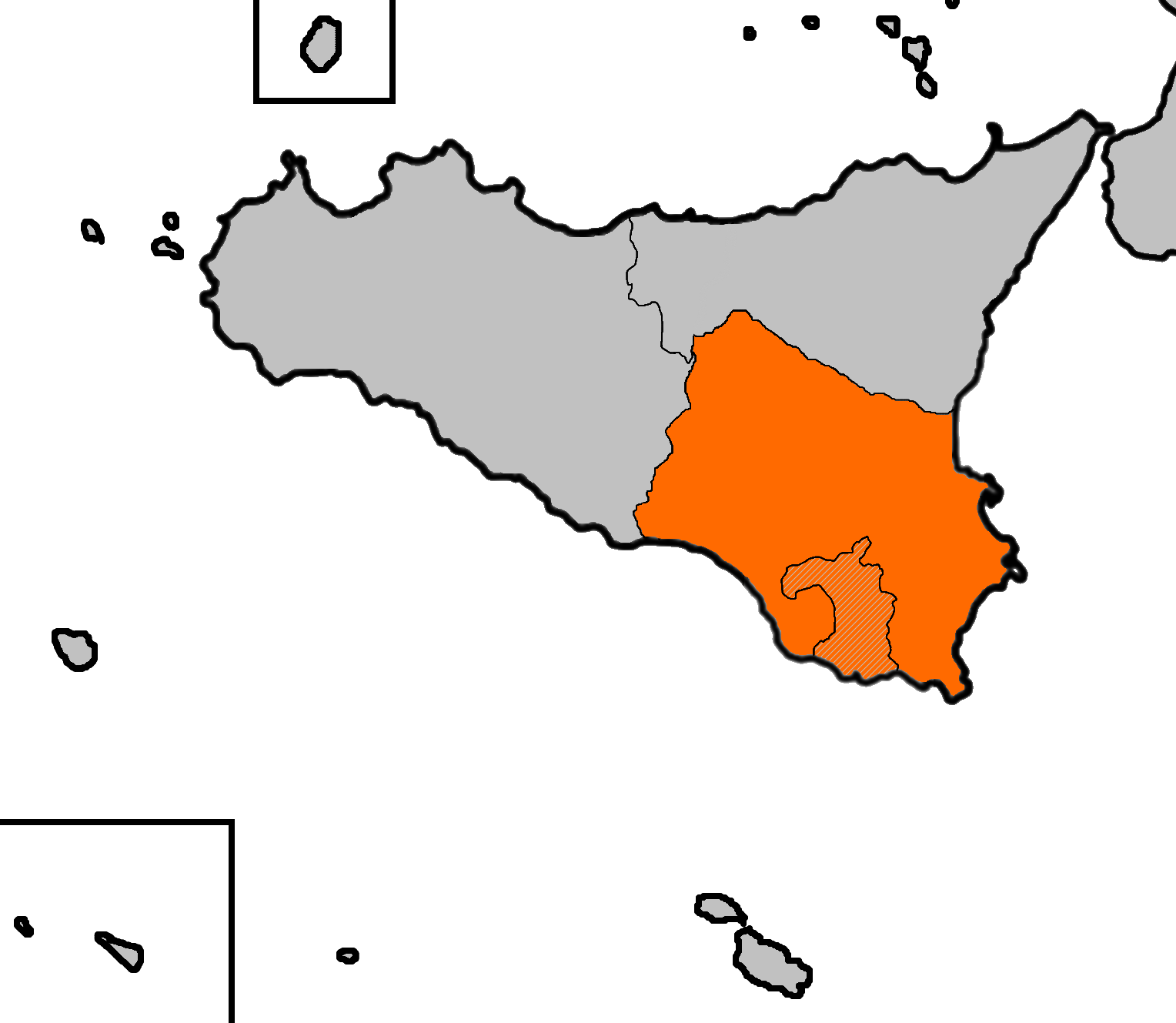
© Archeo, CC BY-SA 3.0 Resized from original. (This derivative is under the same CC BY-SA license.)
World Heritage Research
Discover scientific research and academic studies that deepen our understanding of Late Baroque Towns of the Val di Noto (South-Eastern Sicily) from its history and significance to its conservation, management, and contemporary challenges.
-
Radon exhalation of untreated and aged Modica stone building material: a case study
A study assessing radon exhalation from Modica stone, a material used in UNESCO-listed Late Baroque Towns of the Val di Noto, revealed that aging through salt crystallization does not significantly alter its radon release. Researchers employed the Closed Chamber Method (CCM) with Durridge Rad7 equipment to measure exhalation rates and applied the Markkanen room model to estimate indoor radon concentrations. Findings suggest potential for developing a systematic strategy to assess radon content in building materials, aiding decision-makers in identifying structures requiring protection measures.
Caridi, F., Chiriu, D., Da Pelo, S., Faggio, G., Guida, M., Messina, G., Ponte, M., Ruffolo, S. A., Majolino, D., & Venuti, V. (2026). Radon exhalation of untreated and aged Modica stone building material: a case study [JD]. Atti della Accademia Perloritana dei Pericolanti. Classe di Scienze Fisiche, Matematiche e Naturali, 104(1), A4–1. https://doi.org/10.1478/AAPP.1041A4
View Publication Record | Read Publication -
The Long‑Term Legacy of the 1693 Val di Noto Earthquake: Emergency Management, Reconstruction, and Institutional Impact
The 1693 Val di Noto earthquake, the most severe seismic event in Italy's recorded history, reshaped southeastern Sicily but left a complex legacy marked by institutional efficiency and widespread socio-spatial marginalization. While reconstruction efforts achieved remarkable Late Baroque urban renewal and maintained public order, affected populations bore disproportionate social costs, reflecting pre-existing power dynamics and new vulnerabilities. This study reveals that the earthquake did not reset regional history but accelerated existing processes, with ruling classes adapting while marginalized communities faced enduring hardships. Analyzing operational, legislative, administrative, and fiscal mechanisms, the research exposes a stark contrast between effective institutional responses and the abandonment of affected populations, challenging celebratory narratives of post-disaster recovery.
Marino, C., & Mattia, M. (2026). The Long‑Term Legacy of the 1693 Val di Noto Earthquake: Emergency Management, Reconstruction, and Institutional Impact. Annals of Geophysics, 69(3), SY339. https://doi.org/10.4401/ag-9507
View Publication Record | Read Publication -
Petrographic, petrophysical and engineering geological properties of stone materials employed in the Late Baroque of Val di Noto UNESCO Heritage sites (Sicily, Italy)
A comprehensive analysis of the petrographic, petrophysical, and engineering geological properties of stone materials used in the Late Baroque Towns of Val di Noto reveals a unique relationship between local geology and architectural innovation. The study identifies two primary lithotypes—Hyblean limestones (sedimentary) and Etnean lavas (magmatic)—whose distinct characteristics contribute to the towns' bichromy, a hallmark of their post-1693 earthquake reconstruction. Findings highlight how these stones, exposed to atmospheric agents like rain, freeze-thaw cycles, and saline crystallization, undergo weathering processes that threaten their durability. The research provides critical insights into the petrophysical behavior—including porosity, seismic resistance, and deterioration patterns—of these materials, offering a foundational tool for conserving and restoring this UNESCO-listed heritage. Published in Boletín Geológico Y Minero, this work bridges geological science and cultural preservation, emphasizing the importance of material properties in sustaining architectural integrity.
Punturo, R., Indelicato, V., Mineo, S., Pappalardo, G., Lanzafame, G., Visalli, R., & Cirrincione, R. (2026). Petrographic, petrophysical and engineering geological properties of stone materials employed in the Late Baroque of Val di Noto UNESCO Heritage sites (Sicily, Italy). Boletín Geológico Y Minero, 137(1), 3. https://doi.org/10.21701/bolgeomin/137.1/003
View Publication Record | Read Publication -
Petrographic, microstructural and petrophysical study of asphaltic limestone employed in the Late Baroque towns of the Val di Noto UNESCO site (south-eastern Sicily)
A petrographic, microstructural, and petrophysical study of asphaltic limestone (pitchstone) from the Late Baroque Towns of the Val di Noto UNESCO site reveals a strong correlation between bitumen impregnation levels and the material's distinctive visual properties as well as its superior physical-mechanical performance. The research employed advanced techniques such as synchrotron X-ray microtomography, ultrasonic testing, gas chromatography, differential scanning calorimetry, and thermogravimetric analysis to investigate two representative pitchstone samples with varying bitumen content. Findings demonstrate that the amount of bitumen impregnation directly influences both the petrofabric and petrophysical properties of the stone, offering insights into its durability and aesthetic characteristics in historic architectural applications.
Punturo, R., Indelicato, V., Lanzafame, G., Maniscalco, R., Fazio, E., Bloise, A., Muschella, L., & Cirrincione, R. (2023). Petrographic, microstructural and petrophysical study of asphaltic limestone employed in the Late Baroque towns of the Val di Noto UNESCO site (south-eastern Sicily). Construction and Building Materials, 371, 130730. https://doi.org/10.1016/j.conbuildmat.2023.130730
View Publication Record | Read Publication