World Heritage Identification Number: 934
World Heritage since: 1999
Category: Natural Heritage
WHE Type: Protected Areas & National Parks
Transboundary Heritage: No
Endangered Heritage: No
Country: 🇵🇹 Portugal
Continent: Europe
UNESCO World Region: Europe and North America
Map
The Laurisilva of Madeira: A Unique Ecosystem of Endemic Biodiversity
The Laurisilva of Madeira, inscribed as a UNESCO World Heritage Site in 1999, represents one of the most significant examples of an ancient and rare ecosystem: the laurel forest (Laurisilva). This unique ecosystem, that was once widespread in Europe, survives now exclusively across Macaronesia, which includes the archipelago of Madeira, the Azores, and the Canary Islands in the North Atlantic Ocean.
Madeira’s laurel forest is an exceptional remnant of a once widespread laurel forest type that has been largely destroyed by human activities over centuries. Covering approximately 15,000 hectares, it is the largest surviving area of Laurisilva and is believed to be 90 percent primary forest. This means that the majority of the trees in this forest have not been influenced by human activities.
The Laurisilva of Madeira is characterized by its dense vegetation dominated by laurel trees (Laurus novocanariensis), which can reach heights of up to 20 meters. Other characteristic tree species include Ocotea foetens, Persea indica, and Apollonias barbujana. These trees form a complex canopy that supports a rich understory of ferns, mosses, and epiphytic plants.
This ancient forest is home to a unique suite of plant and animal species, many of which are endemic to the region. Some notable endemic fauna include the Trocaz pigeon (Columba trocaz) and the Madeiran firecrest (Regulus madeirensis). The forest also provides habitat for several bat species, including the Madeira pipistrelle (Pipistrellus maderensis), a Macaronesian endemic, and a subspecies of lesser noctule (Nyctalus leisleri verrucosus).
The Laurisilva of Madeira is also of great scientific interest due to its high levels of endemism and the evolutionary processes that have shaped its biodiversity. The island's isolation and unique geology have contributed to the development of distinct species and ecological communities.
In addition to its biological value, the unique Macaronesian forest plays a crucial role in maintaining the islands' water cycle. The dense vegetation captures rainfall and releases it slowly into the groundwater, ensuring a reliable water supply for the local population.
The conservation of the Laurisilva of Madeira is of utmost importance due to the fragility of this ecosystem and the threats it faces from invasive species, climate change, and human activities. Efforts to protect and restore the laurisilva include the creation of protected areas, the implementation of sustainable land management practices, and ongoing research to better understand and conserve this unique World Heritage Site.
To sum it up, the Laurisilva of Madeira is a remarkable example of an ancient and rare ecosystem that harbors a wealth of endemic biodiversity. Its conservation is essential for maintaining the health and resilience of this unique ecosystem, as well as preserving the cultural and scientific heritage of the Madeira Islands.
UNESCO Description of the World Heritage Site
The Laurisilva of Madeira is an outstanding relict of a previously widespread laurel forest type. It is the largest surviving area of laurel forest and is believed to be 90% primary forest. It contains a unique suite of plants and animals, including many endemic species such as the Madeiran long-toed pigeon.
UNESCO Justification of the World Heritage Site
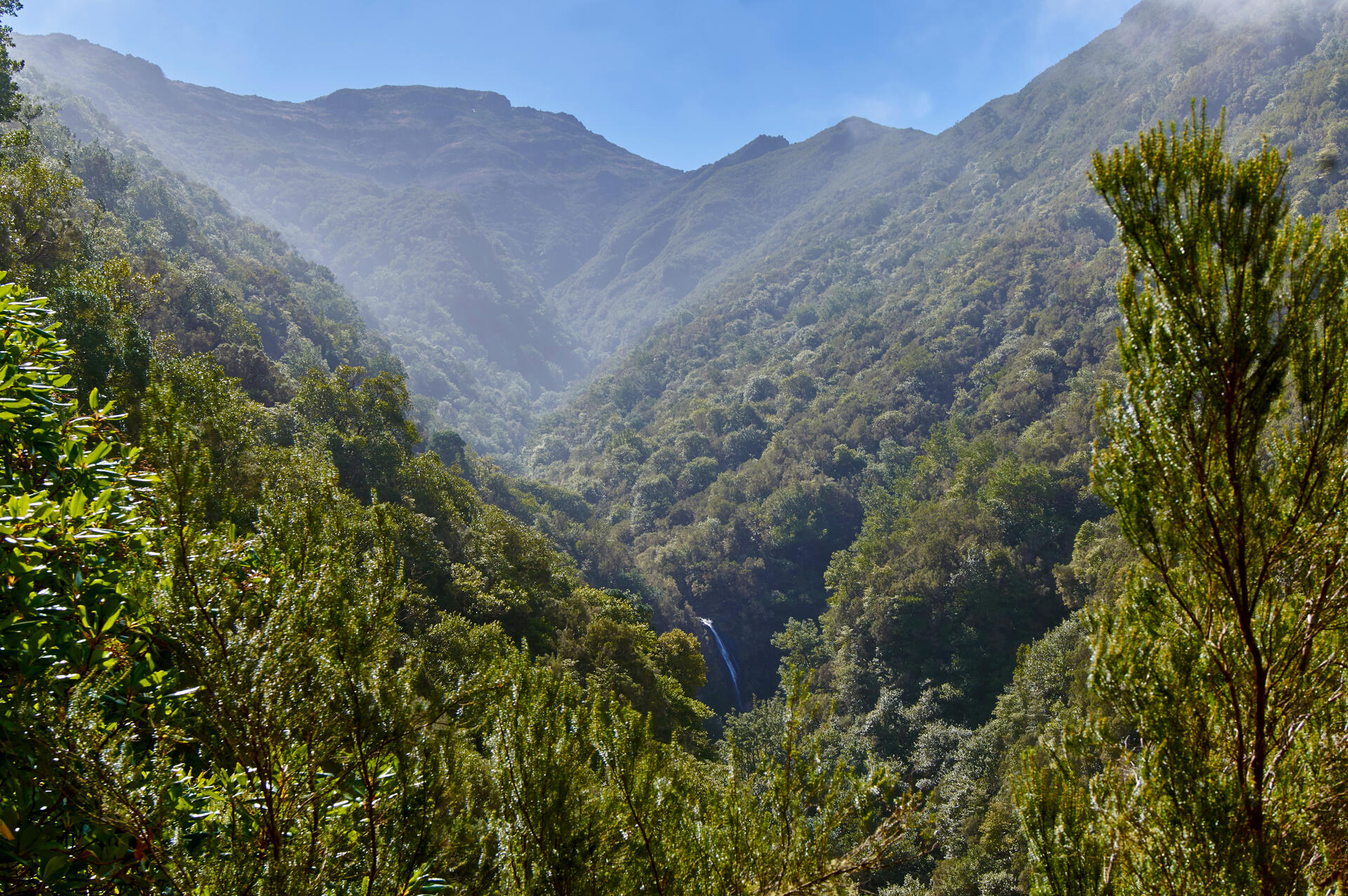
Criterion (ix): The Laurisilva of Madeira is an outstanding relict of a previously widespread laurel forest type, which covered much of Southern Europe 15-40 million years ago. The forest of the property completely covers a series of very steep, V-shaped valleys leading from the plateau and east-west ridge in the centre of the island to the north coast. The forests of the property and their associated biological and ecological process are largely undisturbed, and play a predominant role in the island´s hydrological balance. The forest is mainly comprised of evergreen trees and bushes, with flat, dark green leaves. The property provides a wealth of ecological niches, complex food webs and examples of co-evolution of species. A range of climax vegetation communities such as the Til Laurisilva, the Barbusano Laurisilva and the Vinhático Laurisilva, have been identified within the property. Ancient trees in the valley bottoms, waterfalls and cliffs add to the experience of the values of the property.
Criterion (x): The Laurisilva of Madeira is a place of importance for its biological diversity. A large proportion of its plants and animals are unique to the laurel forest, and it is larger than and with significant differences to other laurel forest areas. Endemic trees belonging to the Lauraceae family such as the Barbusano Apollonias barbujana ssp. Barbujana, the Laurel Laurus novocanariensis, the Til Ocotea foetens and the Vinhático Persea indica are dominant. Other endemic plants include plants such as Pride of Madeira Echium candicans, Honey Spurge Euphorbia mellifera, Madeira Foxglove Isoplexis spectrum and Musschia wollastonii. Ferns abound in the shadowy valleys and bryophytes cover large areas of the soil, banks, rocks and tree trunks. Around 13 liverwort species and 20 moss species are noted as threatened at a European scale, while abundant lichens are indicative of high environmental quality and the absence of pollution. Vertebrate species include a limited number of species with high endemism, including two rare species of bats, the Madeira Pipistrelle Pipistrellus maderensis and the Leisler's Bat Nyctalus leisleri verrucosus and several birds, such as the Madeira Laurel Pigeon Columba trocaz, the Madeiran Firecrest Regulus madeirensis and the Madeiran Chaffinch Fingilla coelebs madeirensis. In the Laurisilva there are more than 500 endemic species of invertebrates, including insects, arachnids and mollusks.
Encyclopedia Record: Madeira evergreen forests
The Madeira evergreen forests is a laurissilva ecoregion of southwestern Europe. It covers the archipelago of Madeira and some nearby islands in the Atlantic Ocean. Laurel forest (Laurisilva) once covered the islands. Over centuries the laurel forests were mostly cleared. Madeira's remaining forests are now protected.Additional Site Details
Area: 15,000 hectares
Number of Components: 1
(x) — Contains most important habitats for biodiversity
Coordinates: 32.76666667 , -17
IUCN World Heritage Outlook
The 2025 Conservation Outlook on Laurisilva of Madeira reports the following assessment:
Source: International Union for Conservation of Nature (IUCN) · View assessment
Image
© Günter Seggebäing, Coesfeld, CC BY-SA 3.0 Resized from original. (This derivative is under the same CC BY-SA license.)
World Heritage Research
Discover scientific research and academic studies that deepen our understanding of Laurisilva of Madeira from its history and significance to its conservation, management, and contemporary challenges.
-
Diversity of the Genus Xylaria in European Atlantic Lauroid Forest: New Records and Description of Eight New Species
A recent study reveals that European Atlantic laurel forests, including both insular and continental regions, harbor significantly higher diversity of the fungal genus Xylaria (Xylariaceae) than previously recognized. By analyzing over 80 collections from Madeira, the Azores, the Canary Islands, and mainland Iberia, researchers identified at least 13 species, eight of which are newly described. The study employed an integrative approach combining morphological observations with multilocus phylogenetic analyses using ITS, LSU, RPB2, and TUB2 loci to resolve species boundaries, particularly in morphologically cryptic lineages. This research underscores the importance of these ecosystems as reservoirs of fungal diversity and evolutionary novelty, contributing to our understanding of Xylaria's global distribution and biodiversity.
De la Peña-Lastra, S., Mateos, A., García-Martín, A., Rigueiro-Rodríguez, A., & Serrano, M. (2026). Diversity of the Genus Xylaria in European Atlantic Lauroid Forest: New Records and Description of Eight New Species. Life, 16(6), 993. https://doi.org/10.3390/life16060993
View Publication Record | Read Publication -
Vulnerabilidad de las laurisilvas macaronésicas ante el cambio global: un análisis anatómico, dendrocronológico y de la dinámica forestal.
Macaronesian cloud forests, unique to the Azores, Madeira, and Canary Islands, face heightened vulnerability due to their limited distribution and dependence on trade wind-driven cloud belts. This study reveals that these ecosystems exhibit distinct anatomical traits linked to xylem hydraulic function and regeneration strategies, with tree-ring analysis showing sensitivity to climate variability, particularly drought. Forest dynamics in preserved areas are also influenced by land-use changes and windstorms. The research combines anatomical, dendrochronological, and forest dynamics studies across 19 tree species to assess their resilience to global change drivers, providing critical insights for conservation strategies.
García López, M. A. Vulnerabilidad de las laurisilvas macaronésicas ante el cambio global: un análisis anatómico, dendrocronológico y de la dinámica forestal. https://doi.org/10.35376/10324/85547
View Publication Record | Read Publication -
Perceções sobre Biodiversidade e Conservação da Floresta Laurissilva da Ilha da Madeira: Culturas Locais e Implicações para a Educação Ambiental
Local communities in Madeira Island exhibit a strong positive relationship with the Laurisilva Forest, rooted in traditional knowledge and intergenerational practices. This study reveals that while there is widespread appreciation for biodiversity conservation, conflicts arise between preservation efforts and socioeconomic development needs. Through semi-structured interviews and content analysis, researchers identified key cultural perceptions and concerns, underscoring the importance of community involvement in crafting contextually relevant conservation strategies. The findings highlight the need to balance ecological protection with local economic interests, offering insights that could enhance environmental education and management practices.
Freitas, T. M. N., Alves, F., & Bacelar-Nicolau, P. (2026). PERCEPCIONES SOBRE LA BIODIVERSIDAD Y LA CONSERVACIÓN:EL BOSQUE DE LAURISILVA DE LA ISLA DE MADEIRA Y CULTURAS LOCALES. Poiésis - Revista Do Programa de Pós-Graduação Em Educação, 20(37), 168–190. https://doi.org/10.59306/poiesis.v20e372026168-190
View Publication Record | Read Publication -
Mycena laurivora sp. nov., a new white species in M. sect. Polyadelphia
A new fungal species, Mycena laurivora, has been identified in the Laurisilva of Madeira and São Miguel Islands, distinguished by its white coloration and exclusive habitat on fallen leaves of Laurus spp. near watercourses or under cultivated laurels. This discovery was made through a combination of morphological (macro- and microscopic) and molecular analyses, setting it apart from other species in the Mycena sect. Polyadelphia. The study highlights the ecological specificity of M. laurivora, which thrives in the Mesomediterranean and Coline belts, contributing to the understanding of fungal biodiversity in these unique UNESCO World Heritage Sites.
VIllarreal, M., Campos, J. C., & Zamora, J. C. (2025). Mycena laurivora sp. nov., a new white species in M. sect. Polyadelphia. Fungi Iberici, 5, 7–17. https://doi.org/10.51436/funiber/05.001
View Publication Record | Read Publication -
Species-specific responses to land-use change in island insectivorous bats
Island insectivorous bats exhibit species-specific and scale-dependent responses to human-induced land-use changes, with activity patterns varying significantly across different habitats. A large-scale bioacoustic survey on Madeira revealed that Pipistrellus maderensis thrives in shrublands, croplands, and Laurisilva (primary forest), while Nyctalus leisleri verrucosus and Plecotus austriacus show negative associations with these land-use types. Additionally, altitude negatively influenced the activity of N. leisleri verrucosus and P. austriacus. This study highlights the potential of low-cost autonomous sensors for island-wide bat surveys and underscores the importance of habitat-specific conservation strategies to mitigate threats posed by anthropogenic pressures.
Ferreira, D. F., Gibb, R., López-Baucells, A., Nunes, N. J., Jones, K. E., & Rocha, R. (2022). Species-specific responses to land-use change in island insectivorous bats. Journal for Nature Conservation, 67, 126177. https://doi.org/10.1016/j.jnc.2022.126177
View Publication Record | Read Publication -
Island tourism carrying capacity in the UNESCO Site Laurisilva of Madeira
Tourism carrying capacity (TCC) in the UNESCO World Heritage Site of Laurisilva of Madeira is significantly below theoretical limits, yet trail access remains unrestricted despite concerns for natural resource management. This finding stems from a study that assessed TCC on two popular Rabaçal trails using a formulation integrating physical aspects and environmental correction factors. Despite UNESCO's recommendations for managing tourism impacts, the local population's perception of overuse suggests a critical gap between theoretical capacity and actual management practices.
Mota, L., Franco, M., & Santos, R. (2021). 255 Island tourism carrying capacity in the UNESCO Site Laurisilva of Madeira. Island Studies Journal, 16(2), 255–269. https://doi.org/10.24043/isj.143
View Publication Record | Read Publication -
Social Carrying Capacity in Island Destinations: Interpreting Visitors’ Opinions in Madeira Island
Visitors to the UNESCO-listed Laurisilva of Madeira exhibit only slight satisfaction with social carrying capacity, despite registering an average satisfaction level of 71%. The study identifies five key dimensions—cleanliness and natural conditions, trail amenities, trail conditions, environmental conditions, and pollution levels—as critical factors influencing visitor enjoyment. Nonparametric tests revealed statistically significant differences in satisfaction based on respondents' education levels, underscoring the importance of these social values for effective site management. This approach complements traditional physical thresholds by providing actionable insights for planning and managing island destinations.
Mota, L., Franco, M., & Santos, R. (2021). Social Carrying Capacity in Island Destinations: Interpreting Visitors’ Opinions in Madeira Island. European Journal of Tourism, Hospitality and Recreation, 11(2), 253–266. https://doi.org/10.2478/ejthr-2021-0023
View Publication Record | Read Publication