World Heritage Identification Number: 1258
World Heritage since: 2007
Category: Natural Heritage
WHE Type: Protected Areas & National Parks
Transboundary Heritage: No
Endangered Heritage: No
Country: 🇪🇸 Spain
Continent: Europe
UNESCO World Region: Europe and North America
Map
Teide National Park: A Geological Marvel on Tenerife Island
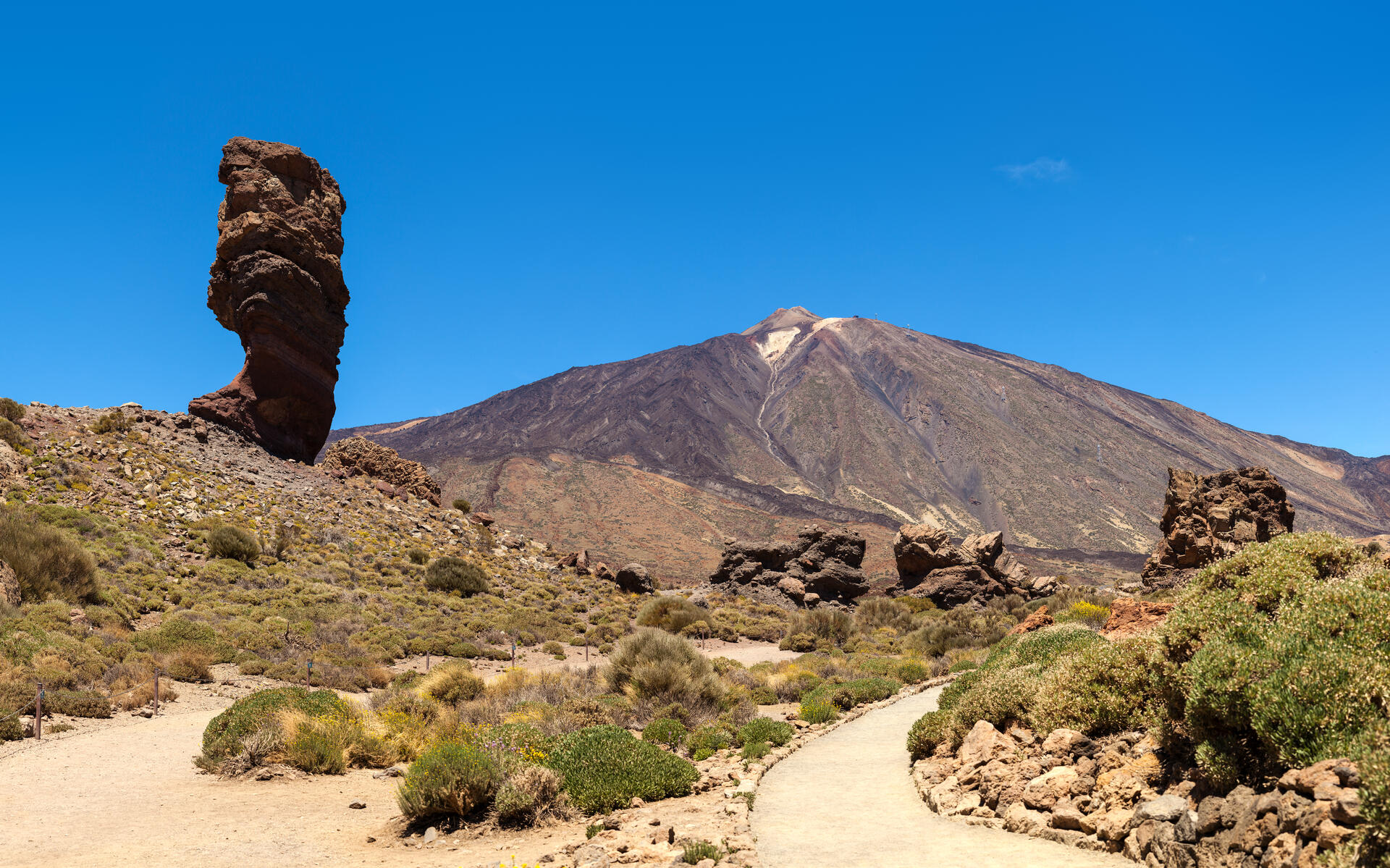
Teide National Park, situated on the island of Tenerife in the Canary Islands, Spain, is a testament to the breathtaking beauty and geological significance of oceanic islands. Inscribed as a UNESCO World Heritage Site in 2007, this protected area showcases the Teide-Pico Viejo stratovolcano complex, crowned by Mount Teide, the highest peak on Spanish soil, rising to 3,718 meters (12,198 feet). Measured from the ocean floor, the volcanic structure ascends roughly 7,500 meters (24,600 feet), making it one of the tallest volcanic edifices on Earth.
The visual spectacle of Teide National Park is enhanced by distinctive atmospheric conditions that create a dynamic and ever-changing landscape. One of the most striking phenomena is the “sea of clouds” (mar de nubes), which frequently forms below the mountain slopes. This effect occurs when moist trade winds from the Atlantic rise along Tenerife’s northern flanks and condense at a stable inversion layer, creating a dense blanket of clouds that contrasts dramatically with the sunlit volcanic summit above.
Mount Teide, an active volcano, has played a crucial role in shaping the geology of Tenerife, with successive eruptions building up the volcano over time. The broader volcanic complex of Las Cañadas began forming millions of years ago, while the present Teide–Pico Viejo stratovolcano emerged after the collapse of the earlier Las Cañadas edifice roughly 170,000–200,000 years ago, forming the vast Las Cañadas Caldera that dominates the park today.
Although the most recent eruption on Tenerife occurred in 1909 at the Chinyero vent on the island’s northwest rift zone, Teide itself continues to exhibit minor fumarolic activity near its summit and remains under continuous scientific monitoring. The cone-shaped structure consists primarily of basaltic lavas as well as more evolved volcanic rocks such as phonolite, and it is surrounded by extensive lava flows, ash deposits, and striking rock formations that vividly illustrate the geological processes shaping oceanic islands.
Beyond its geological importance, Teide National Park is also notable for its specialized high-altitude biodiversity. The park hosts a variety of plant species uniquely adapted to its arid volcanic environment, many of them endemic to the Canary Islands. Among the most iconic is Echium wildpretii, whose towering red flower spikes bloom spectacularly against the dark lava fields.
Hardy shrubs such as Spartocytisus supranubius further characterize the landscape. At lower elevations within the park, stands of Canary Island pine (Pinus canariensis) provide a transitional zone between forest and volcanic highland. These diverse habitats together create a sanctuary for specialized flora and fauna uniquely suited to this dramatic environment.
In addition to its natural wonders, Teide National Park offers visitors numerous opportunities for exploration and discovery. Hiking trails traverse the volcanic terrain, leading through lava fields, caldera walls, and panoramic viewpoints that reveal sweeping vistas of Tenerife and neighboring islands. The cable car service, Teleférico del Teide, carries visitors close to the summit, where carefully managed access allows for extraordinary views across the Atlantic.
The park’s exceptional air quality, low light pollution, and high altitude also make it a premier global destination for astrophysical research. It hosts the Teide Observatory (Observatorio del Teide), which, together with the Roque de los Muchachos Observatory on La Palma, forms part of one of the world’s most important centers for solar and night-sky observation. The area is officially recognized as a Starlight Tourist Destination, reflecting both its scientific value and its extraordinary clarity of the night sky.
Beyond its physical grandeur, the park holds deep cultural and spiritual significance. To the Guanches, the indigenous inhabitants of Tenerife, the mountain was known as Echeyde, a sacred site believed to be the home of the demon Guayota. According to legend, Guayota imprisoned the sun god Magec within the volcano, plunging the world into darkness until the supreme deity Achamán intervened and restored cosmic order.
In summary, Teide National Park stands as a remarkable example of the geological forces that shape oceanic islands. Its extraordinary volcanic structures, specialized ecosystems, and dramatic landscapes combine to create one of Europe’s most distinctive natural monuments. As a UNESCO World Heritage Site, it serves as both a scientific treasure and a powerful reminder of the dynamic processes that continue to shape our planet.
UNESCO Description of the World Heritage Site
Situated on the island of Tenerife, Teide National Park features the Teide-Pico Viejo stratovolcano that, at 3,718 m, is the highest peak on Spanish soil. Rising 7,500 m above the ocean floor, it is regarded as the world’s third-tallest volcanic structure and stands in a spectacular environment. The visual impact of the site is all the greater due to atmospheric conditions that create constantly changing textures and tones in the landscape and a ‘sea of clouds’ that forms a visually impressive backdrop to the mountain. Teide is of global importance in providing evidence of the geological processes that underpin the evolution of oceanic islands.
UNESCO Justification of the World Heritage Site
Criterion (vii): Mount Teide is a striking volcanic landscape dominated by the jagged Las Cañadas escarpment and a central volcano that makes Tenerife the third tallest volcanic structure in the world. Within this landscape is a superlative suite of landforms that reveal different phases of construction and remodeling of the volcanic complex and highlight its unique geodiversity. The visual impact is emphasized by atmospheric conditions that create constantly changing textures and tones in the landscape and a ‘sea of clouds' that forms a visually impressive backdrop to the mountain.
Criterion (viii): Teide National Park is an exceptional example of a relatively old, slow moving, geologically complex and mature volcanic system. It is of global importance in providing diverse evidence of the geological processes that underpin the evolution of oceanic islands, and these values complement those of existing volcanic properties on the World Heritage List, such as the Hawaii Volcanoes National Park. It offers a diverse and accessible assemblage of volcanic features and landscapes in a relatively limited area. The area is a major centre for international research with a long history of influence on geology and geomorphology especially through the work of von Humboldt, von Buch and Lyell which has made Mount Teide a significant site in the history of volcanology.
Encyclopedia Record: Teide National Park
Teide National Park is a national park located in Tenerife, Canary Islands, Spain.Additional Site Details
Area: 18,990 hectares
Number of Components: 1
(viii) — Outstanding example representing major earth stages
Coordinates: 28.2713888889 , -16.6436111111
IUCN World Heritage Outlook
The 2025 Conservation Outlook on Teide National Park reports the following assessment:
Source: International Union for Conservation of Nature (IUCN) · View assessment
Image
© Thomas Wolf, www.foto-tw.de, CC BY-SA 3.0 de Resized from original. (This derivative is under the same CC BY-SA license.)
World Heritage Research
Discover scientific research and academic studies that deepen our understanding of Teide National Park from its history and significance to its conservation, management, and contemporary challenges.
-
Microplastics in snow of a high mountain national park: El teide, tenerife (canary islands, spain)
A study on microplastics (MPs) in the snow of Teide National Park, Canary Islands, revealed significant deposition of MPs at high altitudes (2,100-3,200 m), with concentrations increasing during periods of high anthropogenic pressure. The research identified a prevalence of blue and black fibers averaging 1259 µm in length, primarily composed of cellulose, polyester, and acrylic. Samples were collected in January and February 2021 using stereomicroscopy for visualization and quantification, followed by chemical composition analysis via micro-Fourier transform infrared spectroscopy. The findings highlight the long-distance transport of MPs through atmospheric deposition and their potential ecological impacts on remote mountain ecosystems.
Villanova-Solano, C., Hernández-Sánchez, C., Díaz Peña, F. J., González-Sálamo, J., González-Pleiter, M., & Hernández-Borges, J. (2022). Microplastics in snow of a high mountain national park: El teide, tenerife (canary islands, spain). Zenodo. https://doi.org/10.5281/ZENODO.7216544
View Publication Record | Read Publication -
The Volcanic Geoheritage of El Teide National Park (Tenerife, Canary Islands, Spain)
El Teide National Park boasts one of the most spectacular volcanic landscapes globally. While its geodiversity is legally protected, public understanding lags due to inadequate outreach efforts and inconsistent scientific communication. This study identifies key challenges in disseminating the park's geological significance and proposes solutions: compiling existing knowledge, pinpointing critical geosites, developing targeted outreach programs, and training guides for effective knowledge transfer. By addressing these gaps, the research aims to elevate public appreciation of this unique volcanic heritage.
Martí-Molist, J., Dorado-García, O., & López-Saavedra, M. (2022). The Volcanic Geoheritage of El Teide National Park (Tenerife, Canary Islands, Spain). Geoheritage, 14(2). https://doi.org/10.1007/s12371-022-00698-5
View Publication Record | Read Publication -
Proposals for Sustainable Transport in Natural Areas: A Case Study of Teide National Park
Teide National Park, one of the world's most visited natural areas, faces significant challenges due to mass tourism, including traffic congestion, pollution, and high noise levels. Research reveals that visitors are willing to adopt sustainable transportation options if given the opportunity. Studies show strong preference for a public bicycle-sharing system, willingness to pay for shuttle-bus services to reduce environmental impact, and substantial recreational economic value tied to the site's sustainability. These findings provide actionable insights for policymakers to implement demand management strategies that balance visitor experience with ecological preservation, offering a model for other high-traffic natural parks.
González, R. M., Román, C., & Marrero, Á. S. (2021). Proposals for Sustainable Transport in Natural Areas: A Case Study of Teide National Park. Sustainable Transport and Tourism Destinations, 179–197. https://doi.org/10.1108/s2044-994120210000013014
View Publication Record | Read Publication -
Aphyllophoroid fungi in Teide National Park (Tenerife, Canary Islands)
A comprehensive survey of Aphyllophoroid fungi in Teide National Park, Tenerife, Canary Islands, identifies 133 species, significantly expanding the known mycobiota of this UNESCO World Heritage Site. The study, published in Mycotaxon, utilizes annotated species distribution data to document fungal diversity in one of the most biodiverse volcanic landscapes on Earth. Researchers employed field sampling and taxonomic analysis to characterize these fungi, which play crucial roles in ecosystem processes such as decomposition and nutrient cycling. This work contributes to our understanding of fungal biodiversity in extreme environments and underscores the importance of preserving such unique habitats.
Beltrán Tejera, E., Rodríguez-Arma, J. L., Armas, M. J. D., & Quijada, L. (2019). Aphyllophoroid fungi in Teide National Park (Tenerife, Canary Islands). Mycotaxon, 134(2), 407. https://doi.org/10.5248/134.407
View Publication Record | Read Publication -
Using geotagged photographs and GPS tracks from social networks to analyse visitor behaviour in national parks
Geotagged data from social networks, including photographs and GPS tracks, can effectively analyze visitor behavior in national parks. A study on Teide National Park, the most visited in Spain, demonstrated that such data provides valuable insights into spatial distribution, points of interest, itinerary networks, temporal patterns, and visitors' origins. Additionally, this approach offers practical applications for determining optimal locations for new facilities like information stands. The research highlights the potential of social media-derived data as a tool for understanding and managing visitor behavior in protected areas.
Barros, C., Moya-Gómez, B., & Gutiérrez, J. (2019). Using geotagged photographs and GPS tracks from social networks to analyse visitor behaviour in national parks. Current Issues in Tourism, 23(10), 1291–1310. https://doi.org/10.1080/13683500.2019.1619674
View Publication Record | Read Publication -
Tourists’ travel time values using discrete choice models: the recreational value of the Teide National Park
Research reveals that the recreational value of Teide National Park, when calculated using discrete choice models independent of labor market factors, significantly differs from traditional wage-based approaches. By analyzing trade-offs between time and money in transport mode choices among 801 visitors, the study estimates distinct travel time values for different stages of the trip and transport modes. This novel method, combining Mixed Logit models with Zonal Travel Cost Method, challenges conventional practices by focusing on the opportunity cost of leisure rather than work time, offering a more accurate assessment of recreational value.
González, R. M., Marrero, Á. S., & Navarro-Ibáñez, M. (2018). Tourists’ travel time values using discrete choice models: the recreational value of the Teide National Park. Journal of Sustainable Tourism, 26(12), 2021–2042. https://doi.org/10.1080/09669582.2018.1527342
View Publication Record | Read Publication -
Visitors’ Attitudes towards Bicycle Use in the Teide National Park
A public bike-sharing system shows promise as a sustainable transportation solution for the Teide National Park (TNP), Spain's most visited national park. The study, combining revealed and stated preferences with ordered logit models, found that bicycles could significantly reduce car dependency—currently at 70%—mitigating environmental strain and enhancing visitor experience. This approach offers a practical strategy to improve mobility management in high-traffic protected areas, balancing ecological preservation with tourism sustainability.
González, R. M., Román, C., & Marrero, Á. S. (2018). Visitors’ Attitudes towards Bicycle Use in the Teide National Park. Sustainability, 10(9), 3283. https://doi.org/10.3390/su10093283
View Publication Record | Read Publication -
An Application of the CHAID Algorithm to Study the Environmental Impact of Visitors to the Teide National Park in Tenerife, Spain
A significant link between visitor behavior and environmental impact at the Teide National Park (TNP), one of Europe's most visited sites, was identified through a CHAID algorithm analysis. The study revealed that visitors arriving by car tend to stay longer in the park, correlating with increased environmental footprint due to prolonged exposure and higher emissions from private vehicles. Conducted via 805 valid questionnaires in 2016, this research underscores the urgent need for sustainable transport solutions, such as promoting less polluting vehicles or alternative transportation modes, to mitigate ecological strain on this UNESCO World Heritage Site.
Diaz-Perez, F. M., & Bethencourt-Cejas, M. (2017). An Application of the CHAID Algorithm to Study the Environmental Impact of Visitors to the Teide National Park in Tenerife, Spain. International Business Research, 10(7), 168. https://doi.org/10.5539/ibr.v10n7p168
View Publication Record | Read Publication -
Automatic identification of shrub vegetation of the Teide National Park
Researchers have developed an innovative method to automatically identify populations of Teide broom, an endemic shrub in the Canary Islands, using remote sensing imagery. This approach combines superpixels as the minimum image processing unit with one-class classification, enabling precise location mapping of the species within Teide National Park. The methodology was validated in a known population area in the northwest of the park, demonstrating its potential to support conservation efforts by providing accurate and efficient vegetation monitoring. This technique offers significant applications for biodiversity assessment and environmental management.
Garcia-Pedrero, A., Rodriguez-Esparragon, D., Gonzalo-Martin, C., Ibarrola, E., Lillo-Saavedra, M., & Marcello, J. (2015). Automatic identification of shrub vegetation of the Teide National Park. 2015 4th International Work Conference on Bioinspired Intelligence (IWOBI), 55–60. https://doi.org/10.1109/iwobi.2015.7160144
View Publication Record | Read Publication -
Impact of the introduced honeybees (Apis mellifera, Apidae) on Teide National Park (Tenerife, Canary Islands)
Massive introduction of honeybees (Apis mellifera) in Teide National Park significantly disrupts native pollination networks, reducing floral visitor diversity and impairing reproductive success of key plant species. The study found that up to 3000 beehives, housing around 100 million bees, compete with native fauna for nectar and pollen, leading to decreased fruit and seed production due to inbreeding depression. While honeybees are not effective pollinators, their dominance alters the park's ecological balance, threatening its endemic flora and fauna. Researchers recommend banning introduced beehives to protect the park's biodiversity.
Valido, A., Rodríguez-Rodríguez, M. C., & Jordano, P. (2014). Impact of the introduced honeybees (Apis mellifera, Apidae) on Teide National Park (Tenerife, Canary Islands). Ecosistemas, 23(3), 58–66. https://doi.org/10.7818/ecos.2014.23-3.08
View Publication Record | Read Publication