World Heritage Identification Number: 1200
World Heritage since: 2005
Category: Cultural Heritage
WHE Type: Archaeological Sites
Transboundary Heritage: No
Endangered Heritage: No
Country: 🇮🇹 Italy
Continent: Europe
UNESCO World Region: Europe and North America
Map
Exploring the Rich History of Syracuse and the Rocky Necropolis of Pantalica
The UNESCO World Heritage Site of Syracuse and the Rocky Necropolis of Pantalica offers a fascinating glimpse into the rich history of ancient Greece and Rome, as well as the subsequent influences that have shaped Sicily's cultural landscape. This article will delve into the significant historical, archaeological, and architectural aspects of this remarkable site.
More to come…UNESCO Description of the World Heritage Site
The site consists of two separate elements, containing outstanding vestiges dating back to Greek and Roman times: The Necropolis of Pantalica contains over 5,000 tombs cut into the rock near open stone quarries, most of them dating from the 13th to 7th centuries BC. Vestiges of the Byzantine era also remain in the area, notably the foundations of the Anaktoron (Prince’s Palace). The other part of the property, Ancient Syracuse, includes the nucleus of the city’s foundation as Ortygia by Greeks from Corinth in the 8th century BC. The site of the city, which Cicero described as ‘the greatest Greek city and the most beautiful of all’, retains vestiges such as the Temple of Athena (5th century BC, later transformed to serve as a cathedral), a Greek theatre, a Roman amphitheatre, a fort and more. Many remains bear witness to the troubled history of Sicily, from the Byzantines to the Bourbons, interspersed with the Arabo-Muslims, the Normans, Frederick II of the Hohenstaufen dynasty (1197–1250), the Aragons and the Kingdom of the Two Sicilies. Historic Syracuse offers a unique testimony to the development of Mediterranean civilization over three millennia.
UNESCO Justification of the World Heritage Site
Criterion (ii): The ensemble of sites and monuments in Syracuse/Pantalica constitutes a remarkable testimony of the Mediterranean cultures over the centuries.
Criterion (iii): The Syracuse/Pantalica ensemble offers, through its remarkable cultural diversity, an exceptional testimony to the development of civilizations over three millennia.
Criterion (iv): The group of monuments and archaeological sites situated in Syracuse (between the nucleus of Ortygia and the vestiges located throughout the urban area) is the finest example of outstanding architectural creation encompassing several cultural influences (Greek, Roman and Baroque).
Criterion (vi): Ancient Syracuse was directly linked to events, ideas and literary works of outstanding universal significance.
Encyclopedia Record: Syracuse, Sicily
Syracuse is a city and municipality, capital of the free municipal consortium of the same name, located in the autonomous region of Sicily in Southern Italy. As of 2025, with a population of 115,636, it is the fourth most populous city in Sicily, following Palermo, Catania, and Messina.Additional Site Details
Area: 898.46 hectares
Number of Components: 3
(iii) — Unique or exceptional testimony to a cultural tradition
(iv) — Outstanding example of a type of building or landscape
(vi) — Directly associated with events or living traditions
Coordinates: 37.05944 , 15.29306
Image
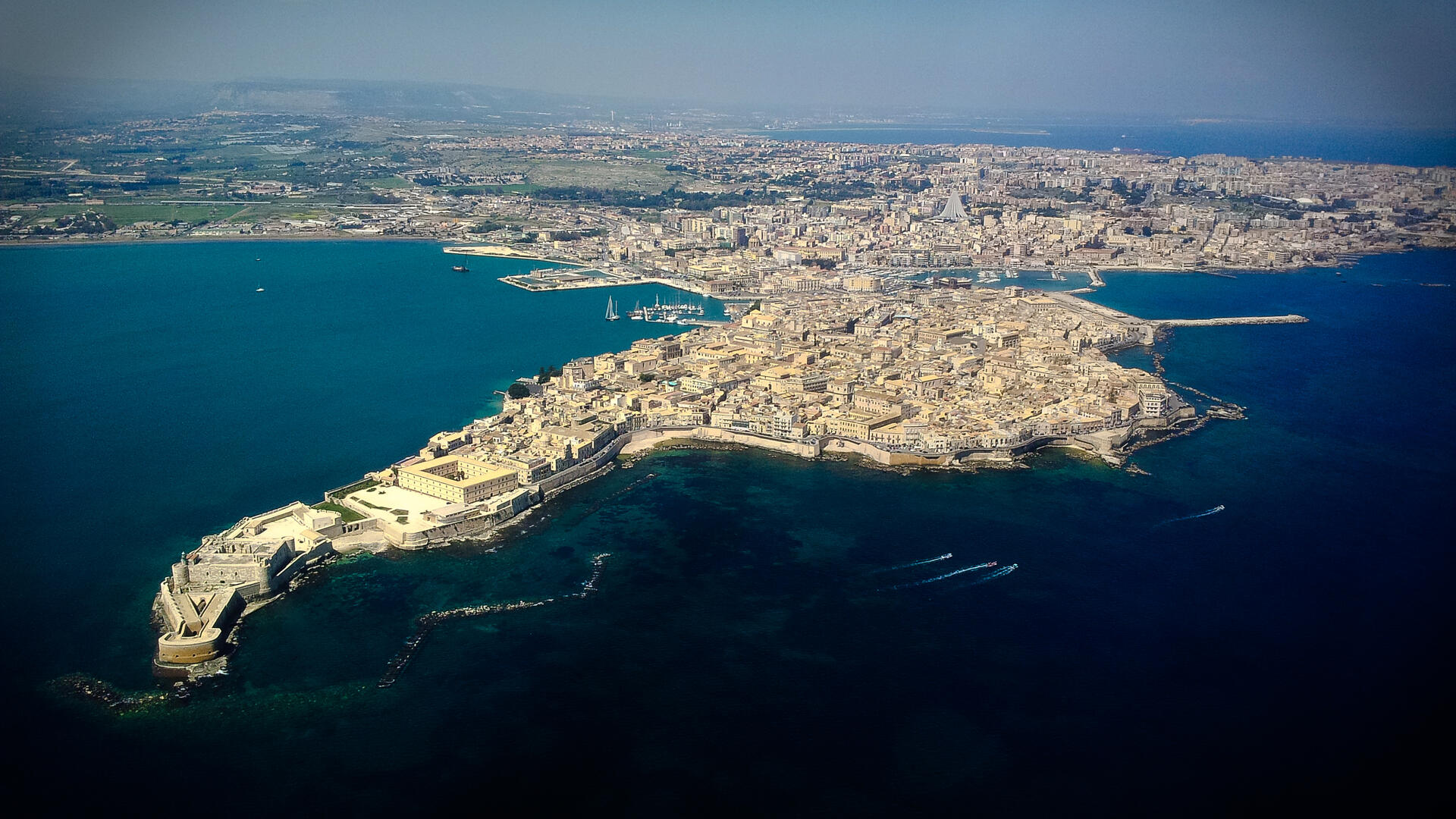
© Agostino Artnoir Sella, CC BY-SA 2.0 Resized from original. (This derivative is under the same CC BY-SA license.)
World Heritage Research
Discover scientific research and academic studies that deepen our understanding of Syracuse and the Rocky Necropolis of Pantalica from its history and significance to its conservation, management, and contemporary challenges.
-
Pantalica Ricerche su un sito pluristratificato, I. Indagini nei depositi.
A critical reassessment of Pantalica, a UNESCO World Heritage Site near Syracuse, Sicily, challenges traditional mythologized narratives by grounding its historical reconstruction in archaeological data and scientific research. The study, conducted over three years through field surveys, material analysis at the Paolo Orsi Regional Archaeological Museum, and archaeometric techniques, reveals a stratified landscape of human occupation spanning from prehistory (1250–750 BC) to the Greek period and Middle Ages. Key findings include the site's complex topographical features and regional connections, explored under the CHANGES project's theme of 'extra-urban stratified landscapes.' The research also emphasizes the potential of digital communication for heritage dissemination, offering a robust interdisciplinary framework for understanding Pantalica's significance.
MILITELLO, P. M., & Lanteri, R. (2025). Pantalica Ricerche su un sito pluristratificato, I. Indagini nei depositi. (P. M. MILITELLO & R. Lanteri, Eds.). Edizioni Quasar di Severino Tognon s.r.l. via Ajaccio 41-43, 00198 Roma (Italia). https://doi.org/10.5281/ZENODO.19051235
View Publication Record | Read Publication