World Heritage Identification Number: 1279
World Heritage since: 2009
Category: Cultural Heritage
WHE Type: Natural Landscapes & Geographic Features
Transboundary Heritage: No
Endangered Heritage: No
Country: 🇨🇳 China
Continent: Asia
UNESCO World Region: Asia and the Pacific
Map
Sacred Buddhist Mountain: An Exploration of Mount Wutai
Mount Wutai, officially named Wutaishan and colloquially referred to as Mount Qingliang, is a significant cultural landscape located in the Shanxi Province of China. This sacred Buddhist mountain stands out as the highest in Northern China, boasting a unique morphology characterized by steep, treeless peaks arranged in a cardinal direction pattern. The central area of Mount Wutai is encompassed by a cluster of these flat-topped peaks or mesas.
More to come…UNESCO Description of the World Heritage Site
With its five flat peaks, Mount Wutai is a sacred Buddhist mountain. The cultural landscape is home to forty-one monasteries and includes the East Main Hall of Foguang Temple, the highest surviving timber building of the Tang dynasty, with life-size clay sculptures. It also features the Ming dynasty Shuxiang Temple with a huge complex of 500 statues representing Buddhist stories woven into three-dimensional pictures of mountains and water. Overall, the buildings on the site catalogue the way in which Buddhist architecture developed and influenced palace building in China for over a millennium. Mount Wutai, literally, 'the five terrace mountain', is the highest in Northern China and is remarkable for its morphology of precipitous slopes with five open treeless peaks. Temples have been built on this site from the 1st century AD to the early 20th century.
UNESCO Justification of the World Heritage Site
Criterion (ii): The overall religious temple landscape of Mount Wutai, with its Buddhist architecture, statues and pagodas reflects a profound interchange of ideas, in terms of the way the mountain became a sacred Buddhist place, endowed with temples that reflected ideas from Nepal and Mongolia and which then influenced Buddhist temples across China.
Criterion (iii): Mount Wutai is an exceptional testimony to the cultural tradition of religious mountains that are developed with monasteries. It became the focus of pilgrimages from across a wide area of Asia, a cultural tradition that is still living.
Criterion (iv): The landscape and building ensemble of Mount Wutai as a whole illustrates the exceptional effect of imperial patronage over a 1,000 years in the way the mountain landscape was adorned with buildings, statuary, paintings and steles to celebrate its sanctity for Buddhists.
Criterion (vi): Mount Wutai reflects perfectly the fusion between the natural landscape and Buddhist culture, religious belief in the natural landscape and Chinese philosophical thinking on the harmony between man and nature. The mountain has had far-reaching influence: mountains similar to Wutai were named after it in Korea and Japan, and also in other parts of China such as Gansu, Shanxi, Hebei and Guandong provinces.
Encyclopedia Record: Mount Wutai
Mount Wutai, also known by its Chinese name Wutaishan and as Mount Qingliang, is a sacred Buddhist site at the headwaters of the Qingshui in Shanxi Province, China. Its central area is surrounded by a cluster of flat-topped peaks or mesas roughly corresponding to the cardinal directions. The north peak is the highest and is also the highest point in North China.Additional Site Details
Area: 18,415 hectares
Number of Components: 2
(iii) — Unique or exceptional testimony to a cultural tradition
(iv) — Outstanding example of a type of building or landscape
(vi) — Directly associated with events or living traditions
Coordinates: 39.0305555556 , 113.5633333333
Image
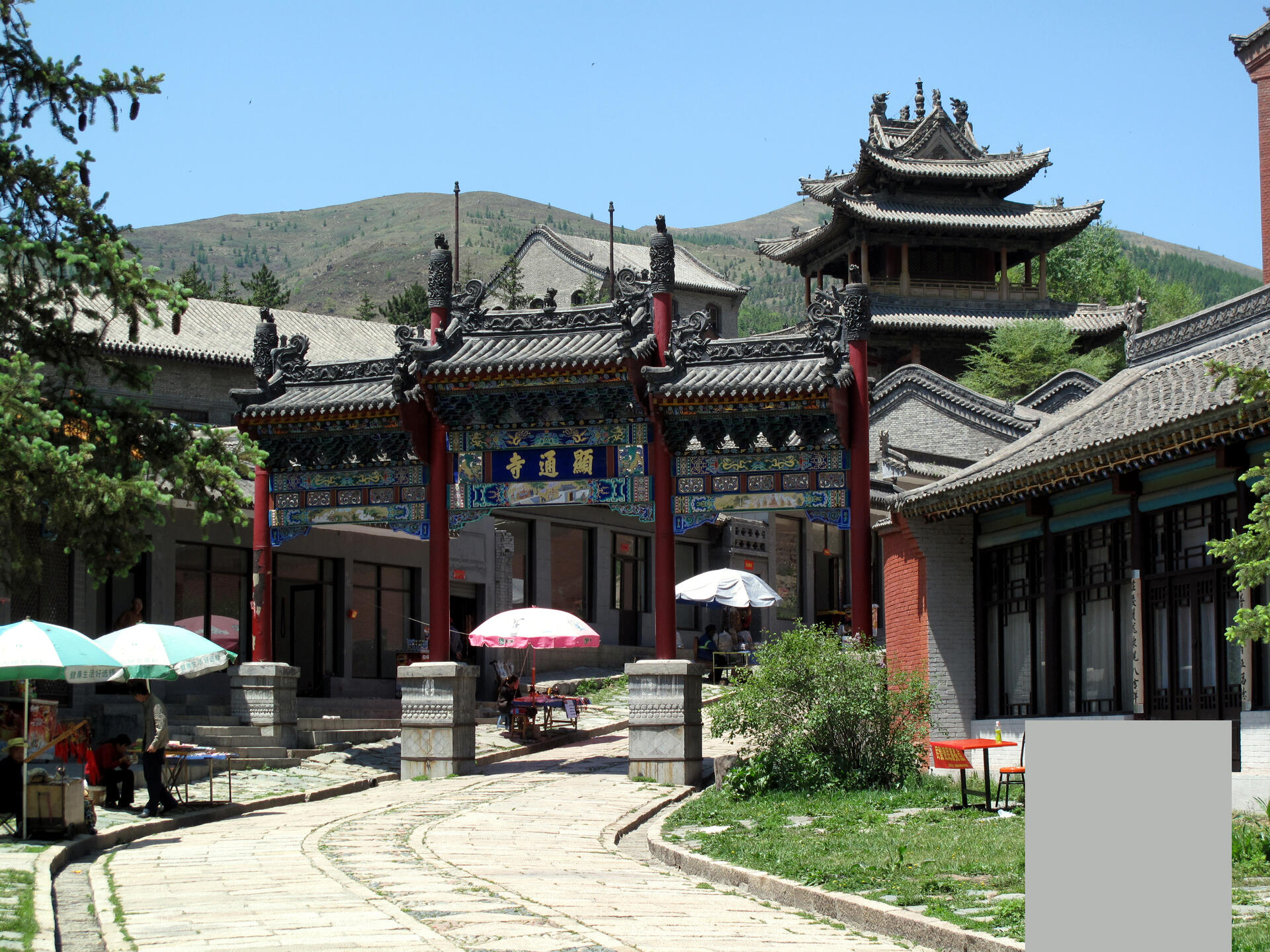
© G41rn8, CC BY-SA 4.0 Resized from original. (This derivative is under the same CC BY-SA license.)
World Heritage Research
Discover scientific research and academic studies that deepen our understanding of Mount Wutai from its history and significance to its conservation, management, and contemporary challenges.
-
Design Research on Mount Wutai Lacquer Trays Based on Cultural Hierarchy Theory
A systematic approach using cultural hierarchy theory successfully enhances the depth and user experience of regional cultural products, as demonstrated by the development of lacquer ceremonial trays for Mount Wutai. The study deconstructed the site's cultural resources into material, behavioral, and spiritual layers, guiding a design process that integrated craftsmanship inheritance, functional adaptation, and emotional resonance. Questionnaire surveys informed the creation of five trays, showcasing how motif extraction, color systems, and form adaptation can reflect regional identity while meeting user needs. This method offers a replicable framework for similar cultural product development.
Pengyue, L., & Tian, T. (2026). Design Research on Mount Wutai Lacquer Trays Based on Cultural Hierarchy Theory. Research on Literary and Art Development, 7(2), 113–116. https://doi.org/10.47297/wsprolaadwsp2634-786525.20260702
View Publication Record | Read Publication -
Research on the Development of Religious Tourism Resources in the Mount Wutai Scenic Area, Shanxi Province
Mount Wutai, a UNESCO World Heritage Site and significant Buddhist cultural landmark, is experiencing a shift from faith-driven tourism to broader cultural tourism. However, its development faces challenges such as spatial planning issues, limited religious and cultural experiences, infrastructure strain, and ecological pressure. Research suggests that enhancing religious and cultural depth, improving facilities, promoting ecological sustainability, and diversifying tourism products could elevate tourist experiences and support high-quality development in Shanxi Province. The study employed literature review, questionnaire surveys, and comprehensive analysis to assess current trends, identify problems, and propose optimization strategies.
Wang, X. (2026). Research on the Development of Religious Tourism Resources in the Mount Wutai Scenic Area, Shanxi Province. Modern Economics & Management Forum, 7(3), 283. https://doi.org/10.32629/memf.v7i3.5380
View Publication Record | Read Publication -
Historic landscape images and contemporary spatial practices at religious heritage sites: evidence from Mount Wutai, China
A pronounced dislocation between historic landscape images and contemporary spatial practices was identified at Mount Wutai, revealing that sites with strong symbolic significance but interrupted ritual continuity attract limited engagement. Conversely, areas with active religious practices maintain both symbolic and experiential prominence. The study argues that the persistence of sacred landscape meaning relies on continued enactment of landscape practices, not just material heritage. Researchers spatially interpreted historical textual representations and compared them with contemporary movement patterns and dwell times to explore this dynamic. This relational understanding of image, practice, and sacredness offers implications for managing religious and cultural landscapes.
Bai, X., Ji, T., Jiao, X., & Sakai, T. (2026). Historic landscape images and contemporary spatial practices at religious heritage sites: evidence from Mount Wutai, China. Journal of Asian Architecture and Building Engineering, 1–18. https://doi.org/10.1080/13467581.2026.2721906
View Publication Record | Read Publication -
A Visual Analysis of the Map of Mount Wutai in Mogao Cave 61 and Its Significance
A visual analysis of the map of Mount Wutai in Mogao Cave 61 reveals its significance as both a sacred landscape reconstruction and a political narrative. The mural, the largest extant landscape depiction on the Silk Road, serves as a visual pilgrimage space for believers unable to visit Mount Wutai while also reflecting the Guiyijun regime's political aspirations of peace and stability. Through art historical and iconographic analysis, the study demonstrates that this map mirrors cross-regional pilgrimage networks and the ideal order of multi-ethnic coexistence, underscoring Dunhuang's role as a cultural crossroads on the Silk Road.
Li, X. (2026). A Visual Analysis of the Map of Mount Wutai in Mogao Cave 61 and Its Significance. Communications in Humanities Research, 115(1), 27–32. https://doi.org/10.54254/2753-7064/2026.ht36381
View Publication Record | Read Publication -
Women in temples : the reconstruction of modern Chinese Buddhism temples in Mount Wutai
Mount Wutai, a UNESCO World Heritage Site and one of Chinese Buddhism's four sacred mountains, has seen significant transformation in its temple architecture and practices since the implementation of China's Reform and Opening-up policy. A recent study highlights how women have played a pivotal role in this reconstruction process, challenging traditional gender norms within Buddhist institutions. The research explores the evolution of temple spaces, from their historical significance to their modern adaptations, emphasizing the agency of women in shaping religious and architectural landscapes. Through qualitative analysis, including interviews and archival research, the study reveals how women's involvement has influenced the preservation, renovation, and spiritual revitalization of Mount Wutai's temples. This work contributes to a broader understanding of gender dynamics in Buddhist communities and the intersection of culture, religion, and heritage conservation.
Ji, X. Women in temples : the reconstruction of modern Chinese Buddhism temples in Mount Wutai. https://doi.org/10.14711/thesis-991013401042903412
View Publication Record | Read Publication -
Mapping the Sacred Landscape: Spatial Representation and Narrative in Panoramic Maps of Mount Wutai and Mount Putuo
Panoramic maps (shengjing tu) of Mount Wutai and Mount Putuo, often preserved as woodblock prints, serve not merely as pilgrimage guides but as narrative-driven representations that emphasize sacredness over geographical accuracy. These maps prioritize significant monasteries and landscape features, integrating local legends and historical narratives to convey the spiritual essence of the sites. Unlike practical roadmaps, their primary function is to evoke a sense of reverence through artistic conventions, while their affordability via woodblock printing facilitated widespread dissemination, reinforcing the sacred significance of these Buddhist landscapes. The study reveals that these maps are folk landscape paintings shaped by religious beliefs and geomantic principles, offering an idealized spatial representation rather than strict realism.
Pan, Y. (2025). Mapping the Sacred Landscape: Spatial Representation and Narrative in Panoramic Maps of Mount Wutai and Mount Putuo. Religions, 16(6), 671. https://doi.org/10.3390/rel16060671
View Publication Record | Read Publication -
On the Practical Philosophy of the Nuns’ Buddhist Academy at Mount Wutai Through “One-Week Intensive Buddha Retreats”
A living tradition: The Nuns’ Buddhist Academy at Mount Wutai’s 'One-Week Intensive Buddha Retreats' embodies the practical philosophy of Chinese Buddhism, demonstrating how scriptural teachings—particularly from the Avatamsaka and Amitābha Sutras—are translated into tangible spiritual practice. This approach integrates textual analysis with sociological observation to reveal the enduring relevance of Pure Land practice in contemporary society. By emphasizing experiential learning and the 'non-obstruction of principle and phenomenon,' the study argues that this tradition remains vibrant, blending theoretical depth with immediate spiritual application.
Li, Y., Zhang, Y., & Wang, J. (2025). On the Practical Philosophy of the Nuns’ Buddhist Academy at Mount Wutai Through “One-Week Intensive Buddha Retreats”. Religions, 16(10), 1267. https://doi.org/10.3390/rel16101267
View Publication Record | Read Publication