World Heritage Identification Number: 1470
World Heritage since: 2018
Category: Cultural Heritage
WHE Type: Religious Sites & Sacred Architecture
Transboundary Heritage: No
Endangered Heritage: No
Country: 🇩🇪 Germany
Continent: Europe
UNESCO World Region: Europe and North America
Map
Naumburg Cathedral: A Testament to Medieval Art and Architecture
The Naumburg Cathedral, nestled in the picturesque town of Naumburg in central Germany, stands as a testament to the rich artistic and architectural heritage of the Middle Ages. Inscribed as a UNESCO World Heritage Site in 2018, this remarkable structure offers a unique insight into the evolution of European architecture during the transitional period from Romanesque to Gothic styles.
More to come…UNESCO Description of the World Heritage Site
Located in the eastern part of the Thuringian Basin, the Cathedral of Naumburg, whose construction began in 1028, is an outstanding testimony to medieval art and architecture. Its Romanesque structure, flanked by two Gothic choirs, demonstrates the stylistic transition from late Romanesque to early Gothic. The west choir, dating to the first half of the 13th century, reflects changes in religious practice and the appearance of science and nature in the figurative arts. The choir and life-size sculptures of the founders of the Cathedral are masterpieces of the workshop known as the ‘Naumburg Master’.
UNESCO Justification of the World Heritage Site
Criterion (i): The episcopal church of Naumburg is unique among the medieval cathedrals due to the west choir conceptualized and designed by a brilliant sculptor – the “Naumburg Master” – and his workshop. The organic combination of architecture, sculpture and glass paintings created an extraordinary synthesis of the arts. The twelve life-sized, colored founder figures in the west choir, the passion reliefs of the west rood screen, the crucifixion group on its portal and the numerous capitals are outstanding examples of the architectural sculpture of the Middle Ages. One of the founder figures – Uta of Ballenstedt – is considered as one of the icons of Gothic sculpture. They are sculpted from the same blocks of stone as the pillar strips, and the various media are integrated in the fabric of the architecture and its manner of construction. A single intelligence stood behind the integrated conception of the architecture, sculpture, and stained glass and merged them into one integral piece of work.
Criterion (ii): The workshop organization of sculptors and stonemasons was established in the early 13th century and is known under the name Naumburg Master. It constitutes one of the decisive conveyors and pioneers of the ground-breaking innovations in architecture and sculpture in the second half of the 13th century. The migration of the workshop of the Naumburg Master, from northeastern France through the Middle Rhine areas to the eastern boundaries of the Holy Roman Empire and further to southwestern Europe, gives testimony to the extensive European cultural exchange during the High Middle Ages.
Encyclopedia Record: Naumburg Cathedral
Naumburg Cathedral, located in Naumburg, Germany, is the former cathedral of the Bishopric of Naumburg-Zeitz. The church building, most of which dates back to the 13th century, is a renowned landmark of the German late Romanesque and was recognised as a UNESCO World Heritage Site in 2018. The west choir with the famous donor portrait statues of the twelve cathedral founders (Stifterfiguren) and the Lettner, works of the Naumburg Master, is one of the most significant early Gothic monuments.Additional Site Details
Area: 1.82 hectares
Number of Components: 1
(ii) — Significant interchange of human values
Coordinates: 51.1548055556 , 11.804
Image
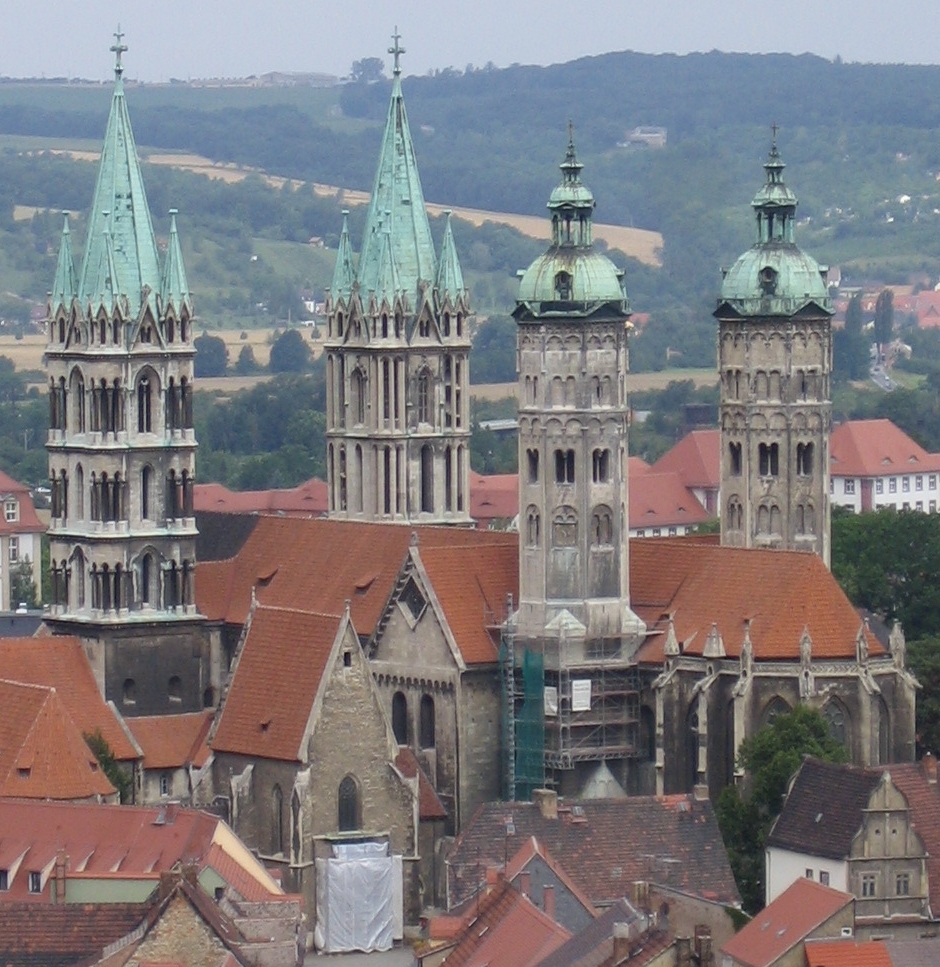
© Wst at German Wikipedia, CC BY-SA 3.0 Resized from original. (This derivative is under the same CC BY-SA license.)