World Heritage Identification Number: 534
World Heritage since: 2000
Category: Cultural Heritage
WHE Type: Agriculture Landscapes, Parks & Gardens
Transboundary Heritage: No
Endangered Heritage: No
Country: 🇩🇪 Germany
Continent: Europe
UNESCO World Region: Europe and North America
Map
The Garden Kingdom of Dessau-Wörlitz: A Landscape Design Masterpiece from the Age of Enlightenment
The Garden Kingdom of Dessau-Wörlitz, inscribed as a UNESCO World Heritage Site in 2000, stands as a testament to the ideals of the Age of Enlightenment in the 18th century. This cultural landscape, spanning an area of 142 square kilometers within the Middle Elbe Biosphere Reserve in the German state of Saxony-Anhalt, offers a unique blend of aesthetics, education, and economics.
More to come…UNESCO Description of the World Heritage Site
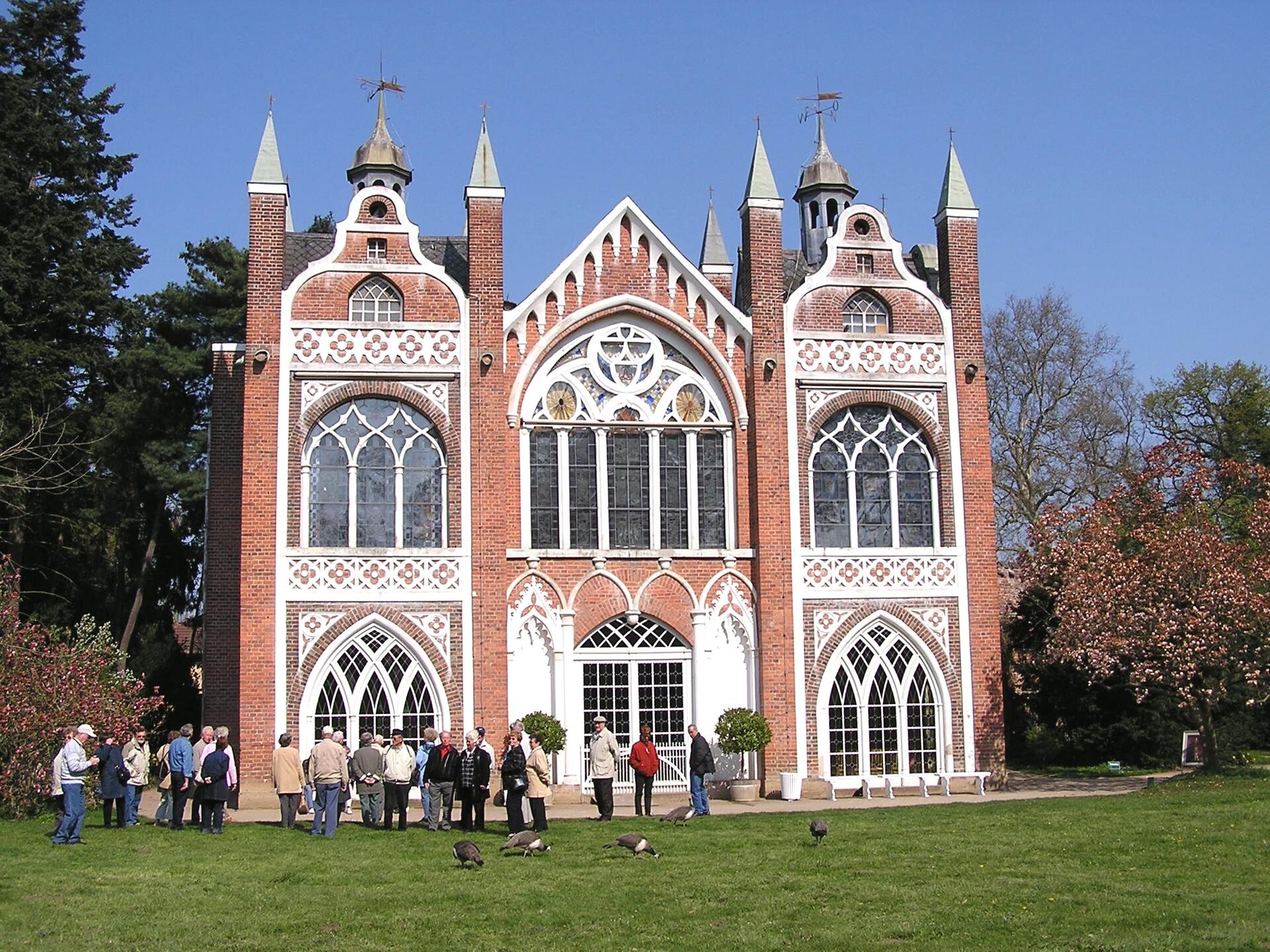
The Garden Kingdom of Dessau-Wörlitz is an exceptional example of landscape design and planning of the Age of the Enlightenment, the 18th century. Its diverse components - outstanding buildings, landscaped parks and gardens in the English style, and subtly modified expanses of agricultural land - serve aesthetic, educational, and economic purposes in an exemplary manner.
UNESCO Justification of the World Heritage Site
Criterion (ii): The Garden Kingdom of Dessau-Wörlitz is an outstanding example of the application of the philosophical principles of the Age of the Enlightenment to the design of a landscape that integrates art, education, and economy in a harmonious whole.
Criterion (iv): The 18th century was a seminal period for landscape design, of which the Garden Kingdom of Dessau-Wörlitz is an exceptional and wide-ranging illustration.
Encyclopedia Record: Dessau-Wörlitz Garden Realm
The Dessau-Wörlitz Garden Realm is a cultural landscape and World Heritage Site in Germany, located between the city of Dessau and the town of Wörlitz in Central Germany. One of the first and largest English parks in Germany and continental Europe, it was created in the late 18th century under the regency of Duke Leopold III of Anhalt-Dessau. Today, the cultural landscape of Dessau-Wörlitz encompasses an area of 142 km2 (55 sq mi) within the Middle Elbe Biosphere Reserve in the German state of Saxony-Anhalt. Because of its exceptional landscape design and testimony to the ideals of the Age of Enlightenment, the Dessau-Wörlitz Garden Realm was designated as a world heritage site in 2000.Additional Site Details
Area: 11,891 hectares
Number of Components: 3
(iv) — Outstanding example of a type of building or landscape
Coordinates: 51.8425 , 12.42083
World Heritage Research
Discover scientific research and academic studies that deepen our understanding of Garden Kingdom of Dessau-Wörlitz from its history and significance to its conservation, management, and contemporary challenges.
-
Drehberg Olympic Games: An Overlooked Phenomenon in Cultural and Sports Heritage Tourism of the Dessau-Wörlitz Region
A long-forgotten tradition of the Drehberg Olympic Games, a pre-modern sporting event held annually in 18th-century Germany, has been revived after nearly two centuries. This study reveals a significant gap between the cultural importance of this heritage phenomenon and its minimal representation in tourism discourse within the UNESCO World Heritage Site of Dessau-Wörlitz Garden Realm. Through archival research, interviews, field visits, and content analysis, the research highlights Drehberg's untapped potential as a heritage tourism destination, integrating sport, education, history, and local identity. The findings emphasize the need for re-evaluating promotional strategies to better position Drehberg within the region's cultural and touristic landscape.
Rozmiarek, M., Parowicz, I., & Włodarczyk, A. (2026). Drehberg Olympic Games: An Overlooked Phenomenon in Cultural and Sports Heritage Tourism of the Dessau-Wörlitz Region. Heritage & Society, 1–22. https://doi.org/10.1080/2159032x.2026.2693434
View Publication Record | Read Publication -
Garden Empire or the Sublime Politics of the Chinese-Gothic Style
Eighteenth-century European gardens, particularly those incorporating Chinese-Gothic architectural elements, served as political symbols reflecting royal power and governance ideals. The study reveals that the 'Chinese-Gothic style,' popularized by architect Sir William Chambers, was not merely an aesthetic choice but a deliberate representation of empire and sublimity, contrasting with the strict geometric designs of French Renaissance gardens. This style was contentious, as evidenced by contemporary critiques such as William Mason's satirical poem, which highlighted its discordant elements. The research explores how garden design in sites like Kew Gardens (London) and Dessau-Wörlitz (Germany) mirrored broader political ideologies, with the irregular 'landscape garden' style being championed as a reflection of constitutional governance over despotic rule.
Zhang, C. (2018). Garden Empire or the Sublime Politics of the Chinese-Gothic Style. Goethe Yearbook, 25(1), 77–96. https://doi.org/10.1353/gyr.2018.0004
View Publication Record | Read Publication -
The use of English and German pattern books at the Garden Kingdom of Dessau-Wörlitz at the turn of the 19th century
A groundbreaking study challenges the conventional narrative of cultural and architectural transfer between Britain and Germany during the late 18th century. Focusing on three lesser-explored structures within the UNESCO-listed Garden Kingdom of Dessau-Wörlitz, this research reveals a complex process of replication, translation, and adaptation in design, with one case—the 'Schlangenhaus' or 'snake house'—suggesting it may have influenced British pattern books, potentially reversing the direction of cultural exchange. The study also sheds light on copyright and authorship issues of the era, where German publications copied British designs without attribution. Employing a comparative analysis of British and German pattern books, literature reviews, expert consultations, and site visits, this work re-evaluates the significance of these structures within the broader architectural discourse of 18th-century Europe.
Oschatz, C. (2018). The use of English and German pattern books at the Garden Kingdom of Dessau-Wörlitz at the turn of the 19th century. Birmingham City University. https://doi.org/10.5165/HAWK-HHG/416
View Publication Record | Read Publication -
The Garden Kingdom of Dessau-Wörlitz as an Example for the Management of a Historical Monument
The Garden Kingdom of Dessau-Wörlitz, spanning 145 square kilometers, stands as a critical example for the preservation and management of historical cultural landscapes. This study highlights the necessity of a comprehensive, scientifically grounded approach to safeguard such sites from irreversible changes due to development or infrastructural projects like power lines and wind energy areas. Previous research had focused on individual elements like castles, parks, and town centers, but lacked an integrated analysis of the entire landscape. The monument master plan developed here addresses this gap by providing a holistic framework for evaluating and managing the historical cultural landscape, ensuring its integrity is maintained while balancing modern demands.
Tenzer, H. (2016). The Garden Kingdom of Dessau-Wörlitz as an Example for the Management of a Historical Monument. Fábos Conference on Landscape and Greenway Planning Volume 5 Issue 1 2016. https://doi.org/10.7275/FABOS.602
View Publication Record | Read Publication