World Heritage Identification Number: 1006
World Heritage since: 2000
Category: Cultural Heritage
WHE Type: Archaeological Sites
Transboundary Heritage: No
Endangered Heritage: No
Country: 🇧🇪 Belgium
Continent: Europe
UNESCO World Region: Europe and North America
Map
The Neolithic Flint Mines at Spiennes (Mons): A Unique European Legacy
The Neolithic Flint Mines at Spiennes, situated near the Walloon village of Spiennes, southeast of Mons in Belgium, stand as a remarkable testament to the ingenuity and resourcefulness of Neolithic farming communities. This extensive mining complex, covering approximately 172 hectares, is one of the world's most important archaeological landscapes of prehistoric mining. Offering exceptional insights into Neolithic technology and society, the site was inscribed on the UNESCO World Heritage List in 2000.
The mines at Spiennes represent one of the largest and oldest Neolithic flint-mining complexes in northwestern Europe, dating back to the mid and late Neolithic period between 4,300 and 2,200 BC. They were developed to extract high-quality flint, a hard, durable stone that was highly valued for the manufacture of tools and weapons. Flint axes, blades, and other implements produced from this material played a crucial role in hunting, woodworking, farming, food preparation, and many aspects of daily life. The widespread distribution of Spiennes flint also reflects the existence of extensive exchange networks among Neolithic communities.
The archaeological importance of the Spiennes flint mines was first recognized during the nineteenth century, and systematic excavations have continued to reveal new information about the site. Archaeologists have documented thousands of mining shafts, recovered numerous stone tools and antler picks, and reconstructed many aspects of Neolithic mining and tool production. Ongoing research continues to improve our understanding of the technological skills and daily lives of the communities that worked the mines.
What sets the Spiennes mines apart is the remarkable diversity of mining techniques employed to extract the flint. The miners devised various methods to excavate the flint deposits, including shallow extraction pits, deep vertical shafts, and horizontal galleries that followed the flint seams underground. Some shafts extended more than 15 metres below the surface, demonstrating an impressive understanding of geology and mining engineering. These techniques allowed them to access flint layers at different depths and angles, demonstrating an impressive level of problem-solving and adaptability of Neolithic communities in exploiting natural resources.
Once extracted, the flint was carefully worked into axe blanks, blades, and other implements by skilled craftspeople. Many of these unfinished or finished tools were transported well beyond the mining area, indicating the existence of extensive exchange networks among Neolithic communities. The widespread distribution of Spiennes flint across present-day Belgium and neighboring regions highlights the site's importance not only as a center of resource extraction but also as a hub of prehistoric production and trade.
Another notable aspect of the Spiennes mines is their close association with nearby Neolithic habitation. Archaeological evidence indicates that the mining activities were closely connected with surrounding settlements, providing valuable insights into the social organization, economy, and daily life of the communities that worked the mines. This relationship helps archaeologists reconstruct not only prehistoric mining practices but also the broader cultural landscape of the Neolithic period.
The Neolithic Flint Mines at Spiennes offer a unique window into the technological achievements and economic organization of Europe's early farming societies. Their exceptional state of preservation has enabled archaeologists to reconstruct ancient mining methods in remarkable detail, making the site one of the most important sources of information on prehistoric flint extraction.
The site's inscription on the UNESCO World Heritage List recognizes its outstanding universal value and its contribution to our understanding of Neolithic technology, society, and the early exploitation of natural resources. As research and conservation continue, the mines remain an invaluable record of human innovation and cooperation during one of the most transformative periods in European prehistory.
UNESCO Description of the World Heritage Site
The Neolithic flint mines at Spiennes, covering more than 100 ha, are the largest and earliest concentration of ancient mines in Europe. They are also remarkable for the diversity of technological solutions used for extraction and for the fact that they are directly linked to a settlement of the same period.
UNESCO Justification of the World Heritage Site
Criterion (i): The Neolithic Flint Mines at Spiennes provide exceptional testimony to early human inventiveness and application.
Criterion (iii): The arrival of the Neolithic cultures marked a major milestone in human cultural and technological development, which is vividly illustrated by the vast complex of ancient flint mines at Spiennes.
Criterion (iv): The flint mines at Spiennes are outstanding examples of the Neolithic mining of flint, which marked a seminal stage of human technological and cultural progress.
Encyclopedia Record: Neolithic flint mines of Spiennes
The Neolithic flint mines of Spiennes are among the largest and earliest Neolithic flint mines which survive in north-western Europe, located close to the Walloon village of Spiennes, southeast of Mons, Belgium. The mines were active during the mid and late Neolithic between 4,300 and 2,200 BC. Declared to be "remarkable for the diversity of technological solutions used for extraction" the site and its surroundings were inducted into the UNESCO's list of World Heritage Sites in 2000.Additional Site Details
Area: 172 hectares
Number of Components: 1
(iii) — Unique or exceptional testimony to a cultural tradition
(iv) — Outstanding example of a type of building or landscape
Coordinates: 50.4201134823 , 3.9822689106
Image
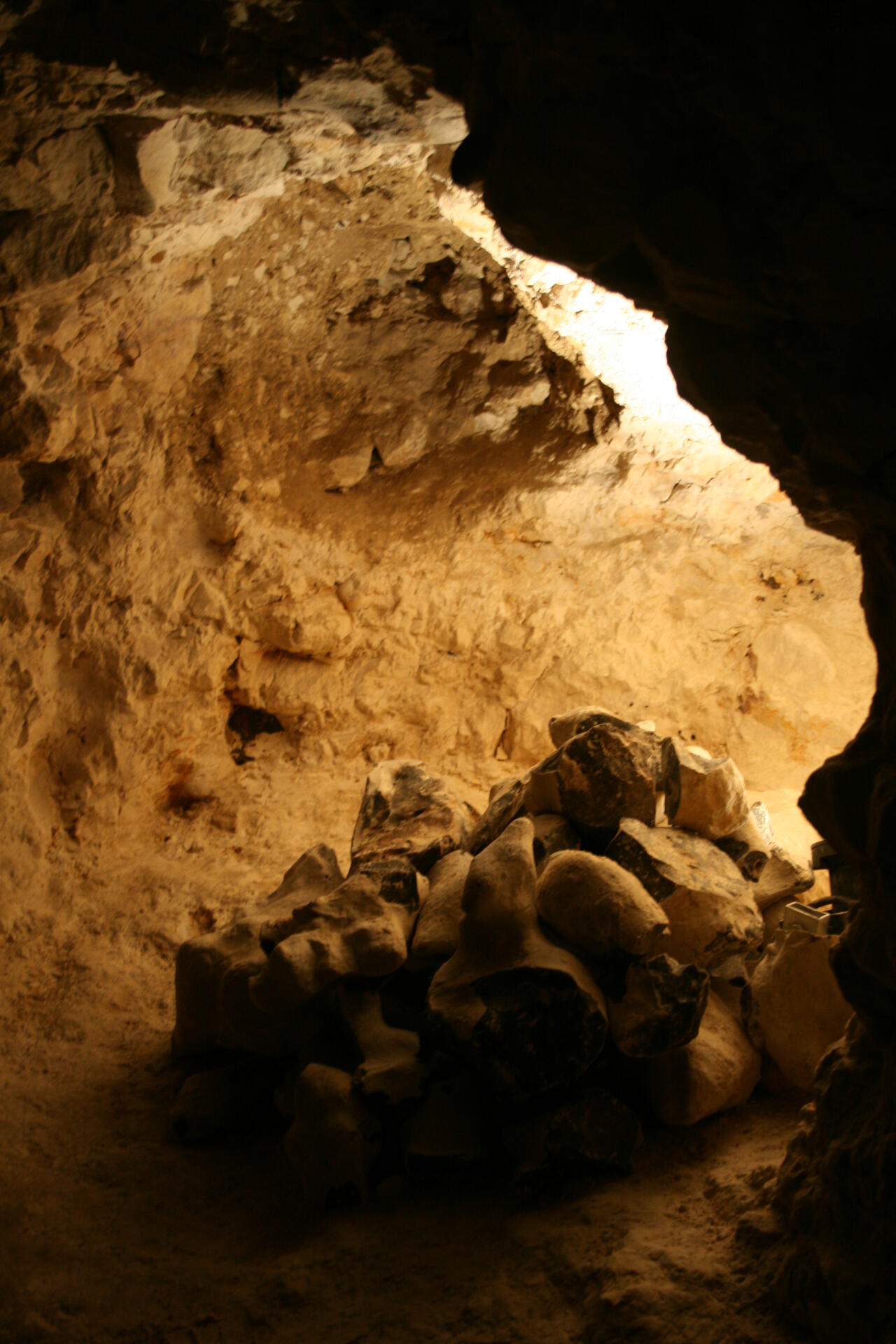
© Jean-Pol GRANDMONT, CC BY-SA 3.0 Resized from original. (This derivative is under the same CC BY-SA license.)
World Heritage Research
Discover scientific research and academic studies that deepen our understanding of Neolithic Flint Mines at Spiennes (Mons) from its history and significance to its conservation, management, and contemporary challenges.
-
The Neolithic flint mines of Spiennes (Belgium)
The Neolithic flint mines of Spiennes, Belgium, stand out as a remarkable example of early mining practices in North-Western Europe, dating back to the end of the fifth millennium BC. This UNESCO World Heritage Site, discovered in the late 19th century, spans over 100 hectares and showcases sophisticated mining techniques used to extract large flint slabs from depths of 15 to 16 meters. The site's significance is further underscored by its nearly 2000-year exploitation period and the proximity of an enclosed settlement. Ongoing archaeological research, supported by continuous investment from the Public Service of Wallonia, continues to uncover new data, contributing valuable insights into Neolithic mining and knapping techniques.
Collet, H., & Collin, J.-P. (2023). The Neolithic flint mines of Spiennes (Belgium). Prehistoric Flint Mines in Europe, 103–130. https://doi.org/10.2307/jj.8816101.8
View Publication Record | Read Publication -
The Good, the Bad and the Ugly. Selection of flint nodules, first step of the chaîne opératoire: data from ST6 Neolithic mine (Spiennes, Belgium)
Neolithic miners at Spiennes (Belgium) demonstrated a nuanced approach to flint nodule selection, prioritizing blocks with minimal flaws such as extensional fractures. Analysis of shaft ST6, exploited between 4200-3600 BCE, revealed variability in selection criteria across mined beds, suggesting adaptive strategies based on raw material quality. The presence of hammerstones and roughouts within the mine raises intriguing questions about potential underground knapping activities, challenging assumptions about Neolithic tool production practices.
Cattelain, L., Collet, H., Collin, J.-P., Hennebert, M., & Woodbury, M. (2024). The Good, the Bad and the Ugly. Selection of flint nodules, first step of the chaîne opératoire: data from ST6 Neolithic mine (Spiennes, Belgium). Anthropologica Et Praehistorica. https://doi.org/10.57937/AP.2023.011
View Publication Record | Read Publication -
Prehistoric Flint Mines in Europe
Prehistoric flint mining in Europe reveals complex social and economic systems that thrived from the Neolithic to the Bronze Age. This comprehensive study, led by the UISPP Commission on Flint Mining, synthesizes research from 18 articles contributed by archaeologists across ten European countries. It highlights the uniformity of mining practices while acknowledging diverse methodologies and traditions. Key insights include the geographical and geological contexts of major mines like Spiennes in Belgium, Grime’s Graves in England, and Rijckholt-Sint Geertruid in the Netherlands, along with the Defensola mine in Italy. The research examines mining zone topography, exploitation techniques, dating, lithic production, labor organization, settlement patterns, product distribution, and symbolic aspects. Richly illustrated with color photographs and drawings, this work serves as a valuable resource for both academics and general readers seeking up-to-date information on prehistoric flint mining communities.
Françoise, B., Jacek, L., Alan, S., & Dagmara H., W. (Eds.). (2023). Prehistoric Flint Mines in Europe. https://doi.org/10.32028/9781803272214
View Publication Record | Read Publication -
Raw material exploitation strategies on the flint mining site of Spiennes (Hainaut, Belgium)
The Neolithic flint mines at Spiennes (Mons, Belgium) represent one of Europe's most extensive and long-lasting mining operations, spanning from 4350 to 2300 BCE. This study reveals that the site's longevity was enabled by its rich flint resources, favorable geography, and sophisticated mining strategies, which evolved over time. Analysis of stratigraphic evidence and flint production suggests variability in both synchronic and diachronic mining techniques, particularly for standardized axeheads and blades. The research also proposes a hypothesis linking the seasonality of mining activities to the permanent settlement of Michelsberg populations, who combined farming with specialized mining and knapping. Group specialization, social control of resources, and century-old traditions likely sustained Spiennes' dominance in the Mons Basin's raw material supply for centuries.
Collet, H., Lavachery, P., & Woodbury, M. (2016). Raw material exploitation strategies on the flint mining site of Spiennes (Hainaut, Belgium). Journal of Lithic Studies, 3(2), 127–162. https://doi.org/10.2218/jls.v3i2.1821
View Publication Record | Read Publication