World Heritage Identification Number: 1635
World Heritage since: 2021
Category: Cultural Heritage
WHE Type: Historic Cities & Urban Areas
Transboundary Heritage: No
Endangered Heritage: No
Country: 🇫🇷 France
Continent: Europe
UNESCO World Region: Europe and North America
Map
Nice, Winter Resort Town of the Riviera: A Cosmopolitan Haven Between Sea and Mountains
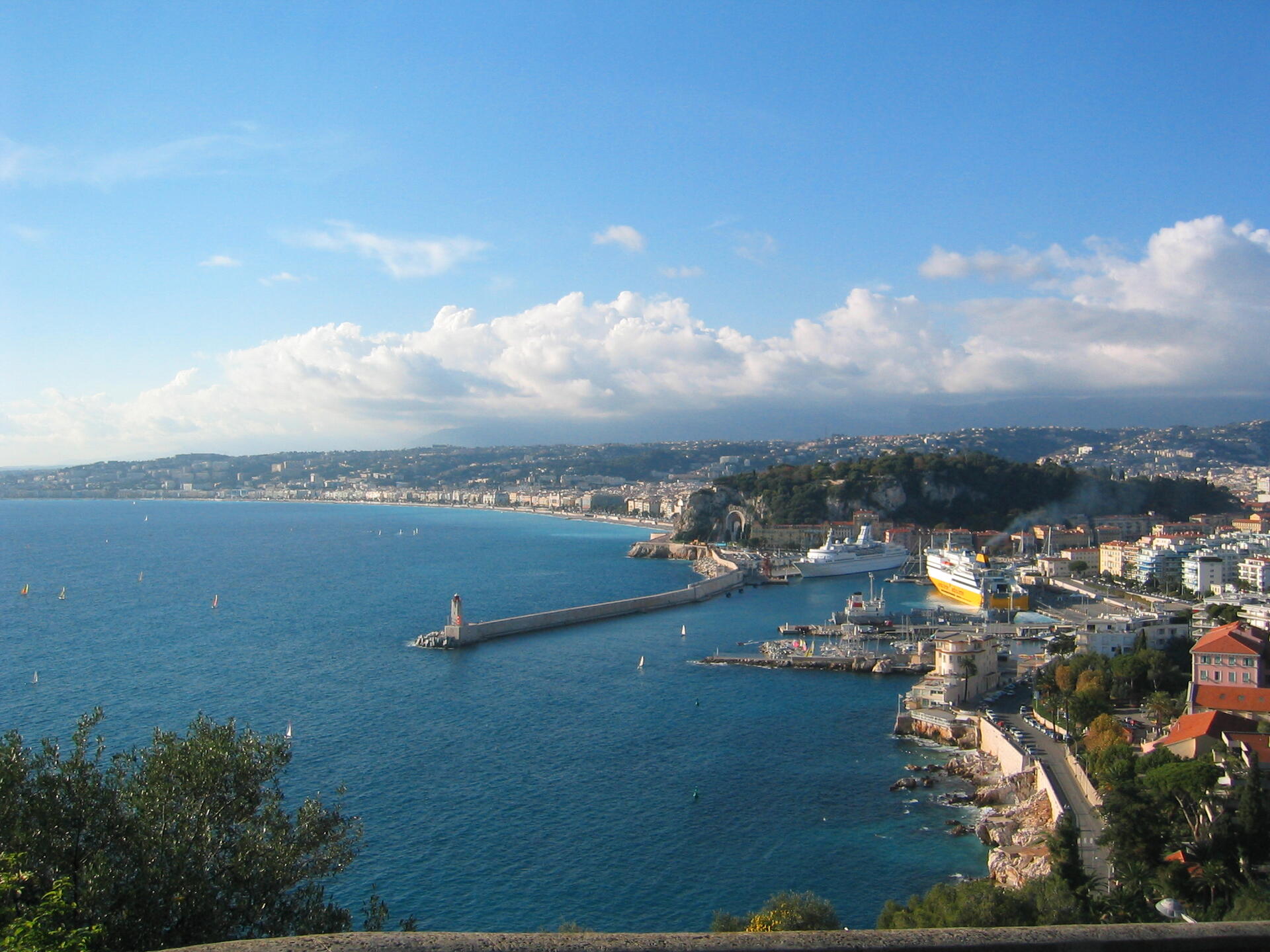
Nice, officially recognized as a UNESCO World Heritage Site in 2021, stands out as a unique example of a winter resort town that seamlessly blends history, culture, and natural beauty. Situated on the Mediterranean coast, at the foot of the Alps, and close to the Italian border, Nice offers a captivating blend of coastal and mountainous landscapes that have drawn visitors since the mid-18th century.
More to come…UNESCO Description of the World Heritage Site
Nice, located on the Mediterranean, at the foot of the Alps, near the Italian border, in the Provence-Alpes-Côte d’Azur region, reflects the development of a city devoted to winter tourism, making the most of its mild climate and its coastal situation, between sea and mountains. From the mid-18th century, the site attracted growing numbers of aristocratic and upper-class families, mainly British, who developed the habit of spending their winters there. In 1832, Nice, then part of the Kingdom of Sardinia, set up the “Consiglio d’Ornato” which drew up a city planning scheme and architectural requirements designed to make the city attractive to foreigners. Thus, the “Camin dei Ingles”, a modest path which had been created along the coastline by British winter visitors in 1824, subsequently became the prestigious Promenade des Anglais. After the city was ceded to France in 1860, and thanks to its connection to the European rail network, an increasing number of winter visitors from all countries flocked to the city. This led to successive phases of development of new districts beyond the medieval old town. The diverse cultural influences of the winter visitors and the desire to make the most of the weather conditions and the coastal landscape have shaped the urban development and eclectic architectural styles of these districts, contributing to Nice’s reputation as a cosmopolitan winter resort.
UNESCO Justification of the World Heritage Site
Criterion (ii): Nice, Winter Resort Town of the Riviera, represents an important example of the fusion of British, Italian, French, Russian and other cultural influences, resulting in a variety of architectural styles, designs and decorations of buildings that express its cosmopolitan character as a winter resort, especially in the 19th century, under the impetus of the Consiglio d'Ornato. Fashionable styles in European capitals (neo-classicism, historicism, eclecticism, Belle-Époque, neo-colonial, regionalist, Art-deco ...) were imported and reinterpreted in Nice, under the influence of sponsors, architects and craftsmen from different countries, who brought their know-how in decoration (stucco, sgraffito, painted friezes, rockeries, ceramics...). Foreign contributions are also considerable in terms of the use and function of the facilities. Indeed, the development of winter resorts has led to the proliferation of three types of accommodation intended for foreigners: the travellers hotel, the villa and the seasonal holiday rentals. The amphitheatre setting facing the sea, the addition of vegetation (including many acclimatised species), and the walks - such as the Terrasse des Ponchettes and the Promenade des Anglais – encourage appreciation of the beauty of the site and the mild climate. The sequenced street grid composed of north-south axes and perpendicular secondary roads favours the heliotropism of the facades and the perspectives towards the hills or the sea, by offering many facades facing south, while making room for different forms of vegetation: parks and public and private gardens, and separate plots and borders often planted with exotic species.
Encyclopedia Record: Nice
Nice is a city in and the prefecture of the Alpes-Maritimes department in France. The Nice agglomeration extends far beyond the administrative city limits, with a population of nearly one million on an area of 744 km2 (287 sq mi). Located on the French Riviera, the southeastern coast of France on the Mediterranean Sea, at the foot of the French Alps, Nice is the second-largest French city on the Mediterranean coast and second-largest city in the Provence-Alpes-Côte d'Azur region after Marseille. Nice is approximately 13 kilometres (8 mi) from the principality of Monaco and 30 kilometres (19 mi) from the French–Italian border. Nice's airport serves as a gateway to the region.Additional Site Details
Area: 522 hectares
Number of Components: 1
Coordinates: 43.7016944444 , 7.2723055556