World Heritage Identification Number: 1432
World Heritage since: 2014
Category: Natural Heritage
WHE Type: Natural Landscapes & Geographic Features
Transboundary Heritage: No
Endangered Heritage: No
Country: 🇧🇼 Botswana
Continent: Africa
UNESCO World Region: Africa
Map
The Okavango Delta: A Unique Inland Delta System
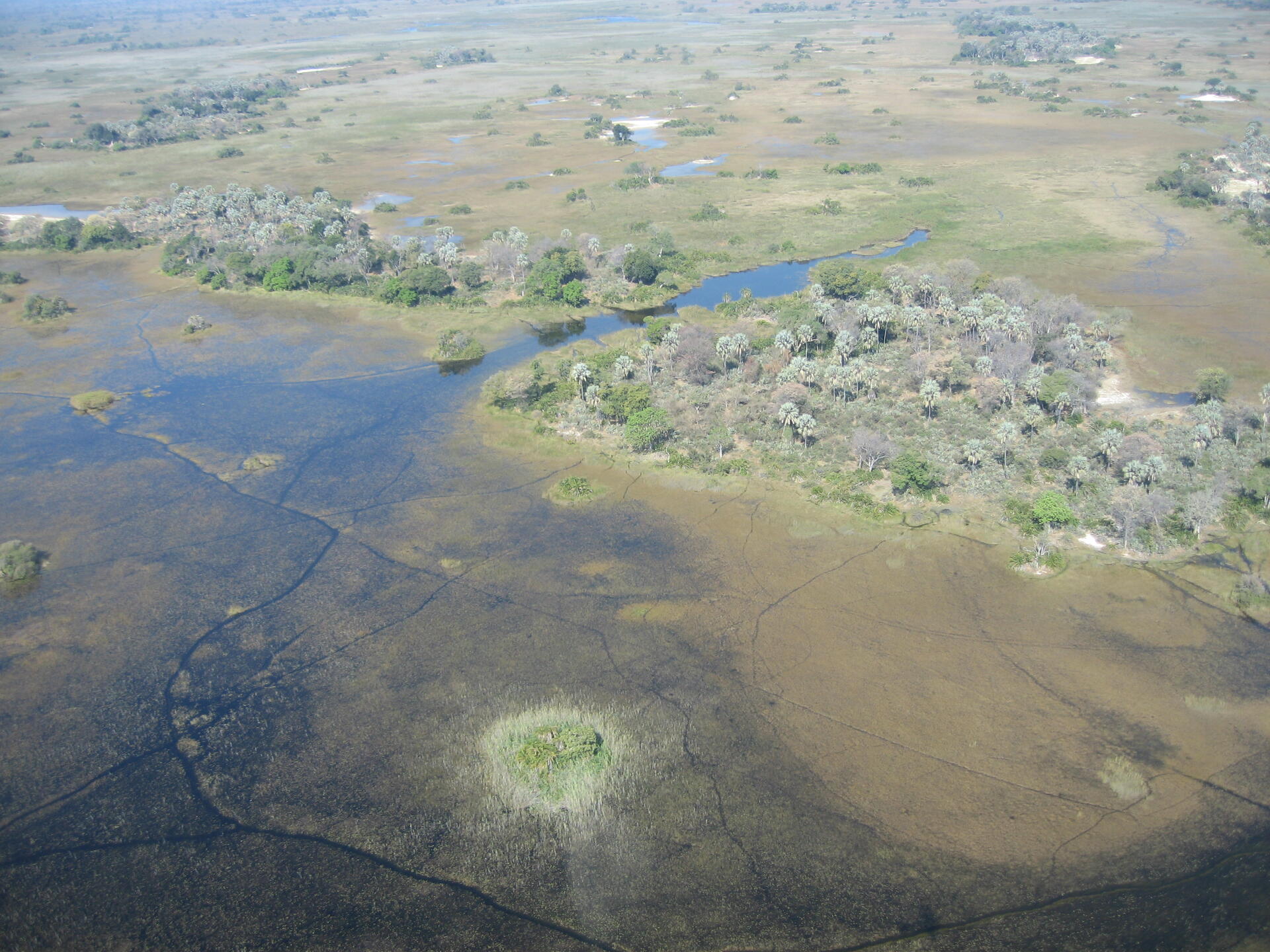
The Okavango Delta, located in north-western Botswana, is a remarkable natural wonder that stands out among the world's delta systems due to its unique characteristics. Inscribed as a UNESCO World Heritage Site in 2014, this delta comprises permanent marshlands and seasonally flooded plains, making it one of the few major interior delta systems that does not flow into a sea or ocean.
The Okavango Delta is situated within the endorheic basin of the Kalahari Desert, at an elevation ranging from 930 to 1,000 meters above sea level. This delta forms where the Okavango River reaches a tectonic trough, creating a complex network of channels, lagoons, and islands that can cover between 15,000 and 22,000 square kilometers, depending on seasonal flooding, while the UNESCO-listed core area encompasses about 20,000 square kilometers.
One of the distinctive features of the Okavango Delta is its timing of annual flooding. Unlike many other delta systems, which experience flooding during the rainy season, the Okavango Delta experiences flooding during the local dry season, as floodwaters arrive months after rainfall in the river’s Angolan headwaters.
This unusual pattern has resulted in the synchronization of the native plants and animals' biological cycles with these seasonal rains and floods. This intricate interplay between climatic, hydrological, and biological processes creates an exceptional example of how nature can adapt and thrive under challenging conditions.
The Okavango Delta is home to an impressive array of wildlife, including several threatened species of large mammals. Among these are the cheetah, African wild dog, lion, and populations of white and black rhinoceros that have been reintroduced through conservation programs. These animals coexist harmoniously within the diverse ecosystem, each playing a crucial role in maintaining the balance of the delicate food chain.
In addition to its rich biodiversity, the Okavango Delta boasts a wealth of plant life. The delta's wetlands support a variety of vegetation, from grasslands and reeds to forests and acacia woodlands. This diverse flora provides essential resources for the numerous animal species that inhabit the area.
The Okavango Delta is also of significant cultural importance to the local communities, particularly the San and Bakgalagadi peoples who have lived in harmony with the environment for centuries. Their traditional knowledge and practices have played a vital role in preserving the delta's unique ecosystem and biodiversity.
To protect this precious natural heritage, various conservation efforts have been implemented. These include the Moremi Game Reserve, the Mababe Depression Ramsar Site, and the Okavango Wilderness Project. These initiatives aim to safeguard the Okavango Delta's exceptional ecological processes and biodiversity.
Ultimately, the Okavango Delta represents a truly extraordinary example of the intricate relationship between climate, geology, hydrology, and biology. Its unique flooding patterns, rich biodiversity, and cultural significance make it a must-visit destination for anyone seeking to experience the wonders of nature. As we continue to face challenges related to climate change and habitat loss, the Okavango Delta serves as a powerful reminder of the importance of preserving our planet's natural treasures.
UNESCO Description of the World Heritage Site
This delta in north-west Botswana comprises permanent marshlands and seasonally flooded plains. It is one of the very few major interior delta systems that do not flow into a sea or ocean, with a wetland system that is almost intact. One of the unique characteristics of the site is that the annual flooding from the River Okavango occurs during the dry season, with the result that the native plants and animals have synchronized their biological cycles with these seasonal rains and floods. It is an exceptional example of the interaction between climatic, hydrological and biological processes. The Okavango Delta is home to some of the world’s most endangered species of large mammal, such as the cheetah, white rhinoceros, black rhinoceros, African wild dog and lion.
UNESCO Justification of the World Heritage Site
Criterion (vii): Permanent crystal clear waters and dissolved nutrients transform the otherwise dry Kalahari Desert habitat into a scenic landscape of exceptional and rare beauty, and sustain an ecosystem of remarkable habitat and species diversity, thereby maintaining its ecological resilience and amazing natural phenomena. The annual flood-tide, which pulses through the wetland system every year, revitalizes ecosystems and is a critical life-force during the peak of the Botswana’s dry season (June/July). The Okavango Delta World Heritage property displays an extraordinary juxtaposition of a vibrant wetland in an arid landscape and the miraculous transformation of huge sandy, dry and brown depressions by winter season floods triggers spectacular wildlife displays: large herds of African Elephant, Buffalo, Red Lechwe, Zebra and other large animals splashing, playing, and drinking the clear waters of the Okavango having survived the dry autumn season or their weeks’ long migration across the Kalahari Desert.
Criterion (ix): The Okavango Delta World Heritage property is an outstanding example of the complexity, inter-dependence and interplay of climatic, geo-morphological, hydrological, and biological processes. The continuous transformation of geomorphic features such as islands, channels, river banks, flood plains, oxbow lakes and lagoons in turn influences the abiotic and biotic dynamics of the Delta including dryland grasslands and woodland habitats. The property exemplifies a number of ecological processes related to flood inundation, channelization, nutrient cycling and the associated biological processes of breeding, growth, migration, colonization and plant succession. These ecological processes provide a scientific benchmark to compare similar and human-impacted systems elsewhere and give insight into the long-term evolution of such wetland systems.
Criterion (x): The Okavango Delta World Heritage property sustains robust populations of some of the world’s most endangered large mammals such as Cheetah, white and black Rhinoceros, Wild Dog and Lion, all adapted to living in this wetland system. The Delta’s habitats are species rich with 1061 plants (belonging to 134 families and 530 genera), 89 fish, 64 reptiles, 482 species of birds and 130 species of mammals. The natural habitats of the nominated area are diverse and include permanent and seasonal rivers and lagoons, permanent swamps, seasonal and occasionally flooded grasslands, riparian forest, dry deciduous woodlands, and island communities. Each of these habitats has a distinct species composition comprising all the major classes of aquatic organisms, reptiles, birds and mammals. The Okavango Delta is further recognized as an Important Bird Area, harbouring 24 species of globally threatened birds, including among others, six species of Vulture, the Southern Ground-Hornbill, Wattled Crane and Slaty Egret. Thirty-three species of water birds occur in the Okavango Delta in numbers that exceed 0.5% of their global or regional population. Finally Botswana supports the world’s largest population of elephants, numbering around 130,000: the Okavango Delta is the core area for this species’ survival.
Encyclopedia Record: Okavango Delta
The Okavango Delta or Okavango Grassland is a vast inland delta in Botswana formed where the Okavango River reaches a tectonic trough at an elevation of 930–1,000 m (3,050–3,280 ft) in the central part of the endorheic basin of the Kalahari Desert.Additional Site Details
Area: 2,023,590 hectares
Number of Components: 1
(ix) — Outstanding example representing ecological and biological processes
(x) — Contains most important habitats for biodiversity
Coordinates: -19.2833333333 , 22.9
IUCN World Heritage Outlook
The 2025 Conservation Outlook on Okavango Delta reports the following assessment:
Source: International Union for Conservation of Nature (IUCN) · View assessment
Image
Teo Gómez, Public domain
World Heritage Research
Discover scientific research and academic studies that deepen our understanding of Okavango Delta from its history and significance to its conservation, management, and contemporary challenges.
-
The effects of tourism development on rural livelihoods in the Okavango Delta, Botswana
Tourism development through Community-Based Natural Resource Management (CBNRM) has successfully improved rural livelihoods in the Okavango Delta, Botswana. A study analyzing data from Khwai, Sankoyo, and Mababe villages found that communities transitioned away from traditional activities like hunting, gathering, and farming to engage in tourism, leading to enhanced access to basic needs such as shelter, employment, income, and social services. The research, employing long-term surveys and in-depth interviews, demonstrated that CBNRM has not only boosted livelihoods but also fostered social capital, contradicting claims of failure in community development projects. This finding underscores the potential for sustainable tourism to drive rural development while conserving biodiversity.
Mbaiwa, J. E., & Stronza, A. L. (2010). The effects of tourism development on rural livelihoods in the Okavango Delta, Botswana. Journal of Sustainable Tourism, 18(5), 635–656. https://doi.org/10.1080/09669581003653500
View Publication Record | Read Publication