World Heritage Identification Number: 365
World Heritage since: 1986
Category: Cultural Heritage
WHE Type: Archaeological Sites
Transboundary Heritage: No
Endangered Heritage: No
Country: 🇿🇼 Zimbabwe
Continent: Africa
UNESCO World Region: Africa
Map
Khami Ruins National Monument: A Testament to Ancient Trade and Civilization
The Khami Ruins National Monument, situated approximately 22 kilometers west of Bulawayo, Zimbabwe, stands as a significant remnant of the Kingdom of Butua of the Torwa dynasty. This archaeologically rich site has garnered international recognition, earning a place among the UNESCO World Heritage Sites since 1986.
More to come…UNESCO Description of the World Heritage Site
Khami, which developed after the capital of Great Zimbabwe had been abandoned in the mid-16th century, is of great archaeological interest. The discovery of objects from Europe and China shows that Khami was a major centre for trade over a long period of time.
UNESCO Justification of the World Heritage Site
Criterion (iii): The property is a unique and exceptional testimony to a civilization which has disappeared.The architecture and archaeological artefacts of the site provide important scientific and historical evidence critical for the understanding of the full chronological development of the Zimbabwe tradition from the Stone Age to the Iron Age era.
Criterion (iv): The property is an outstanding example of a type of building and architectural ensemble which illustrates a significant stage in history. It has yielded an exceptional long evidence related to human evolution and human environment dynamics, collectively extending from 100 000 years ago to date and demonstrates testimonial to the long distance trade with the outer world.
Encyclopedia Record: Khami
Khami is a ruined city located 22 kilometres (14 mi) west of Bulawayo, in Zimbabwe. It was once the capital of the Kingdom of Butua of the Torwa dynasty. It is now a national monument and became a UNESCO World Heritage Site in 1986.Additional Site Details
Area: Not available
Number of Components: 1
(iv) — Outstanding example of a type of building or landscape
Coordinates: -20.15833333 , 28.37666667
Image
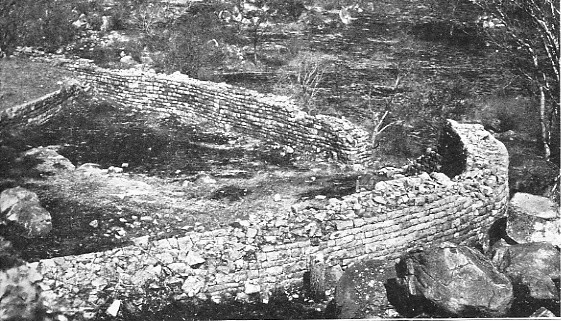
David Randall-MacIver, Public domain
World Heritage Research
Discover scientific research and academic studies that deepen our understanding of Khami Ruins National Monument from its history and significance to its conservation, management, and contemporary challenges.
-
Implications of new AMS dates for the Khami Period in the Mapungubwe Landscape
New radiocarbon dates from Khami Ruins National Monument reveal that the interaction between Sotho (Icon) and Kalanga (Khami) peoples over approximately 200 years played a pivotal role in the emergence of Venda as a distinct language and cultural entity. The study, using Accelerator Mass Spectrometry (AMS) dating, identified two pulses of occupation: Pulse 1 (AD 1400–1480) with eight sites and Pulse 2 (AD 1520–1590) with eight components or sites. While Kalanga people occupied fertile agricultural land near the Limpopo floodplains, Sotho peoples inhabited the southern plateau, leading to an unequal but significant resource-sharing dynamic. Initiation schools on ethnic boundaries facilitated cultural exchange, contributing to the formation of Venda's linguistic and macro-cultural identity.
Huffman, T. N., & Woodborne, S. (2021). Implications of new AMS dates for the Khami Period in the Mapungubwe Landscape. South African Journal of Science, 117(7/8). https://doi.org/10.17159/sajs.2021/9438
View Publication Record | Read Publication -
Landscapes and Ethnicity: An Historical Archaeology of Khami-Phase Sites in Southwestern Zimbabwe
A groundbreaking analysis of Khami-phase sites in southwestern Zimbabwe reveals that radiocarbon dating can validate oral traditions and documentary sources, offering new insights into the Rozvi dynasty's past. By comparing dates from three ancient capitals—Danamombe, Naletale, and Zinjanja—the study provides a more precise archaeological timeline for these historically significant sites. This approach sheds light on the rise and spread of Khami-phase settlements, addressing long-standing questions about their dynastic and ethnolinguistic formations.
Machiridza, L. H. (2020). Landscapes and Ethnicity: An Historical Archaeology of Khami-Phase Sites in Southwestern Zimbabwe. Historical Archaeology, 54(3), 647–675. https://doi.org/10.1007/s41636-020-00259-z
View Publication Record | Read Publication -
The chronology, craft production and economy of the Butua capital of Khami, southwestern Zimbabwe
New radiocarbon dating reveals Khami, the precolonial capital of the Butua kingdom in southwestern Zimbabwe, emerged as a significant political and economic power by the late 14th century—earlier than previously thought. Analysis of material culture from both walled and non-walled areas indicates household-based craft production was widespread, with pottery making, metalworking, ivory working, agriculture, and animal husbandry forming key economic pillars. The presence of local and exotic objects suggests Khami's integration into regional trade networks, reinforcing its role as a major center during the late medieval period.
Mukwende, T., Bandama, F., Chirikure, S., & Nyamushosho, R. T. (2018). The chronology, craft production and economy of the Butua capital of Khami, southwestern Zimbabwe. Azania: Archaeological Research in Africa, 53(4), 477–506. https://doi.org/10.1080/0067270x.2018.1540217
View Publication Record | Read Publication -
No Big Brother Here: Heterarchy, Shona Political Succession and the Relationship between Great Zimbabwe and Khami, Southern Africa
Contrary to long-standing assumptions, Khami Ruins National Monument and Great Zimbabwe were not linked by a parent-offspring relationship. Instead, they coexisted as heterarchical polities with overlapping chronologies, challenging traditional narratives of succession in southern African history. This finding emerges from a study comparing ceramic traditions and dry-stone architecture across both sites, revealing distinct cultural affiliations and typological differences. Absolute and relative chronologies further indicate that Khami flourished independently from the late 14th/early 15th century, long before Great Zimbabwe's decline, while Great Zimbabwe persisted into the late 17th or even 18th century. The research suggests that malleable hierarchies and situational heterarchies were common within these polities, aligning with documented political relations in pre-colonial southern Zambezian states.
Chirikure, S., Mukwende, T., Moffett, A. J., Nyamushosho, R. T., Bandama, F., & House, M. (2017). No Big Brother Here: Heterarchy, Shona Political Succession and the Relationship between Great Zimbabwe and Khami, Southern Africa. Cambridge Archaeological Journal, 28(1), 45–66. https://doi.org/10.1017/s0959774317000555
View Publication Record | Read Publication -
Post-colonial heritage conservation in Africa: perspectives from drystone wall restorations at Khami World Heritage site, Zimbabwe
Modern heritage conservation practices at Khami World Heritage site in Zimbabwe reveal a tension between indigenous beliefs and Western restoration principles. While post-colonial restorations, particularly drystone wall repairs between 2000 and 2015, preserved the site's structural integrity to avoid delisting, they disrupted local traditions that viewed Khami as a sacred resting place for ancestors with minimal human intervention. The study highlights how these compromises—balancing international conservation standards with local spiritual significance—sustain Khami's economic value as a tourist destination while acknowledging their limitations in fully aligning with indigenous practices.
Chirikure, S., Mukwende, T., & Taruvinga, P. (2015). Post-colonial heritage conservation in Africa: perspectives from drystone wall restorations at Khami World Heritage site, Zimbabwe. International Journal of Heritage Studies, 22(2), 165–178. https://doi.org/10.1080/13527258.2015.1103300
View Publication Record | Read Publication -
Khami and the Venda in the Mapungubwe Landscape
Archaeological research at Khami Ruins National Monument reveals significant differences between the 15th–16th century Khami occupation and the later Venda period. Unlike the 19th-century Venda capitals, which housed around 350 people in dense chiefdoms, the earlier Khami phase supported thousands living on cattle posts and agricultural villages under more consistent rainfall. The study also documents a gradual cultural shift, with the Venda-speaking Machete chiefdom acculturating into Sotho-speaking groups by the time Mapungubwe was discovered in the 1930s. This work sheds light on the dynamic social and environmental changes in the Mapungubwe landscape, combining archaeological evidence with historical analysis to reconstruct past settlement patterns and cultural transitions.
Huffman, T. N., & du Piesanie, J. (2011). Khami and the Venda in the Mapungubwe Landscape. Journal of African Archaeology, 9(2), 189–206. https://doi.org/10.3213/2191-5784-10197
View Publication Record | Read Publication