World Heritage Identification Number: 718
World Heritage since: 1996
Category: Natural Heritage
WHE Type: Protected Areas & National Parks
Transboundary Heritage: No
Endangered Heritage: Yes
Country: 🇨🇩 Democratic Republic of the Congo
Continent: Africa
UNESCO World Region: Africa
Map
Okapi Wildlife Reserve: A Biodiverse Sanctuary in the Heart of the Ituri Forest
The Okapi Wildlife Reserve (OWR) is a significant conservation area located in the northeastern region of the Democratic Republic of the Congo (DRC), bordering South Sudan and Uganda. Spanning approximately 14,000 square kilometers, OWR represents around one-fifth of the expansive Ituri Forest, making it a crucial component of this vast African drainage system.
Established in 1996, the Okapi Wildlife Reserve was inscribed as a UNESCO World Heritage Site due to its remarkable biodiversity and the presence of the endangered okapi (Okapia johnstoni). This elusive forest giraffe subspecies, native only to the Congo Basin, is believed to have a global population of roughly 30,000 individuals, with an estimated 5,000 residing within the reserve.
In addition to the okapi, the OWR is home to a diverse array of threatened species, including the critically endangered African forest elephant (Loxodonta cyclotis), and various primate genera such as the chimpanzee (Pan troglodytes). The reserve harbours a high diversity of mammals (some 100 species) and bird species (more than 370), some of which are endemic or under threat. The reserve's rich ecosystem supports a wide range of flora and fauna, contributing to its designation as a vital hub for biodiversity conservation efforts.
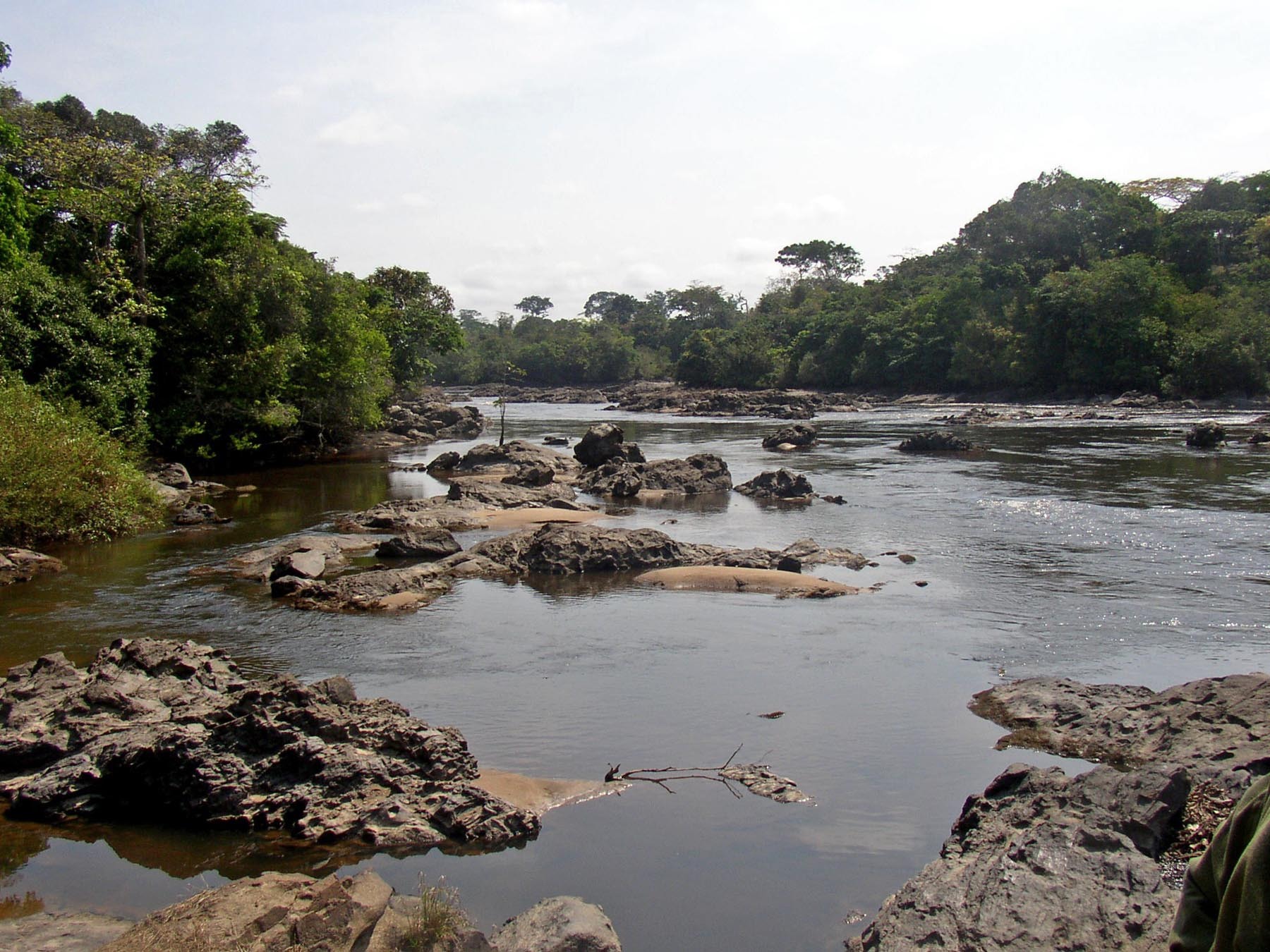
One of the most striking features of the Okapi Wildlife Reserve is its dramatic scenery. The Ituri and Epulu rivers, meandering through the dense forest, create breathtaking landscapes marked by cascading waterfalls. These natural wonders not only provide essential habitats for the reserve's diverse inhabitants but also serve as key attractions for tourists seeking unique experiences in pristine wilderness settings.
The people who call the Okapi Wildlife Reserve home are primarily traditional nomadic pygmy communities, including the Mbuti and Efe hunter-gatherer groups. These indigenous peoples have lived harmoniously within the forest for centuries, developing a deep understanding of the local environment and its many creatures. Their cultural practices and knowledge play an integral role in the ongoing conservation efforts within the reserve.
The Okapi Wildlife Reserve faces numerous challenges, including poaching, habitat loss, and political instability. However, ongoing collaborative efforts between local communities, government agencies, and international organizations aim to ensure the long-term survival of this extraordinary sanctuary and the myriad species that call it home.
To sum it up, the Okapi Wildlife Reserve stands as a testament to the rich biodiversity found within the Congo Basin and serves as a critical stronghold for the endangered okapi. Its stunning landscapes, diverse ecosystems, and vibrant indigenous cultures make it a truly unique destination worthy of protection and preservation for future generations.
UNESCO Description of the World Heritage Site
The Okapi Wildlife Reserve occupies about one-fifth of the Ituri forest in the north-east of the Democratic Republic of the Congo. The Congo river basin, of which the reserve and forest are a part, is one of the largest drainage systems in Africa. The reserve contains threatened species of primates and birds and about 5,000 of the estimated 30,000 okapi surviving in the wild. It also has some dramatic scenery, including waterfalls on the Ituri and Epulu rivers. The reserve is inhabited by traditional nomadic pygmy Mbuti and Efe hunters.
UNESCO Justification of the World Heritage Site
Criterion (x): With its bio-geographical location, wealth of biotopes and the presence of numerous species that are rare or absent in the adjacent low altitude forests, it is probable that the Ituri forest served, during earlier drier climatic periods, as refuge for the tropical rainforest. To the north of the Reserve, the granite rocky outcrops, provide refuge to a plant species particularly adapted to this microclimate, characterised by numerous endemic species such as the Giant Cycad (Encepholarcus ituriensis). The Reserve contains 101 mammal species and 376 species of documented birds. The population of the endemic species of Okapi (Okapia johnstoni), a forest giraffe, is estimated at 5,000 individuals. Among the endemic mammals of the forest in the north-east of the DRC identified in the Reserve, are the aquatic genet (Osbornictis piscivora) and the giant genet (Genetta victoriae). The Reserve provides refuge to 17 species of primates (including 13 diurnal and 4 nocturnal), the highest number for an African forest, including 7,500 chimpanzees (Pan troglodytes). The Reserve also contains one of the most diverse populations of forest ongulates with 14 species, including six types of cephalophus. It also provides refuge to the largest population of forest elephants ((Loxodonta africana cyclotis) still present in eastern DRC, estimated at 7,500 individuals, and it is important for the conservation of other forest species such as the bongo (Tragelaphus eurycerus), the dwarf antelope (Neotragus batesi), the water chevratain (Hyemoschus aquaticus), the forest buffalo (Syncerus caffer nanus) and the giant forest hog (Hylochoerus meinertzhageni). It is also documented as one of the most important protected areas in Africa for the conservation of birds, with the presence of numerous emblematic species such as the Congo Peafowl (Afropavo congensis), as well as numerous endemic species in eastern DRC.
Encyclopedia Record: Okapi Wildlife Reserve
The Okapi Wildlife Reserve is a wildlife reserve in the Ituri Forest in the north-east of the Democratic Republic of the Congo, near the borders with South Sudan and Uganda. At approximately 14,000 km2, it covers approximately one-fifth of the area of the forest. In 1996, the Okapi Wildlife Reserve was designated a UNESCO World Heritage Site, due to its large population of endangered okapis and its high overall biodiversity.Additional Site Details
Area: 1,372,625 hectares
Number of Components: 1
Coordinates: 2 , 28.5
IUCN World Heritage Outlook
The 2025 Conservation Outlook on Okapi Wildlife Reserve reports the following assessment:
Source: International Union for Conservation of Nature (IUCN) · View assessment
Image
J. Doremus, Public domain
World Heritage Research
Discover scientific research and academic studies that deepen our understanding of Okapi Wildlife Reserve from its history and significance to its conservation, management, and contemporary challenges.
-
Binary annual map (Forest/Non-Forest) of the Okapi Wildlife Reserve during 2000 to 2024
A comprehensive binary annual map of the Okapi Wildlife Reserve, spanning from 2000 to 2024, reveals significant changes in forest cover over a quarter-century. This dataset, derived from the Joint Research Centre Tropical Moist Forest (JRC-TMF) data, provides yearly spatial layers that offer critical insights into deforestation and forest dynamics within this UNESCO World Heritage Site. The maps serve as a transparent and reproducible resource for researchers, enabling detailed analysis of land-use changes and their ecological impacts. By offering a granular view of forest/non-forest transitions, the dataset supports studies on biodiversity conservation, habitat fragmentation, and the effectiveness of protection measures in one of Africa's most biologically diverse regions.
Madibi, P., Kibambe Lubamba, J.-P., Zhang, A., & Pontius, R. (2026). Binary annual map (Forest/Non-Forest) of the Okapi Wildlife Reserve during 2000 to 2024. Zenodo. https://doi.org/10.5281/ZENODO.18963864
View Publication Record | Read Publication -
Bird community composition across a land use gradient in the eastern Democratic Republic of Congo
A study reveals significant differences in bird community composition between the Okapi Wildlife Reserve (OWR) and surrounding agroforestry areas in eastern Democratic Republic of Congo. While cocoa farms exhibited higher species richness, primary forests demonstrated the highest diversity and evenness, with annual cultures showing the most balanced communities. Eighteen bird species were strongly associated with specific habitats. The research, combining mist netting and passive acoustic monitoring across 19 sites, underscores the importance of protected areas like OWR for sustaining avian biodiversity while highlighting the potential benefits of structurally complex agroforestry landscapes for certain forest bird subsets.
Tabe Tiku, R. C., Jones, S. E., Elikwo, M. N., Cyril, K., Ngoy, S., Zaunbrecher, V., & Sehgal, R. N. (2026). Bird community composition across a land use gradient in the eastern Democratic Republic of Congo. Ostrich, 97(1), 30–43. https://doi.org/10.2989/00306525.2026.2620763
View Publication Record | Read Publication -
GIS Methods to Distinguish Between Land Changes from Smallholder Agriculture and Mining in a Time Series for a Tropical Protected Area Forest
A new GIS approach reveals distinct land-use patterns in the Okapi Wildlife Reserve, Democratic Republic of the Congo, by analyzing 24 years of satellite data. The study distinguishes between persistent and alternating non-forest changes caused by smallholder agriculture and illegal mining using Trajectory Analysis and DynamicPATCH. It finds that while agricultural zones show increasing persistence in land-use change—suggesting a shift from rotational crops to prohibited perennial ones—the mining zone exhibits consistent, accelerating expansion of illegal mining fronts. The hunting-conservation zone remains largely stable. This method provides actionable insights into zoning rule compliance and highlights the limitations of endpoint analyses in capturing dynamic land-use changes.
Madibi, P. M., Kibambe Lubamba, J.-P., Zhang, A., & Pontius, R. G. (2026). GIS Methods to Distinguish Between Land Changes from Smallholder Agriculture and Mining in a Time Series for a Tropical Protected Area Forest. Land, 15(9), 1630. https://doi.org/10.3390/land15091630
View Publication Record | Read Publication -
Assessing Land Cover Change and Forest Sustainability in a World Heritage Context: Evidence from the Okapi Wildlife Reserve
Forest loss and degradation in the Okapi Wildlife Reserve (OWR), a UNESCO World Heritage site, have accelerated since 2013, with disturbances primarily concentrated along its boundaries and National Road No. 4, while also affecting core protected areas. This study, using Landsat satellite data from 2000 to 2023 and the Continuous Change Detection and Classification (CCDC) algorithm, reveals increasing landscape fragmentation and varied conservation pressures across management zones, as measured by the Sustainable Development Goal (SDG) 15.1.1 indicator. The findings highlight the potential of Earth observation techniques for monitoring endangered World Heritage sites in conflict-affected regions with limited field data.
Fan, J., Li, L., Sun, J., Yang, J., Tu, R., Fu, X., Luo, Z., & Karimian, H. (2026). Assessing Land Cover Change and Forest Sustainability in a World Heritage Context: Evidence from the Okapi Wildlife Reserve. Land, 15(9), 1635. https://doi.org/10.3390/land15091635
View Publication Record | Read Publication -
Indigenous Knowledge and Sustainable Management of Forest Resources in a Socio-Cultural Upheaval of the Okapi Wildlife Reserve Landscape in the Democratic Republic of the Congo
Indigenous knowledge systems play a crucial role in sustainable forest resource management within the Okapi Wildlife Reserve (OWR) in the Democratic Republic of Congo, despite rapid socio-cultural changes. The study reveals that customary taboos and restrictions effectively regulate hunting, fishing, gathering, and honey harvesting, contributing to biodiversity conservation. However, vulnerabilities such as biodiversity decline, erosion of intergenerational knowledge transmission, and increased reliance on monetary income are evident. A mixed-methods approach, including surveys (n = 80), focus group discussions, floristic inventories, and statistical analyses, demonstrated a highly structured socio-ecological gradient, indicating strong coupling between environmental perceptions, demographic identity, and livelihood strategies. The findings underscore the resilience of Indigenous Peoples but also highlight their exposure to ecological and cultural disruptions. Formal recognition of Indigenous institutions and integration of their knowledge systems into co-management frameworks are essential for strengthening ecological resilience and aligning conservation policies with global biodiversity and climate agendas.
Kasoki, L. M., Essouman, P. F. E., Musavandalo, C. M., Wamba, F. R., Makanua, I. D., Nguba, T. B., Mavakala, K., Mweru, J.-P. M., Tsakem, S. C., Babale, M., Nzuzi, F. L., & Michel, B. (2025). Indigenous Knowledge and Sustainable Management of Forest Resources in a Socio-Cultural Upheaval of the Okapi Wildlife Reserve Landscape in the Democratic Republic of the Congo. Forests, 16(10), 1523. https://doi.org/10.3390/f16101523
View Publication Record | Read Publication -
Hidden species diversity in the Enteromius Cope, 1867 (Teleostei: Cyprinidae) from the Aruwimi basin (Middle Congo) in the Okapi Wildlife Reserve (Democratic Republic of the Congo)
Two new African minnow species, Enteromius cerinus and Enteromius ruforum, have been discovered in the Angadiko River within the Okapi Wildlife Reserve (OWR) in the Democratic Republic of Congo. These species are distinguished by unique morphological traits, such as low circumpeduncular scales, body depth, and barbel lengths for E. cerinus, and high body depth with small, isometric eye diameter for E. ruforum. Genetic analysis using mitochondrial DNA (COI gene) confirmed their distinct lineages, with genetic distances of 10.3% and 11.2%, respectively, from the closely related species Enteromius kamolondoensis. The study highlights the hidden biodiversity in the poorly documented left-bank sub-affluents of the Nepoko River, which face significant anthropogenic threats, including habitat destruction and illegal fishing practices like ecopage. Both new species are classified as Vulnerable (VU) under IUCN criteria, emphasizing the urgent need for conservation efforts to protect the reserve's freshwater biodiversity.
Mayo Ilodiri, W., Huyghe, C. E. T., da Costa, L. M., Mambo Baba, T., Danadu Mizani, C., & Vreven, E. J. W. M. N. (2024). Hidden species diversity in the Enteromius Cope, 1867 (Teleostei: Cyprinidae) from the Aruwimi basin (Middle Congo) in the Okapi Wildlife Reserve (Democratic Republic of the Congo). Journal of Fish Biology, 106(2), 230–255. Portico. https://doi.org/10.1111/jfb.15883
View Publication Record | Read Publication -
Comparing forest product harvest rates and livelihood activities among migrant and Indigenous households in the Congo Basin
Recent migrants to the Congo Basin's forests, including those near Okapi Wildlife Reserve, are less likely to engage in forest-harvest-based livelihoods and harvest fewer forest foods and fibers compared to longer-established or Indigenous households. They tend to be wealthier, younger, and more represented in salaried jobs. Indigenous households, however, show a significantly higher likelihood of participating in forest-based livelihoods, with variations across sites influenced by remoteness and economic opportunities. The study, based on over 6500 household surveys, highlights the changing dynamics of forest-proximate communities and their implications for forest management and governance.
L’Roe, J., Shanley Barr, G., Detoeuf, D., Wieland, M., Ikati, B., Enduyi Kimuha, M., Sandrin, F., Bilua, D., Bondeko, G., Londza, Y., Bakabana, P., Mavah, G., Evans, B., & Wilkie, D. (2023). Comparing forest product harvest rates and livelihood activities among migrant and Indigenous households in the Congo Basin. Forest Policy and Economics, 157, 103089. https://doi.org/10.1016/j.forpol.2023.103089
View Publication Record | Read Publication