World Heritage Identification Number: 137
World Heritage since: 1980
Category: Natural Heritage
WHE Type: Protected Areas & National Parks
Transboundary Heritage: No
Endangered Heritage: Yes
Country: 🇨🇩 Democratic Republic of the Congo
Continent: Africa
UNESCO World Region: Africa
Map
Exploring the Wonders of Kahuzi-Biega National Park
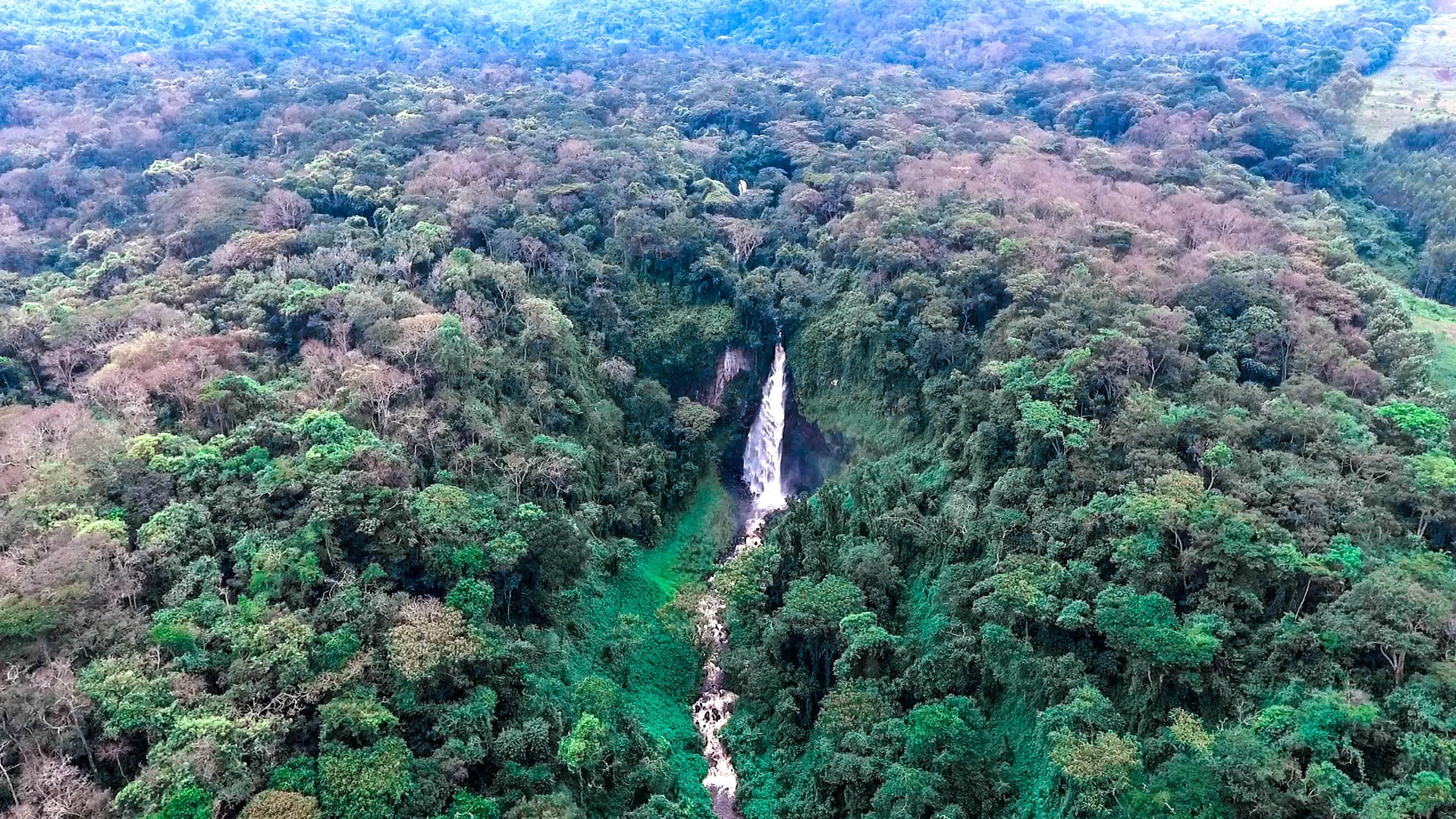
The Kahuzi-Biega National Park, located in the eastern Democratic Republic of the Congo, stands as a testament to the rich biodiversity and natural beauty that Africa possesses. Inscribed as a UNESCO World Heritage Site in 1980, this vast area of primary tropical forest is dominated by two majestic extinct volcanoes, Kahuzi and Biega.
More to come…UNESCO Description of the World Heritage Site
A vast area of primary tropical forest dominated by two spectacular extinct volcanoes, Kahuzi and Biega, the park has a diverse and abundant fauna. One of the last groups of eastern lowland (graueri) gorillas (consisting of only some 250 individuals) lives at between 2,100 and 2,400 m above sea-level.
UNESCO Justification of the World Heritage Site
Criterion (x): Kahuzi-Biega National Park contains a greater diversity of mammal species than any other site in the Albertine Rift. It is the second most important site of the region for both endemic species and in terms of specific diversity. The Park protects 136 species of mammals, among which the star is the eastern lowland gorilla and thirteen other primates, including threatened species such as the chimpanzee, the colubus bai and cercopiuthic of Hoest and Hamlyn. Other extremely rare species of the eastern forests of the DRC are also found, such as the giant forest genet (Genetta victoriae) and the aquatic genet (Genetta piscivora). Characteristic mammals of the central African forests also live in the Park, such as the bush elephant, bush buffalo, hylochere and bongo. The property is located in an important endemism zone (Endemic Bird Area) for birds identified by Birdlife International. The Wildlife Conservation Society established a complete list of birds in the Park in 2003 with 349 species, including 42 endemic. Also, the Park was designated as a centre of diversity for plants by IUCN and WWF in 1994, with at least 1,178 inventoried species in the highland zone, although the lowland yet remains to be recorded. The Park is one of the rare sites of sub-Saharan Africa where the floral and fauna transition from low to highlands is observable. In effect, it includes all the stages of forest vegetation from 600 m to more than 2,600 m, dense low and middle altitude rainforests to sub-mountain to mountain and bamboo forests. Above 2,600 m at the summit of Mounts Kahuzi and Biega, a sub-alpine vegetation has developed, with heather, and home to the endemic plant Senecio kahuzicus. The Park also contains plant formations, rare worldwide, such as the swamp and bog altitudes and the marshland and riparian forests on hydromorphic ground at all altitudes.
Encyclopedia Record: Kahuzi-Biéga National Park
The Kahuzi-Biega National Park is a protected area near Bukavu town in eastern Democratic Republic of the Congo. It is situated near the western bank of Lake Kivu and the Rwandan border.Additional Site Details
Area: 6e+05 hectares
Number of Components: 1
Coordinates: -2.334053 , 28.180743
IUCN World Heritage Outlook
The 2025 Conservation Outlook on Kahuzi-Biéga National Park reports the following assessment:
Source: International Union for Conservation of Nature (IUCN) · View assessment
World Heritage Research
Discover scientific research and academic studies that deepen our understanding of Kahuzi-Biega National Park from its history and significance to its conservation, management, and contemporary challenges.
-
Microclimate Buffering Across a 650 m Afro-Alpine Gradient: Thermoregulation at the Nest Level by Grauer’s Gorillas in the Kahuzi-Biega National Park
Grauer’s gorillas (Gorilla beringei graueri) in Kahuzi-Biega National Park create a consistent 2.0 °C thermal refuge within their night nests across a 650 m Afro-alpine gradient, mitigating the harsh nighttime temperatures that often drop below 5 °C at elevations above 2050 m. This study provides the first quantitative evidence that canopy density significantly reduces the elevation penalty for thermoregulation in African great apes, with thermal buffering decreasing by approximately 30% near the summit due to greater canopy openness and higher altitudes. Researchers analyzed 66 night nests using calibrated mercury thermometers and sky-facing photographs, revealing a mean temperature difference of 2.03 ± 0.37 °C between nest interiors and ambient air. The findings underscore the critical role of canopy retention in counteracting accelerated warming at high altitudes (+0.45 °C per decade), highlighting its importance for conservation strategies in the Democratic Republic of Congo.
Consolee, K. T., Kalonji, A., James, A., Luan, X., & Cong, L. (2026). Microclimate Buffering Across a 650 m Afro-Alpine Gradient: Thermoregulation at the Nest Level by Grauer’s Gorillas in the Kahuzi-Biega National Park. Forests, 17(2), 254. https://doi.org/10.3390/f17020254
View Publication Record | Read Publication -
Land Rights for the Indigenous Pygmy Peoples and Preservation of the Kahuzi-Biega National Park in Eastern DR Congo: A Paradigm for Integral Conservation and the Survival of the Riparian Population
A shift towards participatory governance in managing the Kahuzi-Biega National Park (KBNP) is crucial for balancing conservation efforts with the land rights of indigenous Pygmy peoples. Current exclusionary practices have led to social marginalization and a lack of community interest in conservation, despite legal provisions guaranteeing local use rights. The study, conducted through documentation, focus groups, and interviews, highlights that integrating customary and traditional rights into park management could foster sustainable coexistence. While co-management principles are theoretically promoted, practical implementation remains elusive without concrete agreements with indigenous communities. Ensuring dignified survival for riparian populations requires legal and customary pluralism, addressing inequitable access to social services and securing forest resource access.
Mokoso, J. D. D. M., Cihusi, H.-P. B., Ndetshala, D. A., Mukenge, M. L., & Sefu, J. A. (2026). Land Rights for the Indigenous Pygmy Peoples and Preservation of the Kahuzi-Biega National Park in Eastern DR Congo: A Paradigm for Integral Conservation and the Survival of the Riparian Population. East African Journal of Environment and Natural Resources, 9(1), 281–301. https://doi.org/10.37284/eajenr.9.1.4570
View Publication Record | Read Publication -
A Perfect Fit for the Indigenous “Slot”? Batwa Identity Politics Meets Global Advocacy Agendas in Kahuzi-Biega National Park
Indigenous rights activism, while aiming to support marginalized communities, can inadvertently obscure local complexities. In Kahuzi-Biega National Park, Democratic Republic of Congo, the Batwa people are often portrayed as the ultimate guardians of their ancestral forests, resisting 'fortress conservation.' However, this global advocacy narrative overlooks internal frictions within Batwa groups and tensions with other social groups and the environment. The study reveals that strategic adoption of an Indigenous identity by some Batwa chiefs clashes with messy local realities, highlighting unintended consequences when global agendas meet localized contexts.
Simpson, F. O., Matabaro, L. B., & Alinirihu, V. C. (2026). A Perfect Fit for the Indigenous “Slot”? Batwa Identity Politics Meets Global Advocacy Agendas in Kahuzi-Biega National Park. Routledge Handbook of Environmental Anthropology, 351–361. https://doi.org/10.4324/9781003469858-33
View Publication Record | Read Publication -
Anthropogenic disturbance regimes reduce biomass and alter floristic composition in montane forests of Kahuzi-Biega National Park, Eastern Democratic Republic of the Congo
Anthropogenic disturbances, despite Kahuzi-Biega National Park's protected status, significantly reduce aboveground biomass by 51% and alter floristic composition in its montane forests. These disturbances form non-random spatial regimes, often co-occurring as logging, charcoal production, and agriculture, leading to reductions in tree density (42%) and basal area (54%). The study, using a disturbance gradient across 63 plots, found that such cumulative pressures can durably reshape tropical montane forest ecosystems. Disturbances independently explained 10% of floristic variation, while the full model accounted for 31%, indicating both structural changes and direct ecological filtering effects.
Cirezi, N. C., Mushagalusa, P. B., Mangaza, L., Pika, L. M., Jesuka, R., Balezi, A. Z., Karume, K., Lumbuenamo, R. S., Rakotondrasoa, O. L., Bastin, J.-F., Fayolle, A., & Bogaert, J. (2026). Anthropogenic disturbance regimes reduce biomass and alter floristic composition in montane forests of Kahuzi-Biega National Park, Eastern Democratic Republic of the Congo. Trees, Forests and People, 26, 101399. https://doi.org/10.1016/j.tfp.2026.101399
View Publication Record | Read Publication -
Edible insects and their host plants: ethnobotanical insights from Kahuzi-Biega National Park, DRC
Research in Kahuzi-Biega National Park, DRC, reveals that 12 species of edible insects are consumed by local communities, with Imbrasia obscura, Imbrasia epimethea, and Epidonta brunneomixta being the most cited. The study also identifies 29 host plants, including 10 with timber value, suggesting potential for regulated insect harvesting within the park or promoting their abundance in agroforestry systems outside. Focus-group discussions with village elders across 27 villages provided insights into species distribution and cultural practices, highlighting the importance of edible insects as a food and income source in Central Africa's mountain regions.
Bulonvu, F., Imani, G., Bilonza, J., Mujawamariya, M., Kaplin, B. A., Benga, L., Ngute, A. S. K., Cirimwami, L., & Cuni-Sanchez, A. (2026). Edible insects and their host plants: ethnobotanical insights from Kahuzi-Biega National Park, DRC. Forests, Trees and Livelihoods, 1–14. https://doi.org/10.1080/14728028.2026.2717694
View Publication Record | Read Publication -
Initiating a Dynamic Co-Constructed One Health Project: reflections from Participatory Action Research in the Kahuzi-Biega National Park, Democratic Republic of Congo
A collaborative One Health (OH) approach, implemented through Participatory Action Research (PAR), demonstrates significant potential for addressing interconnected environmental, animal, and human health challenges in the UNESCO-listed Kahuzi-Biega National Park (KBNP), Democratic Republic of Congo. This study highlights how co-constructed solutions—developed through sustained community partnerships—can enhance resilience against emerging pandemics while ensuring contextual relevance. The research underscores the importance of integrating local knowledge and power dynamics to overcome humanitarian implementation challenges, offering a scalable model for similar biodiversity hotspots.
Dagneau, E., Procureur, F., Vieri, K., Olchini, D., Ben Abdelhafidh, L., & Franzini, A.-L. (2025). Initiating a Dynamic Co-Constructed One Health Project: reflections from Participatory Action Research in the Kahuzi-Biega National Park, Democratic Republic of Congo. IJAR – International Journal of Action Research, 20(3-2024), 279–294. https://doi.org/10.3224/ijar.v20i3.05
View Publication Record | Read Publication -
Challenges and Threats Facing Gorilla beringei graueri in Kahuzi-Biega National Park and Conservation Strategies
Grauer’s gorilla (Gorilla beringei graueri), a flagship species of biodiversity in the Democratic Republic of Congo, faces severe threats from mining activities, poaching, deforestation, and climate change, which have accelerated its population decline. A systematic review identified these pressures as critical challenges, emphasizing the need for urgent conservation action. While ongoing strategies in Kahuzi-Biega National Park aim to mitigate these threats, the study underscores the necessity for global collaboration to protect this endangered species. The findings highlight the interconnected risks posed by human activities and environmental changes, calling for coordinated efforts among governments, NGOs, and local communities to safeguard Grauer’s gorillas and their habitats.
Consolee, K. T., James, A., Kalonji, A., & Luan, X. (2025). Challenges and Threats Facing Gorilla beringei graueri in Kahuzi-Biega National Park and Conservation Strategies. Diversity, 17(4), 270. https://doi.org/10.3390/d17040270
View Publication Record | Read Publication