World Heritage Identification Number: 1461
World Heritage since: 2021
Category: Natural Heritage
WHE Type: Protected Areas & National Parks
Transboundary Heritage: No
Endangered Heritage: No
Country: 🇹🇭 Thailand
Continent: Asia
UNESCO World Region: Asia and the Pacific
Map
Kaeng Krachan Forest Complex: A Biodiverse Haven Amidst Human Rights Concerns
The Kaeng Krachan Forest Complex, inscribed as a UNESCO World Heritage Site in 2021, is a testament to the rich biodiversity found within the Tenasserim mountain range in Thailand. This expansive forest complex spans across the Thailand-Myanmar border, sharing boundaries with the Tanintharyi Nature Reserve. Its designation as a World Heritage Site underscores its significant role in preserving global biodiversity, yet it remains entangled in controversies surrounding human rights violations against the indigenous communities residing within its borders.
More to come…UNESCO Description of the World Heritage Site
The site is located along the Thailand side of the Tenasserim mountain range, part of a north-south granite and limestone mountain ridge running down the Malay Peninsula. Located at the cross-roads between the Himalayan, Indochina, and Sumatran faunal and floral realms, the property is home to rich biodiversity. It is dominated by semi-evergreen/dry evergreen and moist evergreen forest with some mixed deciduous forest, montane forest, and deciduous dipterocarp forest. A number of endemic and globally endangered plant and wildlife species have been reported in the property, which overlaps with two Important Bird Areas (IBAs) and is noted for its rich diversity of birdlife, including eight globally endangered fauna species. The property is home to the critically endangered Siamese Crocodile (Crocodylus siamensis), the endangered Asiatic Wild Dog (Cuon alpinus), Banteng (Bos javanicus), Asian Elephant (Elephas maximus), Yellow/Elongated Tortoise (Indotestudo elongata), and the endangered Asian Giant Tortoise (Manouria emys), as well as several other vulnerable species of birds and mammals. Remarkably, it is also home to eight cat species: the endangered tiger (Panthera tigris) and Fishing Cat (Prionailurus viverrinus), the near-threatened Leopard (Panthera pardus) and Asian Golden Cat (Catopuma temminckii), the vulnerable Clouded Leopard (Neofelis nebulosi) and Marbled Cat (Pardofelis marmorata), and the least concerned Jungle Cat (Felis chaus) and Leopard Cat (Prionailurus bengalensis).
UNESCO Justification of the World Heritage Site
Criterion (x): KKFC hosts a remarkable range of mammals, birds and reptiles from this region and is considered as one of the top 500 most irreplaceable protected areas in the world for the conservation of mammal, bird and amphibian species. The property is characterised by six forest types, dominated by semi-evergreen, dry evergreen and moist evergreen forests and complemented by mixed deciduous forest, montane forest, and deciduous dipterocarp forest. The property represents a meeting point of several zoogeographical realms and floristic provinces being the northernmost point for many species from the south and conversely the southernmost point for species from the north. In addition to this macro scale diversity, the diverse geological characteristics and highly variable topography contribute to an exceptionally high habitat diversity at the micro scale. The property’s rich biodiversity is demonstrated by the presence of at least 459 known wild animal species, as well as by 81 rare species, and 48 endemic species. The property is home to a large number of threatened and rare plant species, some of which are extinct elsewhere. Prunus kaengkrachanensis stands out as a rosaceous plant species discovered in 2015 and endemic to KKFC. Further critical species include Champi Doi (Magnolia gustavii), and Agarwood (Aquilaria malaccensis) and Kamettia chandeei of the dogbane family. The species Geostachys smitinandii of the ginger family is found only in the KKFC and the Dong Phayayen – Khao Yai Forest Complex Natural World Heritage site of Thailand. The property is also the world’s only home to the plant species Trichosanthes phonsenae from the cucumber family first discovered in 2003. KKFC also maintains healthy populations of globally important and threatened wildlife species. A complete suite of top carnivores has been identified in the area, including eight species of Felidae (cat species), including tiger (Panthera tigris). The property stands out as one of the last few places where the Siamese crocodile (Crocodylus siamensis) is still present in the wild. It is home to the Sunda Pangolin (Manis javanica), Elongated Tortoise (Indotestudo elongata), Asian Giant Tortoise (Manouria emys) as well as Banteng (Bos javanicus), Asian Elephant (Elephas maximus), Dhole (Cuon alpinus), Asian Black Bear (Ursus thibetanus), Malay tapir (Tapirus indicus), Mainland Serow (Capricornis sumatraensis), Gaur (Bos gaurus) and Stump-tailed Macaque (Macaca arctoides).
Encyclopedia Record: Kaeng Krachan National Park
Kaeng Krachan National Park is the largest national park of Thailand. It is on the border with Burma, contiguous with the Tanintharyi Nature Reserve. It is a popular park owing to its proximity to the tourist town of Hua Hin. It was named a UNESCO World Heritage Site on 26 July 2021, despite concerns from the OHCHR around the human rights violations of the indigenous people that live in the park.Additional Site Details
Area: 408,940 hectares
Number of Components: 1
Coordinates: 12.8656666667 , 99.4001666667
IUCN World Heritage Outlook
The 2025 Conservation Outlook on Kaeng Krachan Forest Complex reports the following assessment:
Source: International Union for Conservation of Nature (IUCN) · View assessment
Image
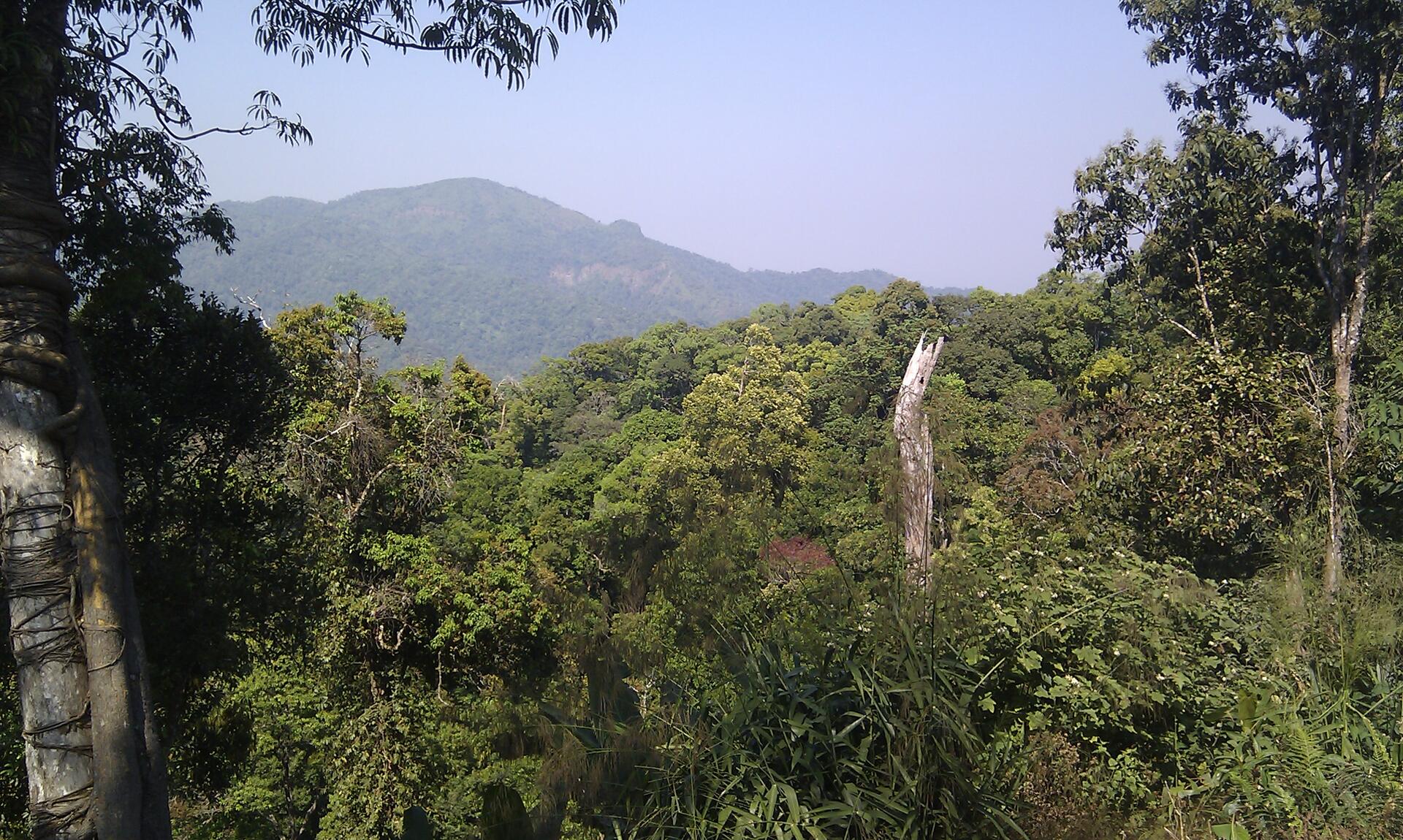
© JJ Harrison (https://www.jjharrison.com.au/), CC BY-SA 3.0 Resized from original. (This derivative is under the same CC BY-SA license.)
World Heritage Research
Discover scientific research and academic studies that deepen our understanding of Kaeng Krachan Forest Complex from its history and significance to its conservation, management, and contemporary challenges.
-
“World Heritage, Blood Heritage”: The Kaeng Krachan Forest Complex and the Impact of World Heritage on Indigenous Rights
The designation of the Kaeng Krachan Forest Complex as a Natural World Heritage Site in 2021 highlighted significant human rights concerns, particularly for the Indigenous Karen people residing within its boundaries. This study analyzes the World Heritage Committee's deliberations, focusing on themes such as Outstanding Universal Value, human rights, and community roles to demonstrate how World Heritage status—and the associated Authorized Heritage Discourse (AHD)—can profoundly impact Indigenous communities. The research reveals that while the site's natural significance is celebrated, its recognition also exacerbates challenges for local populations, underscoring the need for balanced heritage management that prioritizes both conservation and human rights.
Santikarn, A. (2024). “World Heritage, Blood Heritage”: The Kaeng Krachan Forest Complex and the Impact of World Heritage on Indigenous Rights. International Journal of Cultural Property, 31(3), 316–337. https://doi.org/10.1017/s0940739125000037
View Publication Record | Read Publication -
Rights to heritage and the environment in Thailand
Thailand's approach to Indigenous heritage, exemplified by the ongoing conflict over land rights in the Kaeng Krachan Forest Complex (KKFC), reveals a persistent tension between state authority and Indigenous claims. Designated as a national park in 1981 and later listed as a UNESCO World Heritage Site in 2021, the KKFC has been at the center of forced evictions of the Karen community, highlighting Thailand's 'crypto-colonial' legacy shaped by colonialism and Cold War influences. This chapter underscores the unresolved struggle for Indigenous rights to both natural and cultural heritage, illustrating how historical contexts continue to influence contemporary conflicts over land and recognition in Southeast Asia.
Santikarn, A. (2023). Rights to heritage and the environment in Thailand. Asia’s Heritage Trend, 187–214. https://doi.org/10.4324/9781003396765-11
View Publication Record | Read Publication