World Heritage Identification Number: 591
World Heritage since: 1991
Category: Natural Heritage
WHE Type: Protected Areas & National Parks
Transboundary Heritage: No
Endangered Heritage: No
Country: 🇹🇭 Thailand
Continent: Asia
UNESCO World Region: Asia and the Pacific
Map
Thungyai-Huai Kha Khaeng Wildlife Sanctuaries: A Biodiversity Haven in Southeast Asia
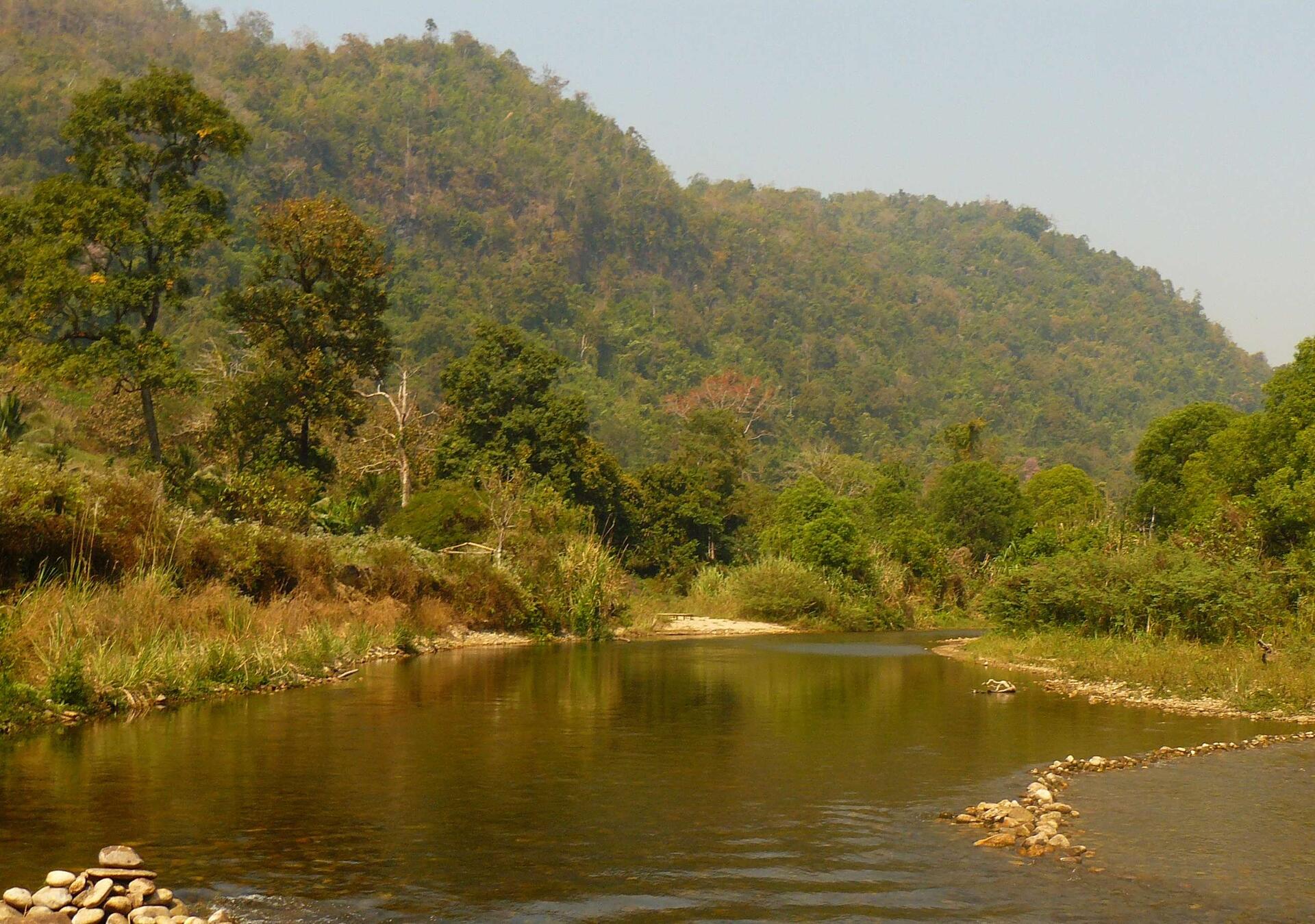
The Thungyai-Huai Kha Khaeng Wildlife Sanctuaries, spanning over 600,000 hectares, represent a significant conservation effort in Thailand and Southeast Asia. Inscribed as a UNESCO World Heritage Site in 1991, these sanctuaries encompass a vast expanse of nearly untouched wilderness that serves as a refuge for a rich tapestry of flora and fauna.
More to come…UNESCO Description of the World Heritage Site
Stretching over more than 600,000 ha along the Myanmar border, the sanctuaries, which are relatively intact, contain examples of almost all the forest types of continental South-East Asia. They are home to a very diverse array of animals, including 77% of the large mammals (especially elephants and tigers), 50% of the large birds and 33% of the land vertebrates to be found in this region.
UNESCO Justification of the World Heritage Site
Criterion (vii): Thung Yai-Huai Kha Khaeng Wildlife Sanctuary contains biological features of outstanding natural beauty and of great scientific value, including many natural features and two major watersheds with their associated riverine forests. Straddling the Shan – Thai folded mountains and its three distinct landforms, the property contains ridges that run parallel from north to south, rising to heights well over 1,500 meters. The tallest peak, Thung Yai, reaches 1,830 meters above sea level while the numerous valley bottoms within the sanctuary slope from 400 to 250 meters above sea level, creating stunning landscapes and encompassing superlative forest habitats.
Criterion (ix): Thung Yai-Huai Kha Khaeng Wildlife Sanctuary represents an outstanding and unique biome in mainland Southeast Asia, combining Sino-Himalayan, Sundaic, Indo-Burmese, and Indo-Chinese biogeography elements, with the flora and fauna characteristics of all four zones. The property encompasses significant ecological and biological processes, including habitats and biological features such as limestone habitats, mineral-licks, wetlands, and sink-holes. The savanna forest of Thung Yai is the most complete and secure example of Southeast Asia’s dry tropical forest.
Criterion (x): Thung Yai-Huai Kha Khaeng Wildlife Sanctuary has exceptional species and habitat diversity. The property supports many wild plant and animal relatives of domestic species, with many reaching the limits of their distributions in the sanctuary. Species lists have been compiled, which include 120 mammals, 400 birds, 96 reptiles, 43 amphibians, and 113 freshwater fish. In addition to many regional endemic species and some 28 internationally threatened species, at least one-third of all mainland Southeast Asia’s known mammals are represented within the boundaries of the property, providing the major stronghold for the long-term survival of many species.
Encyclopedia Record: Thung Yai Naresuan Wildlife Sanctuary
The Thung Yai Naresuan Wildlife Sanctuary is a protected area in Thailand in the northern part of Kanchanaburi Province and the southern part of Tak Province. It was declared a wildlife sanctuary in 1972, and a World Heritage Site by UNESCO in 1991 together with the adjoining Huai Kha Khaeng Wildlife Sanctuary.Additional Site Details
Area: 622,200 hectares
Number of Components: 1
(ix) — Outstanding example representing ecological and biological processes
(x) — Contains most important habitats for biodiversity
Coordinates: 15.33333 , 98.91667
IUCN World Heritage Outlook
The 2025 Conservation Outlook on Thungyai - Huai Kha Khaeng Wildlife Sanctuaries reports the following assessment:
Source: International Union for Conservation of Nature (IUCN) · View assessment
World Heritage Research
Discover scientific research and academic studies that deepen our understanding of Thungyai-Huai Kha Khaeng Wildlife Sanctuaries from its history and significance to its conservation, management, and contemporary challenges.
-
Spatial and Temporal Habitat Use by the Main Prey Species of Tigers in Two Protected Areas of Thailand’s Southern Western Forest Complex
A recent study reveals that human activities significantly influence the spatial and temporal habitat use of tiger prey species, with notable differences between two protected areas in Thailand's Southern Western Forest Complex (sWEFCOM). The research, conducted through camera trapping surveys from 2019 to 2020 in Khuean Srinagarindra National Park and Salakphra Wildlife Sanctuary, found that unsustainable resource use practices, particularly those linked to human presence, are shifting the habitat preferences of key prey species. This shift poses a critical challenge for tiger recovery, as it disrupts the ecological balance essential for their persistence. The study underscores the urgent need for enhanced conservation law enforcement and community engagement in adjacent villages to mitigate these impacts and support the recovery of both prey populations and tigers.
Suksavate, S., Dumsrisuk, Y., Indarabut, P., Godfrey, A., Saosoong, S., Harihar, A., Samad, I., Sukmasuang, R., Duengkae, P.,. (2022). Spatial and Temporal Habitat Use by the Main Prey Species of Tigers in Two Protected Areas of Thailand’s Southern Western Forest Complex. Environment and Natural Resources Journal, 20(6), 1–12. https://doi.org/10.32526/ennrj/20/202200046
View Publication Record | Read Publication