World Heritage Identification Number: 160
World Heritage since: 1981
Category: Cultural Heritage
WHE Type: Buildings & Architectural Ensembles
Transboundary Heritage: No
Endangered Heritage: No
Country: 🇫🇷 France
Continent: Europe
UNESCO World Region: Europe and North America
Map
The Palace and Park of Fontainebleau: A Royal Residence and National Museum
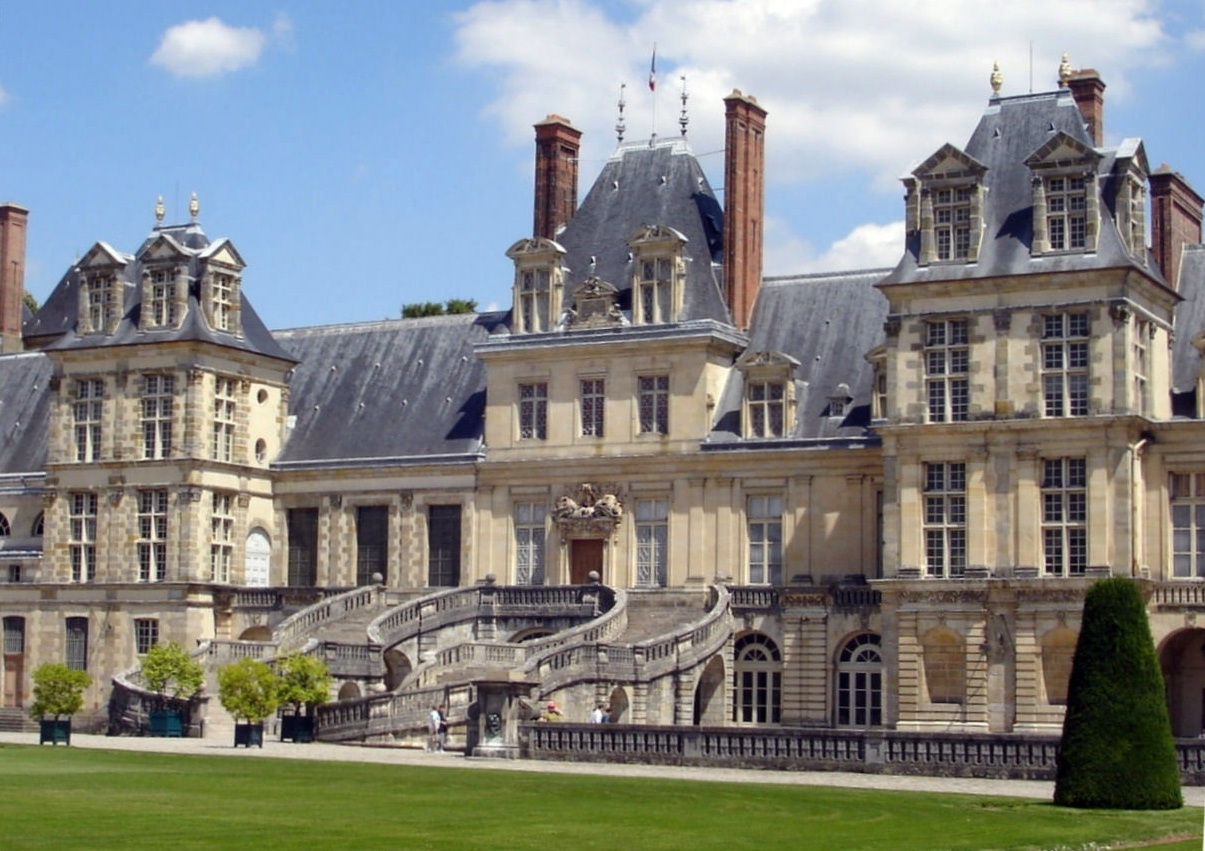
The Palace and Park of Fontainebleau, situated approximately 55 kilometers southeast of Paris, stands as a testament to the rich history and architectural evolution of France. Inscribed as a UNESCO World Heritage Site in 1981, this grand palace has been a significant part of the French royal court since the 12th century.
More to come…UNESCO Description of the World Heritage Site
Used by the kings of France from the 12th century, the medieval royal hunting lodge of Fontainebleau, standing at the heart of a vast forest in the Ile-de-France, was transformed, enlarged and embellished in the 16th century by François I, who wanted to make a 'New Rome' of it. Surrounded by an immense park, the Italianate palace combines Renaissance and French artistic traditions.
UNESCO Justification of the World Heritage Site
Criterion (ii) : The architecture and decor of the Palace of Fontainebleau strongly influenced the evolution of art in France and Europe. The Italian artists called upon by the king, painters, sculptors and architects, decisively and lastingly oriented French Renaissance art, to which they gave its most prestigious and precious examples.
Criterion (vi) : The Palace and the Park of Fontainebleau, a major royal residence for four centuries, are associated with events in French history of exceptional universal importance such as the repeal of the Edict of Nantes by Louis XIV in 1685 and the abdication of the Emperor Napoleon I in 1814.
Encyclopedia Record: Palace of Fontainebleau
Palace of Fontainebleau, located 55 kilometers southeast of the center of Paris, in the commune of Fontainebleau, is one of the largest French royal châteaux. It served as a hunting lodge and autumn residence for many of the French monarchs, including Louis VII, Francis I, Henry II, Louis-Philippe, Napoleon I, and Napoleon III. Though the monarchs only resided there for a few months of the year, they gradually transformed it into a genuine palace, filled with art and decoration. It became a national museum in 1927 and was designated a UNESCO World Heritage Site in 1981 for its unique architecture and historical importance.Additional Site Details
Area: 144 hectares
Number of Components: 1
(vi) — Directly associated with events or living traditions
Coordinates: 48.40194444 , 2.698055556
World Heritage Research
Discover scientific research and academic studies that deepen our understanding of Palace and Park of Fontainebleau from its history and significance to its conservation, management, and contemporary challenges.
-
Origin of woman
A significant shift in the depiction of the female nude occurred during the French Renaissance, particularly at the Palace and Park of Fontainebleau. Initially confined to private religious texts, such as Jean Fouquet’s 1452 Melun Diptych, the female nude evolved into monumental mythological forms under King François I’s patronage, brought in by Italian artists. By the mid-16th century, French artists at Fontainebleau introduced large-scale oil paintings featuring secular nudes, categorized into heroic nudes, women at their toilettes, and women at their baths. This transition, analyzed through historical art analysis, marks a pivotal development in Renaissance iconography, blending religious, mythological, and secular themes.
Peoples, A. S. Origin of woman. https://doi.org/10.14418/rgfbnjnz
View Publication Record | Read Publication -
‘The God of the Race’: Louis XIII and his Itinerant Court
Contrary to the prevailing narrative, Louis XIII's court was highly mobile, with extensive and frequent travels that posed physical dangers, disrupted governance, and had devastating impacts on the towns visited. These 'progresses' were crucial for political maneuvering, securing provinces, diplomatic engagements, and responding to security needs, while also allowing royal influence over ceremonial entries. The study reveals a complex logistical network supporting these travels, even when the court remained in Île-de-France, with Louis increasingly favoring Fontainebleau and Saint-Germain-en-Laye over Paris. Cardinal Richelieu's power base in Rueil further fragmented the court's structure, undermining royal prestige. The research challenges assumptions about the court's stability and highlights its polycentric nature.
Jaffré, M. W. S. (2025). ‘The God of the Race’: Louis XIII and his Itinerant Court. The Courtiers and the Court of Louis XIII, 1610–1643, 261–284. https://doi.org/10.1093/9780198957645.003.0009
View Publication Record | Read Publication -
Vizita Suveranilor României Mari în Franța (9 - 12 Aprilie 1924)
A historical account highlights the significance of King Ferdinand and Queen Marie's state visit to France from April 9–12, 1924, marking a pivotal moment in Romania's post-Union diplomatic efforts. The visit underscored Romania's strategic alignment with France and Britain while showcasing its role as a democratic leader in Europe. Key events included solemn tributes to fallen Romanian soldiers in Alsace, formal receptions in Strasbourg, and high-profile engagements in Paris, including honors from the University of Strasbourg and French political figures like President Alexandre Millerand. The visit concluded with a ceremonial dinner at Fontainebleau, leaving a lasting impression on both French and Romanian media. This analysis provides a detailed narrative of the tour's diplomatic and symbolic importance, contextualizing it within Romania's broader geopolitical strategy following the Great Union of 1918.
DINU, Ș. (2024). VIZITA SUVERANILOR ROMÂNIEI MARI ÎN FRANȚA (9 - 12 APRILIE 1924). Revista Bibliotecii Academiei Române, 9(17), 49–65. https://doi.org/10.59277/rbar.2024.17.03
View Publication Record | Read Publication -
Une si douce captivité . Oiseaux de volière et célébration de la monarchie au château de Fontainebleau sous Henri IV
The aviary at the Palace of Fontainebleau, constructed for King Henri IV between 1599 and 1608, served as a sophisticated political allegory, symbolizing royal power and absolutism. This study reveals its immersive design—spatially, visually, and auditorily—as a carefully curated space that celebrated monarchy through the captivity of whistling birds. The aviary's architectural and interior dispositions were analyzed to highlight its recreational and symbolic functions, demonstrating how it manifested the virtues and perceived benefits of royal authority at the French court. By examining historical records and architectural evidence, the research underscores the aviary's role in reinforcing monarchical prestige during Henri IV's reign.
Lurin, E. (2023). Une si douce captivité . Oiseaux de volière et célébration de la monarchie au château de Fontainebleau sous Henri IV. Revue de L’art, N° 218(4), 6–19. https://doi.org/10.3917/rda.218.0006
View Publication Record | Read Publication -
On Porcelain
Porcelain, a material invented by the Chinese around 200 BC and renowned for its strength and translucency, has been a subject of fascination and attempted replication by Western cultures. The study 'On Porcelain' explores the historical and cultural significance of porcelain, particularly through the lens of looting and colonialism. It examines how the acquisition of porcelain artifacts from China, such as those presented to Empress Eugenie and Queen Victoria after the looting of the Old Summer Palace, reflects broader patterns of power dynamics and historical narratives. The research delves into the psychological and social implications, drawing parallels between the delicacy of porcelain and the perceived value of white women in society, as illustrated through historical events like the 1955 murder of Emmett Till and the 2020 incident involving Amy Cooper in Central Park. It also highlights the ongoing struggle for the return of looted artifacts, symbolized by the theft of a chimera from the Palace and Park of Fontainebleau in 2015.
Mao, S. W. (2022). On Porcelain. New England Review, 43(1), 79–83. https://doi.org/10.1353/ner.2022.0007
View Publication Record | Read Publication -
Life at Fontainebleau
A detailed account of royal life at the Palace and Park of Fontainebleau reveals the intricate logistics and daily routines of the French monarchy during summer stays. The study, based on historical records from 1604 to 1609, highlights the extensive preparations involved in relocating courtly households, including bedding, tableware, and personal belongings, reflecting the material culture of early 17th-century aristocracy. Observations of the dauphin's journey—from St Germain-en-Laye to Fontainebleau—offer insights into child-rearing practices, royal protocol, and the social dynamics of travel during this period. The research approach combines narrative analysis with historical documentation, providing a vivid portrayal of life at one of France's most significant royal residences.
Crump, L. (2022). Life at Fontainebleau. Nursery Life 300 Years Ago, 109–132. https://doi.org/10.4324/9781003325062-6
View Publication Record | Read Publication -
Passages to Fantasy: The Performance of Motion in Cellini's Fontainebleau Portal and the Galerie François I
Cellini's Fontainebleau Portal design, commissioned by King Francis I in the 1540s, reveals a duality in motion and space. The bronze portal, depicting the 'Nymph of Fontainebleau' in a forest setting, contrasts the dynamic motions of hunting rituals in the exterior with the more structured, choreographed movements of diplomatic tours within the palace. This design underscores the complementarity between interior and exterior spaces as zones of visual and somatic pleasure, reviving the mythological foundation of Fontainebleau as a bountiful hunting ground and water source. Although the portal was never completed, its conceptualization offers insight into the spatial and performative dimensions of Renaissance architecture and royal symbolism.
Bensoussan, N. (2025). Passages to Fantasy: The Performance of Motion in Cellini’s Fontainebleau Portal and the Galerie François I. Early Modern Spaces in Motion, 59–80. https://doi.org/10.5117/9789463725811_ch02
View Publication Record | Read Publication