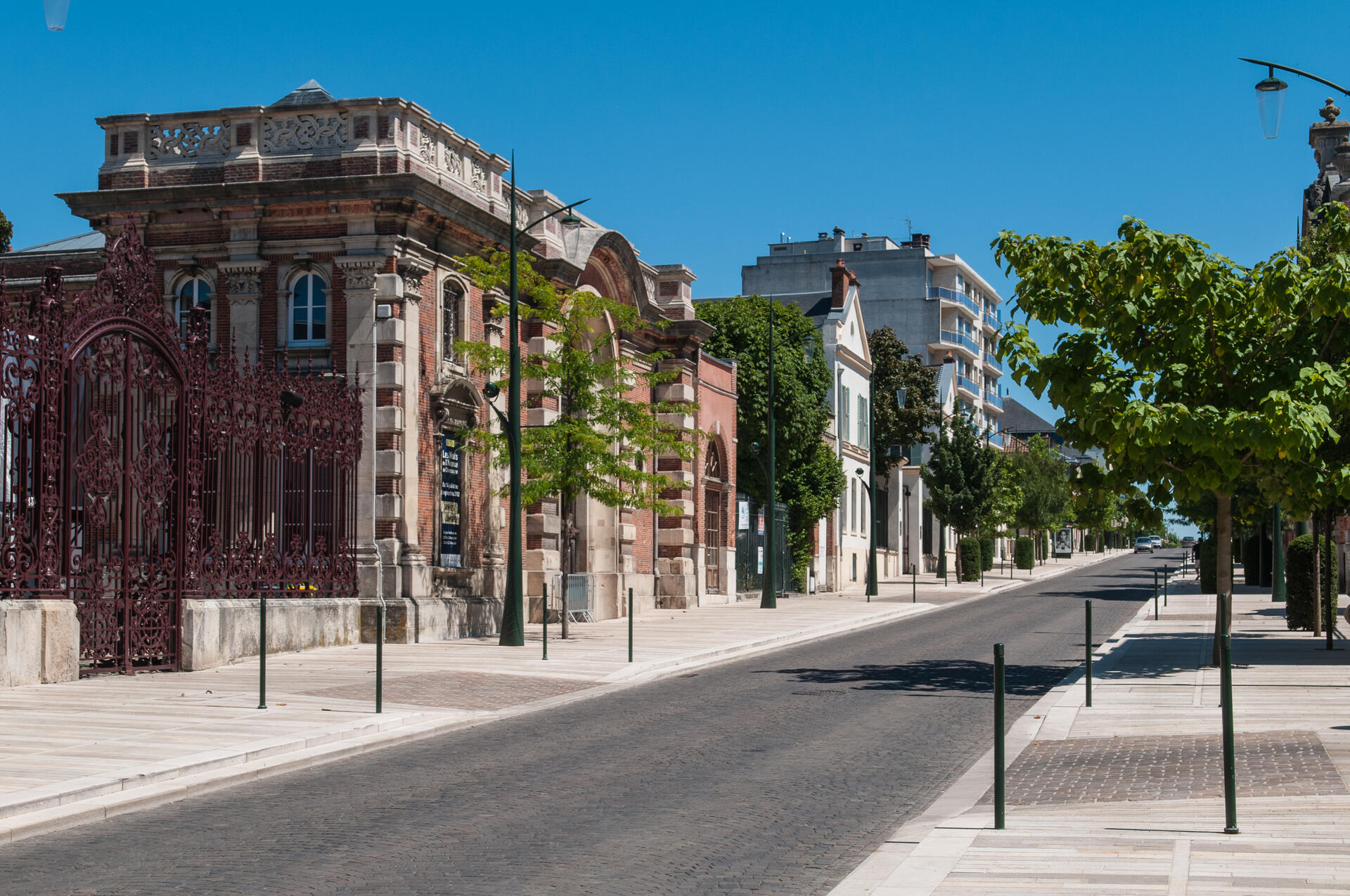
World Heritage Identification Number: 1465
World Heritage since: 2015
Category: Cultural Heritage
WHE Type: Agriculture Landscapes, Parks & Gardens
Transboundary Heritage: No
Endangered Heritage: No
Country: 🇫🇷 France
Continent: Europe
UNESCO World Region: Europe and North America
Map
The Champagne Hillsides, Houses, and Cellars: A UNESCO World Heritage Site
The Champagne Hillsides, Houses, and Cellars, inscribed to the UNESCO World Heritage List in 2015, offers a unique insight into the history, culture, and industry of one of the world's most celebrated beverages – champagne. This French region, located in the northeast of the country, is not only famous for its sparkling wine but also for its significant contribution to the development of agro-industrial enterprises.
More to come…UNESCO Description of the World Heritage Site
The property encompasses sites where the method of producing sparkling wines was developed on the principle of secondary fermentation in the bottle since the early 17th century to its early industrialization in the 19th century. The property is made up of three distinct ensembles: the historic vineyards of Hautvillers, Aÿ and Mareuil-sur-Aÿ, Saint-Nicaise Hill in Reims, and the Avenue de Champagne and Fort Chabrol in Epernay. These three components – the supply basin formed by the historic hillsides, the production sites (with their underground cellars) and the sales and distribution centres (the Champagne Houses) - illustrate the entire champagne production process. The property bears clear testimony to the development of a very specialized artisan activity that has become an agro-industrial enterprise.
UNESCO Justification of the World Heritage Site
Criterion (iii): The Champagne Hillsides, Houses and Cellars are the outcome of expertise perfected over the generations, of exemplary inter-professional organisation and of the protection of the appellation, as well as the development of inter-cultural relations and social innovations over a long period of time, which women also took part in. Through the development of traditional know-how, the people of Champagne have overcome a number of obstacles, both in the vineyards (a harsh climate and rather infertile chalky soils), and in the wine-making process, through their mastery of sparkling wine production techniques, and in assembly and bottling. Champagne enterprise was able to gain from the technological and entrepreneurial contributions of the British and Germans. The equilibrium between wine-growers and the Champagne Houses led to the development of a pioneering inter-professional structure that is still active today.
Criterion (iv): As the legacy of wine-growing and wine-making practices perfected over the centuries, production in Champagne is founded on its supply basin (the vineyards), its processing sites (the vendangeoirs, where grapes are pressed, and the cellars) and its sales and distribution centres (the headquarters of the Houses). They are functionally intertwined and intrinsically linked to the chalky substratum where the vines grow, which is easy to hollow out and which is also found in the architecture. The production process specific to Champagne, based on secondary fermentation in the bottle, required a vast network of cellars. In Reims, the use of the former Gallo-Roman and medieval chalk quarries, and the digging of suitable cellars in Épernay or on the hillsides, led to the formation of an exceptional underground landscape – the hidden side of Champagne. As Champagne has been exported around the world since the 18th century, trade development resulted in a special kind of town planning, which integrated functional and showcasing goals: new districts were built around production and sale centres, linked to the vineyards and to transport routes.
Criterion (vi): The Champagne, Hillsides, Houses and Cellars, and particularly the Saint-Nicaise Hill, with its monumental quarry-cellars and its early Champagne Houses, and the Avenue of Champagne, with the showcasing spaces of the commerce houses, convey in an outstanding manner the unique and world-renowned image of Champagne as a symbol of the French art of living, of festiveness and celebration, of reconciliation and victory (particularly in sport). Literature, painting, caricatures, posters, music, cinema, photography and even comics all testify to the influence and the constancy of this unique wine's image.
Encyclopedia Record: Champagne hillsides, houses and cellars
Champagne hillsides, houses and cellars is the name given to several sites in the Champagne region of France inscribed to the UNESCO World Heritage List in 2015 for their historical ties to the production and sale of champagne, as well as their testimony to the development of an internationally renowned agro-industrial enterprise.Additional Site Details
Area: 1,101.72 hectares
Number of Components: 14
(iv) — Outstanding example of a type of building or landscape
(vi) — Directly associated with events or living traditions
Coordinates: 49.0775 , 3.9461111111