World Heritage Identification Number: 943
World Heritage since: 1999
Category: Cultural Heritage
WHE Type: Buildings & Architectural Ensembles
Transboundary Heritage: Yes
Endangered Heritage: No
Country: Belgium, France
Continent: Europe
UNESCO World Region: Europe and North America
Map
Belfries of Belgium and France: A Testament to Civic Independence
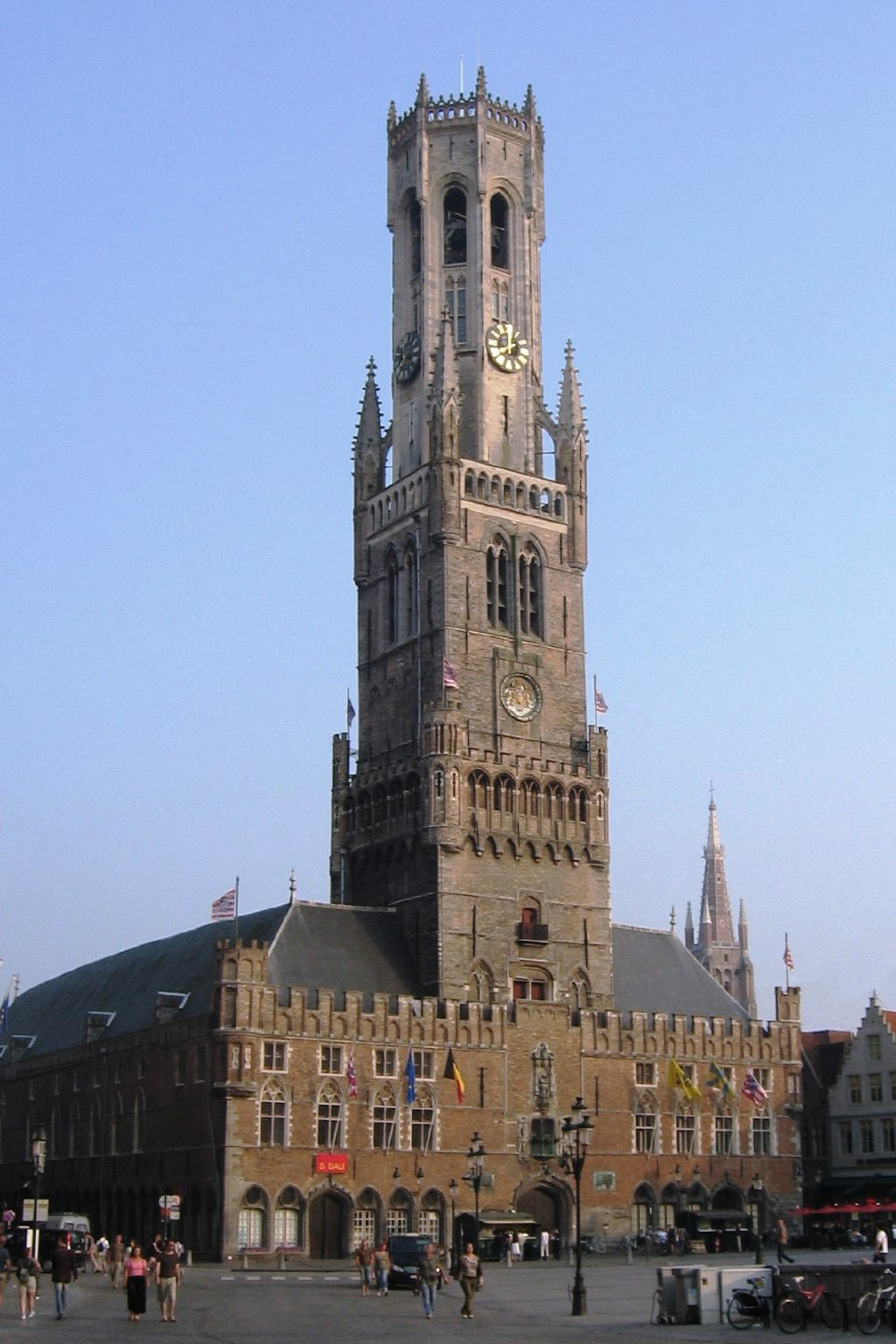
The Belfries of Belgium and France, inscribed as a UNESCO World Heritage Site in 1999 and extended in 2005, stand as a remarkable testament to the emergence of civic independence from feudal and religious influences in the former County of Flanders and neighboring regions that were once under the rule of the House of Burgundy. These 56 historic structures, spanning across Belgium (Flanders, Wallonia, and Brussels) and northern France, serve as an architectural embodiment of the region's rich history and cultural heritage.
Built between the 11th and 17th centuries, these belfries reflect various architectural styles, including Romanesque, Gothic, Renaissance, and Baroque. Each structure is unique, yet they share common characteristics that set them apart from other towering edifices such as town halls or church bell-towers. Unlike these symbols of seigneurial or ecclesiastical power, the belfry represents the authority of the local aldermen, embodying the growing influence and prosperity of the towns themselves.
The belfry's primary function was to house the town's most important bell, used for timekeeping, communication, and as a call to arms during times of conflict. In many cases, belfries also safeguarded the community’s most valuable civic documents, such as charters and seals.
However, their significance extends beyond their practical purposes. Often forming part of the traditional “three-tower” urban ensemble—alongside a church tower and, in some towns, a separate town hall tower—belfries served as prominent visual markers in the medieval landscape, assisting both locals and travelers in orienting themselves within the dense network of Low Country towns. Moreover, they represented the collective identity and pride of each community, fostering a sense of unity among its inhabitants.
The construction of belfries can be traced back to the rise of independent communes in the Low Countries during the Middle Ages. As these towns gained autonomy from feudal lords and the Church, they sought to assert their newfound status through impressive public works. The belfry became a tangible symbol of this newly won freedom, standing tall above the rooftops as a beacon of civic power and prestige.
Over the centuries, many of these belfries have undergone extensive renovations and restorations. Despite these changes, they continue to retain their original character and historical significance. Today, they serve not only as architectural marvels but also as living reminders of the region's rich past and the struggle for civic independence that shaped it.
Looking at the big picture, the Belfries of Belgium and France offer a fascinating glimpse into the history and culture of the Low Countries. Their enduring presence serves as a testament to the resilience and ingenuity of their builders, as well as the spirit of independence that defined the region during the Middle Ages. By preserving these iconic structures, we ensure that future generations will continue to appreciate the unique role they played in shaping the history and identity of the Low Countries.
UNESCO Description of the World Heritage Site
Twenty-three belfries in the north of France and the belfry of Gembloux in Belgium were inscribed in 2005, as an extension to the 32 Belgian belfries inscribed in 1999 as Belfries of Flanders and Wallonia. Built between the 11th and 17th centuries, they showcase the Roman, Gothic, Renaissance and Baroque styles of architecture. They are highly significant tokens of the winning of civil liberties. While Italian, German and English towns mainly opted to build town halls, in part of north-western Europe, greater emphasis was placed on building belfries. Compared with the keep (symbol of the seigneurs) and the bell-tower (symbol of the Church), the belfry, the third tower in the urban landscape, symbolizes the power of the aldermen. Over the centuries, they came to represent the influence and wealth of the towns.
UNESCO Justification of the World Heritage Site
Criterion (ii): The belfries of Belgium and France are exceptional examples of a form of urban architecture adapted to the political and spiritual requirements of their age.
Criterion (iv): The Middle Ages saw the emergence of towns that were independent of the prevalent feudal system. The belfries of Belgium and France symbolize this new-found independence, and also the links within them between the secular and religious powers.
Encyclopedia Record: Belfries of Belgium and France
The Belfries of Belgium and France are a group of 56 historical buildings designated by UNESCO as World Heritage Sites, in recognition of the civic belfries serving as an architectural manifestation of emerging civic independence from feudal and religious influences in the former County of Flanders and neighbouring areas which once were possessions of the House of Burgundy.Additional Site Details
Area: Not available
Number of Components: 56
(iv) — Outstanding example of a type of building or landscape
Coordinates: 50.17444 , 3.23139