World Heritage Identification Number: 1101
World Heritage since: 2004
Category: Cultural Heritage
WHE Type: Archaeological Sites
Transboundary Heritage: No
Endangered Heritage: No
Country: 🇮🇳 India
Continent: Asia
UNESCO World Region: Asia and the Pacific
Map
Exploring the Rich Cultural Landscape of Champaner-Pavagadh Archaeological Park
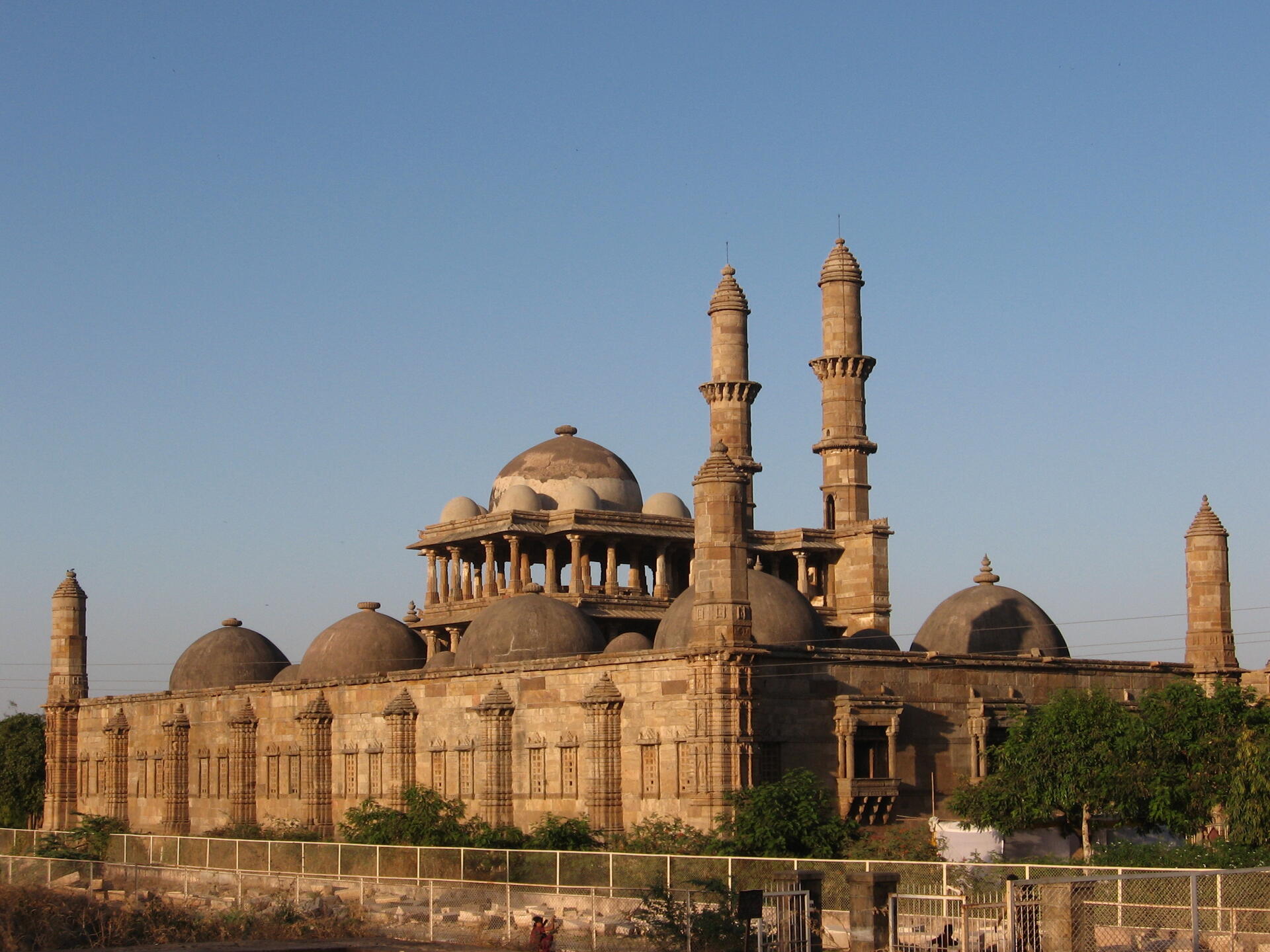
The Champaner-Pavagadh Archaeological Park, a UNESCO World Heritage Site, offers a unique blend of history, architecture, and culture that captivates visitors from all over the world. Located in the Panchmahal district of Gujarat, India, this archaeological park is nestled around the historical city of Champaner, which was established by Vanraj Chavda, a prominent king of the Chavda Dynasty, in the eighth century.
More to come…UNESCO Description of the World Heritage Site
A concentration of largely unexcavated archaeological, historic and living cultural heritage properties cradled in an impressive landscape which includes prehistoric (chalcolithic) sites, a hill fortress of an early Hindu capital, and remains of the 16th-century capital of the state of Gujarat. The site also includes, among other vestiges, fortifications, palaces, religious buildings, residential precincts, agricultural structures and water installations, from the 8th to 14th centuries. The Kalikamata Temple on top of Pavagadh Hill is considered to be an important shrine, attracting large numbers of pilgrims throughout the year. The site is the only complete and unchanged Islamic pre-Mughal city.
UNESCO Justification of the World Heritage Site
Criterion (iii): The Champaner-Pavagadh Archaeological Park with its ancient architecture, temples and special water-retaining installations together with its religious, military and agricultural structures, dating back to the regional Capital City built by Mehmud Begda in the 16th century, represents cultures which have disappeared.
Criterion (iv): The structures represent a perfect blend of Hindu-Moslem architecture, mainly in the Great Mosque (Jama Masjid), which became a model for later mosque architecture in India. This special style comes from the significant period of regional sultanates.
Criterion (v): The Champaner-Pavagadh Archaeological Park is an outstanding example of a very short living capital, making the best use of its setting, topography and natural features. It is quite vulnerable due to abandonment, forest takeover and modern life.
Criterion (vi): The Champaner-Pavagadh Archaeological Park is a place of worship and continuous pilgrimage for Hindu believers.
Encyclopedia Record: Champaner-Pavagadh Archaeological Park
Champaner-Pavagadh Archaeological Park, a UNESCO World Heritage Site, is located in Panchmahal district in Gujarat, India. It is located around the historical city of Champaner, a city which was founded by Vanraj Chavda, the most prominent king of the Chavda Dynasty, in the eighth century. He named it after the name of his friend and general Champa, also known later as Champaraj. The heritage site is studded with forts with bastions starting from the hills of Pavagadh, and extending into the city of Champaner. The park's landscape includes archaeological, historic and living cultural heritage monuments such as Chalcolithic sites, a hill fortress of an early Hindu capital, and remains of the 16th-century capital of the state of Gujarat. There are palaces, entrance gates and arches, mosques, tombs and temples, residential complexes, agricultural structures and water installations such as stepwells and tanks, dating from the eighth to the 14th centuries. The Kalika Mata Temple, located on top of the 800 metres (2,600 ft) high Pavagadh Hill, is an important Hindu shrine in the region, attracting large numbers of pilgrims throughout the year.Additional Site Details
Area: 1,328.89 hectares
Number of Components: 12
(iv) — Outstanding example of a type of building or landscape
(v) — Outstanding example of traditional human settlement
(vi) — Directly associated with events or living traditions
Coordinates: 22.48333333 , 73.53333333
World Heritage Research
Discover scientific research and academic studies that deepen our understanding of Champaner-Pavagadh Archaeological Park from its history and significance to its conservation, management, and contemporary challenges.
-
Checklist of Spiders (Arachnida Araneae) from Champaner Pavagadh Archaeological Park, Gujarat
A comprehensive checklist of spiders from Champaner-Pavagadh Archaeological Park, a UNESCO World Heritage Site in Gujarat, India, identifies 189 species across 32 families. The study, conducted between 2016 and 2019, highlights the site's rich arachnid diversity, including 27 new records for the region. Dominant families included Salticidae, Araneidae, Lycosidae, Theridiidae, Oxyopidae, and Thomisidae. Spiders were collected using active searching, pitfall traps, and sweep nets, providing the first holistic documentation of this understudied ecosystem's spider fauna.
YADAV, A., & KUMAR, D. (2022). CHECKLIST OF SPIDERS (ARACHNIDA ARANEAE) FROM CHAMPANER PAVAGADH ARCHAEOLOGICAL PARK, GUJARAT. Uttar Pradesh Journal of Zoology, 88–109. https://doi.org/10.56557/upjoz/2022/v43i123074
View Publication Record | Read Publication