World Heritage Identification Number: 873
World Heritage since: 2001
Category: Cultural Heritage
WHE Type: Historic Cities & Urban Areas
Transboundary Heritage: No
Endangered Heritage: No
Country: 🇫🇷 France
Continent: Europe
UNESCO World Region: Europe and North America
Map
Provins, Town of Medieval Fairs: A Testimony to the Economic Power of the Counts of Champagne
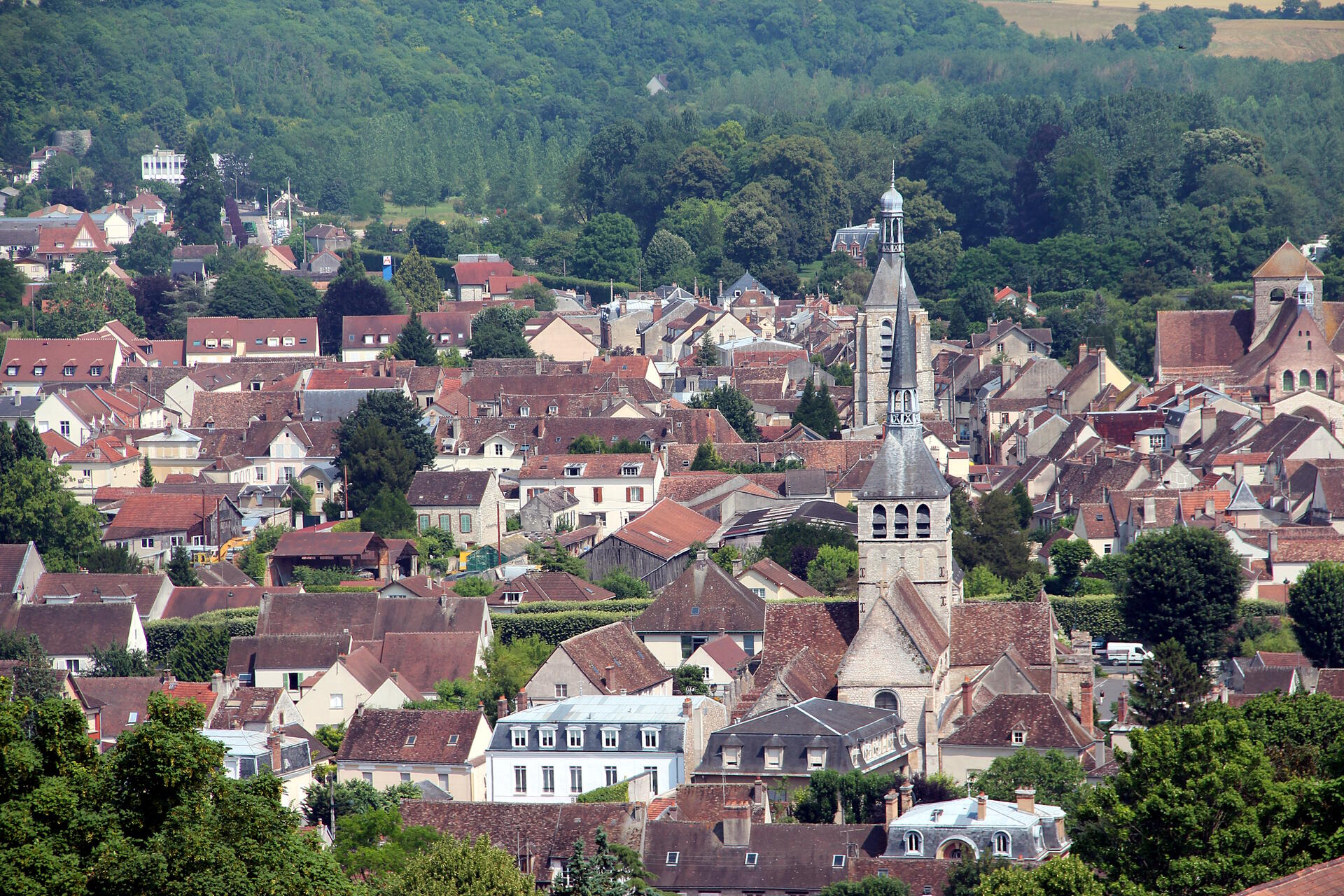
Located in the picturesque Seine-et-Marne department of the Île-de-France region in France, the fortified medieval town of Provins stands as a remarkable testament to the economic prowess and cultural influence of the Counts of Champagne during the Middle Ages. Inscribed as a UNESCO World Heritage Site in 2001, this charming town offers visitors a unique glimpse into the past, showcasing the early developments in international trading fairs and the wool industry that once thrived here.
More to come…UNESCO Description of the World Heritage Site
The fortified medieval town of Provins is situated in the former territory of the powerful Counts of Champagne. It bears witness to early developments in the organization of international trading fairs and the wool industry. The urban structure of Provins, which was built specifically to host the fairs and related activities, has been well preserved.
UNESCO Justification of the World Heritage Site
Criterion (ii): At the beginning of the 2nd millennium, Provins was one of several towns in the territory of the Counts of Champagne that became the venues for great annual trading fairs linking northern Europe with the Mediterranean world.
Criterion (iv): Provins preserves to a high degree the architecture and urban layout that characterize these great medieval fair towns.
Encyclopedia Record: Provins
Provins is a commune in the Seine-et-Marne department in the Île-de-France region in north-central France. Known for its well-preserved medieval architecture and importance throughout the Middle Ages as an economic center and a host of annual trading fairs, Provins became a UNESCO World Heritage Site in 2001.Additional Site Details
Area: 108 hectares
Number of Components: 1
(iv) — Outstanding example of a type of building or landscape
Coordinates: 48.55972222 , 3.298888889
World Heritage Research
Discover scientific research and academic studies that deepen our understanding of Provins, Town of Medieval Fairs from its history and significance to its conservation, management, and contemporary challenges.
-
The Herring Scandal at the Beginning of Lent: Provins, February 1582
A rare glimpse into the everyday life and economic dynamics of medieval Provins, France, emerges from the 'Herring Scandal' of 1582. This incident, documented by priest Claude Haton in his memoirs, reveals hidden aspects of herring trade, consumption patterns, and power relations during the Maritime Revolution. The study leverages judicial, fiscal, and narrative sources to reconstruct the herring's journey from harvest to consumer, challenging the typical silences in historical records about mundane details. Expert examinations and judgments by municipal authorities, including consultations with other towns and the Parliament of Paris, underscore the complexities of food regulation and power structures in medieval society.
Uvarov, P. Yu. (2025). THE HERRING SCANDAL AT THE BEGINNING OF LENT: PROVINS, FEBRUARY 1582. Ural Historical Journal, 89(4), 103–109. https://doi.org/10.30759/1728-9718-2025-4(89)-103-109
View Publication Record | Read Publication -
La verrière des Annonces à Sainte-Croix de Provins ou verrière de l’Incarnation
A rare medieval stained glass window, the 'verrière des Annonces' or 'Incarnation Window,' was discovered in Sainte-Croix de Provins. This 13th-century artwork, previously overlooked, depicts scenes from the life of Christ and provides significant insights into the artistic and religious practices of medieval Provins. The study employs detailed iconographic analysis to highlight its historical importance, linking it to the town's role as a center for medieval fairs and pilgrimage routes. Through archival research and stylistic comparison, the window is contextualized within the broader tradition of Gothic stained glass in France.
Perrot, F. (2024). La verrière des Annonces à Sainte-Croix de Provins ou verrière de l’Incarnation. Bulletin de La Société Nationale Des Antiquaires de France, 2017(1), 425–430. https://doi.org/10.3406/bsnaf.2024.12928
View Publication Record | Read Publication -
50 Years After the World Heritage Convention. An analysis of the evolution of the concepts of Monuments and Authenticity
Historic centers of UNESCO World Heritage Sites, despite their geographical diversity, converge on a unified concept of authenticity and monument preservation. This study analyzed nine sites—Lyon, Provins, Albi, Florence, Pienza, Urbino, Cordoba, Toledo, and Ávila—to reveal how they maintain distinctive features while upholding values of authenticity and outstanding universal significance over centuries. The research, conducted as part of a master's internship at the University of Bologna, demonstrated that these centers embody multiple interpretations of authenticity, ultimately assimilating into a cohesive framework. This finding underscores the adaptability of preservation strategies in safeguarding cultural heritage.
Pica, A. (2023). 50 Years After the World Heritage Convention. An analysis of the evolution of the concepts of Monuments and Authenticity. Restauro Archeologico, 30(1). https://doi.org/10.36253/rar-14280
View Publication Record | Read Publication -
Coniacian–Campanian palynology, carbon isotopes and clay mineralogy of the Poigny borehole (Paris Basin) and its correlation in NW Europe
A high-resolution carbon-isotope curve from the Poigny borehole, near Provins (Seine-et-Marne), reveals critical insights into the Coniacian–Campanian interval of the Upper Cretaceous Chalk in the Paris Basin. This study identifies 33 significant palynological events and integrates them with carbon isotope events (CIEs) to refine sub-stage boundaries and correlate depositional sequences across NW Europe, including England and Germany. The research demonstrates that sea-level fluctuations were a primary driver of palaeoenvironmental changes during this period, as evidenced by the peridinioid/gonyaulacoid (P/G) dinocyst ratio and clay mineralogy analysis. This approach provides a robust framework for chemostratigraphic and biostratigraphic correlation, enhancing our understanding of Late Cretaceous palaeoenvironments.
Pearce, M. A., Jarvis, I., Monkenbusch, J., Thibault, N., Ullmann, C. V., & Martinez, M. (2023). Coniacian–Campanian palynology, carbon isotopes and clay mineralogy of the Poigny borehole (Paris Basin) and its correlation in NW Europe. Comptes Rendus. Géoscience, 354(S3), 45–65. https://doi.org/10.5802/crgeos.118
View Publication Record | Read Publication -
Provins (Seine-et-Marne). 5, rue des Prés de la Comtesse – Champbenoîst
A study of the Champbenoîst site in Provins, France, reveals that despite its historical significance as a Benedictine monastery dating back to the late 12th century, only two modern or contemporary vernacular buildings remain on the original location. The monastery was relocated within the urban enclosure in 1625, leaving behind a modest domain center for land management. This research highlights the contrast between Provins' medieval heritage and its modern architectural remnants, offering insights into the site's evolution over centuries.
Prié, A. (2020). Provins (Seine-et-Marne). 5, rue des Prés de la Comtesse – Champbenoîst. Archéologie Médiévale, 50, 273–274. https://doi.org/10.4000/archeomed.35608
View Publication Record | Read Publication -
Provins as an example of a “live museum”
Provins exemplifies effective cultural heritage management by preserving and revalorizing its medieval architecture and urban layout. The town, founded in the early medieval period and flourishing as a prominent fair town in the 12th and 13th centuries, boasts well-preserved monuments such as defensive walls, the Cesar tower, churches, and residential relics. Recognized by UNESCO in 2001, Provins serves as a model for other historic towns, demonstrating how authorities can fulfill obligations to maintain, protect, and educate communities about heritage conservation. This study highlights Provins' successful approach, offering insights into best practices for cultural heritage management.
Kuśnierz-Krupa, D. (2018). Provins as an example of a “live museum”. E3S Web of Conferences, 49, 65. https://doi.org/10.1051/e3sconf/20184900065
View Publication Record | Read Publication