World Heritage Identification Number: 1308
World Heritage since: 2019
Category: Mixed Cultural Heritage and Natural Heritage
WHE Type: Cultural Landscapes
Transboundary Heritage: No
Endangered Heritage: No
Country: 🇧🇷 Brazil
Continent: Americas
UNESCO World Region: Latin America and the Caribbean
Map
Exploring the Rich Cultural Landscape and Biodiverse Ecosystems of Paraty and Ilha Grande
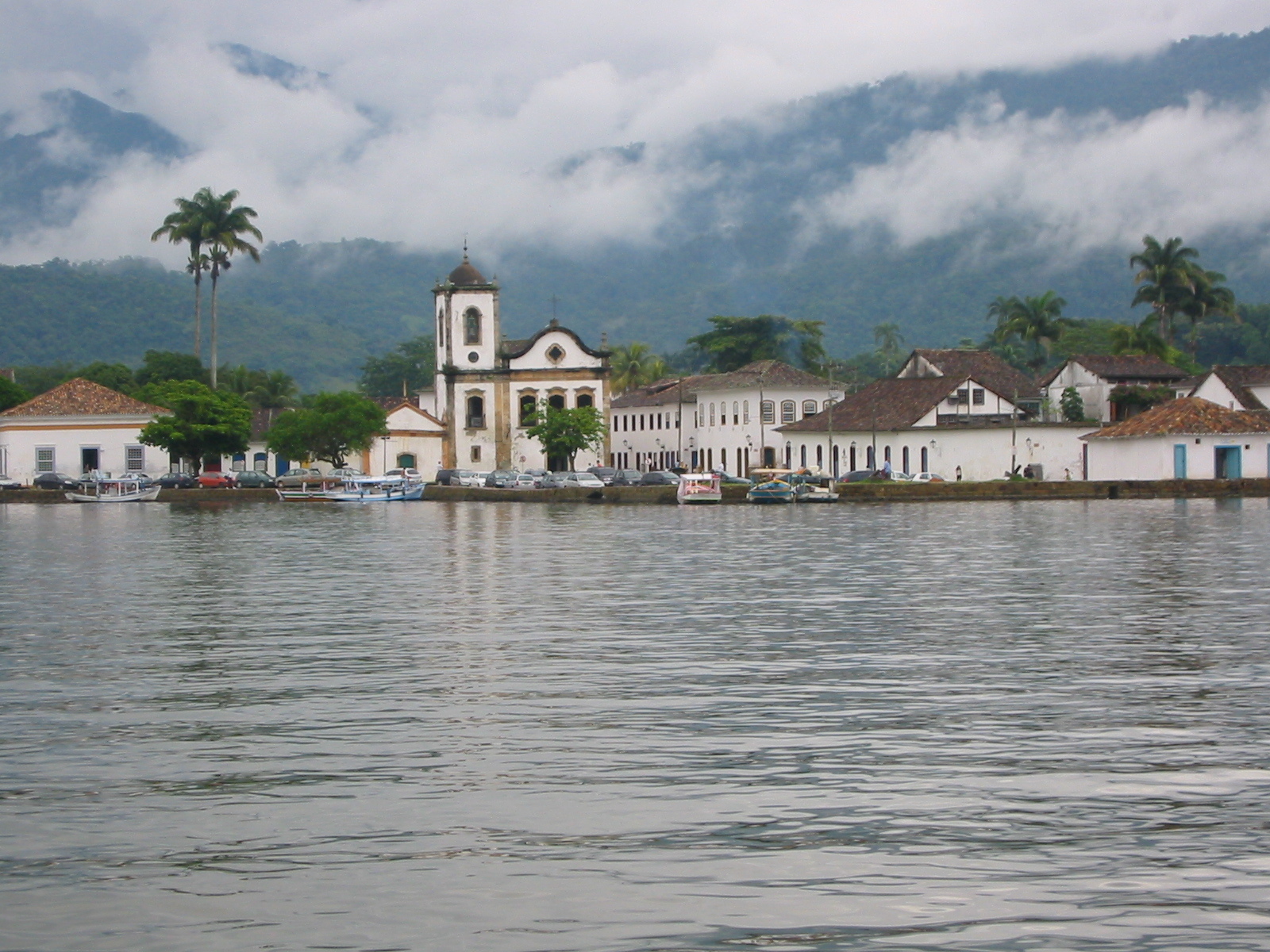
Paraty and Ilha Grande, inscribed as a UNESCO World Heritage Site in 2019, offer a unique blend of cultural and natural wonders that captivate visitors from around the globe. This natural-cultural landscape spans the historic center of Paraty, one of Brazil's most well-preserved coastal towns, four protected areas of the Brazilian Atlantic Forest, part of the Serra da Bocaina mountain range, and the Atlantic coastal region.
More to come…UNESCO Description of the World Heritage Site
This natural-cultural landscape encompasses the historic centre of Paraty, one of Brazil's best-preserved coastal towns, four Brazilian Atlantic Forest protected natural areas, one of the world’s five key biodiversity hotspots, as well as part of the Serra da Bocaina mountain range and the Atlantic coastal region. Serra do Mar and Ilha Grande Bay is home to an impressive diversity of animal species, some of which are threatened, such as the jaguar (Panthera onca), the white-lipped peccary (Tayassu pecari) and several primate species, including the Southern Muriqui (Brachyteles arachnoides), which are emblematic of the property. In the late 17th century, Paraty was the end-point of the Caminho do Ouro (Gold Route), along which gold was shipped to Europe. Its port also served as an entry point for tools and African slaves, sent to work in the mines. A defence system was built to protect the wealth of the port and the town. The historic centre of Paraty has retained its 18th century plan and much of its colonial architecture dating from the 18th and early 19th centuries.
UNESCO Justification of the World Heritage Site
Criterion (v): The Cultural Landscape of Paraty is an outstanding testimony of human interaction with the environment. Since prehistoric times, human groups have lived in interaction with the landscape and have exploited the natural land and water resources that characterize the region and frame the built territory, producing settlements and giving cultural significance to natural features, evolving but keeping the most important natural elements. The Tupi-Guarani language communities have a close relationship with the Atlantic Forest which implies a high level of management and deep knowledge and mastery of the different ecosystems and Forest formations. The traditional communities of Paraty based their cultures on activities related to the use of the land and the sea; traditional fishing activity is still intense, especially in the Caiçara communities and around the historic centre of Paraty. The Quilombolas groups, the descendants of the Africans enslaved during the Colonial period, have created their own cultural patterns in the context of the Atlantic Forest’s landscape. Global climate change and the recurrence and severity of natural disasters make Paraty cultural landscape an area of high vulnerability.
Criterion (x): The property Paraty and Ilha Grande – Culture and Biodiversity is located in the Atlantic Forest hotspot, one of five leading global biodiversity hotspots and the property is known for its high richness in endemic species. The remarkably high biodiversity of this area is due to a unique diversity of landscapes with a set of high mountains and strong altitudinal variation, and ecosystems that occupy areas from sea level to about 2,000 metres in elevation. The property is noteworthy for the occurrence of at least 11 Key Biodiversity Areas. This section of the Atlantic Forest represents the greatest richness of endemism for vascular plants within the hotspot with some 36 species of rare plants, 29 of which are endemic to the site. Among the rare plants of the site are species of herbaceous plants, epiphytes, shrubs and trees, which occupy specific habitats of forest environments and sandbanks, as well as along water courses. With records of 450 species, birds represent 60% of the endangered species of vertebrate fauna identified for the property. Paraty and Ilha Grande - Culture and Biodiversity is home to 45% of all the Atlantic Forest’s avifauna including 57% of the total of endemic bird species for the hotspot. The property boasts impressive species richness across almost all taxa: 125 species of anurans (frogs and toads) have been recorded representing 34% of the species known from the Atlantic Forest and some 27 species of reptile are known from the site. 150 species of mammals are found within the property including several globally significant primates such as the Southern Muriqui which is considered a flagship species for the site. The larger components of the property are also important for large range species such as jaguar, cougar, white-lipped peccary and primate species. The property also supports a similarly high diversity of marine biodiversity and endemism.
Encyclopedia Record: Paraty
Paraty is a Brazilian municipality on the southern coast of the state of Rio de Janeiro. It is 258 kilometres from the state capital, the city of Rio de Janeiro. Alongside the Atlantic Ocean, the municipal area has an average altitude of just five metres above sea level. It covers 924.295 square kilometres and has an estimated population of 47,668, giving a population density of 48.95 inhabitants per square kilometre. According to an estimate by the Brazilian Institute of Geography and Statistics (IBGE) from 2014, it ranks 43rd among the municipalities of the state of Rio de Janeiro by population.Additional Site Details
Area: 173,164.2 hectares
Number of Components: 6
(x) — Contains most important habitats for biodiversity
Coordinates: -23.0186055556 , -44.6853694444
IUCN World Heritage Outlook
The 2025 Conservation Outlook on Paraty and Ilha Grande – Culture and Biodiversity reports the following assessment:
Source: International Union for Conservation of Nature (IUCN) · View assessment