World Heritage Identification Number: 1100
World Heritage since: 2012
Category: Cultural Heritage
WHE Type: Natural Landscapes & Geographic Features
Transboundary Heritage: No
Endangered Heritage: No
Country: 🇧🇷 Brazil
Continent: Americas
UNESCO World Region: Latin America and the Caribbean
Map
Rio de Janeiro: Carioca Landscapes Between the Mountain and the Sea - A UNESCO World Heritage Site
The vibrant city of Rio de Janeiro, nestled between the verdant peaks of the Tijuca National Park and the azure waters of Guanabara Bay, boasts a unique blend of natural beauty and rich cultural heritage. Inscribed as a UNESCO World Heritage Site in 2012, the "Carioca Landscapes Between the Mountain and the Sea" encompasses a breathtaking urban landscape that has been shaped by the interplay of nature and human ingenuity over centuries.
More to come…UNESCO Description of the World Heritage Site
The site consists of an exceptional urban setting encompassing the key natural elements that have shaped and inspired the development of the city: from the highest points of the Tijuca National Park’s mountains down to the sea. They also include the Botanical Gardens, established in 1808, Corcovado Mountain with its celebrated statue of Christ, and the hills around Guanabara Bay, including the extensive designed landscapes along Copacabana Bay which have contributed to the outdoor living culture of this spectacular city. Rio de Janeiro is also recognized for the artistic inspiration it has provided to musicians, landscapers and urbanists.
UNESCO Justification of the World Heritage Site
Criterion (v): The development of the city of Rio de Janeiro has been shaped by a creative fusion between nature and culture. This interchange is not the result of persistent traditional processes but rather reflects an interchange based on scientific, environmental and design ideas that led to innovative landscape creations on a major scale in the heart of the city during little more than a century. These processes have created an urban landscape perceived to be of great beauty by many writers and travellers and one that has shaped the culture of the city.
Criterion (vi): The dramatic landscape of Rio de Janeiro has provided inspiration for many forms of art, literature, poetry, and music. Images of Rio, which show the bay, Sugar Loaf and the statue of Christ the Redeemer have had a high worldwide recognition factor, since the middle of the 19th century. Such high recognition factors can be either positive or negative: in the case of Rio, the image that was projected, and still is projected, is one of a staggeringly beautiful location for one of the world’s biggest cities.
Encyclopedia Record: Tijuca National Park
The Tijuca National Park is an urban national park in the mountains of the city of Rio de Janeiro, Brazil. The park is part of the Atlantic Forest Biosphere Preserve, and is administered by the Chico Mendes Institute for Biodiversity Conservation (ICMBio).Additional Site Details
Area: 7,248.78 hectares
Number of Components: 4
(vi) — Directly associated with events or living traditions
Coordinates: -22.9477777778 , -43.2913888889
Image
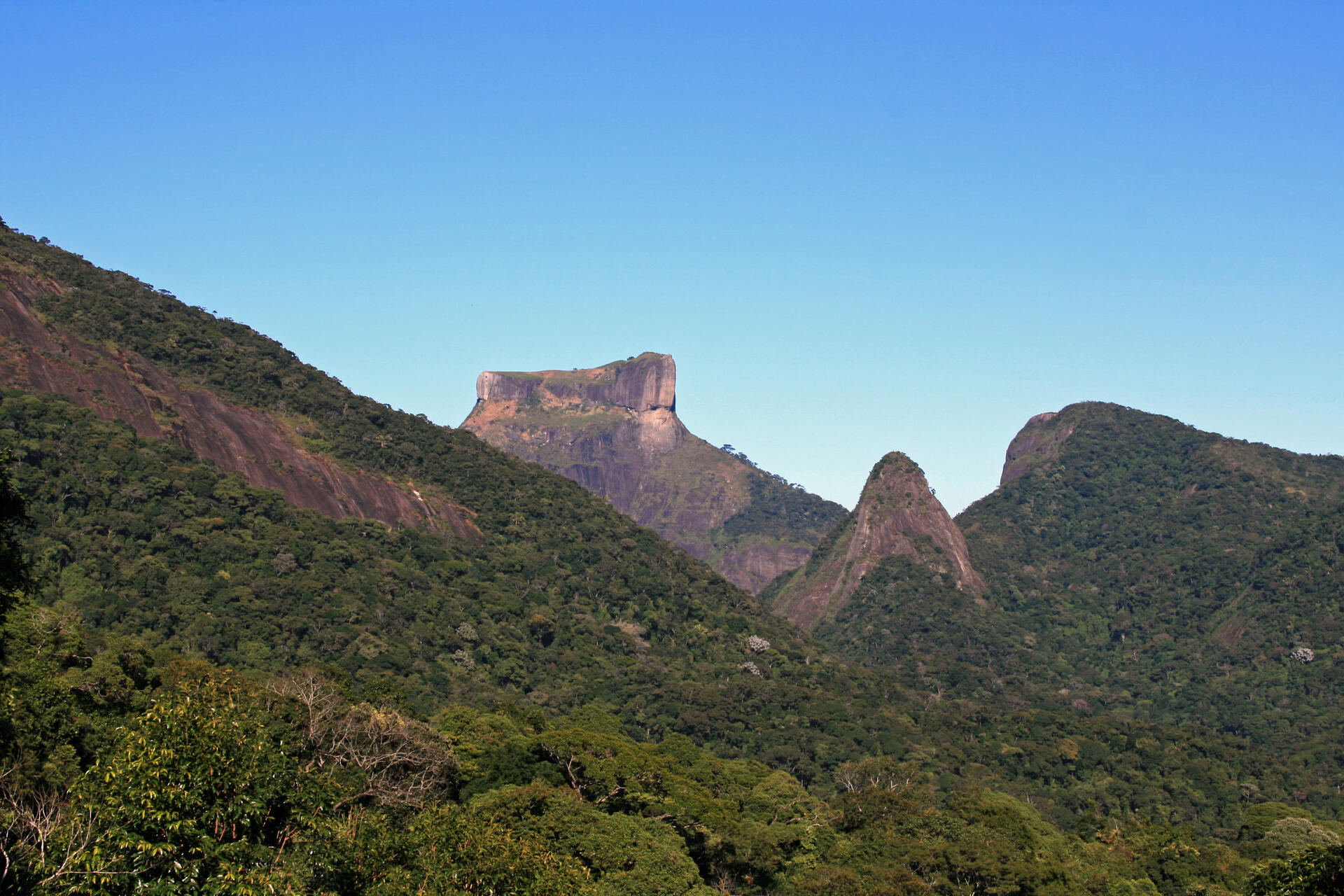
© Halley Pacheco de Oliveira, CC BY-SA 3.0 Resized from original. (This derivative is under the same CC BY-SA license.)
World Heritage Research
Discover scientific research and academic studies that deepen our understanding of Rio de Janeiro: Carioca Landscapes between the Mountain and the Sea from its history and significance to its conservation, management, and contemporary challenges.
-
Mésentente temporelle. La fabrique du patrimoine culturel urbain de Rio de Janeiro à l’épreuve des temps du territoire carioca
This study reveals how the heritagization process of Rio de Janeiro as a UNESCO World Heritage Site serves as a critical moment to interrogate the interplay between past, present, and future, particularly in relation to the city's rapid urban transformations during mega-events. By analyzing four key moments within this process, the research deciphers the temporal horizons of various actors involved, highlighting the negotiation of divergent historicity schemes and their entanglement with the timescales of urban transformation and sustainable development. The findings underscore the complex interplay between different presents at work in shaping Rio's urban landscape, offering insights into how heritage narratives are constructed and contested in dynamic urban contexts.
Zamant, V. (2018). Mésentente temporelle. La fabrique du patrimoine culturel urbain de Rio de Janeiro à l’épreuve des temps du territoire carioca. Développement Durable et Territoires, Vol. 9, n°2. https://doi.org/10.4000/developpementdurable.12173
View Publication Record | Read Publication