World Heritage Identification Number: 1620
World Heritage since: 2021
Category: Cultural Heritage
WHE Type: Buildings & Architectural Ensembles
Transboundary Heritage: No
Endangered Heritage: No
Country: 🇧🇷 Brazil
Continent: Americas
UNESCO World Region: Latin America and the Caribbean
Map
A Living Work of Art: Sítio Roberto Burle Marx
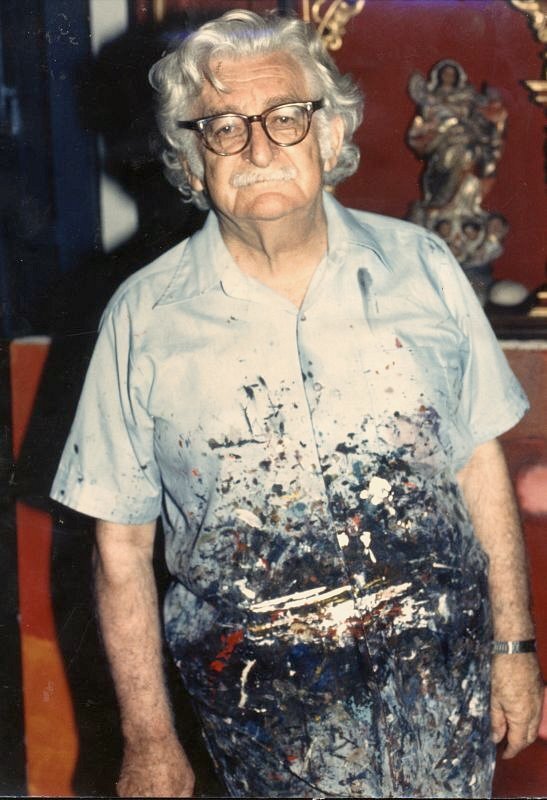
Sítio Roberto Burle Marx, located in the western region of Rio de Janeiro, stands as a testament to the visionary work of landscape architect and artist Roberto Burle Marx (1909-1994). This property, inscribed on the UNESCO World Heritage List in 2021, serves as a "landscape laboratory" where Burle Marx created "living works of art," utilizing native plants and drawing upon Modernist ideas.
More to come…UNESCO Description of the World Heritage Site
Situated in the western region of Rio de Janeiro, the property embodies a successful project developed over more than 40 years by landscape architect and artist Roberto Burle Marx (1909-1994), a “landscape laboratory” to create “living works of art” using native plants and drawing on Modernist ideas. Began in 1949, the property encompasses extensive landscapes, gardens, buildings and collections, which feature the key characteristics that came to define Burle Marx’s landscape gardens and influenced the development of modern gardens internationally. The site is characterized by sinuous forms, exuberant mass planting, architectural plant arrangements, dramatic colour contrasts, use of tropical plants, and the incorporation of elements of traditional folk culture. By the end of the 1960s, the site housed the most representative collection of Brazilian plants, alongside other rare tropical species. In the site, 3,500 cultivated species of tropical and subtropical flora grow in harmony with the native vegetation of the region, notably the Atlantic Forest biome and associated ecosystems, mangrove swamp and restinga (coastal tropical sandy plain). Sítio Roberto Burle Marx exhibits an ecological conception of form as a process, including social collaboration which is the basis for environmental and cultural preservation. It comprises the first modern tropical garden to be inscribed on the World Heritage List.
UNESCO Justification of the World Heritage Site
Criterion (ii): Sítio Roberto Burle Marx demonstrates an important interchange of ideas on landscape design related to the importation of ideas of the Modernist art movement from Europe, their shaping and adaptation through experimentation to a landscape form based on the use of native tropical flora, and their use in a huge number of parks and gardens around the world, which together have had a profound impact on the development of what is now known as Modernist Tropical garden design.
Criterion (iv): Sítio Roberto Burle Marx is an outstanding example of a landscape that demonstrates the development of a new type of landscape design that fused creative ideas of the Modern art movement with local typologies and tropical plants to create a style that ultimately became known as the modern tropical garden.
Encyclopedia Record: Roberto Burle Marx
Roberto Burle Marx was a Brazilian landscape architect whose designs of parks and gardens made him world-famous. He is credited with having introduced modernist landscape architecture to Brazil. He was known as a modern nature artist and a public urban space designer. His work had a great influence on tropical garden design in the 20th century. Water gardens were a popular theme in his work. He was deftly able to transfer traditional artistic expressions such as graphic design, tapestry and folk art into his landscape designs. He also designed fabrics, jewellery and stage sets.Additional Site Details
Area: 40.53 hectares
Number of Components: 1
(iv) — Outstanding example of a type of building or landscape
Coordinates: -23.0223777778 , -43.5462222222
World Heritage Research
Discover scientific research and academic studies that deepen our understanding of Sítio Roberto Burle Marx from its history and significance to its conservation, management, and contemporary challenges.
-
Roberto Burle Marx
A specialized visit by renowned landscape artist Roberto Burle Marx to the VII Bienal de São Paulo in 1963 revealed his deep engagement with ancient Amerindian material culture, a facet of his identity that intertwined with his artistic production and modernist paradigms. This study demonstrates how Burle Marx's role as a collector, documented through first-person epistolography, was both a personal pursuit and a reflection of broader social trajectories within the Brazilian modernist movement. Leveraging Pierre Bourdieu’s concepts of field and social trajectory, the research highlights the interplay between individual practice and cultural paradigms, offering new insights into Burle Marx's multifaceted legacy.
Barcellos, N. R., & Thompson, A. (2026). Roberto Burle Marx. PÓS: Revista Do Programa de Pós-Graduação Em Artes Da EBA/UFMG, 15(35), 1–24. https://doi.org/10.35699/2238-2046.2025.59608
View Publication Record | Read Publication -
Sítio Roberto Burle Marx: Desenvolvimento de Práticas em Educação Ambiental
A project at Sítio Roberto Burle Marx demonstrates the effectiveness of integrating education and sustainability practices, yielding transformative learning experiences for students and visitors. Through a collaborative extension initiative, students from IFRJ developed and implemented educational activities that enhanced environmental awareness among participants. The approach combined theoretical discussions with practical experiments, focusing on themes like sustainability and conservation. Results indicated significant learning outcomes, reinforcing the role of education in fostering critical thinking about environmental issues within UNESCO World Heritage Sites. This model serves as a best-practice example for disseminating environmental education in protected areas.
Assunção, T., & Silva, H. (2025). SÍTIO ROBERTO BURLE MARX: DESENVOLVIMENTO DE PRÁTICAS EM EDUCAÇÃO AMBIENTAL. Anais - Congresso Sul-Americano de Resíduos Sólidos E Sustentabilidade. https://doi.org/10.55449/conresol.8.25.iii-016
View Publication Record | Read Publication -
Desafios da Conservação do Patrimônio Moderno:
A critical analysis of the Sítio Roberto Burle Marx reveals severe structural degradation and loss of authenticity due to persistent water infiltration in its workshop roof. The study identifies key interventions needed to preserve the integrity of this modern architectural gem while mitigating further distortion of its original design. Researchers employed historical construction records, physical surveys, interviews, and technical documentation to diagnose the problem and propose conservation guidelines. This work aims to restore the building's structural stability and authenticity, ensuring its legacy as a significant cultural asset.
Linhares de Souza, P., & Rodrigo Côelho de Carvalho, M. (2025). DESAFIOS DA CONSERVAÇÃO DO PATRIMÔNIO MODERNO: Revista Docomomo Brasil, 8(12), e138. https://doi.org/10.59804/rdb.2025.v8.138
View Publication Record | Read Publication -
Sítio Burle Marx: collection of aromatic Zingiberaceae plants
Research at Sítio Roberto Burle Marx reveals the anatomical basis for the aromatic properties of Zingiberaceae plants, which are widely used as seasonings and medicinal agents. The study identifies secretory idioblasts containing volatile substances in leaf blades of genera Alpinia, Zingiber, and Kaempferia, confirming their role in producing metabolites. Curcuma, Alpinia, and Zingiber were the most represented genera, with histological analysis showing hypostomatic leaves and silica crystals alongside aromatic cells. These findings contribute to understanding the plant family's widespread culinary and medicinal applications.
Victório, C. P., & Arruda, R. d. C. d. O. (2025). Sítio Burle Marx: collection of aromatic Zingiberaceae plants. Nature and Conservation, 18(1), e8737. https://doi.org/10.6008/cbpc2318-2881.2025.001.0003
View Publication Record | Read Publication -
Os jardins de Burle Marx na sede do Banco do Nordeste em Fortaleza: modificações e permanências
A study of the Roberto Burle Marx Gardens at the Banco do Nordeste headquarters in Fortaleza, Brazil, reveals that despite significant modifications since its 1984 design, core elements of Burle Marx's modernist approach persist. The research, conducted by the Jardins de Burle Marx study group, analyzed formal, constructive, and botanical aspects through literature review, documentary research, and field visits. Findings highlight the resilience of Burle Marx's design principles, offering new insights into the evolution of landscaping in Fortaleza. This work contributes to the broader understanding of his legacy while documenting changes over time.
Miyasaki, J. S., Frota Junior, J. I., Ribeiro, M. G. R., Da Silva Cruz, F., Sousa Carvalho, F. J., & Coutinho Aguiar, M. (2024). Os jardins de Burle Marx na sede do Banco do Nordeste em Fortaleza: modificações e permanências. Revista Interagir, (125), 42–47. https://doi.org/10.12662/1809-5771ri.125.4915.p42-47.2024
View Publication Record | Read Publication -
Tapestried Landscape: The Queer Influence of Roberto Burle Marx on Elizabeth Bishop’s Brazil
A profound influence of Roberto Burle Marx, Brazil's renowned landscape architect and modernist figure, on Elizabeth Bishop's poetic perception of the Sítio Burle Marx is revealed. The study uncovers how Bishop's encounters with the site's extraordinary tropical plant life—described as 'marvelous and somehow sad'—were shaped by Burle Marx's innovative and queer aesthetic approach. Through close textual analysis, the research explores how Bishop's poetic work reflects the intersection of modernist design, nature, and queer identity in Brazil during the mid-20th century.
Schmidt, C. (2022). Tapestried Landscape: The Queer Influence of Roberto Burle Marx on Elizabeth Bishop’s Brazil. Modernism/Modernity Print Plus, 6(3). https://doi.org/10.26597/mod.0222
View Publication Record | Read Publication -
Metodologia de levantamento cadastral dos jardins do Sítio Roberto Burle Marx (SRBM)
A systematic cadastral survey of the gardens at Sítio Roberto Burle Marx (SRBM) was developed to support its potential UNESCO World Heritage Site nomination, highlighting the need for advanced documentation methods in historic garden conservation. The methodology established a framework for creating detailed inventories that facilitate long-term planning and management, ensuring the preservation of culturally significant landscapes. This approach serves as a model for documenting other historic gardens, addressing gaps in existing conservation strategies by integrating thorough cataloging with heritage protection goals.
Souza, M. d. C., Oliveira, C. T., Mello, F. V., & Monteiro, J. d. C. (2022). Metodologia de levantamento cadastral dos jardins do Sítio Roberto Burle Marx (SRBM). Revista Científica ANAP Brasil, 15(36). https://doi.org/10.17271/19843240153620223366
View Publication Record | Read Publication