World Heritage Identification Number: 1364
World Heritage since: 2012
Category: Cultural Heritage
WHE Type: Natural Landscapes & Geographic Features
Transboundary Heritage: No
Endangered Heritage: No
Country: 🇧🇭 Bahrain
Continent: Asia
UNESCO World Region: Arab States
Map
The Bahrain Pearling Path: A Unique Testimony of an Island's Prosperity
The Bahrain Pearling Path, inscribed on the UNESCO World Heritage List in 2012, stands as a remarkable testament to the economic and cultural prosperity of an island nation. This site, located in Muharraq City, Bahrain, offers a unique insight into the pearl diving tradition that once dominated the Gulf economy for over two millennia.
More to come…UNESCO Description of the World Heritage Site
The site consists of seventeen buildings in Muharraq City, three offshore oyster beds, part of the seashore and the Qal’at Bu Mahir fortress on the southern tip of Muharraq Island, from where boats used to set off for the oyster beds. The listed buildings include residences of wealthy merchants, shops, storehouses and a mosque. The site is the last remaining complete example of the cultural tradition of pearling and the wealth it generated at a time when the trade dominated the Gulf economy (2nd century to the 1930s, when Japan developed cultured pearls). It also constitutes an outstanding example of traditional utilization of the sea’s resources and human interaction with the environment, which shaped both the economy and the cultural identity of the island’s society.
UNESCO Justification of the World Heritage Site
Criterion (iii): The ensemble of urban properties, fort, seashore and oyster beds is an exceptional testimony to the final flourishing of the cultural tradition of pearling which dominated the Persian Gulf between the 2nd and early 20th centuries. Although the pearling industry has died, these sites carry the memory of its prosperity and the building traditions that it fostered.
Encyclopedia Record: Bahrain Pearling Trail
The Bahrain Pearling Path is a serial cultural heritage site inscribed on the UNESCO World Heritage List on June 30, 2012. It consists of three oyster beds in the northern waters of Bahrain, a segment of the coast and the seafront Bu Mahir fort on the southern tip of Muharraq Island, and 17 buildings in historical section of Muharraq connected by a 3.5 km visitor pathway.Additional Site Details
Area: 35,086.81 hectares
Number of Components: 20
Coordinates: 26.24128 , 50.61351
Image
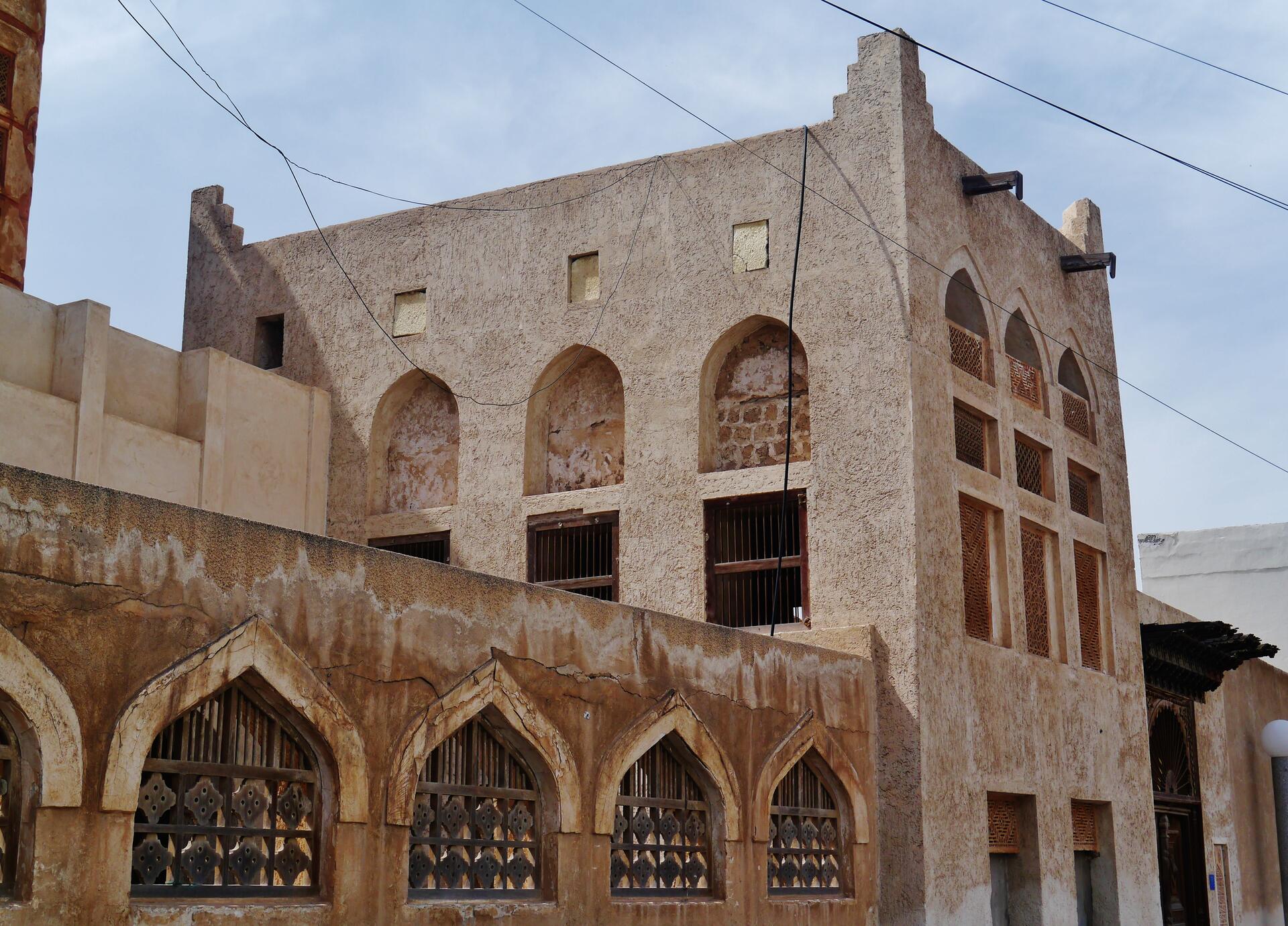
© Zairon, CC BY-SA 4.0 Resized from original. (This derivative is under the same CC BY-SA license.)
World Heritage Research
Discover scientific research and academic studies that deepen our understanding of Pearling, Testimony of an Island Economy from its history and significance to its conservation, management, and contemporary challenges.
-
A gyöngyök útja
Pearling Path, a 3.5 km UNESCO World Heritage site in Muharraq, Bahrain, stands as a testament to the preservation of pearling history from Roman times to the early 20th century. This project, completed after 13 years of development, integrates modern architecture with historic sites such as merchant homes and public squares, offering a unique blend of cultural heritage and contemporary design. Managed by the Bahrain Authority for Culture and Antiquities and designed by architects Christian Kerez, Anne Holtrop, and Valerio Olgiati, Pearling Path has been recognized with the Aga Khan Award, underscoring its significance in reviving and celebrating a lost cultural tradition.
Al-Sayeh, N. (2026). A gyöngyök útja. Metszet, 17(1), 20–29. https://doi.org/10.33268/met.2026.1.2
View Publication Record | Read Publication -
Brutalification of heritage: simulacra of the pearling path, Al Muharraq
Research on the Pearling Path, Al Muharraq, Bahrain, introduces 'Brutalification' as a cultural process where Brutalist architecture symbolically represents intangible pearling heritage. The study reveals that these simulacra—architectural projects lacking tangible referents—are perceived as authentic and accepted representations of heritage, despite their staged or existential authenticity. Using qualitative-interpretive methodology, the research categorizes these simulacra under Baudrillard's order and analyzes spatial voids to understand their role in heritage consumption. The findings highlight how contemporary architectural interventions, designed by renowned firms post-UNESCO designation (2012), contribute to a tangible interpretation of intangible traditions.
Hanif, S., Abid, N., & Ilgın, H. E. (2026). Brutalification of heritage: simulacra of the pearling path, Al Muharraq. Journal of Tourism and Cultural Change, 1–30. https://doi.org/10.1080/14766825.2026.2695370
View Publication Record | Read Publication -
Systematic Review: The Ecology and Cultural Significance of Oysters in the Arabian Gulf
Oyster reefs in the Arabian Gulf, primarily composed of the pearl oyster Pinctada radiata, serve as critical ecological and cultural keystones, yet face severe threats from coastal urbanization and pollution. A systematic review of 1400 publications identified 42 studies that highlight their roles in sediment stabilization, water filtration, and providing nursery habitats for fisheries, while also revealing significant bioaccumulation of heavy metals, indicating widespread contamination. Historically tied to the Gulf's pearling economy, these reefs are now the focus of restoration efforts using sustainable modules across traditional dive sites. However, knowledge gaps persist regarding spatial mapping, climate change impacts, pollutant interactions, and long-term restoration success in hypersaline conditions. The study emphasizes the need for an integrated management approach combining monitoring, pollution mitigation, adaptive restoration, and community engagement to protect both the ecosystems and their cultural significance.
Alkhuzaei, M., Aljenaid, S., & Mohamed, G. (2025). Systematic Review: The Ecology and Cultural Significance of Oysters in the Arabian Gulf. Diversity, 17(8), 565. https://doi.org/10.3390/d17080565
View Publication Record | Read Publication -
Comprehensive associations between pearl oyster beds and coral, seagrass, and algal habitats in the hottest sea on the planet
Pearl oyster beds in Bahrain, critical to the country's marine economy and cultural heritage, are thriving in some of the planet's most extreme marine environments. A recent study reveals that these beds support nine species of pearl oysters, with Pinctada radiata dominating across all sites. The research found significant variations in species richness and density, highest in northern waters (six species, 34 ± 4.9 oysters/m²) compared to eastern and western regions. Pearl yield was also highest in the north and west, with specific sites like Hayr Bu Amamah showing a remarkable 14.3% pearl incidence. The study provides critical baseline data for sustainable management and conservation planning, highlighting the complex associations between pearl oyster beds and coral, seagrass, and algal habitats in Bahrain's waters.
AlMealla, R. K., Edullantes, B., Ali, M., Mardhi, Z., Khan, M., Sharif, M., Tyabji, A., AlMousa, N., Omran, F., Hasan, M., Hazeem, L., Khamis, A. S., Al Khalifa, E., & Dabruzzi, T. (2025). Comprehensive associations between pearl oyster beds and coral, seagrass, and algal habitats in the hottest sea on the planet. Frontiers in Marine Science, 12. https://doi.org/10.3389/fmars.2025.1667575
View Publication Record | Read Publication -
Balancing Progress and Preservation of Heritage: Dilemmas in the Historic Cities of Bahrain
Rapid modernization in Bahrain's historic cities of Manama and Muharraq is reshaping traditional spaces, posing significant threats to cultural identity. A study involving 150 participants—including residents, business owners, youth, and municipal staff—revealed widespread concern over the erosion of heritage due to urban development. The research, combining surveys, in-depth interviews, event observations, and secondary data analysis, highlights a critical dilemma: balancing contemporary urban needs with heritage preservation. It recommends integrating traditional design elements, inclusive planning strategies, and adaptive reuse to ensure cultural heritage remains a vital asset for sustainable urban futures.
Ahmed, Z. Y. (2025). Balancing Progress and Preservation of Heritage: Dilemmas in the Historic Cities of Bahrain. ISVS E-Journal, 12(6), 130. https://doi.org/10.61275/isvsej-2025-12-06-09
View Publication Record | Read Publication -
Pearl Fishing in Bahrain: new evidence from the archaeological collections and archives
New archaeological and archival evidence from Bahrain reveals the profound historical significance of pearl fishing, shedding light on its role as a cornerstone of the island's economy and the Gulf region. Excavations at the UNESCO World Heritage Site 'Pearling Testimony of an Island Economy' uncovered rare artefacts, including Hellenistic to Parthian period jewellery from the Tylos Period, alongside groundbreaking findings from the Early Islamic era. Notably, a major installation built around a submarine spring (Al Sayah) on Muharraq Island provided unprecedented insights into pearl-fishing techniques and practices during this period. Additionally, the study draws from an unparalleled archive of primary documentation housed at the Bahrain National Museum, offering a comprehensive narrative of both ancient and more recent pearling activities.
Carter, R. (2024). Pearl Fishing in Bahrain: new evidence from the archaeological collections and archives. Arabian Humanities, 19. https://doi.org/10.4000/1243p
View Publication Record | Read Publication -
The Pearling Industry
Before the discovery of oil, pearl diving was Bahrain's economic cornerstone, sustaining not only divers but also merchants, boat owners, and other stakeholders. This study reveals how the pearling industry structured livelihoods, with divers working half the year and the rest under the Salafleh system—where they performed off-season duties in exchange for housing or date-garden access. The research highlights the intricate financial relationships between sea captains (Nakhudas) and shore creditors (Musaqqam), illustrating a tightly coupled economic ecosystem that defined Bahrain's pre-oil economy from 1920 to 1945.
Al-Tajir, M. A. (2023). The Pearling Industry. Bahrain 1920-1945, 104–134. https://doi.org/10.4324/9781003402657-5
View Publication Record | Read Publication