
World Heritage Identification Number: 937
World Heritage since: 1999
Category: Natural Heritage
WHE Type: Natural Landscapes & Geographic Features
Transboundary Heritage: No
Endangered Heritage: No
Country: 🇦🇷 Argentina
Continent: Americas
UNESCO World Region: Latin America and the Caribbean
Map
A Natural Marvel: The Península Valdés, Argentina's UNESCO World Heritage Site
The Península Valdés, nestled within the Viedma Department of northeastern Chubut Province in Argentina, stands as a testament to the breathtaking diversity and resilience of marine life. This 3,500 square kilometer peninsula, bordering the San Matías Gulf to the north, has earned international recognition as a UNESCO World Heritage Site since its inscription in 1999.
More to come…UNESCO Description of the World Heritage Site
Península Valdés in Patagonia is a site of global significance for the conservation of marine mammals. It is home to an important breeding population of the endangered southern right whale as well as important breeding populations of southern elephant seals and southern sea lions. The orcas in this area have developed a unique hunting strategy to adapt to local coastal conditions.
UNESCO Justification of the World Heritage Site
Criterion (x): With more than 1,500 specimens visiting the area annually Peninsula Valdes contains the globally most important breeding grounds of the Southern Right Whale, a species that had severely suffered from commercial whaling. The conservation efforts in Peninsula Valdes have been playing and continue to play an important role in the ongoing recovery of this whale species, an encouraging success story in global conservation. The property is also noteworthy for several other marine mammals, in particular major breeding populations of Southern Sea Lion and Southern Elephant Seal. As for the latter species, Peninsula Valdes harbors the northernmost colonies, and the only breeding population of this species in continental Argentina. The small local population of Orca has developed a spectacular hunting method by intentionally stranding on the shores to catch offspring of Southern Sea Lion and Southern Elephant Seals. Both the coastal areas, a diverse mosaic of wetlands, mudflats, dunes and cliffs, and the land area, a distinct and relatively intact part of the Patagonian Desert Steppe, harbour diverse flora and fauna of high conservation value.
Encyclopedia Record: Valdés Peninsula
The Valdes Peninsula is a peninsula into the Atlantic Ocean in the Viedma Department of northeast Chubut Province, Argentina. It is bordered by San Matías Gulf to the north. It is an important nature reserve which was listed as a World Heritage Site by UNESCO in 1999.Additional Site Details
Area: 360,000 hectares
Number of Components: 1
Coordinates: -42.5 , -64
IUCN World Heritage Outlook
The 2025 Conservation Outlook on Península Valdés reports the following assessment:
Source: International Union for Conservation of Nature (IUCN) · View assessment
Image
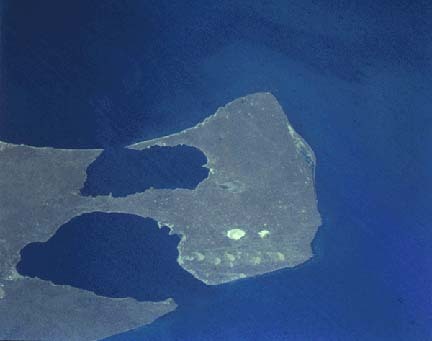
Unknown, Public domain
World Heritage Research
Discover scientific research and academic studies that deepen our understanding of Península Valdés from its history and significance to its conservation, management, and contemporary challenges.
-
Carbon and nitrogen stocks in sediment at Península Valdés Biosphere Reserve: novel insights into the potential contribution of large marine vertebrates to carbon sequestration
Research at Península Valdés Biosphere Reserve reveals that large marine vertebrates, such as South American sea lions and southern right whales, contribute to coastal carbon sequestration through their organic carbon (OC) stocks. Sediment analysis across three locations showed OC storage ranging from 140 to 317 Mg ha-1, with a notable proportion (0.8–6.8% dry weight) of OC originating from these vertebrates. While salt marshes and terrestrial plants were the primary carbon sources, this study provides novel evidence that large marine vertebrates act as significant OC vectors in coastal systems, offering new insights into their role in blue carbon dynamics.
Jiménez-Ramos, R., Egea, L. G., D’Agostino, V. C., Degrati, M., & Loizaga, R. (2025). Carbon and nitrogen stocks in sediment at Península Valdés Biosphere Reserve: novel insights into the potential contribution of large marine vertebrates to carbon sequestration. Frontiers in Marine Science, 12. https://doi.org/10.3389/fmars.2025.1500594
View Publication Record | Read Publication -
Bioarqueología de la violencia interétnica. Un modelo para abordar el ataque indígena al Fuerte San José (Península de Valdés, Chubut, República Argentina)
A novel bioarchaeological model has been developed to characterize the material traces of a 19th-century indigenous attack on the Spanish Fuerte San José in Península Valdés, Argentina. This approach integrates historical documentation, ethnohistoric data, and bioarchaeological evidence from similar conflict scenarios to derive specific expectations for identifying and analyzing skeletal remains linked to the 'malón' of 1810. The model aims to distinguish these violent events from other causes of mortality in the enclave, contributing to the emerging field of bioarchaeology of violence. By synthesizing disparate data sources—including taphonomic processes and osteological records—the study provides a framework for future investigations into interethnic conflict during the colonial period.
García Guraieb, S., & Buscaglia, S. (2025). Bioarqueología de la violencia interétnica. Un modelo para abordar el ataque indígena al Fuerte San José (Península de Valdés, Chubut, República Argentina). Arqueología, 31(2), 13838. https://doi.org/10.34096/arqueologia.t31.n2.13838
View Publication Record | Read Publication -
Influence of water temperature, body size, condition and gull-inflicted lesions on heat loss in southern right whales in Península Valdés, Argentina
Southern right whales (Eubalaena australis) migrating from cold feeding grounds to warmer breeding grounds in Península Valdés, Argentina, experience reduced heat loss during early lactation by 26%, but this migration offers limited thermoenergetic benefits overall. The study found that body condition is a critical regulator of heat loss, with poor condition increasing heat loss beyond field metabolic rate (FMR), threatening survival. Gull-inflicted lesions significantly increase heat loss in small or poorly conditioned calves but have no effect on larger or better-conditioned whales. Researchers used unmanned aerial vehicle photogrammetry to measure body size, volume, and condition, combined with blubber-mass modeling and necropsy data, to estimate sensible and respiratory heat loss. This work highlights the complex interplay between environmental factors, body condition, and external stressors in whale thermoregulation.
Christiansen, F., Sironi, M., Lewin, N., Marón, C. F., & Uhart, M. M. (2026). Influence of water temperature, body size, condition and gull-inflicted lesions on heat loss in southern right whales in Península Valdés, Argentina. Journal of Experimental Biology, 229(1). https://doi.org/10.1242/jeb.250925
View Publication Record | Read Publication -
Dissolved organic matter dynamics in a whale-dominated coastal system: Insights from Península Valdés, Argentina
Research at Península Valdés, Argentina, reveals that large marine mammals, particularly whales, significantly influence dissolved organic matter (DOM) dynamics in coastal ecosystems. The study found that the carbon isotopic signal of dissolved organic carbon (DOC) was predominantly derived from whale and phytoplankton sources, suggesting a 'whale pump' mechanism where whales contribute both labile and recalcitrant DOC to coastal habitats. Microbial overconsumption during the whale calving season increased the DOC:DON ratio, indicating higher refractoriness of DOC. Bioavailable DOC ranged from 18.6% to 52.7% of the total DOC pool, while recalcitrant DOC concentrations averaged 200 ± 19 μM in non-whale seasons and 180 ± 7 μM during whale seasons. These findings underscore the role of whales as vectors for DOM, modulating its dynamics and potentially impacting coastal ecosystem health.
Egea, L. G., Jiménez-Ramos, R., D’Agostino, V. C., Degrati, M., Giacomino, S., Kim, G., Han, H., & Loizaga, R. (2026). Dissolved organic matter dynamics in a whale-dominated coastal system: Insights from Península Valdés, Argentina. Marine Environmental Research, 214, 107778. https://doi.org/10.1016/j.marenvres.2025.107778
View Publication Record | Read Publication -
Taphonomic Analysis of an Articulated Baleen Whale (Cetacea; Mysticeti) from Upper Miocene Inner Shelf Deposits of Península Valdés, Patagonia, Argentina
A remarkably well-preserved, almost fully articulated baleen whale skeleton from the Late Miocene of Península Valdés, Argentina, offers unprecedented insights into taphonomic processes and paleoenvironmental conditions. This specimen, one of the most complete balaenid skeletons known globally, reveals a brief biostratinomic phase characterized by initial decomposition at sea, gas accumulation leading to reorientation, sinking in a ventral-up position on the inner shelf, and lateral re-orientation due to physical and biological processes. The high degree of articulation and association of skeletal elements suggests no lateral transport or refloating, indicating rapid burial under low-energy conditions with normal marine oxygenation and salinity. This study integrates taxonomic, sedimentological, stratigraphic, and ichnological analyses to reconstruct the complex taphonomic history and paleoenvironmental context of this exceptional fossil.
FARRONI, N. D., CUITIÑO, J. I., LAZO, D. G., & BUONO, M. R. (2024). TAPHONOMIC ANALYSIS OF AN ARTICULATED BALEEN WHALE (CETACEA; MYSTICETI) FROM UPPER MIOCENE INNER SHELF DEPOSITS OF PENÍNSULA VALDÉS, PATAGONIA, ARGENTINA. Palaios, 39(3), 97–112. https://doi.org/10.2110/palo.2022.039
View Publication Record | Read Publication -
Massive outbreak of Influenza A H5N1 in elephant seals at Península Valdés, Argentina: increased evidence for mammal-to-mammal transmission
A massive outbreak of high pathogenicity avian influenza (HPAI) H5N1 in southern elephant seals at Península Valdés, Argentina, has provided unprecedented evidence for mammal-to-mammal transmission. The outbreak, which resulted in the death of approximately 17,000 individuals—disproportionately affecting seal pups—and disrupted social and breeding structures, was linked to frequent interactions with sea lions and scavenging by seagulls. Genomic characterization revealed that viruses from pinnipeds and terns in Argentina form a distinct clade with marine mammal viruses from Peru, Chile, and Brazil, sharing an identical set of mammalian adaptation mutations also found in the terns. This multinational transmission of H5N1 viruses in mammals is the first observed globally, suggesting increased evolutionary flexibility and potential global implications for wildlife, humans, and livestock.
Uhart, M., Vanstreels, R. E. T., Nelson, M. I., Olivera, V., Campagna, J., Zavattieri, V., Lemey, P., Campagna, C., Falabella, V., & Rimondi, A. (2024). Massive outbreak of Influenza A H5N1 in elephant seals at Península Valdés, Argentina: increased evidence for mammal-to-mammal transmission. https://doi.org/10.1101/2024.05.31.596774
View Publication Record | Read Publication -
Foraging dives of southern right whales (Eubalaena australis) in relation to larger zooplankton size prey availability in Golfo Nuevo, Península Valdés, Argentina
Southern right whales (Eubalaena australis) in Golfo Nuevo, Península Valdés, Argentina, exhibit daytime foraging dives to exploit high concentrations of larger zooplankton near the seafloor, a behavior not previously documented. Using suction-cup-attached video-imaging tags (CRITTERCAMs), researchers tracked eight whales, observing feeding events during dives averaging 6 minutes and 45 seconds. Zooplankton samples revealed that euphausiids dominated deeper layers with five times higher biomass than subsurface copepods, suggesting SRWs target these prey during their ascent. This study provides critical insights into the foraging strategies of SRWs in a recognized calving ground, highlighting their adaptability to exploit deep-sea resources.
D’Agostino, V. C., Nocera, A. C., Abernathy, K., Wilson, A. M., Coscarella, M. A., & Degrati, M. (2024). Foraging dives of southern right whales (Eubalaena australis) in relation to larger zooplankton size prey availability in Golfo Nuevo, Península Valdés, Argentina. Scientific Reports, 14(1). https://doi.org/10.1038/s41598-024-63879-y
View Publication Record | Read Publication
