World Heritage Identification Number: 1058
World Heritage since: 2004
Category: Cultural Heritage
WHE Type: Historic Cities & Urban Areas
Transboundary Heritage: No
Endangered Heritage: No
Country: 🇲🇦 Morocco
Continent: Africa
UNESCO World Region: Arab States
Map
Portuguese City of Mazagan (El Jadida): A Unique Blend of Cultures
The Portuguese City of Mazagan, now known as El Jadida, is a captivating testament to the rich cultural exchange that took place between Europe and North Africa during the early modern period. Inscribed as a UNESCO World Heritage Site in 2004, this historic city offers a unique blend of Portuguese and Moroccan architectural styles, reflecting the enduring influence of the Portuguese explorers in West Africa on their journey to India.
More to come…UNESCO Description of the World Heritage Site
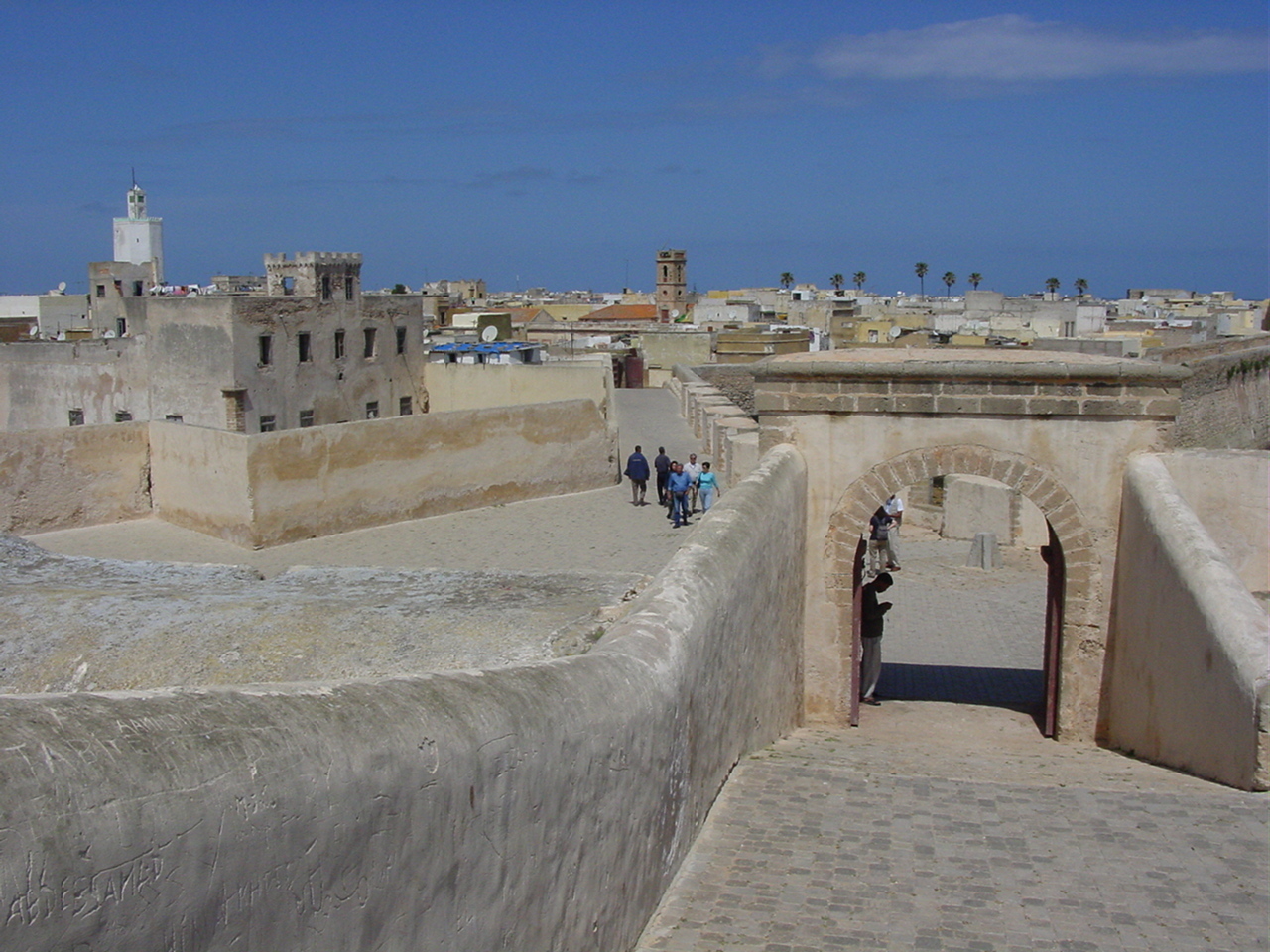
The Portuguese fortification of Mazagan, now part of the city of El Jadida, 90-km southwest of Casablanca, was built as a fortified colony on the Atlantic coast in the early 16th century. It was taken over by the Moroccans in 1769. The fortification with its bastions and ramparts is an early example of Renaissance military design. The surviving Portuguese buildings include the cistern and the Church of the Assumption, built in the Manueline style of late Gothic architecture. The Portuguese City of Mazagan - one of the early settlements of the Portuguese explorers in West Africa on the route to India - is an outstanding example of the interchange of influences between European and Moroccan cultures, well reflected in architecture, technology, and town planning.
UNESCO Justification of the World Heritage Site
Criterion (ii): The Portuguese City of Mazagan is an outstanding example of the exchange of influences between the European and Moroccan cultures from the 16th to 18th centuries, and one of the very first settlements of Portuguese explorers in West Africa on the route to India. These influences are clearly reflected in the architecture, technology and urban planning of the city.
Criterion (iv): The fortified Portuguese city of Mazagan is an outstanding example and one of the first, representing the new design concepts of the Renaissance period integrated with Portuguese construction techniques. Among the most remarkable constructions of the Portuguese period are the cistern and the Church of the Assumption, built in the Manoeline style at the beginning of the 16th century.
Encyclopedia Record: El Jadida
El Jadida is a major port city on the Atlantic coast of Morocco. It is located in the province of El Jadida, Casablanca-Settat, 96 kilometres (60 mi) south of the city of Casablanca. It has a population of 237,564 as of 2024.Additional Site Details
Area: 7.5 hectares
Number of Components: 1
(iv) — Outstanding example of a type of building or landscape
Coordinates: 33.25667 , -8.50194
World Heritage Research
Discover scientific research and academic studies that deepen our understanding of Portuguese City of Mazagan (El Jadida) from its history and significance to its conservation, management, and contemporary challenges.
-
La cittadella portoghese dell’antica Mazagan in Marocco (XVI secolo)
The Portuguese citadel of Mazagan (El Jadida), built in the 16th century, stands as one of the earliest examples of Renaissance military architecture in Morocco. This study reveals that despite its conquest by Moroccan forces in 1769, the site retains significant traces of its Portuguese origin, including a fortress with cisterns, robust walls, and the Church of the Assumption, constructed in Manueline style. By analyzing the architectural characteristics and urban evolution of Mazagan's buildings, the research provides a comparative framework between Portuguese military architecture and contemporary Moroccan styles. The findings highlight the enduring influence of Portuguese design on the site, even after its political transition.
Hadda, L. (2025). La cittadella portoghese dell’antica Mazagan in Marocco (XVI secolo). PROCEEDINGS of the International Conference on Fortifications of the Mediterranean Coast FORTMED 2025. Vol. 19, 569–576. https://doi.org/10.4995/fortmed2025.2025.20298
View Publication Record | Read Publication -
Vascular plants census linked to the biodeterioration process of the Portuguese city of Mazagan in El Jadida, Morocco
A comprehensive census of vascular plants in the Portuguese City of Mazagan (El Jadida, Morocco) reveals 57 species linked to significant biodeterioration of historical structures. The study identifies therophytes and hemicryptophytes as dominant types, accounting for 79% of the flora, with their rooting patterns posing a substantial threat to substrate integrity. While spontaneous plants constitute 81%, invasive naturalized species like Lycium europaeum exacerbate structural damage, necessitating urgent conservation measures. The research employed systematic sampling and botanical identification to assess vegetation impacts on monument degradation, highlighting the critical role of plant colonization in historical preservation challenges.
Dahmani, J., Benharbit, M., Fassar, M., Hajila, R., Zidane, L., Magri, N., & Belahbib, N. (2020). Vascular plants census linked to the biodeterioration process of the Portuguese city of Mazagan in El Jadida, Morocco. Journal of King Saud University - Science, 32(1), 682–689. https://doi.org/10.1016/j.jksus.2018.10.015
View Publication Record | Read Publication -
Fortalezas costeras del Oeste y Norte de Marruecos (S.XV-S.XVII)
Portuguese coastal fortifications along Morocco's Atlantic and Mediterranean coasts, spanning the 15th to 17th centuries, represent a shared heritage recognized by UNESCO. These structures, built during Portugal's occupation from 1415 to 1769, served as strategic strongholds in conflicts with Morocco, including the city of Mazagan (now El Jadida). While efforts have been made to refurbish and rehabilitate these sites, significant conservation work remains. The study highlights their historical significance and the ongoing challenges in preserving this cultural legacy.
Cherradi Akbil, F. (2015). Fortalezas costeras del Oeste y Norte de Marruecos (S.XV-S.XVII). MODERN AGE FORTIFICATIONS of the MEDITERRANEAN COAST - DEFENSIVE ARCHITECTURE OF THE MEDITERRANEAN (FORTMED2015). https://doi.org/10.4995/fortmed2015.2015.1742
View Publication Record | Read Publication