World Heritage Identification Number: 522
World Heritage since: 2003
Category: Cultural Heritage
WHE Type: Buildings & Architectural Ensembles
Transboundary Heritage: No
Endangered Heritage: No
Country: 🇪🇸 Spain
Continent: Europe
UNESCO World Region: Europe and North America
Map
Renaissance Monumental Ensembles of Úbeda and Baeza: A Testament to Spanish Renaissance Architecture
The Renaissance Monumental Ensembles of Úbeda and Baeza, inscribed as a UNESCO World Heritage Site in 2003, offer a unique glimpse into the architectural evolution of Spain during the 16th century. Located in the province of Jaén, Andalusia, these two small cities – Úbeda and Baeza – serve as a testament to the fusion of Moorish influences with the emerging Renaissance style, creating a distinct architectural identity that would later influence Latin American architecture.
More to come…UNESCO Description of the World Heritage Site
The urban morphology of the two small cities of Úbeda and Baeza in southern Spain dates back to the Moorish 9th century and to the Reconquista in the 13th century. An important development took place in the 16th century, when the cities were subject to renovation along the lines of the emerging Renaissance. This planning intervention was part of the introduction into Spain of new humanistic ideas from Italy, which went on to have a great influence on the architecture of Latin America.
UNESCO Justification of the World Heritage Site
Criterion (ii): The 16th-century examples of architectural and urban design in Úbeda and Baeza were instrumental in introducing the Renaissance ideas to Spain. Through the publications of Andréa Vandelvira, the principal project architect, these examples were also diffused to Latin America.
Criterion (iv): The central areas of Úbeda and Baeza constitute outstanding early examples of Renaissance civic architecture and urban planning in Spain in the early 16th century.
Encyclopedia Record: Úbeda
Úbeda is a municipality of Spain located in the province of Jaén, Andalusia. The town lies on the southern ridge of the so-called Loma de Úbeda, a table sandwiched in between the Guadalquivir and the Guadalimar river beds.Additional Site Details
Area: 9 hectares
Number of Components: 2
(iv) — Outstanding example of a type of building or landscape
Coordinates: 38.01131 , -3.37122
Image
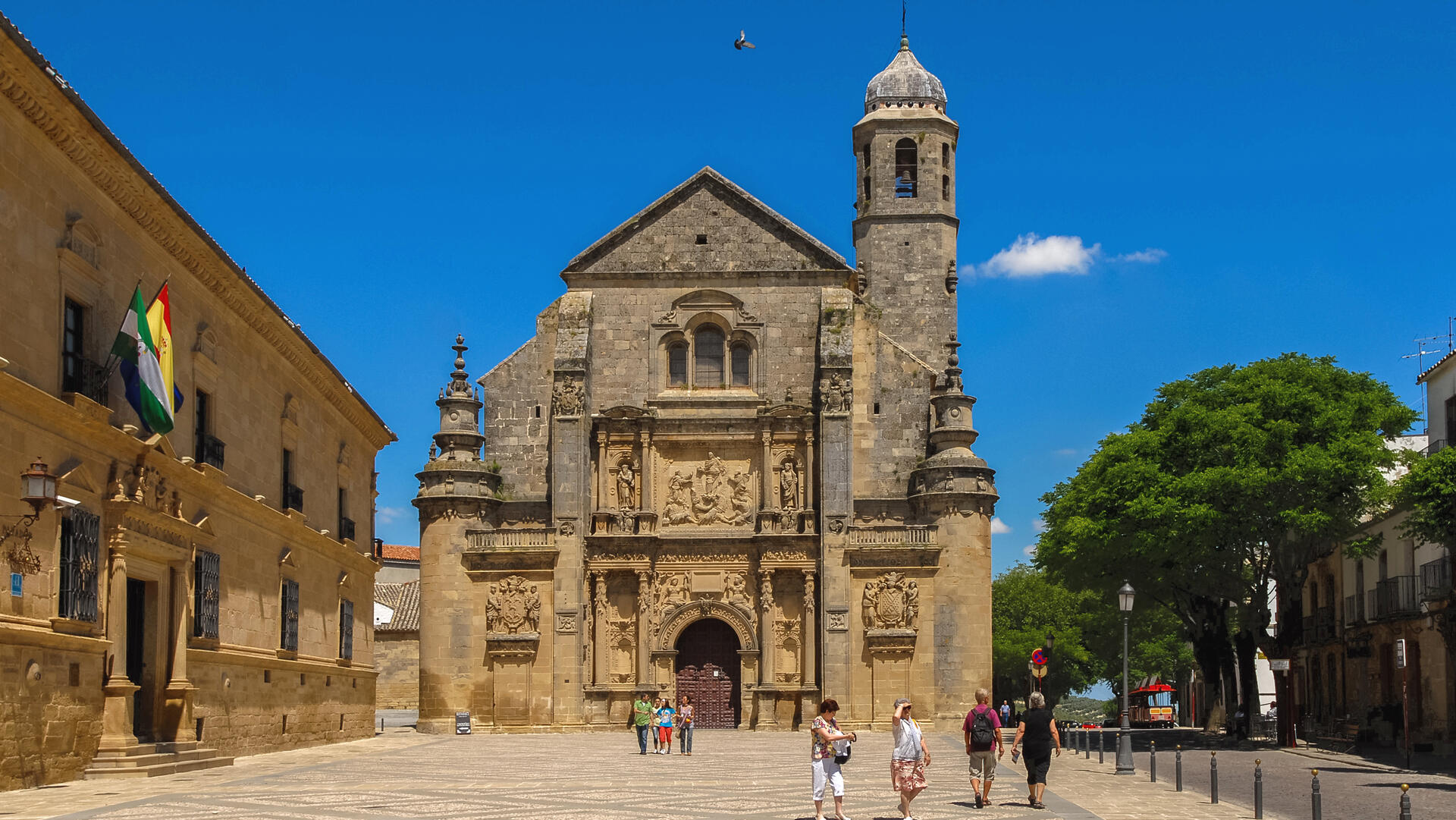
© Mihael Grmek, CC BY-SA 3.0 Resized from original. (This derivative is under the same CC BY-SA license.)