World Heritage Identification Number: 1501
World Heritage since: 2016
Category: Cultural Heritage
WHE Type: Archaeological Sites
Transboundary Heritage: No
Endangered Heritage: No
Country: 🇪🇸 Spain
Continent: Europe
UNESCO World Region: Europe and North America
Map
Exploring the Ancient Mysteries of the Antequera Dolmens Site
The Antequera Dolmens Site, located in the heart of Andalusia, southern Spain, offers a fascinating glimpse into the rich history and ancient mysteries of Europe's prehistoric past. This World Heritage Site, inscribed in 2016, encompasses three megalithic monuments, two natural monuments, and is protected by the CADA (Consejo Autónomo del Patrimonio Histórico de Andalucía).
More to come…UNESCO Description of the World Heritage Site
Located at the heart of Andalusia in southern Spain, the site comprises three megalithic monuments: the Menga and Viera dolmens and the Tholos of El Romeral, and two natural monuments: La Peña de los Enamorados and El Torcal mountainous formations, which are landmarks within the property. Built during the Neolithic and Bronze Age out of large stone blocks, these monuments form chambers with lintelled roofs or false cupolas. These three tombs, buried beneath their original earth tumuli, are one of the most remarkable architectural works of European prehistory and one of the most important examples of European Megalithism.
UNESCO Justification of the World Heritage Site
Criterion (i): The number, size, weight and volume of stone blocks transported and assembled in the basin of Antequera, using rudimentary technology, and the architectural characteristics of the monuments formed by these three megaliths, makes the Antequera Dolmens one of the most important engineering and architectural works of European Prehistory and one of the most important and best known examples of European Megalithism. As such, the dolmens of Menga and Viera and the tholos of El Romeral definitely represent a prime example of the creative genius of humanity.
Criterion (iii): Antequera Dolmens Site provides an exceptional insight into the funerary and ritual practices of a highly organised prehistoric society of the Neolithic and Bronze Age in the Iberian Peninsula. The Dolmens of Antequera materialize an extraordinary conception of the megalithic landscape, being exponents of an original relationship with the natural monuments to which they are intrinsically linked. Differentiating themselves from the canonical orientations towards sunrise, the megalithic monuments shows anomalous orientations: Menga is the only dolmen in continental Europe that faces towards an anthropomorphic mountain such as La Peña de los Enamorados; and the Tholos of El Romeral, facing the El Torcal mountain range, is one of the few cases in the entire Iberian Peninsula where the orientation is towards the western half of the sky. This assembly of the three megalithic monuments together with the two natural monuments represents a very distinctive cultural tradition which has now disappeared.
Criterion (iv): Antequera Dolmens Site is an outstanding example of a megalithic monumental ensemble, comprised of the three megalithic monuments (the Menga and Viera dolmens and the tholos of El Romeral), that illustrate a significant stage of human history when the first large ceremonial monuments were built in Western Europe. The three different types of megalithic architecture seen in this ensemble of dolmens, which are representative of the two great Iberian megalithic traditions (lintelled architecture in the cases of Menga and Viera and the architecture of El Romeral’s false cupola ceiling), and the unique relationship between the dolmens and the surrounding landscape of Antequera (the three megalithic monuments are buried beneath earth tumuli and two megaliths are oriented towards the natural monuments of La Peña de los Enamorados and El Torcal), reinforces the originality of this property.
Encyclopedia Record: Antequera Dolmens Site
The Antequera Dolmens Site is a cultural heritage ensemble comprising three cultural monuments and 2 natural mountain features in and near the city of Antequera in Andalusia, Spain. The cultural institution responsible for its protection is the CADA. It was declared a World Heritage Site in 2016.Additional Site Details
Area: 2,446.3 hectares
Number of Components: 4
(iii) — Unique or exceptional testimony to a cultural tradition
(iv) — Outstanding example of a type of building or landscape
Coordinates: 37.025 , -4.5444444444
Image
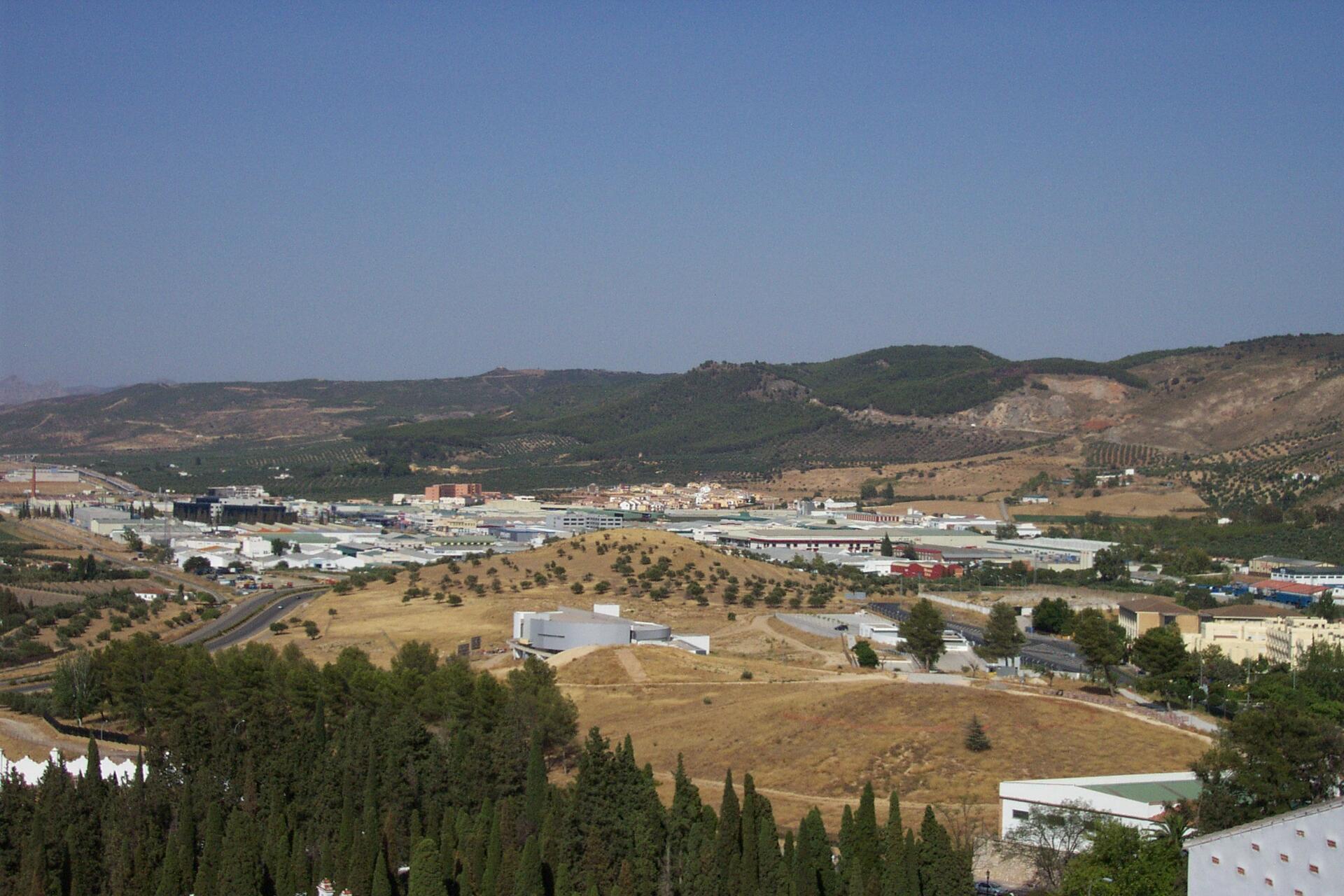
© Juan de Vojníkov, CC BY-SA 3.0 Resized from original. (This derivative is under the same CC BY-SA license.)
World Heritage Research
Discover scientific research and academic studies that deepen our understanding of Antequera Dolmens Site from its history and significance to its conservation, management, and contemporary challenges.
-
The Menhir as an Oral Tradition in Cattle-Raising Territories: First Geological Provenance Analyses at the Antequera Heritage Site, Spain
Geological provenance analysis reveals that menhirs at the Antequera Dolmens Site, Spain, were strategically sourced from specific outcrops, suggesting their role as navigational markers and cultural references in cattle-raising territories. The study combines archaeological field surveys, oral tradition testimonies, GIS mapping, geophysical prospection, photogrammetry, and RTI techniques to identify engravings and paintings on landmarks. This interdisciplinary approach provides the first detailed geological data for menhirs in the region, offering new insights into their historical significance and functionality beyond mere monumentality.
Cabello-Ligero, L., Bueno-Ramírez, P., Armenteros-Lojo, M. J., Suarez Padilla, J., Caro Herrero, J. L., de Balbín-Behrmann, R., Barroso-Bermejo, R., Vázquez Martínez, A., Durán Valsero, J. J., Durán-Laforet, S. R., Jordá Bordehore, R., Morales García, R., & Varo Sánchez-Garrido, M. Á. (2025). The Menhir as an Oral Tradition in Cattle-Raising Territories: First Geological Provenance Analyses at the Antequera Heritage Site, Spain. Heritage, 8(8), 291. https://doi.org/10.3390/heritage8080291
View Publication Record | Read Publication -
Genetic and historical perspectives on the early medieval inhumations from the Menga dolmen, Antequera (Spain)
A groundbreaking genetic analysis of ancient DNA from the Menga dolmen, part of the UNESCO World Heritage Site at Antequera, Spain, reveals that this Neolithic monument, built around 4000 BCE, was reused as a burial site during the early medieval period (8th–11th centuries CE). The study identified distinct North African and Levantine ancestry contributions in one individual, Menga1, alongside typical European uniparental lineages. This finding highlights complex migration patterns in medieval Iberia and underscores the cultural significance of prehistoric monuments in later historical contexts. The research employed SNP-enrichment techniques to extract highly degraded DNA, offering new insights into the genetic diversity and historical reuse of this iconic site.
Silva, M., García Sanjuán, L., Fichera, A., Oteo-García, G., Foody, M. G. B., Fernández Rodríguez, L. E., Navarrete Pendón, V., Bennison, A. K., Pala, M., Soares, P., Reich, D., Edwards, C. J., & Richards, M. B. (2026). Genetic and historical perspectives on the early medieval inhumations from the Menga dolmen, Antequera (Spain). Journal of Archaeological Science: Reports, 69, 105559. https://doi.org/10.1016/j.jasrep.2025.105559
View Publication Record | Read Publication -
A very personal semblance of archaeoastronomy pioneer Professor Michael Hoskin, colleague, mentor and friend
This homage celebrates the pioneering contributions of Professor Michael Hoskin, a leading figure in archaeoastronomy and cultural astronomy. Hoskin's extensive research on megalithic monuments across the Mediterranean basin, including the dolmens of Antequera (Spain) and Talayotic Menorca, established their significance as World Heritage Sites. His work spanned over 2000 monuments, demonstrating the scientific value of archaeoastronomy in cultural heritage preservation. As editor of The Journal for the History of Astronomy for 45 years, Hoskin championed interdisciplinary collaboration, advocating for archaeoastronomy's role as a vital archaeometry tool. His legacy includes foundational texts like Tombs, temples and their orientations, which redefined our understanding of megalithic orientations and their cultural importance.
Belmonte, J. A. (2024). very personal semblance of archaeoastronomy pioneer Professor Michael Hoskin, colleague, mentor and friend. Cosmovisiones / Cosmovisões, 5(1), 21–31. https://doi.org/10.24215/26840162e011
View Publication Record | Read Publication -
Muerte compartida. Arquitecturas megalíticas en Europa
European megalithic structures, long understood as repositories for collective burials since the Neolithic period, exhibit far more complex social and symbolic connections than previously assumed. Radiocarbon dating (C14) and archaeological analysis reveal that these sites were integrated into broader prehistoric networks, surpassing basic maritime diffusion models. The study highlights intricate relationships between architectural evolution, funerary practices, and symbolic manifestations across Europe, challenging earlier interpretations of isolation or limited interaction among megalithic communities.
Bueno Ramírez, P. (2024). Muerte compartida. Arquitecturas megalíticas en Europa. Vínculos de Historia Revista Del Departamento de Historia de La Universidad de Castilla-La Mancha, (13), 13–36. https://doi.org/10.18239/vdh_2024.13.01
View Publication Record | Read Publication -
The provenance of the stones in the Menga dolmen reveals one of the greatest engineering feats of the Neolithic
A groundbreaking study reveals that the massive stones used to construct the Menga dolmen, Europe's most colossal Neolithic monument (c. 3800-3600 BC), were quarried from a rocky outcrop approximately 1 km away. The research, employing high-resolution geological mapping and petrographic analyses, identifies these stones as calcarenites—poorly cemented sedimentary rocks akin to 'soft stones' in modern engineering. This finding underscores the advanced technological prowess of Neolithic societies, demonstrating their ability to transport and manipulate stones weighing up to 150 tons using innovative wood and stone techniques. The study not only sheds light on the construction methods of this UNESCO-listed monument but also contributes to its preservation by providing precise geological insights.
Rodríguez, J. A. L., Sanjuán, L. G., Álvarez-Valero, A. M., Jiménez-Espejo, F., Arrieta, J. M., Fraile-Nuez, E., Artús, R. M., Cultrone, G., Muñoz-Carballeda, F. A., & Martínez-Sevilla, F. (2023). The provenance of the stones in the Menga dolmen reveals one of the greatest engineering feats of the Neolithic. Scientific Reports, 13(1). https://doi.org/10.1038/s41598-023-47423-y
View Publication Record | Read Publication -
A multimethod approach to the genesis of Menga, a World Heritage megalith
A groundbreaking multimethod approach has successfully established the construction date of Menga, one of Europe's most remarkable megaliths and part of the UNESCO World Heritage Site Antequera Dolmens. This study overcame longstanding challenges in determining the temporality of Neolithic monuments that were not primarily used for burial and experienced prolonged use, which often obscures early material records. By analyzing 29 fresh numerical ages—including radiocarbon dating, optically stimulated luminescence, thermoluminescence, and uranium-thorium dating—the research team pinpointed Menga's genesis and contextualized it within its social and cultural milieu. This breakthrough offers new interpretations of the dolmen's role in local and supralocal processes, providing critical insights into early social complexity during the Neolithic period.
García Sanjuán, L., Medialdea, A., Balsera Nieto, V., Athanassas, C., Pike, A., Standish, C. D., Dias, M. I., Rodrigues, A. L., Clavero Toledo, J. L., Wheatley, D. W., & Cintas-Peña, M. (2022). A multimethod approach to the genesis of Menga, a World Heritage megalith. Quaternary Research, 111, 1–20. https://doi.org/10.1017/qua.2022.33
View Publication Record | Read Publication -
The Antequera megalithic site in the work of Georg and Vera Leisner: a review
A groundbreaking study by Georg and Vera Leisner, published in 1943, remains pivotal in understanding the Antequera Dolmens Site. Despite its limited accessibility due to being written in German, their work provided the most comprehensive analysis of the site during the mid-20th century. Recent research reaffirms the relevance of their findings, addressing enduring questions about these megalithic monuments. The study also includes full English and Spanish translations of the Leisners' text on Antequera, ensuring broader accessibility for future scholars.
García Sanjuán, L., Mora Molina, C., & Bartelheim, M. (2019). The Antequera megalithic site in the work of Georg and Vera Leisner: a review. SPAL. Revista de Prehistoria Y Arqueología de La Universidad de Sevilla, 2(28), 93–111. https://doi.org/10.12795/spal.2019.i28.15
View Publication Record | Read Publication