World Heritage Identification Number: 314
World Heritage since: 1984
Category: Cultural Heritage
WHE Type: Buildings & Architectural Ensembles
Transboundary Heritage: No
Endangered Heritage: No
Country: 🇪🇸 Spain
Continent: Europe
UNESCO World Region: Europe and North America
Map
The Alhambra, Generalife, and Albayzín: A Triumvirate of Architectural Masterpieces in Granada, Spain
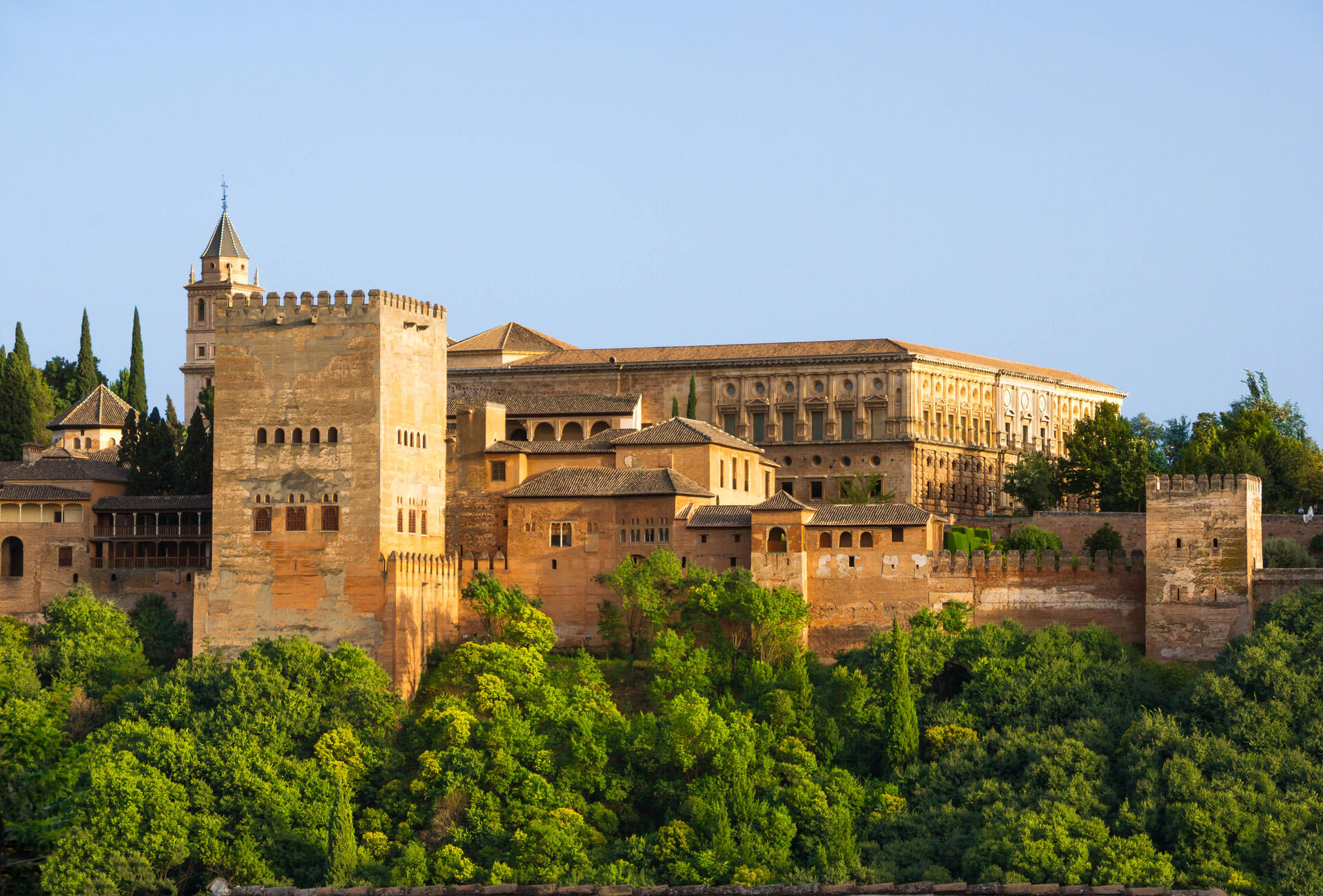
The Alhambra, Generalife and Albayzín constitute a remarkable ensemble of architectural wonders nestled within the picturesque city of Granada, Spain. Inscribed as a UNESCO World Heritage Site in 1984—with the Albayzín added as an extension in 1994—these three distinct yet interconnected sites offer visitors a unique glimpse into the rich tapestry of history, culture, and art that has shaped Granada over the centuries.
The history of this remarkable ensemble extends beyond its Nasrid origins, reflecting the shifting cultural and political landscape of Iberia. In 1492, the Reconquista culminated in the fall of Granada to the Catholic Monarchs, marking the end of Muslim rule in the region. Following this transition, parts of the Alhambra were adapted to suit Christian tastes, including the later addition of Renaissance elements. These layers of transformation reveal the site not as a static relic, but as a living testament to centuries of cultural exchange and adaptation.
The Alhambra, a palace and fortress complex, stands as the crown jewel of this trio. Originally established as a small fortress in the 9th century, it was significantly expanded by the Nasrid dynasty during the 13th and 14th centuries, resulting in the breathtaking structures we see today. The Alhambra is renowned for its intricate Islamic architecture, characterized by delicate arabesques, geometric patterns, and exquisite craftsmanship. Notable features include the Court of the Lions, with its iconic fountain supported by 12 lion sculptures, and the Hall of the Ambassadors, which boasts some of the finest decorative plasterwork in the complex.
Nearby, on the slopes of the same hill, lies the Generalife, a lush garden estate and royal summer retreat. Built in the 13th century, the Generalife offers a contrast to the ornate opulence of the Alhambra, providing a tranquil oasis overlooking the city. Its terraced gardens, flowing water channels, and carefully designed courtyards evoke a sense of serenity and harmony, offering a tantalizing glimpse into the leisure and lifestyle of the Nasrid rulers.
Beyond their architectural beauty, the spaces of the Alhambra and the Generalife are deeply imbued with symbolic meaning. Islamic artistic traditions emphasized harmony, geometry, and the interplay of light and water, evoking the idea of paradise described in the Qur’an. Flowing fountains, reflective pools, and intricately patterned surfaces were not merely decorative, but carefully designed to create an atmosphere of contemplation and transcendence. These elements invite visitors to experience the architecture not only visually, but also intellectually and spiritually.
Completing this architectural ensemble is the Albayzín, a historic residential district perched on a hill opposite the Alhambra. This labyrinthine neighborhood preserves the medieval Islamic urban layout, with narrow, winding streets and intimate plazas. While many of its buildings reflect later Christian and Andalusian influences, the district retains a strong Moorish character. Whitewashed houses, inner courtyards (cármenes), and scenic viewpoints contribute to its enduring charm and cultural richness.
The enduring allure of these sites has also been shaped by their rediscovery in the modern era. In the 19th century, writers and travelers such as Washington Irving helped bring international attention to Granada through works like Tales of the Alhambra. Today, the Alhambra, Generalife, and the Albayzín remain central to the cultural identity of the city, drawing visitors from around the world while posing ongoing challenges of preservation and sustainable tourism.
Together, the Alhambra, Generalife, and Albayzín offer an unparalleled experience for those seeking to explore the cultural heritage of Spain. Each site provides a distinct perspective on Granada’s history—from the grandeur of the Alhambra to the serenity of the Generalife and the lived-in character of the Albayzín. Whether one is drawn by architecture, history, or atmosphere, the extraordinary ensemble of the Alhambra, Generalife, and Albayzín should not be missed.
UNESCO Description of the World Heritage Site
Rising above the modern lower town, the Alhambra and the Albaycín, situated on two adjacent hills, form the medieval part of Granada. To the east of the Alhambra fortress and residence are the magnificent gardens of the Generalife, the former rural residence of the emirs who ruled this part of Spain in the 13th and 14th centuries. The residential district of the Albaycín is a rich repository of Moorish vernacular architecture, into which the traditional Andalusian architecture blends harmoniously.
UNESCO Justification of the World Heritage Site
Criterion (i): The Alhambra and Generalife contain all the known artistic techniques of the Hispano-Muslim world, on the basis of a proportional system in which all decorative and building developments are based, with particular emphasis on the aesthetic value represented by the intelligent use of water and vegetation. Together with this tradition, since 1492 the Royal House has received the most advanced proposals in terms of palace and poliorcertic architecture, and plastic arts of Western humanism. The Albayzín district is the best-preserved illustration of a Hispano-Muslim city in the South of Spain, particularly formed during the Nasrid dynasty. The Albayzín, enriched with the contributions of Christian Renaissance and Spanish Baroque culture, is an exceptional and harmonious blend of two traditions, creating a unique and special form and style.
Criterion (iii): The development of the materials used in the Alhambra and Generalife are unique particularly with the use of plaster, wood and ceramics as decorative elements. Together with the use of the Arabic epigraphy, constructions were transformed into an ensemble of “talking architecture”, whose contents are related to the religious, political and poetic world of the Nasrid Dynasty, preserved and enriched by the best examples of the humanistic and innovative art of the Spanish Renaissance. The architectural ensemble is a living example of the mix of Easter and Western artistic traditions. The Albayzín represents a microcosm of what the Andalusi cultural splendour meant in Granada from its origins in the Zirid Dynasty to the magnificence of the Nasrid Dynasty. The customs passed down through the Andalusí people originated in these kinds of neighbourhoods and have largely influenced all European cultures. Their great scientific knowledge and their social customs - as well as their gastronomy and hygiene – confirm the greatness of this advanced culture that influenced the subsequent cultures of the Albayzín centuries later.
Criterion (iv): The Alhambra and Generalife bear exceptional testimony to Muslim Spain the 13th and 15th centuries. They form a remarkable example of the palatine residences of medieval Islam, neither destroyed nor changed by the vicissitudes of time, as with the examples in Maghreb. The architecture and urban landscape of the Albayzín is the most remarkable cultural example of the survival of Andalusí culture in our days. It bears witness to the medieval Moorish settlement, which was not changed when it was adapted to the Christian way of life after the conquest. Its main characteristics in terms of form, materials and colours, are preserved almost without change and survive as a notable example of a Moorish town of the Nasrid dynasty that merged with the vernacular town planning of the 19th century and the beginning of the 20th century.
Encyclopedia Record: Alhambra
The Alhambra is a palatine city and fortress complex located in Granada, Spain. It is one of the most famous monuments of Islamic architecture and the only well-preserved palace from the medieval Islamic world. Additionally, the palace contains notable examples of Spanish Renaissance architecture.Additional Site Details
Area: 450 hectares
Number of Components: 1
(iii) — Unique or exceptional testimony to a cultural tradition
(iv) — Outstanding example of a type of building or landscape
Coordinates: 37.1767777778 , -3.5899166667
World Heritage Research
Discover scientific research and academic studies that deepen our understanding of Alhambra, Generalife and Albayzín, Granada from its history and significance to its conservation, management, and contemporary challenges.
-
Ground-structure interaction analysis of the Tower of Comarès, Alhambra of Granada, Spain
A comprehensive ground-structure interaction analysis of the Tower of Comarès, part of the UNESCO-listed Alhambra and Generalife complex in Granada, Spain, reveals critical insights into its structural stability under static and seismic conditions. The study, conducted by CEDEX's geotechnical and materials laboratories, identifies key vulnerabilities that could inform targeted preservation strategies. By integrating advanced numerical modeling with on-site data, researchers assessed the tower’s response to seismic forces, providing a foundation for mitigating risks while preserving its architectural integrity. This work contributes to broader efforts to safeguard historic structures against environmental and seismic threats.
Santos, A., Cuéllar, V., Martínez, J. M., & Salinas, J. L. (2026). Ground-structure interaction analysis of the Tower of Comarès, Alhambra of Granada, Spain. XIVth International Conference on Soil Mechanics and Foundation Engineering, Volume 2, 1025–1028. https://doi.org/10.1201/9781003761716-65
View Publication Record | Read Publication -
Vecinos del Fuego: Experiencia en educación primaria sobre ecología del fuego para comprender y sobrellevar mejor los incendios forestales
A wildfire near the UNESCO World Heritage site of Alhambra, Generalife and Albayzín in Granada, Spain, in May 2022 transformed a local landscape used for recreational and educational activities, highlighting the ecological and social impacts of fire. The study 'Vecinos del Fuego' employed an interactive learning model within a Learning Community to educate primary school students (5th and 6th grade) about fire ecology, aiming to correct misconceptions and promote scientifically informed management practices. Through fieldwork—including transect sampling in autumn and spring—the research assessed post-fire plant regeneration, linking ecological observations to environmental management strategies. The intervention demonstrated that structured educational approaches can foster scientific literacy on fire dynamics, benefiting both ecological understanding and community resilience.
Leverkus, A. B., Sánchez Robles, J. M., Aguilera, D., & Torres Muros, L. (2026). Vecinos del Fuego: Experiencia en educación primaria sobre ecología del fuego para comprender y sobrellevar mejor los incendios forestales. Ecosistemas, 3082. https://doi.org/10.7818/ecos.3082
View Publication Record | Read Publication -
Assessment of the seismic vulnerability index of three Moorish houses in the Albayzín, Granada (Spain)
Researchers have identified critical factors affecting the seismic vulnerability of three historic Moorish houses in Granada's Albayzín. Using the SVIVA method, which evaluates ten key parameters influencing seismic performance, the study quantifies structural weaknesses in these earthen and timber buildings. The findings underscore the importance of comprehensive assessments before any rehabilitation or renovation to preserve their integrity amid the region's seismic activity. This work provides a valuable reference for similar heritage structures, offering insights into maintaining their cultural significance while ensuring structural resilience.
Guardiola-Víllora, A., & Basset-Salom, L. (2026). Assessment of the seismic vulnerability index of three Moorish houses in the Albayzín, Granada (Spain). Bulletin of Earthquake Engineering, 24(8), 5913–5947. https://doi.org/10.1007/s10518-026-02463-3
View Publication Record | Read Publication -
Exploring New Conservation Methods: Isolation and Characterization of Algicidal Bacteria from Ornamental Fountains in the Alhambra and Generalife (Granada, Spain)
Researchers have identified a highly effective algicidal bacterium, Stenotrophomonas maltophilia strain LIG25, capable of inhibiting over 98% of algal growth in ornamental fountains at the Alhambra and Generalife (Granada, Spain). This discovery offers a promising eco-friendly alternative to conventional chemical biocides for conserving cultural heritage sites vulnerable to biodeterioration. The study employed 16S rRNA gene sequencing to characterize bacterial communities from eight fountain samples, revealing 18 genera with reported algicidal activity. Functional screening assays using filtered fountain waters against Chlorella vulgaris demonstrated intrinsic inhibitory capacity, with the most active sample selected for further isolation and validation through co-culture assays, cell density measurements, and PAM fluorometry. Despite detecting a diverse microbiome, no significant link was found between taxonomic composition and biofilm development, underscoring the complexity of microbial interactions in these environments.
Calvo-Bayo, I., Fillet, S., Cuzman, O. A., Cuberos-Cáceres, L., González-del-Valle, M., Bolívar-Galiano, F., & Romero-Noguera, J. (2026). Exploring New Conservation Methods: Isolation and Characterization of Algicidal Bacteria from Ornamental Fountains in the Alhambra and Generalife (Granada, Spain). Conservation, 6(2), 70. https://doi.org/10.3390/conservation6020070
View Publication Record | Read Publication -
Heritage Conservation Policies in Spain and World Heritage Sites: An Evaluation through the Case of Granada
Spain's heritage conservation approach, exemplified by the Alhambra Conservation Area, integrates monumental architecture with its environmental context, cultural landscape, and historic urban fabric. This multi-level governance system ensures coordination between central and local authorities, aligning with UNESCO World Heritage principles. The study highlights that cultural heritage should be viewed not just as a physical asset but as a carrier of collective memory, cultural identity, and continuity. The research employed qualitative methods, including literature reviews, international convention analyses, conservation legislation assessments, and case studies, to evaluate Spain's conservation policies and their effectiveness in preserving World Heritage Sites.
Taş, B., & Umar, N. (2026). HERITAGE CONSERVATION POLICIES IN SPAIN AND WORLD HERITAGE SITES: AN EVALUATION THROUGH THE CASE OF GRANADA. JIHSCI. https://doi.org/10.5281/ZENODO.21722390
View Publication Record | Read Publication -
La restauración de un baluarte de artillería de los Reyes Católicos construido entre 1492-1495 sobre un puente nazarí en la Puerta del Arrabal de la Alhambra (Granada, España)
A previously unknown Nasrid bridge, part of a hydraulic complex, was discovered beneath the Puerta del Arrabal bastion—a 15th-century artillery fortification built by the Catholic Monarchs (1492–1495) in Granada’s Alhambra. This finding reveals how the structure's design leveraged existing infrastructure to expedite construction and optimize defensive positioning, bridging a stream while dominating surrounding terrain, including the Generalife gardens. Restoration efforts (2022–2024) employed minimal interventions to preserve historical integrity, reversing 20th-century alterations while maintaining the bastion’s transitional military architecture significance—marking a shift from medieval to early modern fortifications with firearm adaptability.
Orihuela-Uzal, A., García-Pulido, L. J., & Reyes-Martínez, A. (2025). La restauración de un baluarte de artillería de los Reyes Católicos construido entre 1492-1495 sobre un puente nazarí en la Puerta del Arrabal de la Alhambra (Granada, España). PROCEEDINGS of the International Conference on Fortifications of the Mediterranean Coast FORTMED 2025. Vol. 19, 657–664. https://doi.org/10.4995/fortmed2025.2025.20309
View Publication Record | Read Publication -
Letters from Andalucía. II. The Generalife
Santiago Rusiñol i Prats' 'Letters from Andalucía. II. The Generalife' offers a poetic and symbolic exploration of the Generalife, the Nasrid summer palace adjacent to Granada's Alhambra. Through vivid descriptions of its paths, patios, fountains, and vegetation, Rusiñol evokes a dreamlike atmosphere, blending romanticized narratives with sensory details such as colors, textures, sounds, and fragrances. His account reflects Symbolist influences, drawing parallels with works by Maeterlinck and Watteau while portraying the Generalife as a feminine space steeped in historical memory. The text contrasts the palace's intimate scale against the grandeur of Sierra Nevada, emphasizing its artistic and cultural significance as a testament to the displaced Nasrid rulers' legacy.
Rusiñol, S. (2025). Letters from Andalucía. II. The Generalife. Art in Translation, 17(1), 19–28. https://doi.org/10.1080/17561310.2025.2471729
View Publication Record | Read Publication