
World Heritage Identification Number: 1486
World Heritage since: 2015
Category: Cultural Heritage
WHE Type: Infrastructure & Industry
Transboundary Heritage: No
Endangered Heritage: No
Country: 🇳🇴 Norway
Continent: Europe
UNESCO World Region: Europe and North America
Map
Pioneering Industrial Landscape: The Rjukan-Notodden Industrial Heritage Site
The Rjukan-Notodden Industrial Heritage Site, inscribed as a UNESCO World Heritage Site in 2015, offers a unique glimpse into the birth of a groundbreaking industry that revolutionized agriculture worldwide. Situated in the picturesque landscapes of Telemark county, Norway, this site encompasses a harmonious blend of industrial infrastructure and breathtaking natural beauty.
More to come…UNESCO Description of the World Heritage Site
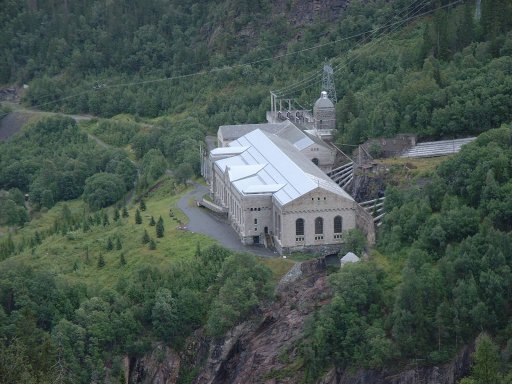
Located in a dramatic landscape of mountains, waterfalls and river valleys, the site comprises hydroelectric power plants, transmission lines, factories, transport systems and towns. The complex was established by the Norsk-Hydro Company to manufacture artificial fertilizer from nitrogen in the air. It was built to meet the Western world’s growing demand for agricultural production in the early 20th century. The company towns of Rjukan and Notodden show workers’ accommodation and social institutions linked by rail and ferry to ports where the fertilizer was loaded. The Rjukan-Notodden site manifests an exceptional combination of industrial assets and themes associated to the natural landscape. It stands out as an example of a new global industry in the early 20th century.
UNESCO Justification of the World Heritage Site
Criterion (ii): Rjukan-Notodden Industrial Heritage Site manifests an exceptional combination of industrial themes and assets tied to the landscape, which exhibit an important exchange on technological development in the early 20th century.
Criterion (iv): The technological ensemble of Rjukan-Notodden comprising dams, tunnels, pipes, power plants, power lines, factory areas and equipment, the company towns, railway lines and ferry service, located in a landscape where the natural topography enabled hydroelectricity to be generated in the necessary large amounts stands out as an example of new global industry in the early 20th century.
Encyclopedia Record: Rjukan–Notodden Industrial Heritage Site
The Rjukan–Notodden Industrial Heritage Site is a World Heritage Site in Telemark county, Norway, created to protect the industrial landscape around Lake Heddalsvatnet and Vestfjorddalen valley. The landscape is centered on the plant built by the Norsk Hydro company to produce calcium nitrate fertilizer from atmospheric nitrogen using the Birkeland–Eyde process. The complex also includes hydroelectric power plants, railways, transmission lines, factories, and workers' accommodation and social institutions in the towns of Notodden and Rjukan.Additional Site Details
Area: 4,959.5 hectares
Number of Components: 1
(iv) — Outstanding example of a type of building or landscape
Coordinates: 59.8786111111 , 8.5936111111
World Heritage Research
Discover scientific research and academic studies that deepen our understanding of Rjukan-Notodden Industrial Heritage Site from its history and significance to its conservation, management, and contemporary challenges.
-
Brickwork in Norway: tradition encounters a new age of industrial construction, 1905–1912
A rapid shift from timber frames with brick infill to all-brick and steel-reinforced structures between 1905 and 1912 at the Rjukan-Notodden Industrial Heritage Site reflects global industrial construction trends. The study identifies three evolutionary phases in building systems, highlighting the incorporation of concealed embedded steel—prone to corrosion—that poses long-term structural risks. While the site's remote mountain location might suggest isolation, the technology used aligns with international advancements, placing it within a broader context of architectural and engineering history. This case study provides an initial typology of construction methods and underscores the need for further material analysis to inform conservation efforts.
Haupt, T. (2025). Brickwork in Norway: tradition encounters a new age of industrial construction, 1905–1912. Proceedings of the Institution of Civil Engineers - Engineering History and Heritage, 178(1), 12–30. https://doi.org/10.1680/jenhh.23.00014
View Publication Record | Read Publication -
Concrete touchdown: new technology influences industrial buildings in Norway, 1912–1920
The introduction of concrete construction technology between 1912 and 1920 significantly influenced industrial architecture at the UNESCO World Heritage Site Rjukan-Notodden, Norway. This period marked the first use of concrete in large-scale industrial structures, such as hydropower stations and production facilities, driven by Hydro's need for synthetic nitrogen fertilizer production. The development of heavy concrete bearing walls and mixed steel-concrete systems required substantial material resources, leading to the innovation of skeleton frames. Research in materials science and structural engineering, both in the USA and Europe, played a pivotal role in achieving viable construction systems. This study highlights how these advancements connected Rjukan-Notodden's industrial buildings to global architectural and engineering history, providing valuable insights for future conservation efforts.
Haupt, T. (2024). Concrete touchdown: new technology influences industrial buildings in Norway, 1912–1920. Proceedings of the Institution of Civil Engineers - Engineering History and Heritage, 177(2), 34–51. https://doi.org/10.1680/jenhh.23.00017
View Publication Record | Read Publication -
Rationalisation of factories in Norway: from classical to modern architecture 1920–1929
Between 1920 and 1929, the Rjukan-Notodden Industrial Heritage Site in Norway underwent significant architectural transformation driven by rationalisation processes. This shift from neo-classical to modernist styles was influenced by global advancements in industrial production and construction technologies, particularly the adoption of prefabricated systems using steel and concrete skeletal structures. The study demonstrates how engineers' designs, prioritising efficiency and simplicity, challenged traditional architectural practices and paved the way for functionalistic expression. This transition not only impacted local conservation efforts but also connects to broader global trends in architecture and engineering history.
Haupt, T. (2025). Rationalisation of factories in Norway: from classical to modern architecture 1920–1929. Proceedings of the Institution of Civil Engineers - Engineering History and Heritage, 178(1), 31–48. https://doi.org/10.1680/jenhh.23.00018
View Publication Record | Read Publication -
A case study of industrial heritage buildings at the Rjukan and Notodden site in Norway
Industrial heritage buildings at the Rjukan and Notodden UNESCO World Heritage Site, Norway, reveal significant commonalities between industrial and high-rise structures despite their distinct architectural expressions and functions. This case study, part of a broader research project, demonstrates that the transition from craft-driven to prefabricated mass construction was a global phenomenon driven by industrialization, profoundly influencing construction technology. The analysis of how these buildings resist loads provides critical insights into their structural evolution, offering practical guidance for heritage conservation efforts. Such findings are invaluable for architects, engineers, and contractors working on future projects, ensuring the preservation of this unique industrial legacy.
Haupt, T. (2024). A case study of industrial heritage buildings at the Rjukan and Notodden site in Norway. Proceedings of the Institution of Civil Engineers - Engineering History and Heritage, 177(1), 16–30. https://doi.org/10.1680/jenhh.23.00013
View Publication Record | Read Publication -
Inclusive management: accommodating site complexity and pluralities in local values in the Rjukan-Notodden Industrial World Heritage Site, Norway
Close collaboration between heritage researchers and practitioners enhances the management of World Heritage Sites by providing valuable inputs for informed decision-making. A study focusing on the Rjukan-Notodden Industrial Heritage Site in Norway demonstrated that such cooperation, particularly through initiatives like the Heritage Place Lab (HPL) pilot programme, can improve understanding of local value diversities and address site complexity. This collaboration requires overlapping and reflexive comprehension of key concepts, achieved through structured, time-managed processes involving social scientists and site managers. The findings highlight the potential for aligning research interests with management challenges, offering broader implications for effective heritage management worldwide.
Johannessen, S. F., Strogan, J., Mikalsen, V. K., Birkeland, I., & Kennedy, A. (2023). Inclusive management: accommodating site complexity and pluralities in local values in the Rjukan-Notodden Industrial World Heritage Site, Norway. Journal of Cultural Heritage Management and Sustainable Development, 13(3), 517–533. https://doi.org/10.1108/jchmsd-09-2022-0165
View Publication Record | Read Publication
