World Heritage Identification Number: 868
World Heritage since: 1998
Category: Cultural Heritage
WHE Type: Religious Sites & Sacred Architecture
Transboundary Heritage: No
Endangered Heritage: No
Country: 🇫🇷 France
Continent: Europe
UNESCO World Region: Europe and North America
Map
Routes of Santiago de Compostela in France: Medieval Pilgrimage Routes in Western Europe
Routes of Santiago de Compostela in France, inscribed as a UNESCO World Heritage Site in 1998, comprise a collection of historic pilgrimage-related monuments and route sections associated with the Camino de Santiago tradition in France. These sites represent some of the most significant medieval pilgrimage heritage locations in Western Europe and illustrate the profound religious and cultural importance of the pilgrimage to Santiago de Compostela during the Middle Ages.
The UNESCO property extends across numerous regions of France, reflecting the vast geographical reach of the pilgrimage routes that once guided travelers toward the Pyrenees and onward into Spain. Among the most historically important pilgrimage roads were the Via Turonensis, Via Lemovicensis, Via Podiensis, and Via Tolosana, each of which connected different parts of medieval Europe to the Camino de Santiago network. Together, these routes facilitated the movement of pilgrims, merchants, clergy, and ideas across the continent.
One of the key aspects that led to the designation of the Routes of Santiago de Compostela as a World Heritage Site is their role in facilitating religious and cultural exchange. Pilgrims traveling from diverse regions brought with them languages, customs, artistic influences, and religious traditions that were shared along the routes. This continuous movement of people contributed to the spread of architectural styles, intellectual ideas, and cultural practices across Western Europe.
Another important aspect of the UNESCO designation is the remarkable concentration of pilgrimage infrastructure associated with the routes. Churches, monasteries, bridges, hospitals, and hostels were constructed to support travelers undertaking the long and often difficult journey to Santiago de Compostela. Many of these structures remain exceptionally well preserved and represent outstanding examples of Romanesque and Gothic architecture, offering visitors a glimpse into the artistic and architectural traditions of medieval Europe.
Among the most notable monuments associated with the Routes of Santiago de Compostela in France are the Basilica of Saint-Sernin, renowned for its Romanesque design and importance as a pilgrimage church; the Abbey Church of Sainte-Foy, famous for its medieval reliquaries and sculptural decoration; and the Pont Valentré, a fortified medieval bridge that once served pilgrims crossing the Lot River. These monuments reflect both the spiritual significance of the pilgrimage and the artistic achievements of medieval France.
These pilgrimage routes also provide exceptional testimony to the influence of Christian pilgrimage traditions during the Middle Ages. The large number of pilgrims who traveled these paths demonstrates the immense spiritual importance attached to Santiago de Compostela, which emerged as one of the most important pilgrimage destinations in medieval Christianity alongside Rome and Jerusalem.
The UNESCO recognition of the Camino de Santiago pilgrimage tradition extends beyond this particular designation. The historic city of Santiago de Compostela itself was separately inscribed as a World Heritage Site in 1985 due to its exceptional religious and architectural significance. In addition, the Routes of Santiago de Compostela: Camino Francés and Routes of Northern Spain were recognized by UNESCO in 1993, highlighting the broader international network of pilgrimage paths that historically guided travelers toward Santiago de Compostela.
Today, the Routes of Santiago de Compostela in France continue to offer valuable insight into the religious, cultural, and architectural developments of Western Europe during the Middle Ages. Preserved through UNESCO protection and ongoing conservation efforts, these monuments and route sections allow modern visitors to experience the enduring legacy of one of Europe’s most influential pilgrimage traditions.
UNESCO Description of the World Heritage Site
Santiago de Compostela was the supreme goal for countless thousands of pious pilgrims who converged there from all over Europe throughout the Middle Ages. To reach Spain pilgrims had to pass through France, and the group of important historical monuments included in this inscription marks out the four routes by which they did so.
UNESCO Justification of the World Heritage Site
Criterion (ii): The Pilgrimage Route of Santiago de Compostela played a key role in religious and cultural exchange and development during the later Middle Ages, and this is admirably illustrated by the carefully selected monuments on the routes followed by pilgrims in France.
Criterion (iv): The spiritual and physical well-being of the pilgrims travelling to Santiago de Compostela were met by the development of a number of specialized types of edifice, many of which originated or were further developed on the French sections.
Criterion (vi): The Pilgrimage Route of Santiago de Compostela bears exceptional witness to the power and influence of the Christian faith among people of all classes and countries in Europe during in the Middle Ages.
Encyclopedia Record: Routes of Santiago de Compostela in France
UNESCO designated the Routes of Santiago de Compostela in France as a World Heritage Site in December 1998. The routes pass through the following regions of France: Aquitaine, Auvergne, Basse-Normandie, Bourgogne, Centre, Champagne-Ardenne, Ile-de-France, Languedoc-Roussillon, Limousin, Midi-Pyrénées, Picardie, Poitou-Charentes, and Provence-Alpes-Côte d'Azur. UNESCO cites the routes' role in "religious and cultural exchange", the development of "specialized edifices" along the routes, and their "exceptional witness to the power and influence of Christian faith among people of all classes and countries in Europe during the Middle Ages".Additional Site Details
Area: 97.21 hectares
Number of Components: Not available
(iv) — Outstanding example of a type of building or landscape
(vi) — Directly associated with events or living traditions
Coordinates: 45.18405556 , 0.722944444
Image
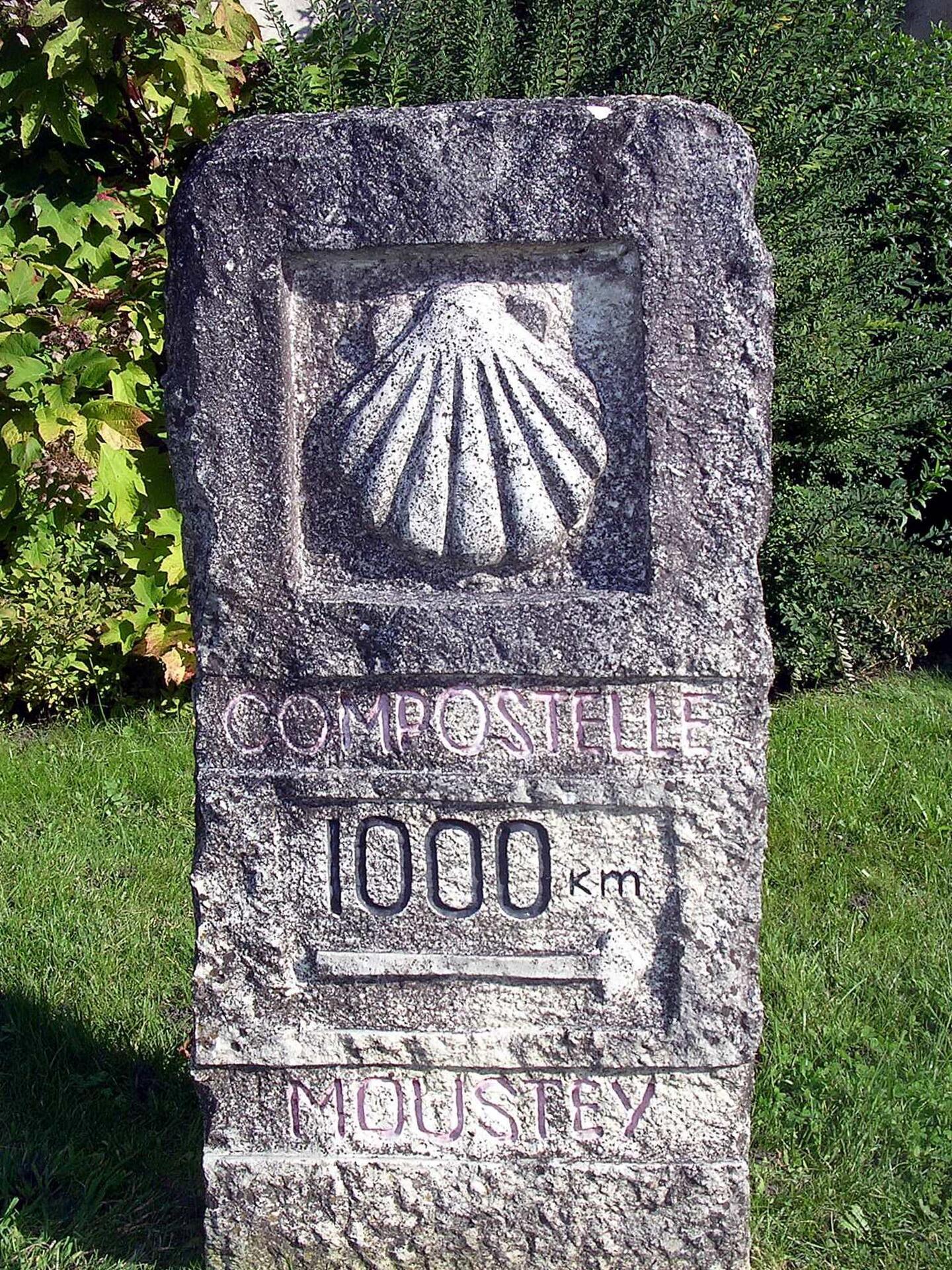
© Jibi44, CC BY-SA 3.0 Resized from original. (This derivative is under the same CC BY-SA license.)
World Heritage Research
Discover scientific research and academic studies that deepen our understanding of Routes of Santiago de Compostela in France from its history and significance to its conservation, management, and contemporary challenges.
-
The Covered Market of Cadouin, France
Medieval covered markets, often constructed from perishable materials and subject to significant modifications or destruction over time, are rare survivors of their original form. The Halle de Cadouin in France offers a unique example of late-medieval market architecture, providing insights into the role of such structures in medieval trade and commerce. Strategically located along the pilgrimage route to Santiago de Compostela, the market is associated with the Cistercian abbey of Cadouin, which attracted pilgrims due to its spiritual significance and advanced agricultural practices. The study highlights the Halle de Cadouin's architectural features, including a star-shaped wooden frame anchored with dowels, and its place within the broader context of Aquitaine's covered markets, many of which were established during the Hundred Years' War to stimulate trade and settlement in frontier regions.
Gruber, E. (2026). The Covered Market of Cadouin, France. Encounters: Medieval Economy in 50 Objects, 140–144. https://doi.org/10.4324/9781032715117-29
View Publication Record | Read Publication -
Pilgrimage as a Regional Socio-Economic Driver: Case Study of Sarria, Km 0 of the Camino de Santiago
Pilgrimage tourism, traditionally undervalued for its socio-economic potential, can serve as a powerful driver for regional development when strategically leveraged. A case study of Sarria, the starting point ('Km 0') of the French Way on the Camino de Santiago, demonstrates this untapped potential. By analyzing qualitative and quantitative data—including surveys, interviews, and mystery shopper audits—Sarria emerges as a model for micro-planning in tourism development. Its strategic location, cultural heritage, and role in issuing Compostela certificates position it to attract diverse tourist groups and extend pilgrim stays, offering practical insights for municipalities seeking to capitalize on pilgrimage routes. A SWOT analysis and proposed municipal actions further highlight the transformative impact of integrating pilgrimage into broader tourism strategies.
Pardo Lopez, C. (2026). Pilgrimage as a Regional Socio-Economic Driver: Case Study of Sarria, Km 0 of the Camino de Santiago. Technological University Dublin. https://doi.org/10.21427/Q15J-GK53
View Publication Record | Read Publication -
Pilgrimages and Other Spiritual Journeys
Pilgrimages, whether religious or secular, can evoke profound spiritual experiences akin to awe and transcendence. A study on the Camino de Santiago, a historic pilgrimage route from Southern France to Santiago de Compostela in Spain, reveals that even non-religious individuals ('nones') engage with such journeys for their spiritual significance. Interviews conducted along the route highlight diverse motivations, ranging from secular to deeply religious, underscoring the multifaceted nature of pilgrimage experiences. The research extends this insight by comparing the Camino de Santiago to other secular pilgrimage sites like Walt Disney World and the Vietnam War Memorial, suggesting that these locations also foster a sense of awe comparable to religious feelings. This dual perspective challenges traditional notions of spirituality, proposing that transcendence is not exclusive to religious contexts but can emerge in various cultural and historical settings.
Manzella, J. C. (2025). Pilgrimages and Other Spiritual Journeys. Seeking Transcendence, 180–198. https://doi.org/10.4324/9781003542926-9
View Publication Record | Read Publication -
Early Studies in Romanesque Architecture and the Discovery of the Pilgrimage Routes to Santiago de Compostela
Early studies on Romanesque architecture revealed the historical significance of the pilgrimage routes to Santiago de Compostela, particularly through the works of Émile Mâle and Arthur Kingsley Porter. A pivotal moment came with the 1878 excavation of the apostle James' mausoleum in Santiago, which revived the dormant pilgrimage tradition. Fidel Fita's 1882 publication of the Codex Calixtinus further cemented this discovery by documenting various routes. Auguste Bouillet's 1893 essay established the first transnational artistic connections between key sites like Sainte-Foy de Conques and Saint-Sernin de Toulouse, marking a turning point in art history. However, subsequent research has challenged the canonization of these routes as described in the Codex Calixtinus.
Karge, H. (2025). Early Studies in Romanesque Architecture and the Discovery of the Pilgrimage Routes to Santiago de Compostela. Ad Limina, XVI-1(16-1), 65–90. https://doi.org/10.61890/adlimina/16.1.2025/02
View Publication Record | Read Publication -
A Pilgrim's Deliberation
A unique fictionalized account provides insight into the motivations and experiences of Johaneta Aymara, a 15th-century brothel manager from Marseille who embarked on a pilgrimage to Le Puy-en-Velay—a key starting point for one of France's main routes to Santiago de Compostela. Drawing from historical records, including notarial inventories and municipal archives, the narrative reconstructs her journey, offering a glimpse into the lives of sex workers in medieval Europe and their participation in penitent pilgrimages. This approach combines historical documentation with speculative storytelling to explore the social and spiritual dimensions of pilgrimage during this period.
McDonough, S. (2024). A Pilgrim’s Deliberation. Portraits of Medieval Europe, 800–1400, 224–233. https://doi.org/10.4324/9781003318972-22
View Publication Record | Read Publication -
Wine and monasteries: Benedictine monasteries in Europe
Only five out of 68 European Benedictine monasteries still produce wine, with none exhibiting a cohesive regional or national promotional strategy to leverage their potential as key nodes for wine tourism. The study, based on qualitative analysis, reveals that while these monasteries possess their own promotional tools, they lack integration into broader tourism strategies in France, Italy, Germany, and the UK. This finding underscores missed opportunities for developing long-distance wine routes and enhancing cultural heritage tourism along historic pilgrimage paths like those of Santiago de Compostela.
Beltrán Peralta, N., Aulet, S., & Vidal-Casellas, D. (2022). Wine and monasteries: Benedictine monasteries in Europe. Journal of Foodservice Business Research, 25(6), 652–683. https://doi.org/10.1080/15378020.2021.2024785
View Publication Record | Read Publication -
« Plus on y va, plus on a envie d’y aller » Questionner l’envie de revenir sur les Chemins de Saint-Jacques de Compostelle
A significant increase in pilgrimage to Santiago de Compostela was observed between 2000 and 2019, with the number of pilgrims rising from 55,000 to 347,000. This trend persists even in France, where pilgrim numbers have grown despite modest overall figures. The study reveals that many pilgrims are repeat visitors, often drawn back by socio-relational motivations rather than solely spiritual or physical ones. Fieldwork conducted in southwest France highlighted the importance of these social and relational factors in sustaining repeated journeys along the Camino de Santiago routes.
Lagarde, D., & Rayssac, S. (2021). « Plus on y va, plus on a envie d’y aller » Questionner l’envie de revenir sur les Chemins de Saint-Jacques de Compostelle. Belgeo, 2. https://doi.org/10.4000/belgeo.49228
View Publication Record | Read Publication