World Heritage Identification Number: 1256
World Heritage since: 2007
Category: Cultural Heritage
WHE Type: Historic Cities & Urban Areas
Transboundary Heritage: No
Endangered Heritage: No
Country: 🇫🇷 France
Continent: Europe
UNESCO World Region: Europe and North America
Map
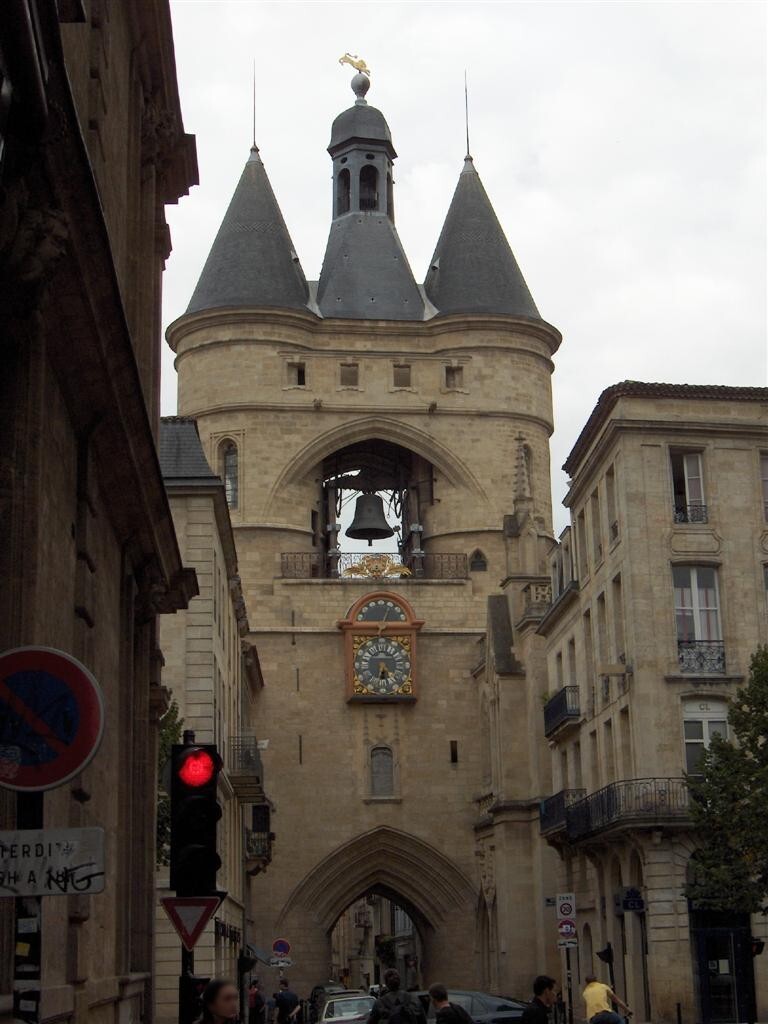
Bordeaux, Port of the Moon: An Inhabited Historic City of Enlightenment Era Architecture
Bordeaux, Port of the Moon, is a designated UNESCO World Heritage Site located in southwestern France. This port city, renowned for its exceptional urban and architectural ensemble, was inscribed in 2007 due to its significant historical, cultural, and architectural value.
More to come…UNESCO Description of the World Heritage Site
The Port of the Moon, port city of Bordeaux in south-west France, is inscribed as an inhabited historic city, an outstanding urban and architectural ensemble, created in the age of the Enlightenment, whose values continued up to the first half of the 20th century, with more protected buildings than any other French city except Paris. It is also recognized for its historic role as a place of exchange of cultural values over more than 2,000 years, particularly since the 12th century due to commercial links with Britain and the Low Lands. Urban plans and architectural ensembles of the early 18th century onwards place the city as an outstanding example of innovative classical and neoclassical trends and give it an exceptional urban and architectural unity and coherence. Its urban form represents the success of philosophers who wanted to make towns into melting pots of humanism, universality and culture.
UNESCO Justification of the World Heritage Site
Criterion (ii): Bordeaux, Port of the Moon, constitutes an exceptional testimony to the exchange of human values over more than two thousand years. These exchanges have provided this cosmopolitan town, in the age of Enlightenment, an unparalleled prosperity that provided for an exceptional urban and architectural transformation that continued through 19th century up to present time. The different stages of construction and development of the harbour town are legible in its urban plan, especially the big transformations carried out from the early 18th century onwards.
Criterion (iv): Bordeaux, Port of the Moon, represents an outstanding urban and architectural ensemble, created in the Age of Enlightenment, whose values have continued up to the first half of the 20th century. Bordeaux is exceptional in the unity of its urban and architectural classical and neo-classical expression, which has not undergone any stylistic rupture over more than two centuries. Its urban form represents the success of philosophers who wanted to make towns into melting pots of humanism, universality and culture.
Encyclopedia Record: Port de la Lune
The Port de la Lune is the name given to the harbour of Bordeaux, dating to the Middle Ages, because of the shape of the river crossing the city. It is represented by a crescent on the coat of arms of Bordeaux, and by three interlaced crescents in the logotype of the municipality.Additional Site Details
Area: 1,731 hectares
Number of Components: 1
(iv) — Outstanding example of a type of building or landscape
Coordinates: 44.8388888889 , -0.5722222222
World Heritage Research
Discover scientific research and academic studies that deepen our understanding of Bordeaux, Port of the Moon from its history and significance to its conservation, management, and contemporary challenges.
-
Beyond the Dark Side of the Port of the Moon: Rethinking the Role of Bordeaux's Slave Trade Past
Bordeaux's historical narrative has long been overshadowed by its role as a slave-trading port. This study challenges that perception, highlighting the agency and resilience of people of color—both enslaved and free—who shaped Bordeaux's identity from the 18th century onward. It reveals how some individuals redefined themselves in the city during the peak of the slave trade, while others, post-abolition, envisioned Bordeaux as a 'Black metropolis.' The research employs a multidirectional approach to reconstruct their lives and communities, offering a nuanced counterpoint to France's colonial history narratives.
Semley, L. (2020). Beyond the Dark Side of the Port of the Moon: Rethinking the Role of Bordeaux’s Slave Trade Past. Histoire Sociale/Social History, 53(107), 43–68. https://doi.org/10.1353/his.2020.0003
View Publication Record | Read Publication -
Beyond the Dark Side of the Port of the Moon: Rethinking the Role of Bordeaux’s Slave Trade Past
Bordeaux, historically recognized as a 'slave-trading port,' is being reexamined for its complex role in the lives of enslaved and free people of color during the 18th century. This study shifts focus from the port's wealth derived from the slave trade to the agency and experiences of individuals who reshaped the city, challenging dominant narratives that emphasize only the 'dark side' of Bordeaux's history. It theorizes how people of color redefined themselves in the city post-slave trade and during early African colonialism, imagining a 'black metropolis.' The research employs historical analysis to reconstruct these lives and communities, offering a nuanced perspective on Bordeaux's past beyond its association with slavery.
Semley, L. (2020). Beyond the Dark Side of the Port of the Moon: Rethinking the Role of Bordeaux’s Slave Trade Past. Histoire Sociale/Social History. https://doi.org/10.1353/his.2019.0065
View Publication Record | Read Publication