
World Heritage Identification Number: 85
World Heritage since: 1979
Category: Cultural Heritage
WHE Type: Archaeological Sites
Transboundary Heritage: No
Endangered Heritage: No
Country: 🇫🇷 France
Continent: Europe
UNESCO World Region: Europe and North America
Map
Exploring the Prehistoric Sites and Decorated Caves of the Vézère Valley
The Prehistoric Sites and Decorated Caves of the Vézère Valley, located in the Dordogne department of France, is a UNESCO World Heritage Site that offers a unique glimpse into the past. This region, often referred to as the "Capital of Prehistory," boasts over 150 known prehistoric sites, making it one of the richest areas in Europe for studying the Paleolithic era and its art.
More to come…UNESCO Description of the World Heritage Site
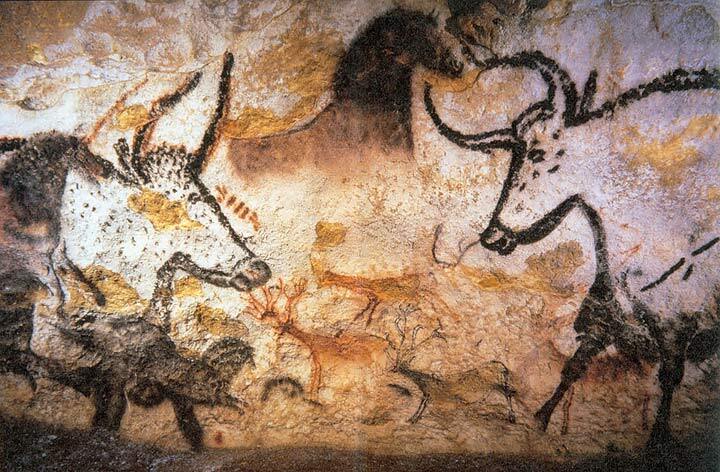
The Vézère valley contains 147 prehistoric sites dating from the Palaeolithic and 25 decorated caves. It is particularly interesting from an ethnological and anthropological, as well as an aesthetic point of view because of its cave paintings, especially those of the Lascaux Cave, whose discovery in 1940 was of great importance for the history of prehistoric art. The hunting scenes show some 100 animal figures, which are remarkable for their detail, rich colours and lifelike quality.
UNESCO Justification of the World Heritage Site
Criterion (i): Some of the figurative ensembles found in the caves of the Vézère Valley are universally recognized as masterpieces of prehistoric art: The Venus de Laussel (Marquay), the chevaline frieze in high relief of Cap-Blanc, and especially the wall paintings of the Lascaux Cave (Montignac), of which the discovery, in 1940, marks an important date in the history of prehistoric art: hunting scenes skillfully composed present close to one hundred animal figures, surprising in the precision of their observation, the richness of their colour, and the vivacity of their rendering.
Criterion (iii): The objects and the works of art found in the Vézère Valley are extremely rare witnesses of long extinct civilizations, which are very difficult to understand. This material, invaluable to the knowledge of the most distant periods of the history of humankind, dates back to the Paleolithic period and is of exceptional interest from an historic, ethnological, anthropological and aesthetic point of view.
Encyclopedia Record: Prehistoric Sites and Decorated Caves of the Vézère Valley
The Prehistoric Sites and Decorated Caves of the Vézère Valley is a UNESCO World Heritage Site in France since 1979. It specifically lists 15 prehistoric sites in the Vézère valley in the Dordogne department, mostly in and around Les Eyzies-de-Tayac-Sireuil, which has been called the "Capital of Prehistory". This valley is exceptionally rich in prehistoric sites, with more than 150 known sites including 25 decorated caves, and has played an essential role in the study of the Paleolithic era and its art. Three of the sites are the namesakes for prehistoric periods; the Micoquien, Mousterian, and Magdalenian. Furthermore, the Cro-Magnon rock shelter gave its name to the Cro-Magnon, the generic name for the European early modern humans. Many of the sites were discovered or first recognised as significant and scientifically explored by the archaeologists Henri Breuil and Denis Peyrony in the early twentieth century, while Lascaux, which has the most exceptional rock art of these, was discovered in 1940.Additional Site Details
Area: 105.733 hectares
Number of Components: 15
(iii) — Unique or exceptional testimony to a cultural tradition
Coordinates: 45.0575 , 1.17
Image
World Heritage Research
Discover scientific research and academic studies that deepen our understanding of Prehistoric Sites and Decorated Caves of the Vézère Valley from its history and significance to its conservation, management, and contemporary challenges.
-
Collection Storage: A Window into the Richness of Cultural Heritage.
Gaël de Guichen's pioneering work in preventive conservation has redefined the role of museum storage rooms, transforming them into optimal environments for preserving unexhibited collections. His concept, developed during his tenure at ICCROM, emphasizes that these spaces should not only protect artifacts but also facilitate their study and public display. The RE-ORG method, a standard he established, revolutionized collection storage practices globally. This interview sheds light on the evolution of his ideas and their broader impact on cultural heritage preservation, highlighting how strategic storage can safeguard humanity's tangible past while making it accessible to future generations.
Kreplak, Y., & Mairesse, F. (2021). Collection Storage: A Window into the Richness of Cultural Heritage. Museum International, 73(1-2), 226–235. https://doi.org/10.1080/13500775.2021.1956780
View Publication Record | Read Publication -
Variability and sampling strategy of cave wall concretion: Case study of the moonmilk found in Leye Cave (Dordogne)
A study of moonmilk deposits in Leye Cave, part of the UNESCO-listed Prehistoric Sites and Decorated Caves of the Vézère Valley, reveals that despite significant macroscopic diversity, these calcite formations exhibit low variability at a microscopic scale. This insight is crucial for optimizing sampling strategies in ornate caves where moonmilk poses a threat to cave art conservation. The research used scanning electron microscopy (SEM) on 24 samples from a single moonmilk strip, providing the first detailed investigation of its chemical composition and morphological structures over a few meters. The findings suggest that targeted micro-sampling can effectively characterize moonmilk without extensive macroscopic variability affecting results.
Mauran, G., Bassel, L., Ferrier, C., Lacanette, D., Bousquet, B., & Chapoulie, R. (2018). Variability and sampling strategy of cave wall concretion: Case study of the moonmilk found in Leye Cave (Dordogne). Archaeometry, 61(2), 327–341. Portico. https://doi.org/10.1111/arcm.12434
View Publication Record | Read Publication -
Photons and electrons for the study of a white veil covering some walls in prehistoric caves
A white concretion, partially covering walls in prehistoric caves within the UNESCO-listed Vézère Valley, has been structurally and chemically characterized using advanced techniques. The study identified two primary calcium carbonate facies: moonmilk and coralloids. This research marks a significant step toward understanding the formation of unexpected layers on cave walls, which could provide insights into the environmental conditions and chronology of these sites. Future work aims to explore the climatic factors influencing these formations over long periods.
Chapoulie, R., Bassel, L., Mauran, G., Ferrier, C., Queffelec, A., Lacanette, D., Malaurent, P., Bousquet, B., Motto-Ros, V., Trichard, F., Pelascini, F., & Rodriguez, V. (2017). Photons and electrons for the study of a white veil covering some walls in prehistoric caves. Acta Imeko, 6(3), 82. https://doi.org/10.21014/acta_imeko.v6i3.483
View Publication Record | Read Publication -
From Chauvet to Lascaux: 15,000 Years of Cave Art
A comprehensive analysis of Upper Paleolithic cave art reveals significant shifts in symbolic language, animal representation, and spatial layout over 15,000 years, linking Chauvet (36 ka BP) to Lascaux (21 ka BP). The study identifies two distinct occupation periods at Chauvet—Aurignacian (37–33.5 ka BP) with black zoomorphic paintings—and traces evolutionary patterns in artistic expression amid glacial environments. Unlike Lascaux, which suffered from tourist-induced microclimate disruption and is now closed, Chauvet offers pristine examples of early Western European art. The research underscores the socio-cultural behavior of Homo sapiens during this era, providing insights into their adaptive strategies and symbolic development.
Geneste, J.-M. (2017). From Chauvet to Lascaux: 15,000 Years of Cave Art. Archaeology, Ethnology & Anthropology of Eurasia, 45(3), 29–40. https://doi.org/10.17746/1563-0110.2017.45.3.029-040
View Publication Record | Read Publication -
The Cave and the Horizon (Chapter 1)
Archaeological evidence from the Vézère Valley, France, reveals that early humans—both Neanderthals and Homo sapiens—developed sophisticated artificial shelters as far back as 30,000 years ago. Contrary to the common stereotype of primitive life centered around cave entrances or savanna hunting, these findings demonstrate a remarkable adaptability in utilizing local resources to construct complex architectural designs tailored to climatic conditions. The study challenges conventional narratives by highlighting the ingenuity and resourcefulness of prehistoric humans, showcasing their ability to innovate beyond natural shelters like caves or rock overhangs.
Dubos, R. (2017). 1 / The Cave and the Horizon. Beast or Angel?, 69–76. https://doi.org/10.4324/9781351314725-11
View Publication Record | Read Publication
