
World Heritage Identification Number: 866
World Heritage since: 1998
Category: Cultural Heritage
WHE Type: Archaeological Sites
Transboundary Heritage: Yes
Endangered Heritage: No
Country: Portugal, Spain
Continent: Europe
UNESCO World Region: Europe and North America
Map
Prehistoric Rock Art Sites in the Côa Valley and Siega Verde: A Transboundary Testimony of Human History
The Prehistoric Rock Art Sites in the Côa Valley and Siega Verde, inscribed as a UNESCO World Heritage Site in 1998, offer a captivating glimpse into the early chapters of human history. Situated along the rivers Agueda and Côa, tributaries of the Douro River, these sites span across the borders of Portugal and Spain, providing a testament to continuous human occupation dating back to the end of the Paleolithic Age.
More to come…UNESCO Description of the World Heritage Site
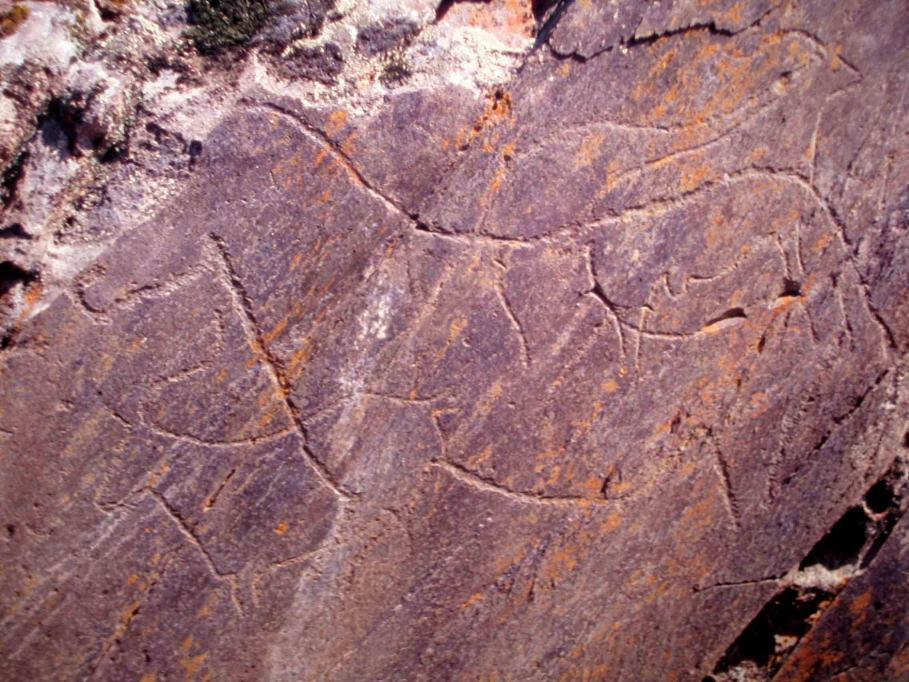
The two Prehistoric Rock Art Sites in the Côa Valley (Portugal) and Siega Verde (Spain) are located on the banks of the rivers Agueda and Côa, tributaries of the river Douro, documenting continuous human occupation from the end of the Paleolithic Age. Hundreds of panels with thousands of animal figures (5,000 in Foz Côa and around 440 in Siega Verde) were carved over several millennia, representing the most remarkable open-air ensemble of Paleolithic art on the Iberian Peninsula.
Côa Valley and Siega Verde provide the best illustration of the iconographic themes and organization of Paleolithic rock art, using the same modes of expression in caves and in the open air, thus contributing to a greater understanding of this artistic phenomenon. Together they form a unique site of the prehistoric era, rich in material evidence of Upper Paleolithic occupation.
UNESCO Justification of the World Heritage Site
Criterion (i): The rock engravings in Foz Côa and Siega Verde, dating from the Upper Palaeolithic to the final Magdalenian/ Epipalaeolithic (22.000 – 8.000 BCE), represent a unique example of the first manifestations of human symbolic creation and of the beginnings of cultural development which reciprocally shed light upon one another and constitute an unrivalled source for understanding Palaeolithic art.
Criterion (iii): The rock art of Foz Côa and Siega Verde, when considered together, throws an exceptionally illuminating light on the social, economic, and spiritual life of our early ancestors.
Encyclopedia Record: Prehistoric Rock Art Sites in the Côa Valley and Siega Verde
Prehistoric Rock Art Sites in the Côa Valley and Siega Verde are a United Nations Educational, Scientific and Cultural Organization (UNESCO) transboundary World Heritage Site, located in the Côa Valley of Portugal and Siega Verde, Spain.Additional Site Details
Area: Not available
Number of Components: 17
(iii) — Unique or exceptional testimony to a cultural tradition
Coordinates: 40.6975 , -6.6611111111
World Heritage Research
Discover scientific research and academic studies that deepen our understanding of Prehistoric Rock Art Sites in the Côa Valley and Siega Verde from its history and significance to its conservation, management, and contemporary challenges.
-
In situ characterization of prehistoric rock paintings: the Côa Valley (Portugal)
A study of prehistoric rock paintings in the Côa Valley, Portugal, reveals that hematite is the predominant pigment used in these ancient artworks. The research utilized in situ color spectrophotometry and portable Raman spectroscopy to analyze red motifs across four sites within the archaeological complex. Findings indicate that while hematite dominates the pigments, goethite, quartz, and feldspars are also present, suggesting potential use of ochre or natural elements from the backdrop stones. This non-invasive methodology provides valuable insights into the composition and preservation of prehistoric rock art, contributing to a deeper understanding of human creativity and material culture during ancient times.
Pozo Antonio, J. S., Rivas, T., Barreiro, P., Caetano, V., Carrera, F., & Alves, L. B. (2023). In situ characterization of prehistoric rock paintings: the Côa Valley (Portugal). Proceedings of the 2022 IMEKO TC4 International Conference on Metrology for Archaeology and Cultural Heritage, 502–507. https://doi.org/10.21014/tc4-arc-2023.095
View Publication Record | Read Publication -
El arte Paleolítico de Siega Verde (Serranillo, Salamanca, España): Una sintética visión en el trigésimo aniversario de su descubrimiento
In 2018, the thirtieth anniversary of the discovery of Paleolithic rock art at Siega Verde (Serranillo, Salamanca, Spain) marked a pivotal moment in understanding Upper Paleolithic art and human settlement during the Last Glacial Maximum (LGM). The site, recognized for its open-air equid figures, challenged prevailing views on Iberian Meseta's prehistoric populations. Its inclusion in UNESCO’s World Heritage List in 2010 underscores its global significance. This synthetic study synthesizes key findings from three decades of research, highlighting the site's unique contributions to Paleolithic art studies and its role as a reference for interpreting prehistoric societies.
Marcos, C. V. (2019). El arte Paleolítico de Siega Verde (Serranillo, Salamanca, España): Una sintética visión en el trigésimo aniversario de su descubrimiento. Estudos Do Quaternário / Quaternary Studies, (19), 63–82. https://doi.org/10.30893/eq.v0i19.180
View Publication Record | Read Publication