World Heritage Identification Number: 929
World Heritage since: 1999
Category: Cultural Heritage
WHE Type: Historic Cities & Urban Areas
Transboundary Heritage: No
Endangered Heritage: No
Country: 🇪🇸 Spain
Continent: Europe
UNESCO World Region: Europe and North America
Map
San Cristóbal de La Laguna: A City Rich in History and Philosophy
San Cristóbal de La Laguna, often simply referred to as La Laguna, is a city and municipality located in the north of Tenerife, the largest and most populous island in the Canary Islands, Spain. This historic city, inscribed as a UNESCO World Heritage Site in 1999, boasts a unique blend of history, philosophy, and cultural significance that sets it apart from other cities in the region.
More to come…UNESCO Description of the World Heritage Site
San Cristóbal de La Laguna, in the Canary Islands, has two nuclei: the original, unplanned Upper Town; and the Lower Town, the first ideal 'city-territory' laid out according to philosophical principles. Its wide streets and open spaces have a number of fine churches and public and private buildings dating from the 16th to the 18th century.
UNESCO Justification of the World Heritage Site
Criterion (ii): San Cristóbal de La Laguna exhibits the signs of an interchange of influences between the European and Hispano-Portuguese and American cultures, with which a constant link on the human, cultural, and socio-economic levels has been maintained. Ibero-America is ever-present at San Cristóbal de La Laguna, not only in its grid plan and Plaza del Adelantado (the founding square), but also in its churches, cloisters, and the civil architecture, which are the siblings of American ones.
Criterion (iv): San Cristóbal de La Laguna was the first non-fortified Spanish colonial town, and its layout provided the model for many colonial towns in the Americas. It is outstanding in its planning as a territory-town, and is the first instance of an unfortified Hispanic town designed and built in a complete project as a space for the organization of a new social order. Since its founding, it has remained a living urban area, in which all the trends, tastes, and styles of each historical period have been expressed, illustrating the first transit point of the Hispanic culture towards the Americas in a two-way cultural interchange that continues until today.
Encyclopedia Record: San Cristóbal de La Laguna
San Cristóbal de La Laguna is a city and municipality in the northern part of the island of Tenerife in the Province of Santa Cruz de Tenerife, on the Canary Islands, Spain. The former capital of the Canary Islands, the city is the third-most populous city of the archipelago and the second-most populous city of the island.Additional Site Details
Area: 60.38 hectares
Number of Components: 1
(iv) — Outstanding example of a type of building or landscape
Coordinates: 28.47788889 , -16.31177778
Image
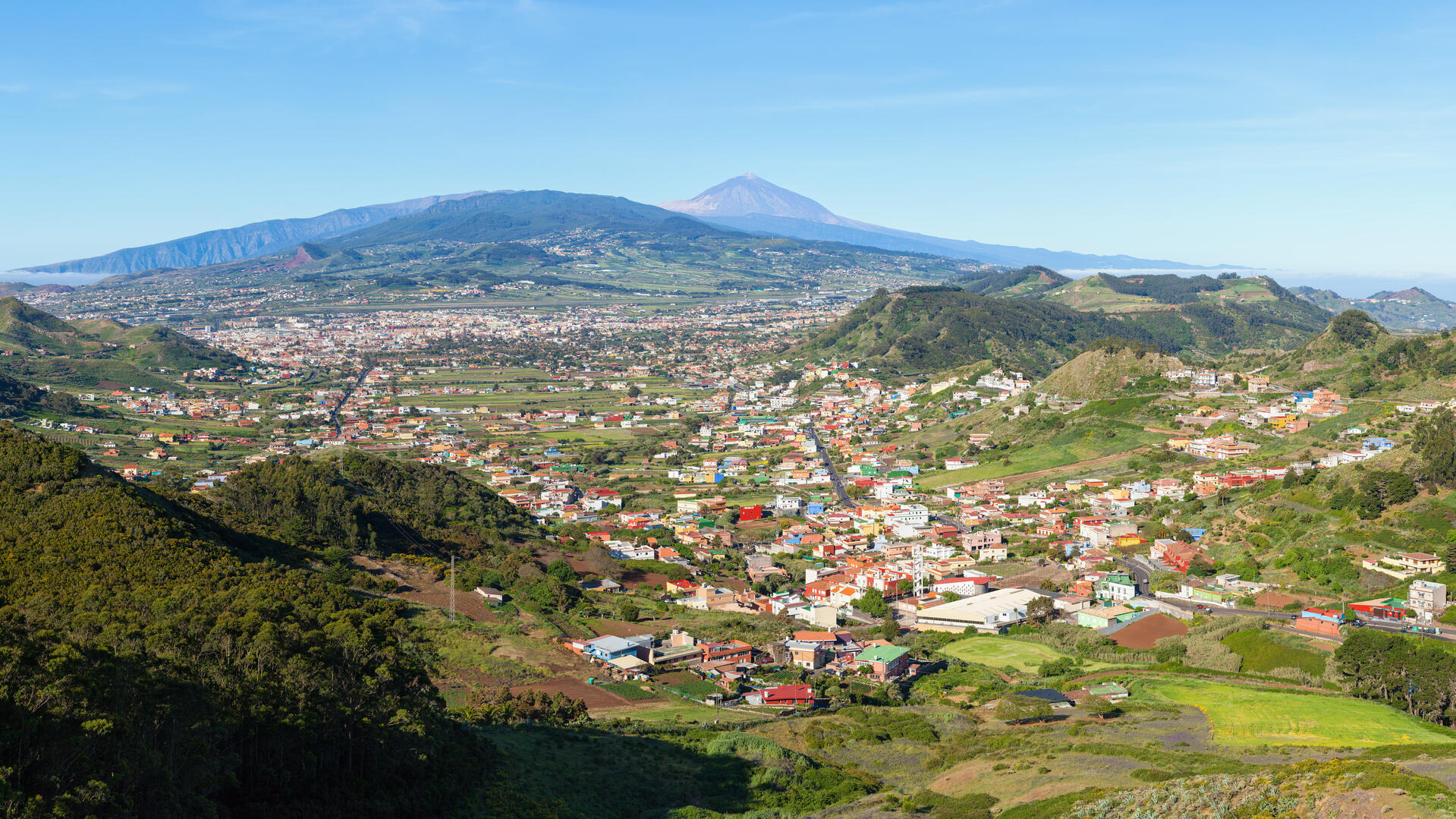
© Thomas Wolf, www.foto-tw.de, CC BY-SA 3.0 de Resized from original. (This derivative is under the same CC BY-SA license.)
World Heritage Research
Discover scientific research and academic studies that deepen our understanding of San Cristóbal de La Laguna from its history and significance to its conservation, management, and contemporary challenges.
-
Evaluación del impacto de la designación como Patrimonio Mundial en las dinámicas urbanas: estudio de caso en la ciudad de San Cristóbal de La Laguna / Assessing the impact of World Heritage designation on urban dynamics: a case study in the city of San Cristóbal de La Laguna
World Heritage designation has complex and contradictory impacts on urban dynamics, as demonstrated by the case of San Cristóbal de La Laguna. While it enhances visibility and strengthens city identity, particularly in historic centers, it also accelerates selective demographic, economic, and urban changes. The study combines discursive analysis of administrative documents with statistical examination of demographic, urban, and tourist indicators, along with cartographic analysis, to identify key transformations since the city's inscription in 1999. This research provides a critical perspective on global processes affecting other UNESCO-listed cities.
Albarrán Periáñez, J. D. (2026). Evaluación del impacto de la designación como Patrimonio Mundial en las dinámicas urbanas: estudio de caso en la ciudad de San Cristóbal de La Laguna / Assessing the impact of World Heritage designation on urban dynamics: a case study in the city of San Cristóbal de La Laguna. Ería, 46(1), 109–133. https://doi.org/10.17811/er.46.2026.109-133
View Publication Record | Read Publication -
Del bullicio al vacío: transformaciones urbanas y declive de las salas de cine en Santa Cruz de Tenerife y San Cristóbal de La Laguna (1970-2025)
A profound shift in urban dynamics and cultural memory is revealed through the decline of cinema theaters in Santa Cruz de Tenerife and San Cristóbal de La Laguna from 1970 to 2025. The study demonstrates that this transformation goes beyond changes in consumer behavior, highlighting a significant mutation in public leisure spaces and the symbolic void left by cinema in contemporary cities. By integrating geography, history, and visual culture, the research reconstructs the stages of theater decline—from neighborhood cinemas to multiplexes—and analyzes both the logic behind their obsolescence and practices of resistance, such as heritage preservation and film festivals. The case of Tenerife serves as a key example for understanding broader urban cultural transformations.
Ferri, L. (2026). Del bullicio al vacío: transformaciones urbanas y declive de las salas de cine en Santa Cruz de Tenerife y San Cristóbal de La Laguna (1970-2025). Latente Revista de Historia Y Estética Audiovisual, (24), 351–366. https://doi.org/10.25145/j.latente.2026.24.14
View Publication Record | Read Publication -
Las comunidades guanches del Barranco del Agua de Dios y sus rituales funerarios (Tegueste-San Cristóbal de La Laguna). Un barranco para la vida y la muerte en Tenerife (Islas Canarias)
The Barranco del Agua de Dios, spanning the municipalities of Tegueste and San Cristóbal de La Laguna on Tenerife, emerges as the most densely occupied archaeological site of the Canary Islands during the aboriginal Guanche period. This study reveals that over a century of excavations and surveys has uncovered more than 100 recorded sites along its route, establishing it as a critical corridor for settlement and ritual activity in northeastern Tenerife. The research synthesizes findings on domestic occupation models across the barranco's sectors while introducing preliminary analyses of thermally altered human remains discovered in multiple caves, shedding new light on Guanche funerary practices. This work combines historical archaeological data with recent discoveries to redefine our understanding of this significant landscape as both a vital hub for life and death.
Pérez Caamaño, F., Louart, A., & Soler-Segura, J. (2025). Las comunidades guanches del Barranco del Agua de Dios y sus rituales funerarios (Tegueste-San Cristóbal de La Laguna). Un barranco para la vida y la muerte en Tenerife (Islas Canarias). Anuario de Estudios Atlánticos, 71. https://doi.org/10.36980/11126/aea
View Publication Record | Read Publication -
Natural Interaction in Virtual Heritage: Enhancing User Experience with Large Language Models
A novel virtual reality (VR) system enhances user experience at UNESCO World Heritage Site San Cristóbal de La Laguna by integrating Large Language Models (LLMs) to enable natural, unscripted dialogue with virtual humans. This approach, combining Speech-to-Text and Text-to-Speech synthesis, prioritizes usability, immersion, and dialogue quality while addressing user-centered design principles. Preliminary studies highlighted the importance of historically adapted language and feedback mechanisms for virtual guides, with a qualitative test revealing preferences for gender selection options. Although limitations such as latency in dialogue generation and reduced performance in non-English languages persist, the research offers a generalist methodology for unscripted virtual human interactions in VR applications, providing actionable recommendations for future implementations.
Sánchez-Berriel, I., Pérez-Nava, F., & Pérez-Rosario, L. (2025). Natural Interaction in Virtual Heritage: Enhancing User Experience with Large Language Models. Electronics, 14(12), 2478. https://doi.org/10.3390/electronics14122478
View Publication Record | Read Publication -
Sobre la desaparecida capilla de San Bernardo en el convento de San Diego del Monte de La Laguna
A rare glimpse into the vanished chapel of San Bernardo, once part of the convent of San Diego del Monte in San Cristóbal de La Laguna, is preserved through historical analysis. Founded in 1677 by priest Bernardo Martín de Fleitas and later gifted to the Counts of Valle de Salazar, the chapel was abandoned after the convent's closure, leaving only fragmentary remains. This study reconstructs its history, examining surviving elements and documenting its transformation under the second count’s revitalization efforts. By analyzing archival records and physical remnants, researchers uncover the chapel’s architectural significance and cultural legacy within the UNESCO World Heritage Site of La Laguna.
Rodríguez Bravo, J. (2025). Sobre la desaparecida capilla de San Bernardo en el convento de San Diego del Monte de La Laguna. Revista de Historia Canaria, (207), 119–139. https://doi.org/10.25145/j.histcan.2025.207.06
View Publication Record | Read Publication -
Ciudades de frontera: transversalidad de los paisajes cultural y urbano entre San Cristóbal de La Laguna y Panamá
A comparative analysis of colonial urbanism in San Cristóbal de La Laguna (Canary Islands) and Panamá reveals that the traditional view of Hispanic urban planning as a conscious, planned process is incomplete. The study challenges this assumption by examining both sites—closely spaced in time but differing significantly in context—and identifies key interpretative keys for understanding colonial urban phenomena within the broader Castilian Atlantic colonization. This approach sheds new light on how frontier dynamics shaped urban landscapes during the late 15th and early 16th centuries, integrating historical, archaeological, and cartographic evidence to redefine our understanding of territorial occupation in this pivotal period.
González Zalacain, R. J., & Linero Baroni, M. (2024). Ciudades de frontera: transversalidad de los paisajes cultural y urbano entre San Cristóbal de La Laguna y Panamá. Vínculos de Historia Revista Del Departamento de Historia de La Universidad de Castilla-La Mancha, (13), 274–294. https://doi.org/10.18239/vdh_2024.13.14
View Publication Record | Read Publication -
From Maps to 3D Models: Reconstructing the Urban Landscape of San Cristóbal de La Laguna in the 16th Century
A groundbreaking 3D reconstruction of San Cristóbal de La Laguna reveals the city's 16th-century urban landscape with unprecedented accuracy. Using Leonardo Torriani's 1588 map as the foundation, researchers developed a map-based workflow that integrates historical sources and current data to balance fidelity with modernization. This methodology not only reconstructs one of the first non-fortified Spanish colonial cities but also sets a precedent for applying similar techniques to other European maps from the same era. The findings highlight the potential of 3D visualization technologies in preserving and studying historical urban landscapes that have been lost or altered over time.
Pérez Nava, F., Sánchez Berriel, I., Pérez Morera, J., Martín Dorta, N., Meier, C., & Hernández Rodríguez, J. (2023). From Maps to 3D Models: Reconstructing the Urban Landscape of San Cristóbal de La Laguna in the 16th Century. Applied Sciences, 13(7), 4293. https://doi.org/10.3390/app13074293
View Publication Record | Read Publication