World Heritage Identification Number: 1389
World Heritage since: 2012
Category: Cultural Heritage
WHE Type: Archaeological Sites
Transboundary Heritage: No
Endangered Heritage: No
Country: 🇨🇳 China
Continent: Asia
UNESCO World Region: Asia and the Pacific
Map
Xanadu: A Symphony of Cultures at the Heart of the Yuan Dynasty
The Site of Xanadu, inscribed as a UNESCO World Heritage Site in 2012, stands as a testament to the harmonious fusion of two distinct civilizations: the Mongolian nomads and the Han Chinese. Situated north of the Great Wall, this historical complex, spanning over 25,000 hectares, was the brainchild of Kublai Khan, the Mongol ruler who established the Yuan dynasty, and his Chinese advisor, Liu Bingzhdong.
More to come…UNESCO Description of the World Heritage Site
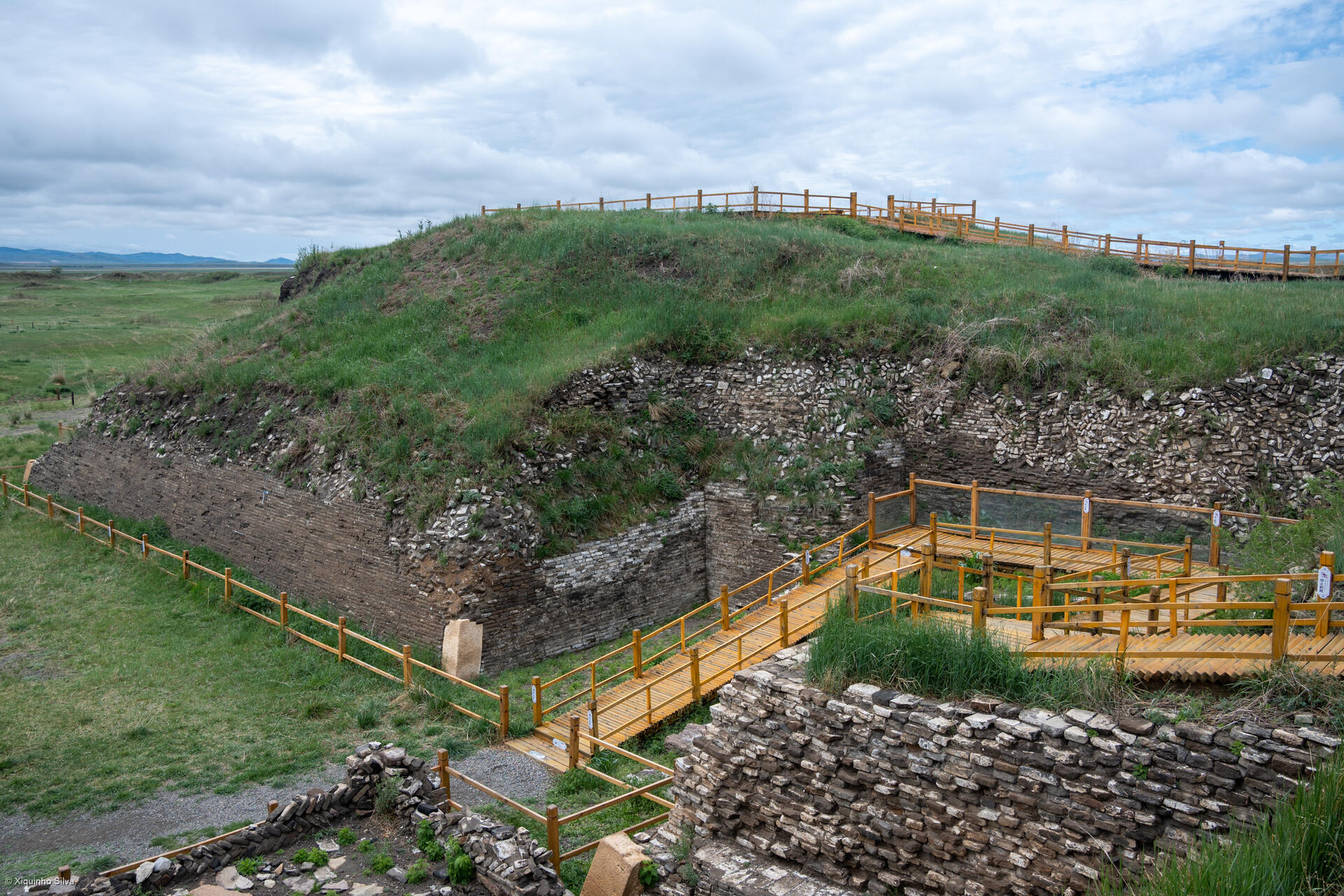
North of the Great Wall, the Site of Xanadu encompasses the remains of Kublai Khan’s legendary capital city, designed by the Mongol ruler’s Chinese advisor Liu Bingzhdong in 1256. Over a surface area of 25,000 ha, the site was a unique attempt to assimilate the nomadic Mongolian and Han Chinese cultures. From this base, Kublai Khan established the Yuan dynasty that ruled China over a century, extending its boundaries across Asia. The religious debate that took place here resulted in the dissemination of Tibetan Buddhism over north-east Asia, a cultural and religious tradition still practised in many areas today. The site was planned according to traditional Chinese feng shui in relation to the nearby mountains and river. It features the remains of the city, including temples, palaces, tombs, nomadic encampments and the Tiefan’gang Canal, along with other waterworks.
UNESCO Justification of the World Heritage Site
Criterion (ii): The location and environment of the Site of Xanadu exhibits influence from both Mongolian and Han Chinese values and lifestyles. The city site exhibits an urban planning pattern indicative of integration of the two ethnicities. From the combination of Mongolian and Han ideas and institutions the Yuan Dynasty was able to extend its control over an extremely large part of the known world at that time. The Site of Xanadu is a unique example of an integrated city plan involving different ethnic communities.
Criterion (iii): The Site of Xanadu is exceptional testimony to the supreme rule of the Yuan conqueror Kublai Khan, the assimilation and conversion to the culture and political system of the conquered, and the determination and effort of the conqueror in adhering to and maintaining the original cultural traditions.
Criterion (iv): The site location and environment of the Site of Xanadu together with its urban pattern demonstrates a coexistence and fusion of nomadic and farming cultures. The combination of a Han city plan with the gardens and landscape necessary to the Yuan dynasty’s Mongolian lifestyle at Xanadu resulted in an outstanding example of urban layout that illustrates a significant stage in human history.
Criterion (vi): The city of Xanadu hosted the great debate between Buddhism and Taoism in the 13th century, an event that resulted in dissemination of Tibetan Buddhism over North-east Asia.
Encyclopedia Record: Shangdu
Shangdu, known in the West as Xanadu, was the summer capital of the Yuan dynasty. Located in what is now Zhenglan Banner, Inner Mongolia, it was designed by Chinese architect Liu Bingzhong and served as a seasonal retreat blending Mongolian steppe traditions with Chinese urban planning. The site gained legendary status after it was visited by Marco Polo and later inspired the English poet Samuel Taylor Coleridge.Additional Site Details
Area: 25,131.27 hectares
Number of Components: 1
(iii) — Unique or exceptional testimony to a cultural tradition
(iv) — Outstanding example of a type of building or landscape
(vi) — Directly associated with events or living traditions
Coordinates: 42.358 , 116.1851277778
World Heritage Research
Discover scientific research and academic studies that deepen our understanding of Site of Xanadu from its history and significance to its conservation, management, and contemporary challenges.
-
“Kubla Khan” and Islamic Structures: Retracing Symbolism and Investigating Imagination
Coleridge's poem 'Kubla Khan' reveals striking architectural parallels between Xanadu, the Mongol summer palace, and Islamic structures, suggesting a fusion of historical mimesis and imaginative symbolism. The study identifies resemblances between Xanadu's pleasure-dome and Islamic paradise gardens (chaharbagh), as well as similarities with Kashmir's geographical spaces, supported by accounts from Marco Polo and other travelers. It further compares Xanadu to the Taj Mahal and Mecca, exploring its allegorical significance in relation to Islamic paradise or Jannah. The research examines possible influences on Coleridge’s poem, including historical narratives and his dreams, while retracing the symbolism of this fabled city.
Chatterjee, S. (2019). “Kubla Khan” and Islamic Structures: Retracing Symbolism and Investigating Imagination. New Horizons in English Studies, 4, 67–73. https://doi.org/10.17951/nh.2019.4.67-73
View Publication Record | Read Publication -
The archaeoastronomy and feng shui of Xanadu: Kublai Khan’s imperial Mongolian capital
Xanadu, Kublai Khan's imperial summer capital during the Yuan dynasty (1271–1368), was designed with feng-shui principles that harmonized it with natural forces. A key discovery reveals that celestial alignments played a significant role in achieving this harmony, integrating visible and invisible elements of earth, sky, and water. The study combines archaeoastronomy and feng shui analysis to demonstrate how Xanadu's layout reflected sophisticated understanding of cosmic and terrestrial dynamics, offering new insights into the architectural and cultural sophistication of Mongolian imperial design.
Romain, W. F. (2017). The archaeoastronomy and feng shui of Xanadu: Kublai Khan’s imperial Mongolian capital. Time and Mind, 10(2), 145–174. https://doi.org/10.1080/1751696x.2017.1310567
View Publication Record | Read Publication -
Translating Intangible Cultural Heritage in an Ethnolinguistic Community: A Case Study of the Site of Xanadu in Inner Mongolia
A study identifies key challenges and strategies for translating the intangible cultural heritage of the Site of Xanadu, a UNESCO World Heritage Site representing Mongolian history and culture. The research reveals that effective translation must balance information transfer with cultural dissemination to ensure foreign tourists, particularly native English speakers, grasp the site's significance. By analyzing application documents, advertisements, and websites, the study pinpoints idiomatic and cross-cultural hurdles while proposing feasible solutions to bridge linguistic and cultural gaps. Funded by Inner Mongolia's Philosophy and Social Sciences Research Planning Office, this work contributes to broader efforts in international publicity of intangible cultural heritage.
Liu, J. Y. (2014). Translating Intangible Cultural Heritage in an Ethnolinguistic Community: A Case Study of the Site of Xanadu in Inner Mongolia. Journal of Language Teaching and Research, 5(6). https://doi.org/10.4304/jltr.5.6.1334-1339
View Publication Record | Read Publication