World Heritage Identification Number: 1248
World Heritage since: 2007
Category: Natural Heritage
WHE Type: Natural Landscapes & Geographic Features
Transboundary Heritage: No
Endangered Heritage: No
Country: 🇨🇳 China
Continent: Asia
UNESCO World Region: Asia and the Pacific
Map
Unveiling the Spectacular South China Karst: A Tropical Subtropical Karst Landscape
The South China Karst, a veritable treasure trove of geological wonders, stretches across four Chinese provinces – Chongqing, Guangxi, Guizhou, and Yunnan. This expansive region, encompassing approximately 97,125 hectares, was designated a UNESCO World Heritage Site in June 2007, owing to its exceptional display of humid tropical to subtropical karst landscapes.
More to come…UNESCO Description of the World Heritage Site
South China Karst is one of the world’s most spectacular examples of humid tropical to subtropical karst landscapes. It is a serial site spread over the provinces of Guizhou, Guangxi, Yunnan and Chongqing and covers 97,125 hectares. It contains the most significant types of karst landforms, including tower karst, pinnacle karst and cone karst formations, along with other spectacular characteristics such as natural bridges, gorges and large cave systems. The stone forests of Shilin are considered superlative natural phenomena and a world reference. The cone and tower karsts of Libo, also considered the world reference site for these types of karst, form a distinctive and beautiful landscape. Wulong Karst has been inscribed for its giant dolines (sinkholes), natural bridges and caves.
UNESCO Justification of the World Heritage Site
Criterion (vii): The South China Karst World Heritage property includes spectacular karst features and landscapes, which are both exceptional phenomena, and of outstanding aesthetic quality. It includes the stone forests of Shilin, superlative natural phenomena which include the Naigu stone forest occurring on dolomitic limestone and the Suyishan stone forest arising from a lake, the remarkable fengcong and fenglin karsts of Libo, and the Wulong Karst, which includes giant collapse depressions, called Tiankeng, and exceptionally high natural bridges between them, with long stretches of deep unroofed caves. It also includes Guilin, which displays spectacular tower karst and internationally acclaimed fenglin riverine landscapes, Shibing Karst, which has the best known example of subtropical fengcong karst in dolomite, deep gorges and spine-like hills often draped with cloud and mist, and Jinfoshan Karst, which is an isolated island long detached from the Yunnan-Guizhou plateau, surrounded by precipitous cliffs and punctured by ancient caves. Huanjiang Karst provides a natural extension to Libo Karst, contains outstanding fengcong features and is covered in almost pristine monsoon forest. The property’s forest cover and natural vegetation is mainly intact, providing seasonal variation to the landscape and further enhancing the property’s very high aesthetic value. Intact forest cover also provides important habitat for rare and endangered species, and several components have very high biodiversity conservation value.
Criterion (viii): The South China Karst World Heritage property reveals the complex evolutionary history of one of the world’s most outstanding landscapes. Shilin and Libo are global reference areas for the karst features and landscapes that they exhibit. The stone forests of Shilin developed over 270 million years during four major geological time periods from the Permian to present, illustrating the episodic nature of the evolution of these karst features. Libo contains carbonate outcrops of different ages shaped over millions of years by erosive processes into impressive Fengcong and Fenglin karsts. Libo also contains a combination of numerous tall karst peaks, deep dolines, sinking streams and long river caves. Wulong represents high inland karst plateaus that have experienced considerable uplift, with giant dolines and bridges. Wulong's landscapes contain evidence for the history of one of the world's great river systems, the Yangtze and its tributaries. Huanjiang Karst is an extension of the Libo Karst component. Together the two sites provide an outstanding example of fengcong karst and also preserve and display a rich diversity of surface and underground karst features. Guilin Karst is considered the best known example of continental fenglin and provides a perfect geomorphic expression of the end stage of karst evolution in South China. Guilin is a basin at a relatively low altitude and receives abundant allogenic (rainfed) water from surrounding hills, leading to a fluvial component that aids fenglin development, resulting in fenglin and fengcong karst side-by-side over a large area. Scientific study of karst development in the region has resulted in the generation of the ‘Guilin model’ of fengcong and fenglin karst evolution. Shibing Karst provides a spectacular fengcong landscape, which is also exceptional because it developed in relatively insoluble dolomite rocks. Shibing also contains a range of minor karst features including karren, tufa deposits and caves. Jinfoshan Karst is a unique karst table mountain surrounded by massive towering cliffs. It represents a piece of dissected plateau karst isolated from the Yunnan-Guizhou-Chonqing plateau by deep fluvial incision. An ancient planation surface remains on the summit, with an ancient weathering crust. Beneath the plateau surface are dismembered horizontal cave systems that appear at high altitude on cliff faces. Jinfoshan records the process of dissection of the high elevation karst plateau and contains evidence of the region’s intermittent uplift and karstification since the Cenozoic. It is a superlative type-site of a karst table mountain.
Encyclopedia Record: South China Karst
The South China Karst, a UNESCO World Heritage Site since June 2007, spans the provinces of Chongqing, Guangxi, Guizhou, and Yunnan. It is noted for its karst features and landscapes as well as rich biodiversity. The site comprises seven clusters Phase I: Libo Karst, Shilin Karst, and Wulong Karst inscribed in 2007, and Phase II: Guilin Karst, Shibing Karst, Jinfoshan Karst, and Huanjiang Karst inscribed in 2014. UNESCO describes the South China Karst as "unrivalled in terms of the diversity of its karst features and landscapes".Additional Site Details
Area: 97,125 hectares
Number of Components: 12
(viii) — Outstanding example representing major earth stages
Coordinates: 24.9233333333 , 110.3544444444
IUCN World Heritage Outlook
The 2025 Conservation Outlook on South China Karst reports the following assessment:
Source: International Union for Conservation of Nature (IUCN) · View assessment
Image
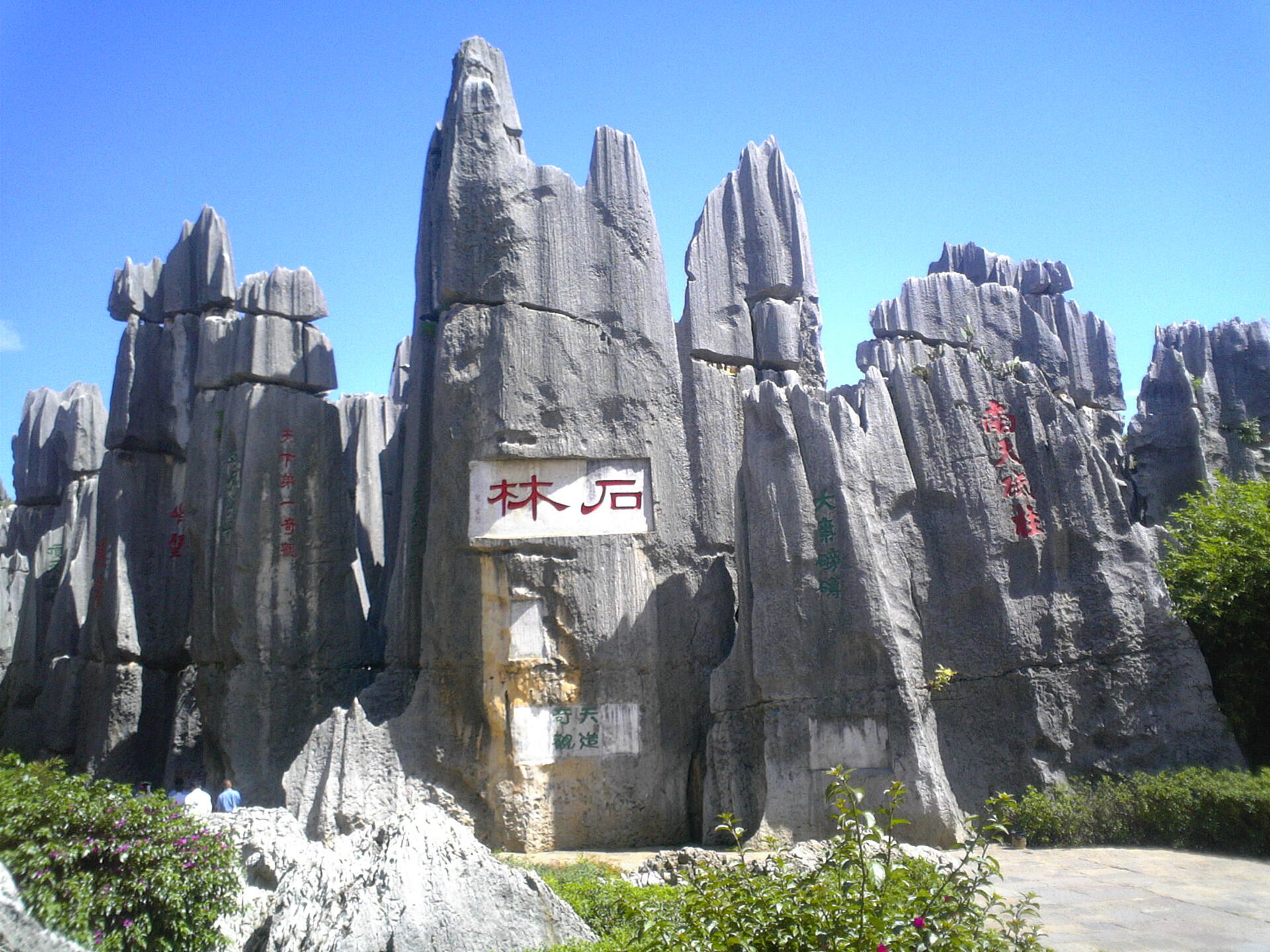
© No machine-readable author provided. Chenyun~commonswiki assumed (based on copyright claims)., CC BY-SA 2.5 Resized from original. (This derivative is under the same CC BY-SA license.)
World Heritage Research
Discover scientific research and academic studies that deepen our understanding of South China Karst from its history and significance to its conservation, management, and contemporary challenges.
-
Nitrate Source Apportionment and Nitrogen Export Characteristics of Spring Water in a Dolomite Karst World Heritage Site: A Tracing Study Based on Nitrogen and Oxygen Isotopes
Dissolved nitrogen leaching, not just surface processes, significantly drives the evolution of karst rocky desertification in the Shibing Dolomite Karst World Heritage Site. A year-long study using monthly monitoring, hydrochemistry, and nitrate dual isotopes (¹⁵N and ¹⁸O) revealed stark differences between core and buffer zone springs. The buffer zone exhibits high anthropogenic nitrate dominance (>62%) with seasonal peaks, rapid hydrological response, and limited denitrification, while the core area shows stable natural nitrate levels (5–7.4 mg/L) and potential local denitrification. Nitrogen export in the buffer zone surges 4.5 times during the rainy season, primarily as NO₃⁻ (93% of TN), whereas the core area has a higher total nitrogen export flux per unit area (3.34 vs. 0.4 g/m²/a) with a greater proportion of dissolved organic nitrogen (DON). These findings highlight the critical role of dissolved nitrogen in shaping karst landscapes, offering new insights for conservation and management strategies.
Mo, J., Lyu, X., Jiao, S., Zhu, C., & Wang, D. (2026). Nitrate Source Apportionment and Nitrogen Export Characteristics of Spring Water in a Dolomite Karst World Heritage Site: A Tracing Study Based on Nitrogen and Oxygen Isotopes. Sustainability, 18(10), 4939. https://doi.org/10.3390/su18104939
View Publication Record | Read Publication -
Spatio-temporal dynamics of grassland ecosystem services and the segmentation effects of their drivers: A case in South China Karst
Despite a 4.36% decline in grassland area within the South China Karst region from 2000 to 2020, ecosystem services (ES) showed significant improvement, with 73.52% of counties exhibiting an elasticity index exceeding 1. This study quantified grassland ES and its sensitivity to area changes using spatio-temporal analysis and quantile regression models, revealing segmented effects of drivers—particularly socio-economic factors—on ES dynamics. The findings highlight a counterintuitive trend where grassland degradation did not correlate with reduced ES supply capacity, offering critical insights for the UN Decade on Ecosystem Restoration (2021–2030). This research advances understanding of grassland ES resilience in karst regions and informs targeted restoration strategies.
Li, Y., Xiong, K., Zhang, W., Xiang, S., Zhang, B., & Li, R. (2025). Spatio-temporal dynamics of grassland ecosystem services and the segmentation effects of their drivers: A case in South China Karst. Global Ecology and Conservation, 57, e03392. https://doi.org/10.1016/j.gecco.2024.e03392
View Publication Record | Read Publication -
Assessment of ecological and landscape services in urban green spaces in South China Karst
A significant portion (89.63%) of urban green spaces (UGS) in South China Karst exhibits low quality, with ecological services showing a distinct 'high in the east and low in the west' pattern, while landscape perception services vary nonlinearly. The study, using a multi-dimensional attribute index system and TOPSIS method, identifies that the indicator SC holds the highest weight (20.89%) among evaluated factors. Notably, there is a strong correlation between ecological benefit indicators, with GSA showing significant relationships with seven other metrics. This assessment provides critical insights for sustainable urban management in Karst regions globally.
Wang, X., Chen, X., Yang, L., Song, Y., & Chi, Y. (2025). Assessment of ecological and landscape services in urban green spaces in South China Karst. Npj Heritage Science, 13(1). https://doi.org/10.1038/s40494-025-01759-y
View Publication Record | Read Publication -
Trade-offs and synergies of ecosystem services and their drivers in the forests of the South China Karst
A decline in ecosystem service values of up to 9.77% has been observed in the forests of South China Karst, primarily driven by trade-offs between services such as water yield and soil conservation, which increased by 13.44% and 4.94%, respectively, while carbon storage and biodiversity declined. The study reveals that these changes are influenced by both internal and external drivers, with precipitation and temperature positively affecting ecosystem services, whereas population density has a negative impact. These findings suggest that adopting a framework based on these drivers could guide optimal forest management strategies in this region.
He, C., Xiong, K., & Rong, L. (2025). Trade-offs and synergies of ecosystem services and their drivers in the forests of the South China Karst. Npj Heritage Science, 13(1). https://doi.org/10.1038/s40494-025-01847-z
View Publication Record | Read Publication -
Trade‐Offs/Synergies and Drivers of Ecosystem Service Sustainability at Multiple Scales: Insights From the South China Karst
A new study reveals that ecosystem service sustainability (ESS) in the South China Karst region exhibits complex trade-offs and synergies that vary with time and spatial scale. While habitat quality and carbon sequestration have declined, water yield, soil conservation, and food provision have improved, with more gradual changes observed at the watershed scale compared to county-level variations. The research highlights that social and terrain factors predominantly influence habitat quality, while vegetation and climate play significant roles in shaping soil conservation, carbon sequestration, and water yield. Notably, climate and terrain interactions often result in negative indirect effects on ESS sustainability, particularly at larger scales. To enhance ecological management, the study advocates for multi-scale approaches that prioritize synergistic management between supply and demand to resolve conflicts and achieve balanced outcomes.
Chen, Y., Xiong, K., Luo, L., Zhang, S., & Chen, J. (2025). Trade‐Offs/Synergies and Drivers of Ecosystem Service Sustainability at Multiple Scales: Insights From the South China Karst. Land Degradation & Development, 36(16), 5575–5591. Portico. https://doi.org/10.1002/ldr.70021
View Publication Record | Read Publication -
Construction of forest ecological security patterns based on MSPA model and circuit theory in the Desertification Control forests in South China Karst
A new framework for ecological security patterns (ESP) reveals significant fragmentation and connectivity issues in karst desertification control forests, with forest patch areas decreasing as desertification severity worsens. Researchers used Morphological Spatial Pattern Analysis (MSPA) to identify ecological sources and circuit theory to map corridors and nodes, uncovering critical insights into the structure-function dynamics of these forests. The study highlights how targeted restoration strategies can leverage these patterns for regional sustainable development. By integrating normalized difference vegetation index (NDVI) and land use/land cover data, the research provides a scientific basis for mitigating internal degradation caused by high ecological flow resistance.
Zhang, S., Zhang, Y., Xiong, K., Yu, Y., He, C., Zhang, S., & Wang, Z. (2025). Construction of forest ecological security patterns based on MSPA model and circuit theory in the Desertification Control forests in South China Karst. Npj Heritage Science, 13(1). https://doi.org/10.1038/s40494-025-01973-8
View Publication Record | Read Publication -
Exploring social-ecological system resilience in South China Karst: Quantification, interaction and policy implication
China's Grain to Green Program (GTGP), one of the world's largest payments for ecosystem services, has shown significant ecological benefits but its impact on social-ecological system (SES) resilience remains understudied. A new study quantifying SES resilience in South China Karst reveals an upward trend in social resilience from 2000 to 2020, particularly in social development, while ecological resilience remained stable despite slight declines in ecosystem services and increased landscape fragmentation. Spatially, nearly half of the counties exhibited mismatched SES resilience distributions, with an inverted U-shaped relationship indicating a threshold effect. The study also identifies four distinct zones for SES resilience—key optimization for social systems, safety zones, restoration zones, and ecological optimization—which suggest adaptive adjustments to GTGP could maximize future SES benefits. While GTGP positively reduced regional SES trade-offs, its effectiveness is limited by the overemphasis on converting farmland to forest and grassland.
Chen, T., Wang, Y., & Peng, L. (2024). Exploring social-ecological system resilience in South China Karst: Quantification, interaction and policy implication. Geography and Sustainability, 5(2), 289–301. https://doi.org/10.1016/j.geosus.2024.01.003
View Publication Record | Read Publication