World Heritage Identification Number: 307
World Heritage since: 1984
Category: Cultural Heritage
WHE Type: Buildings & Architectural Ensembles
Transboundary Heritage: No
Endangered Heritage: No
Country: 🇺🇸 United States of America
Continent: Americas
UNESCO World Region: Europe and North America
Map
The Statue of Liberty: A Symbol of Freedom and Immigration
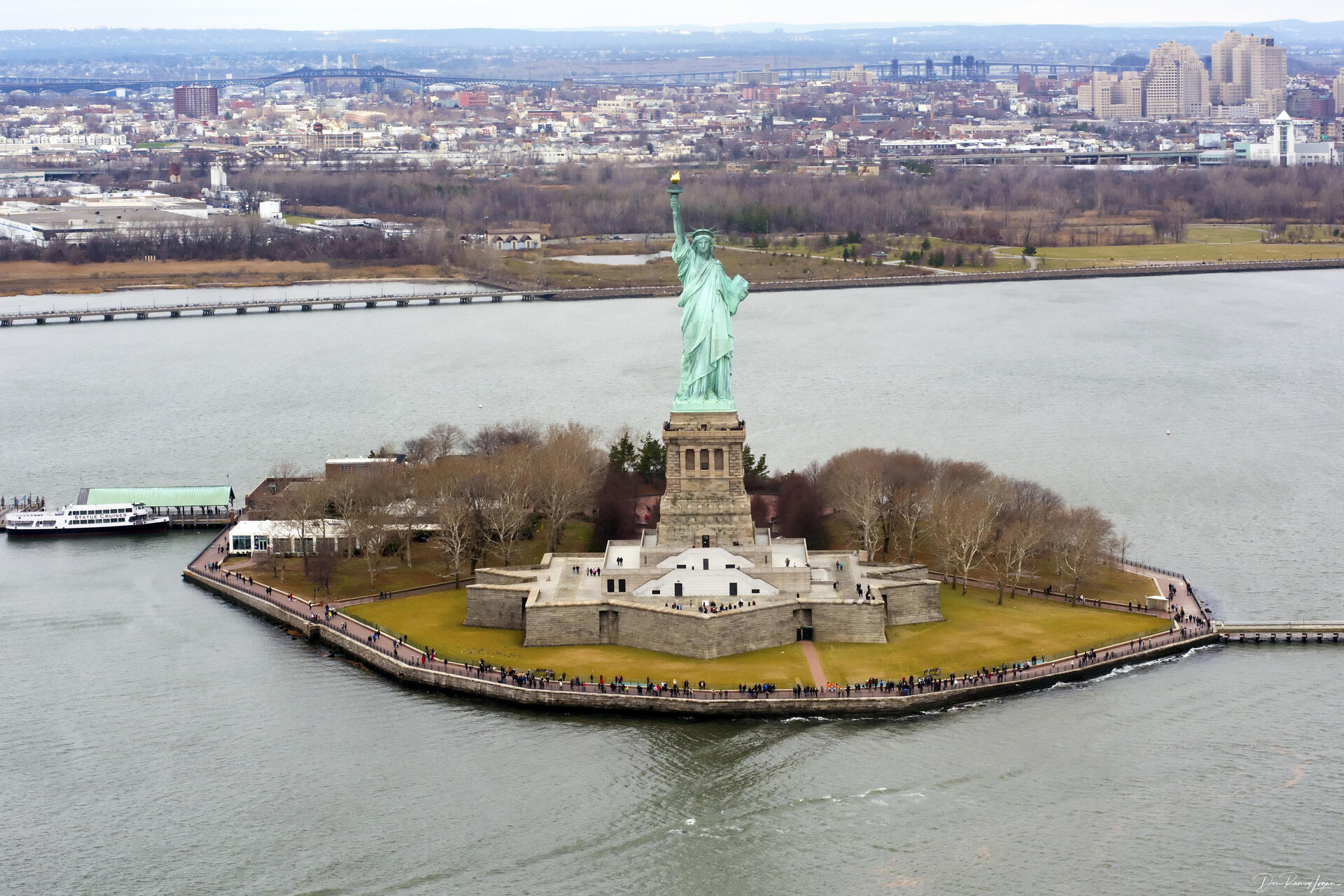
The Statue of Liberty, officially known as Liberty Enlightening the World, is one of the most iconic and recognizable landmarks in the world. Located on Liberty Island in Upper New York Bay, it serves as a beacon of hope and freedom for millions of people who have immigrated to the United States. This colossal neoclassical sculpture, designed by French sculptor Frédéric Auguste Bartholdi, was inaugurated on October 28, 1886, and was a gift from France to commemorate the centennial ideals of American independence.
Bartholdi collaborated with Gustave Eiffel, the renowned French engineer, to construct the statue's framework, which is made primarily of wrought iron. The statue stands approximately 151 feet tall from the base of the statue to the tip of its torch, making it one of the largest statues in the world at the time of its creation. The statue's pedestal, designed by Richard Morris Hunt, adds another 154 feet to the overall height, bringing the statue’s total height from ground level to the torch to more than 305 feet. The statue is made of copper, which has turned green due to oxidation over time.
The Statue of Liberty is a symbol of freedom and democracy, representing the ideals of liberty, peace, and prosperity. The statue's full name, Liberty Enlightening the World, reflects these ideals. The statue holds a torch in her right hand, symbolizing enlightenment and progress, while her left arm cradles a tablet inscribed with the date of the American Declaration of Independence, July IV MDCCLXXVI (July 4, 1776). The statue’s head wears a crown with seven rays, symbolizing the seven continents and seven seas, reflecting the unity of the human race.
Although the statue was dedicated before the opening of Ellis Island in 1892, located nearby, it later became a powerful welcoming symbol for millions of immigrants arriving in the United States. The statue's inscription, "Give me your tired, your poor, Your huddled masses yearning to breathe free," comes from Emma Lazarus’s 1883 poem The New Colossus and was added to the pedestal in 1903. It is a testament to the country's commitment to accepting those seeking refuge and opportunity. The statue remains a powerful symbol of the United States' history as a nation of immigrants and a beacon of hope for those seeking a better life.
In 1984, the Statue of Liberty was designated as a UNESCO World Heritage Site, recognizing its cultural, historical, and architectural significance. Today, the statue continues to inspire visitors from around the world, reminding them of the enduring ideals of freedom, democracy, and opportunity that the United States represents.
In recent years, the Statue of Liberty has undergone extensive restoration efforts to preserve the statue for future generations. In 2019, the Statue of Liberty Museum opened on Liberty Island, offering visitors an immersive experience that showcases the statue's history, construction, and symbolism. The museum also houses the statue's original torch, which was replaced in 1986 with a new copper torch covered in 24-karat gold leaf.
In conclusion, the Statue of Liberty is more than just a monument; it is a symbol of hope, freedom, and opportunity. It stands as a reminder of the United States' commitment to accepting immigrants and providing them with a chance to build a better life. As a UNESCO World Heritage Site, the Statue of Liberty continues to inspire visitors from around the world and serve as a testament to the power of freedom and the enduring spirit of humanity.
UNESCO Description of the World Heritage Site
Made in Paris by the French sculptor Bartholdi, in collaboration with Gustave Eiffel (who was responsible for the steel framework), this towering monument to liberty was a gift from France on the centenary of American independence. Inaugurated in 1886, the sculpture stands at the entrance to New York Harbour and has welcomed millions of immigrants to the United States ever since.
UNESCO Justification of the World Heritage Site
Criterion (i): This colossal statue is a masterpiece of the human spirit. The collaboration between the sculptor Frédéric Bartholdi and the engineer Gustave Eiffel resulted in the production of a technological wonder that brings together art and engineering in a new and powerful way.
Criterion (vi): The symbolic value of the Statue of Liberty lies in two basic factors. It was presented by France with the intention of affirming the historical alliance between the two nations. It was financed by international subscription in recognition of the establishment of the principles of freedom and democracy by the United States of America’s Declaration of Independence, which the Statue holds in her left hand. The Statue also soon became and has endured as a symbol of the migration of people from many countries into the United States in the late 19th and the early 20th centuries. She endures as a highly potent symbol – inspiring contemplation, debate, and protest – of ideals such as liberty, peace, human rights, abolition of slavery, democracy, and opportunity.
Encyclopedia Record: Liberty Island
Liberty Island is a federally owned island in Upper New York Bay in the northeastern United States. Its most notable feature is the Statue of Liberty, a large statue by Frédéric Auguste Bartholdi that was dedicated in 1886. The island also contains the Statue of Liberty Museum, which opened in 2019, and exhibits the statue's original torch, which was carried by Liberty from 1886 to 1984.Additional Site Details
Area: 5.95 hectares
Number of Components: 1
(vi) — Directly associated with events or living traditions
Coordinates: 40.68944444 , -74.04472222