World Heritage Identification Number: 22
World Heritage since: 1980
Category: Cultural Heritage
WHE Type: Historic Cities & Urban Areas
Transboundary Heritage: No
Endangered Heritage: Yes
Country: 🇸🇾 Syrian Arab Republic
Continent: Asia
UNESCO World Region: Arab States
Map
The Ancient City of Bosra: A Testimony to Civilizational Interplay
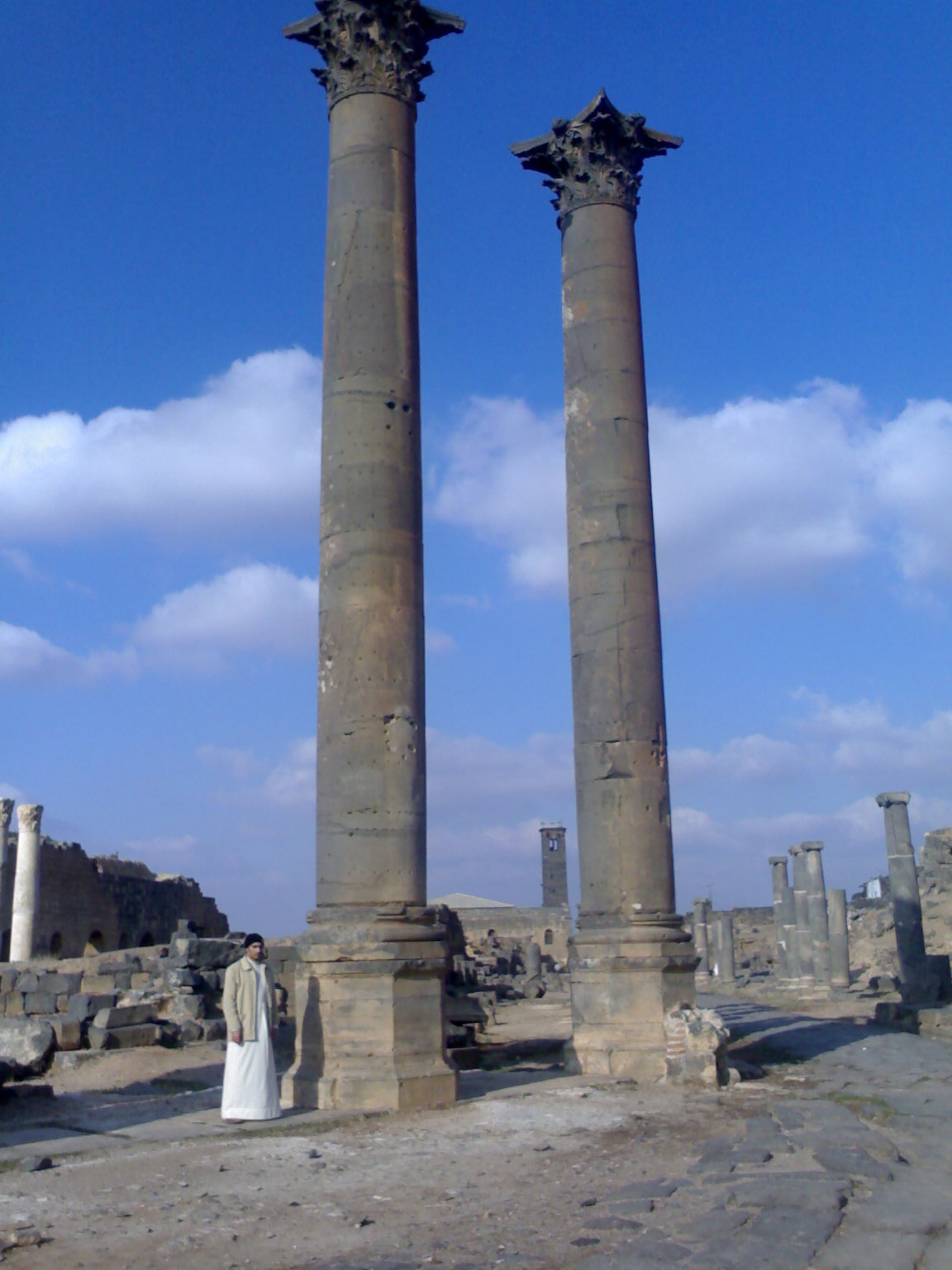
The Ancient City of Bosra, nestled in the verdant valleys of southern Syria, stands as a remarkable testament to the interplay of various civilizations that have shaped human history. Inscribed by UNESCO as a World Heritage Site in 1980, this archaeological treasure trove offers a captivating glimpse into the Roman, Byzantine, and Muslim eras.
More to come…UNESCO Description of the World Heritage Site
Bosra, once the capital of the Roman province of Arabia, was an important stopover on the ancient caravan route to Mecca. A magnificent 2nd-century Roman theatre, early Christian ruins and several mosques are found within its great walls.
UNESCO Justification of the World Heritage Site
Criterion (i): The incorporation of the exceptionally intact 2nd century Roman theatre, complete with its upper gallery, into later fortifications to create a strong citadel guarding the road to Damascus represents a unique architectural achievement. The remains of the 6th century basilica of the martyrs Sergios, Bacchos and Leontios, the cathedral of Bosra, represent an extremely significant example of the centrally planned churches in terms of the evolution of early church architectural forms. The Mosque of Omar, restored in 1950, is one of the rare constructions of the 1st century of the Hegira preserved in Syria. The Madrasa Jâmi' Mabrak an-Nâqua is one of the oldest and most celebrated of Islam.
Criterion (iii): Of the city which once counted 80,000 inhabitants there remain today extensive ruins of Nabataean, Roman, Byzantine and Umayyad buildings. These ruins, including the major monuments mentioned under Criterion (i) above bear exceptional testimony to the past civilizations that created them.
Criterion (vi): In Islam, Bosra is associated with a significant episode in the life of the Prophet Mohammed, who is believed to have visited Bosra twice. At the end of his first visit, it is said that Monk Baheira indicated that Muhammad was to become a prophet.
Encyclopedia Record: Ancient City of Bosra
The Ancient City of Bosra is an archaeological site located in the city of Bosra, Syria. The site illustrates the Roman, Byzantine and Muslim civilizations, and was inscribed by UNESCO on the list of World Heritage Sites in 1980.Additional Site Details
Area: 116.2 hectares
Number of Components: 2
(iii) — Unique or exceptional testimony to a cultural tradition
(vi) — Directly associated with events or living traditions
Coordinates: 32.5191666667 , 36.4841666667
World Heritage Research
Discover scientific research and academic studies that deepen our understanding of Ancient City of Bosra from its history and significance to its conservation, management, and contemporary challenges.
-
After the Fall
A new architectural approach aims to transform the devastated ancient city of Bosra, Syria, into a symbol of hope and resilience through a museum-memorial. This design-led thesis proposes preserving fragments from both the Syrian Civil War and historical periods in an allegorical timeline, creating a sensitive reminder for returning residents while safeguarding Syria's cultural heritage. The project addresses the irreversible damage to ancient ruins like Bosra, which has suffered significant loss due to war, by integrating contemporary and historic artifacts into a memorial experience. The research explores speculative preservation methods to honor Syria's past amid ongoing conflict.
Duncan, W. After the Fall. https://doi.org/10.26686/wgtn.17065373
View Publication Record | Read Publication -
Temples et marques du pouvoir romain en Arabie romaine
This study reveals that the Nabataeans, following the peaceful annexation of their kingdom by Rome in 106 AD, maintained architectural and religious autonomy despite Roman dominance. While Roman sanctuaries were established in Decapolis cities like Amman and Jerash, the Nabataeans integrated Graeco-Roman imagery into their temples while preserving Semitic worship practices. The research analyzes how this dual tradition—marked by both Roman influence and Nabataean continuity—reflects a strategy of cultural preservation and religious freedom within the newly formed Roman province of Arabia. The study also highlights the construction or embellishment of local sanctuaries, such as those in Khirbet edh-Dharih and Wadi Ramm, alongside the elevation of Petra to metropolis status, suggesting a complex interplay between Roman administrative power and Nabataean identity.
Seigneuret, D. (2012). Temples et marques du pouvoir romain en Arabie romaine. Les Marqueurs Archéologiques Du Pouvoir, 133–154. https://doi.org/10.4000/books.psorbonne.5552
View Publication Record | Read Publication