World Heritage Identification Number: 1721
World Heritage since: 2024
Category: Cultural Heritage
WHE Type: Archaeological Sites
Transboundary Heritage: No
Endangered Heritage: No
Country: 🇯🇴 Jordan
Continent: Asia
UNESCO World Region: Arab States
Map
Umm Al-Jimāl: An Ancient Rural Settlement in Northern Jordan
Umm Al-Jimāl, a rural settlement in northern Jordan, offers a unique glimpse into the past, providing valuable insights into the history, culture, and architectural styles of the Hauran region. Inscribed as a UNESCO World Heritage Site in 2024, this remarkable archaeological site has been meticulously preserved, offering visitors a chance to walk through time and experience the life of its ancient inhabitants.
More to come…UNESCO Description of the World Heritage Site
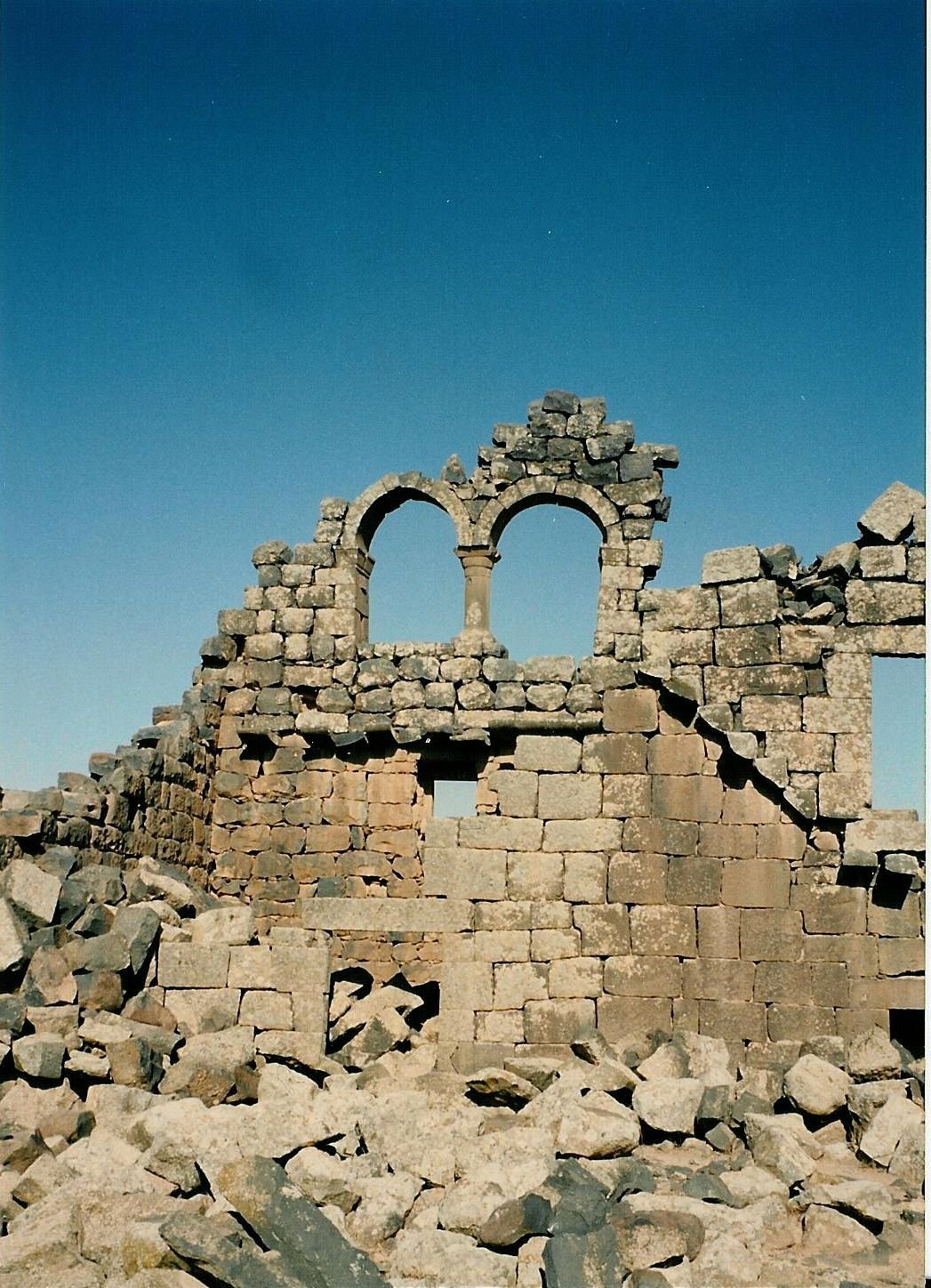
The property is a rural settlement in northern Jordan that developed organically on the site of an earlier Roman settlement around the 5th century CE and functioned until the end of the 8th century CE. It preserves basaltic structures from the Byzantine and Early Islamic periods that represent the local architecture style of the Hauran region, with some earlier Roman military buildings re-purposed by later inhabitants. The settlement formed part of a broader agricultural landscape that included a complex water catchment system, which sustained agriculture and animal herding. The earliest structures uncovered at Umm Al-Jimāl date back to the 1st century CE, when the area formed part of the Nabataean Kingdom. A rich epigraphic corpus in Greek, Nabataean, Safaitic, Latin and Arabic uncovered on the site and spanning many centuries provides insights into its history, and sheds light on the changes in its inhabitants’ religious beliefs.
UNESCO Justification of the World Heritage Site
Criterion (iii): As a typical rural Hauranian settlement that developed around agricultural and animal herding activities on the Hauran basaltic plateau, Umm Al-Jimāl is one of the most representative examples of the rural lifestyle of the Hauranian people, reflecting the key aspects of their cultural traditions and social values embodied in the well-preserved distinctive basalt architecture. By preserving the local architectural character and cultural traditions over centuries despite political or religious change, the property testifies to the resilience of the Hauranian culture.
Encyclopedia Record: Umm el-Jimal
Umm el-Jimal, also rendered as Umm ej Jemāl, Umm al-Jimal or Umm idj-Djimal, is a village in northern Jordan approximately 17 kilometers east of Mafraq. It is primarily notable for the substantial ruins of a Byzantine and early Islamic town which are clearly visible above the ground, as well as an older Roman village located to the southwest of the Byzantine ruins.Additional Site Details
Area: 42.584 hectares
Number of Components: 1
Coordinates: 32.3269444444 , 36.37
World Heritage Research
Discover scientific research and academic studies that deepen our understanding of Umm Al-Jimāl from its history and significance to its conservation, management, and contemporary challenges.
-
The Roman army in Provincia Arabia: Old and new documents from Umm al-Jimāl (Jordan)
Two newly discovered epigraphic documents from Umm al-Jimāl, Jordan, shed light on the Roman military presence in Provincia Arabia. The first, a Greek dedication to Zeus Keraunios under the Severi dynasty, and the second, a Latin inscription detailing the construction of a tower under Flavius Maximinus, provide critical insights into the region's military history from 106 CE to the reign of Justinian (527-565 CE). These findings contribute to understanding the dynamics between soldiers, villagers, and nomads in the limes Arabicus. The study combines epigraphic analysis with historical context to reconstruct the Roman army's role and interactions in this UNESCO World Heritage Site.
Bader, N., Aliquot, J., & Hazza, M. (2023). The Roman army in Provincia Arabia: Old and new documents from Umm al-Jimāl (Jordan). Syria, 100, 193–210. https://doi.org/10.4000/syria.15397
View Publication Record | Read Publication -
An edition of new Nabataean inscriptions from Umm al-Jimāl
Recent discoveries at Umm Al-Jimāl, a UNESCO World Heritage Site in Jordan's north-eastern Badia, have uncovered six new Nabataean inscriptions. These inscriptions, carved in the square or monumental script, represent a significant addition to the known corpus of Nabataean epigraphy. The findings provide valuable insights into the language and culture of the Nabataeans, a people renowned for their architectural and artistic achievements during the Roman period. The study, conducted by al-Zoubi, al-Manaser, and Hazza (2022), contributes to the broader understanding of Nabataean civilization through meticulous documentation and analysis of these newly discovered texts.
al-Zoubi, M., al-Manaser, A., & Hazza, M. (2022). An edition of new Nabataean inscriptions from Umm al-Jimāl. Syria, 99, 293–298. https://doi.org/10.4000/syria.14631
View Publication Record | Read Publication -
An Arab Chariot Monument at Umm al-Jimāl
Research at Umm al-Jimāl, Jordan, reveals previously unpublished basalt sculptures from a Nabataean-Roman to Byzantine settlement, offering new evidence of Hellenistic-Romanized embellishment in an Arab-Nabataean sanctuary. The fragments, dated to the first or second century AD, depict chariot groups driven by deities, paralleling similar statuary found in the nearby basalt desert of al-Ledjā (ancient Trachonitis). Analysis of these remnants suggests they were part of a larger sculptural complex likely destroyed during the Palmyrenean Campaign in the later third century AD. The study combines archaeological investigation with comparative analysis to reconstruct the sanctuary's significance and cultural context, bridging gaps in our understanding of this understudied region.
Weber-Karyotakis, T. M., & al-Khdair, M. H. S. (2018). An Arab Chariot Monument at Umm al-Jimāl. Palestine Exploration Quarterly, 150(3), 214–235. https://doi.org/10.1080/00310328.2018.1485427
View Publication Record | Read Publication -
A Revised Reading of a Nabataean Inscription from Umm Al-Jimal
A revised interpretation of a Nabataean inscription from Umm Al-Jimāl challenges previous readings, offering new insights into the language and culture of the ancient Nabataeans. The study focuses on line two of an inscription analyzed by S. Said and M. al-Hamad (2003), proposing alternative translations that refine understanding of the text's historical context. By employing epigraphic analysis and comparative linguistic methods, the authors demonstrate how re-evaluating ambiguous or poorly preserved inscriptions can yield significant advancements in deciphering Nabataean script and semantics. This work contributes to ongoing efforts to reconstruct the epigraphic corpus of Umm Al-Jimāl, a UNESCO World Heritage Site renowned for its Nabataean heritage.
Butts, A. M., & Hardy, H. H. (2010). A Revised Reading of a Nabataean Inscription from Umm Al-Jimal. Journal of Semitic Studies, 55(2), 385–389. https://doi.org/10.1093/jss/fgq004
View Publication Record | Read Publication