World Heritage Identification Number: 876
World Heritage since: 1998
Category: Cultural Heritage
WHE Type: Historic Cities & Urban Areas
Transboundary Heritage: No
Endangered Heritage: No
Country: 🇪🇸 Spain
Continent: Europe
UNESCO World Region: Europe and North America
Map
The University and Historic Precinct of Alcalá de Henares: A Legacy of Education and Urban Planning
The University and Historic Precinct of Alcalá de Henares, located in the Community of Madrid, Spain, is a testament to the fusion of education, urban planning, and history that has made it a significant UNESCO World Heritage Site since 1998. This city, founded in the early 16th century by Cardinal Francisco Jiménez de Cisneros, serves as the original model for the Civitas Dei (City of God) – an idea that Spanish missionaries would later bring to the Americas. Moreover, it influenced numerous universities across Europe and beyond.
More to come…UNESCO Description of the World Heritage Site
Founded by Cardinal Jiménez de Cisneros in the early 16th century, Alcalá de Henares was the world's first planned university city. It was the original model for the Civitas Dei (City of God), the ideal urban community which Spanish missionaries brought to the Americas. It also served as a model for universities in Europe and elsewhere.
UNESCO Justification of the World Heritage Site
Criterion (ii): Alcalá de Henares was the first city to be designed and built solely as the seat of a university, and was to serve as the model for other centres of learning in Europe and the Americas.
Criterion (iv): The concept of the ideal city, the City of God (Civitas Dei), was first given material expression in Alcalá de Henares, from where it was widely diffused throughout the world.
Criterion (vi): The contribution of Alcalá de Henares to the intellectual development of humankind finds expression in its materialization of the Civitas Dei, in the advances in linguistics that took place there, not least in the definition of the Spanish language, and through the work of its great son, Miguel de Cervantes Saavedra and his masterpiece Don Quixote.
Encyclopedia Record: Alcalá de Henares
Alcalá de Henares is a Spanish municipality of the Community of Madrid. Housing is primarily located on the north bank of the Henares. As of 2018, it has a population of 193,751, making it the region's third-most populated municipality.Additional Site Details
Area: 78.38 hectares
Number of Components: 1
(iv) — Outstanding example of a type of building or landscape
(vi) — Directly associated with events or living traditions
Coordinates: 40.48138889 , -3.368055556
Image
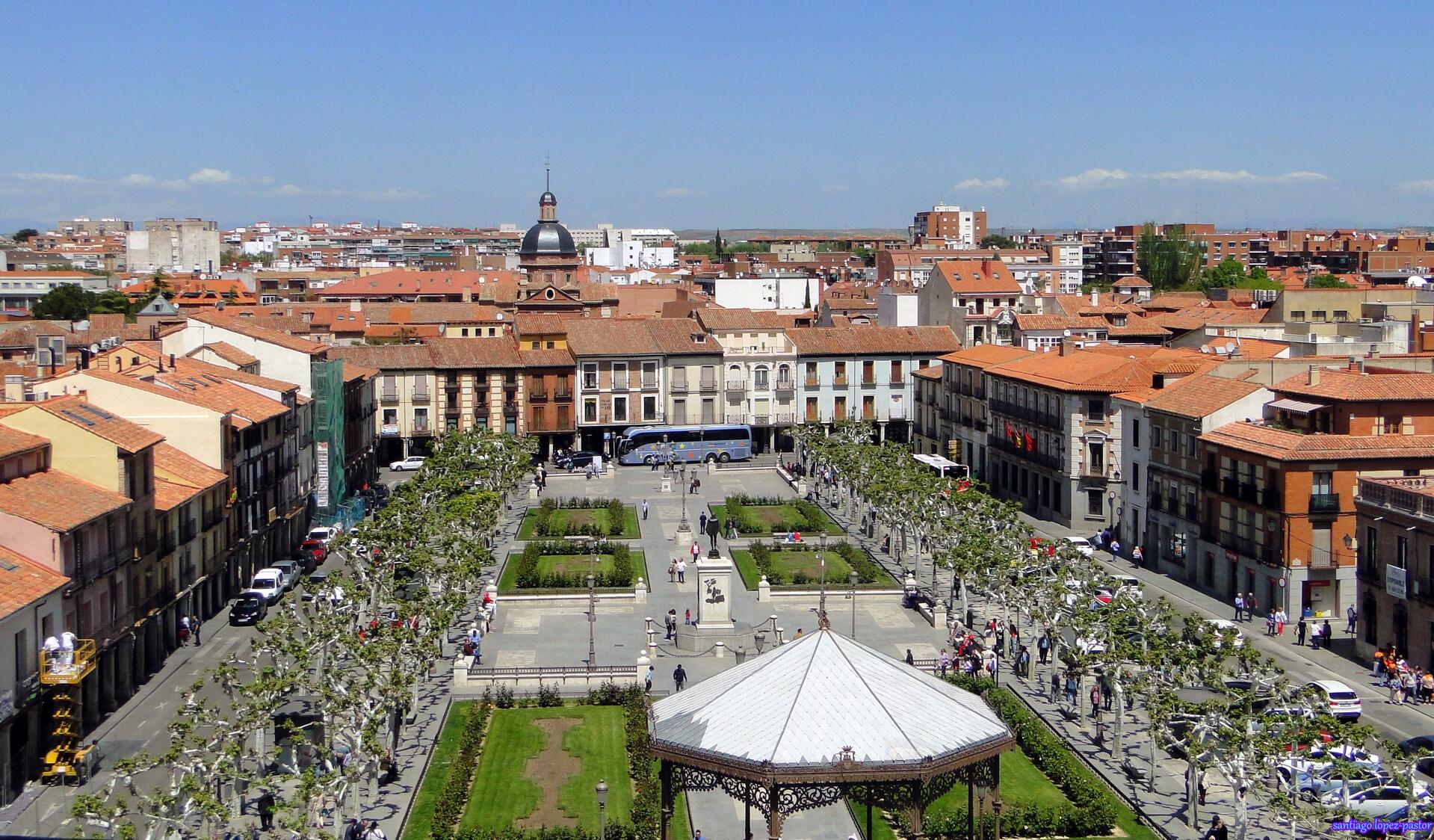
© santiago lopez-pastor, CC BY-SA 2.0 Resized from original. (This derivative is under the same CC BY-SA license.)
World Heritage Research
Discover scientific research and academic studies that deepen our understanding of University and Historic Precinct of Alcalá de Henares from its history and significance to its conservation, management, and contemporary challenges.
-
Colorimetry to assess the visual impact of dust deposition on mosaics at sheltered archaeological sites
A novel colorimetric approach using a spectrophotometer and LumiCam® camera revealed that wet cleaning, despite involving water—a known decay factor—is the most effective method for restoring the original visual appearance of dust-covered mosaics at sheltered archaeological sites. This finding challenges conventional conservation practices by demonstrating that wet cleaning can mitigate the negative visual impact of dust deposition on high-value decorative elements like the mosaic in the House of Hippolytus, a Roman villa in Alcalá de Henares (Spain). The study highlights the need to reassess cleaning regimes for sheltered sites, where dust accumulation is less frequently washed away than in open-air settings. By objectively evaluating color and spectral changes before and after dry and wet cleaning, researchers provide critical insights to guide conservation strategies that balance aesthetic recovery with material preservation.
Cabello Briones, C., Mayorga Pinilla, S., Vázquez Moliní, D., & Álvarez Fernández-Balbuena, A. (2021). Colorimetry to assess the visual impact of dust deposition on mosaics at sheltered archaeological sites. Heritage Science, 9(1). https://doi.org/10.1186/s40494-021-00509-0
View Publication Record | Read Publication -
The performance of shelters for the conservation of archaeological sites in dry and warm climates: the case of Complutum
Research on the University and Historic Precinct of Alcalá de Henares reveals that shelters at the Roman archaeological site of Complutum effectively mitigate environmental decay in dry, warm climates. By comparing two shelter designs over two field seasons (2018–2019), scientists found that more enclosed structures provide superior stability for vulnerable heritage like mosaics by regulating temperature and humidity. Using hourly data loggers and local rainfall records, the study demonstrated that both shelters outperform outdoor conditions, though one design offers clearer advantages. These findings underscore the importance of strategic shelter design in preserving archaeological sites exposed to harsh climates.
Cabello Briones, C. (2020). The performance of shelters for the conservation of archaeological sites in dry and warm climates: the case of Complutum. Ge-Conservacion, 17, 193–201. https://doi.org/10.37558/gec.v17i1.756
View Publication Record | Read Publication